
From May 12, 2019 to May 19, 2019, there were a total of 17 new drug data entries this week, including 12 for oncology, and one each for psychiatric disorders, ophthalmology, dermatology, hematology, and mRNA-based drugs.
❖Amgen Announces First-in-Human Trial Results for KRAS Small-Molecule Inhibitor AMG510Among KRAS-related development pipelines, Amgen is the first to release human trial data, outpacing its competitor Mirati, which initiated its first clinical trial of a KRAS G12C inhibitor in January 2019. With technological advancements, long-dormant targets such as KRAS are gradually being reactivated, and further progress is expected to emerge in the future.
❖Iovance Reports Impressive Data for Tumor-Infiltrating Lymphocyte (TIL) Therapy. Among 27 patients with recurrent advanced cervical cancer, the objective response rate (ORR) for Iovance’s treatment reached 44%, compared to an ORR of 14% for Keytruda in similar trials within this population. Fueled by this positive news, Iovance’s stock price surged by 40%.
❖The 2019 ASCO Annual Meeting will feature the debut of numerous innovative oncology drugs from China. According to the official website of the ASCO Annual Meeting, there are 638 abstracts related to China (out of a total of 4,950). Beigene, Innovent, Junshi, Hengrui, Sorrento, Eisai, and Betta Pharmaceuticals, among others, will announce their latest clinical progress. We look forward to these developments with great anticipation.
❖Opdivo Faces Compounding Setbacks: Phase 3 Trial for Glioblastoma Misses Primary Endpoint Last Week, While Japan Reports Pituitary Dysfunction Crises in Some Patients This WeekEleven patients developed pituitary dysfunction, including one death, with a suspected causal link to Opdivo; however, the specific causes remain to be determined.
Poseida’s Autologous CAR-T Product P-BCMA-101
ObtainedFDA Grants Orphan Drug Designation
FDA Recently Grants Orphan Drug Designation to Poseida’s Investigational Product P-BCMA-101 for the Treatment of Relapsed/Refractory Multiple Myeloma
P-BCMA-101 is primarily composed of memory stem-like T cells, which are characterized by long-term survival (persisting for decades), self-renewal capacity, and differentiation potential, thereby facilitating the reconstitution of the entire T-cell subset.
Inclusion Criteria and Study DesignIn the Phase I trial, 23 patients received treatment across five dose cohorts. The Phase II trial is currently ongoing.
Among the 19 evaluable patients in the Phase I trial, 13 achieved partial response or better, and 2 achieved minor response. In the Phase II clinical trial, patients demonstrated a 100% overall response rate (ORR). Meanwhile, P-BCMA-101 exhibited favorable tolerability and safety profiles.
Amgen’s Investigational KRAS G12C Small-Molecule Inhibitor
Positive Results Achieved in First Clinical Trial
Amgen Announces Positive Results from the First-in-Human Trial of Its Investigational KRAS Small-Molecule Inhibitor AMG 510 at ASCO Annual Meeting; Company Plans to Initiate Clinical Trials Combining AMG 510 with Anti-PD-1 Therapy.
AMG510 is a small-molecule inhibitor that covalently binds to the KRAS protein with the G12C mutation.
Inclusion Criteria and Study DesignIn this open-label, multicenter, Phase I clinical trial, 22 cancer patients harboring KRAS G12C mutations received treatment. These patients had previously undergone multiple prior therapies.
Of the 10 patients evaluated, 2 achieved partial response, 6 had stable disease, and 2 experienced disease progression.
Figure: Structure of AMG510
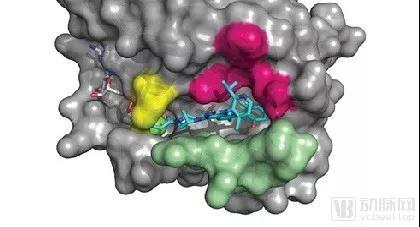
Source: Amgen, ASCO 2019
Genentech's Broad-Spectrum Anti-Cancer Drug Entrectinib
AnnouncementPositive Phase I Clinical Results for Brain Tumor Treatment
Genentech Announces Phase 1 Clinical Trial Data for Its Anti-Cancer Drug Entrectinib in Pediatric Patients with Brain Tumors and Solid Tumors.
Entrectinib is a “broad-spectrum” anticancer drug that targets tumors harboring NTRK, ROS1, or ALK gene fusions and can cross the blood-brain barrier.
Inclusion Criteria and Study DesignPediatric patients with solid tumors, brain tumors, and glioblastoma harboring the aforementioned gene fusions received treatment.
Pediatric patients with brain tumors and solid tumors harboring gene fusions achieved a 100% (11/11) response rate following treatment with Entrectinib.
Forty Seven Announces Its Anti-CD47 AntibodyHu5F9-G4
Results of the First-in-Human Clinical Trial
Forty Seven, Inc. to Present Initial Results from the First-in-Human Clinical Trial of Its Investigational Anti-CD47 Antibody Hu5F9-G4 at ASCO; The Antibody Was Evaluated for the Treatment of Acute Myeloid Leukemia or Myelodysplastic Syndromes in This Trial.
Hu5F9-G4 (5F9) is a humanized monoclonal antibody that inhibits CD47, enhancing macrophage phagocytosis and promoting T-cell priming.
Inclusion Criteria and Study DesignFifteen treatment-naïve patients with acute myeloid leukemia/myelodysplastic syndrome received monotherapy or azacitidine-based combination therapy.
Among the 15 patients, 8 achieved complete remission; among the 10 patients with relapsed/refractory disease, 1 achieved a morphology-free leukemia state. Furthermore, as of January 2019, none of the patients who achieved remission had relapsed.
Sintilimab Announces Phase II Clinical Data for Sintilimab
Inceyt disclosed data from the ORIENT-4 study on its anti-PD-1 product, sintilimab, for the treatment of relapsed or refractory extranodal NK/T-cell lymphoma, in an abstract at the ASCO Annual Meeting.
Sintilimab is a domestically produced innovative PD-1 monoclonal antibody anti-tumor drug.
Inclusion Criteria and Study DesignThe ORIENT-4 study is a multicenter, single-arm, phase 2 clinical trial in which 28 patients with relapsed or refractory extranodal NK/T-cell lymphoma, who had received a median of three prior lines of conventional therapy, were treated. The primary endpoint of the trial was the objective response rate.
As of February 2019, the objective response rate (ORR) was 68% among 28 patients, with a disease control rate of 86%.
Junshi Biosciences Announces Toripalimab
Treatment of Nasopharyngeal CarcinomaInterim Results of the Phase II Clinical Study
Junshi Biosciences Announces Interim Results from Phase 2 Clinical Study of Its Anti-PD-1 Antibody Toripalimab for Refractory Metastatic Nasopharyngeal Carcinoma in ASCO Abstract
Toripalimab is a domestically developed innovative PD-1 monoclonal antibody anticancer drug.
Inclusion Criteria and Study DesignThe interim data disclosed herein are from an open-label Phase 2 clinical trial.
As of January this year, among 135 evaluable patients, the objective response rate was 25.2%, and the disease control rate was 54.8%.
AbbVie and Roche’s Combination Therapy Approved for First-Line Treatment of Leukemia
FDA Approves Venclexta (venetoclax), Co-developed by AbbVie and Roche)In combination with Gazyva (obinutuzumab), for the first-line treatment of patients with previously untreated chronic lymphocytic leukemia or small lymphocytic lymphoma.
Venetoclax is a highly specific BCL-2 inhibitor that can restore apoptosis in cancer cells. Obinutuzumab is an immunotherapeutic agent targeting CD20.
Inclusion Criteria and Study DesignApproval of the Phase 3 clinical study CLL14 based on the combination therapy.
Trial results demonstrated that, compared with standard therapy, the combination regimen reduced the risk of disease progression or death by 67%. During a 28-month follow-up period, 87% of patients remained free from disease worsening.
FDA Approves Pfizer’s Avelumab and Axitinib
Combination Therapy as First-Line Treatment for Advanced Renal Cell Carcinoma
FDA Recently Approves Pfizer’s Bavencio (avelumab) in Combination with Inlyta (axitinib) for First-Line Treatment of Advanced Renal Cell Carcinoma
This combination therapy integrates a PD-L1 monoclonal antibody with a VEGFR tyrosine kinase inhibitor.
Inclusion Criteria and Study DesignApproval was based on the JAVELIN Renal 101 randomized, multicenter, open-label Phase 3 trial.
The trial results demonstrated that the combination therapy group significantly improved patients' progression-free survival (PFS) (13.8 months vs. 8.4 months), while also markedly increasing the objective response rate (ORR) in the treated population (51.4% vs. 25.7%).
Iovance Tumor-Infiltrating Lymphocyte Therapy
Active in Cervical Cancer Treatment
Iovance Announces Positive Data from Phase 2 Trial of LN-145, Its Tumor-Infiltrating Lymphocyte (TIL) Therapy, in Patients with Advanced Cervical Cancer
TIL therapy involves isolating tumor-infiltrating lymphocytes from the patient and stimulating their expansion ex vivo using the cytokine IL-2. The activated and expanded TILs, with enhanced anti-tumor potency, are then infused back into the patient to eradicate tumor cells.
Inclusion Criteria and Study DesignPatients with advanced cervical cancer who received this therapy had previously undergone an average of 2.6 prior lines of treatment.
Among the 27 evaluable patients, 1 achieved complete response, 9 achieved partial response, and 2 had unconfirmed partial responses. Overall, this TIL therapy achieved an ORR of 44%, nearly three times that of Keytruda in a similar patient population (14%).
Figure: 22-Day Manufacturing Process for Iovance’s LN-145 Therapy
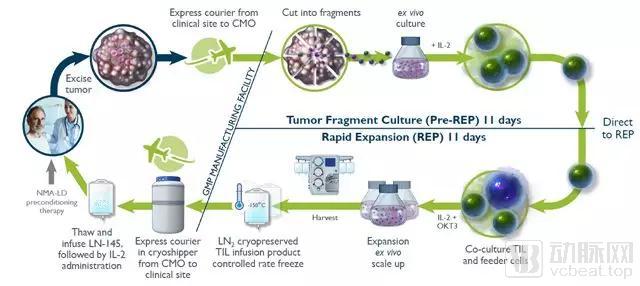
Source: Iovance, ASCO 2018
Daiichi Sankyo’s New Drug Receives FDA Voting Support
Poised to Become the First Approved Therapy for Tenosynovial Giant Cell Tumor
The FDA’s Advisory Committee voted 12–3 in favor of Daiichi Sankyo’s new drug, pexidartinib, for the treatment of symptomatic tenosynovial giant cell tumor (TGCT). Previously, patients could only be treated with surgery, or even amputation.
Pexidartinib is an oral colony-stimulating factor 1 receptor inhibitor.
Inclusion Criteria and Study DesignApproval was granted based on the results of the Phase 3 clinical trial named ENLIVEN.
Trial data showed that 39% of patients receiving treatment achieved remission after 25 weeks, whereas the objective response rate in the placebo group was 0%.
Myovant Sciences Uterine FibroidsInnovative Therapies
Met Phase III Clinical Endpoints
Recently, Myovant announced that its developed Relugolix combination therapy achieved the primary endpoint and multiple secondary endpoints in Phase 3 clinical trials for the treatment of uterine fibroids.
Relugolix is an oral gonadotropin-releasing hormone receptor antagonist.
Inclusion Criteria and Study DesignIn the LIBERTY 1 Phase 3 clinical trial, 388 patients with uterine fibroids and heavy menstrual bleeding received either relugolix combination therapy or placebo.
Trial data showed that relugolix significantly alleviated patients' condition, with 73.4% of patients in the treatment group achieving response criteria, compared to only 18.9% in the placebo group.
Celgene's New Drug for Kaposi's Sarcoma: Pomalyst
Breakthrough Therapy Designation Granted
FDA Grants Breakthrough Therapy Designation to Celgene’s Pomalyst for HIV-Negative Kaposi Sarcoma Patients
Pomalyst is an oral thalidomide analog.
Inclusion Criteria and Study DesignApproval of the Phase 1/2 clinical trial of Pomalyst in 22 patients.
Trial data show that the ORR in treated HIV patients reached 100%, with a CR rate of 14%.
The First Schizophrenia Treatment Not Acting Through Dopamine Receptor Binding
ofAntipsychotic Drug Receives FDA Breakthrough Therapy Designation
Recently, the investigational new drug SEP-363856, developed by Sunovion and PsychoGenics for the treatment of schizophrenia, was granted Breakthrough Therapy Designation by the U.S. FDA. It has the potential to become the first medication for schizophrenia that does not exert its therapeutic effect through binding to dopamine D2 receptors.
SEP-363856 is believed to have the potential to activate serotonin 1A receptors and trace amine-associated receptor 1 (TAAR1) (mechanism unclear).
Inclusion Criteria and Study DesignApproval of the randomized, placebo-controlled, double-blind registration study named SEP361-201.
Trial data showed that patients receiving SEP-363856 had significant improvements in the total score on the Positive and Negative Syndrome Scale compared with the placebo group.
Aflibercept Approved for the Treatment of All Stages of Diabetic Retinopathy
Regeneron Announces FDA Approval of Its Blockbuster Ophthalmic Drug Eylea (Aflibercept) for the Treatment of All Stages of Diabetic Retinopathy.
Aflibercept is a VEGF inhibitor, with global sales of $7.354 billion in 2018.
Inclusion Criteria and Study DesignApproval based on the Phase 3 clinical trial named PANORAMA.
Trial data showed that the proportion of patients with improved retinopathy (defined as a two-step improvement on the DRSS scale) among those treated with Eylea was 65% (with injections every 16 weeks) and 80% (with injections every 8 weeks), compared to 15% in the control group.
Pfizer Announces Its JAK Inhibitor
InPositive Top-Line Results Achieved in Phase 3 Clinical Trial
Pfizer Announces Positive Topline Results from Phase 3 Clinical Trial of JAK1 Inhibitor Abrocitinib for Moderate-to-Severe Dermatitis
Abrocitinib is an oral JAK1 inhibitor.
Inclusion Criteria and Study DesignThis clinical trial is a randomized, double-blind, placebo-controlled Phase 3 clinical trial.
In the treatment group, the proportion of patients achieving the primary efficacy endpoint and key secondary endpoints was significantly higher.
Unicure Announces Positive Phase 2 Data for Hemophilia B Gene Therapy
Unicure Announces Positive Data from Phase 2b Clinical Trial of Its Hemophilia B Gene Therapy, AMT-061
AMT-061 is a gene therapy combining an AAV5 vector with the FIX-Padua variant for the treatment of moderate to severe hemophilia B.
Inclusion Criteria and Study DesignThe Phase 2b trial of AMT-061 is an open-label, single-dose, single-arm, multicenter study. To date, three patients have received treatment.
Six months after a single dose of AMT-061, coagulation factor IX (FIX) activity continued to rise in the three treated patients, with two patients reaching normal levels.
Moderna’s Investigational mRNA Influenza Vaccine in
Performed well in Phase I trials
Moderna Releases Phase 1 Trial Data for Its Investigational mRNA Influenza Vaccine.
Moderna has released data for its H10N8 influenza vaccine, mRNA-1440, and its H7N9 influenza vaccine, mRNA-1851.
Inclusion Criteria and Study DesignIn two Phase I clinical trials, 201 and 156 healthy volunteers received vaccine or placebo injections, respectively.
Trial data show that both influenza vaccines demonstrated a favorable safety profile in Phase I trials and elicited robust immune responses.

❖Bayer Announces $150 Million Investment to Build Cell Culture Technology Center in Berkeley, California, to Support Production and Development of Its Expanding Biologics Portfolio (Notably Oncology and Cardiology Projects Scheduled for Launch by End-2021), Thereby Benefiting More Patient Populations. The Center Will Be Developed in Collaboration with Fluor and GE Healthcare.
❖Henlius’s rituximab injection (Hanlikang) has been officially included in the Shanghai Medical Insurance list. The agreed procurement price for the 100 mg/10 mL/vial product is set at RMB 1,648, with a fixed out-of-pocket amount of RMB 650 for individuals.
❖Vertex Pharmaceuticals and Kymera Therapeutics Announce Four-Year R&D Collaboration to Co-Develop Small-Molecule Protein Degraders Targeting Multiple Targets. Kymera Is Eligible for a $70 Million Upfront Payment, Potential Milestone Payments Exceeding $1 Billion, and Subsequent Product Royalties.
❖UK biotechnology company F-star announced that it will amend its collaboration agreement with Merck for the joint development of bispecific antibody cancer immunotherapies. Under the amended terms of the original 2017 agreement, F-star has regained exclusive rights to develop and commercialize FS118, a tetravalent bispecific antibody previously licensed to Merck.
❖Forty Seven Inc. has entered into a clinical trial collaboration agreement with Acerta Pharma, an AstraZeneca company, to evaluate the efficacy of a triple-combination therapy comprising the anti-CD47 monoclonal antibody 5F9, the targeted BTK inhibitor Calquence, and rituximab in the treatment of diffuse large B-cell lymphoma.
❖Recently, Ono Pharmaceutical, BMS’s partner in Japan, responded to the Ministry of Health, Labour and Welfare’s adverse event report regarding Opdivo. As of November 7, 2018, there were 11 cases of pituitary dysfunction suspected to be causally related to Opdivo (3 cases in melanoma patients and 8 cases in non-small cell lung cancer patients), including one death (in a patient with non-small cell lung cancer); the specific cause remains unclear. This development further exacerbates the setbacks for Opdivo, whose Phase III clinical trial in glioblastoma failed to meet its primary endpoint.
❖Nestlé Announces Sale of Its Skin Health Business for Approximately $10.1 Billion, Entering Exclusive Negotiations with a Consortium Led by European Private Equity Giant EQT and the Abu Dhabi Investment Authority
❖Roche’s $4.3 Billion Acquisition of Sparks Therapeutics Delayed for the Third Time Due to Extended FTC Regulatory Review
❖Blackstone recently acquired a 46% stake in South Korean pharmaceutical distributor Geo-Young from Anchor Equity Partners for KRW 1.1 trillion (USD 945 million).
❖Novartis’ CAR-T Therapy Kymriah Recently Included in Japan’s National Health Insurance for Treating Certain Leukemias or Lymphomas, Priced at $305,000
❖Genentech and Parvus Therapeutics, a company specializing in specific immune-modulating drugs, have entered into a collaboration to jointly develop, manufacture, and commercialize Parvus’s immunomodulatory therapy, Navacim. This therapy can be used for the treatment of inflammatory bowel disease, autoimmune liver diseases, and celiac disease.