
May 6, 2019–May 11, 2019: A total of 13 new drug data entries were recorded this week, including 7 for rare diseases, 3 for oncology, 2 for pulmonary diseases, and 1 for hematologic disorders.
❖Novartis and Genentech successively announced positive data this week for their spinal muscular atrophy (SMA) treatments, Zolgensma (a gene therapy) and Risdiplam, respectively. Trial results indicate that patients with different types of SMA are expected to have more treatment options in the future. Currently, Biogen’s Spinraza is the only approved therapy for SMA, with sales reaching $1.724 billion in 2018. Going forward, Zolgensma and Risdiplam are poised to compete with Spinraza, potentially forming a three-way split in the market.
❖The Phase 3 clinical trial of Opdivo for the treatment of glioblastoma multiforme (GBM) failed, with no significant improvement in overall survival (OS) observed in the experimental arm. Current pharmacological treatments for GBM primarily consist of temozolomide and bevacizumab, leaving a substantial unmet medical need. Meanwhile, Opdivo has missed another opportunity in its competition with Keytruda. In the first quarter of this year, Opdivo generated $1.8 billion in sales, compared to $2.3 billion for Keytruda. Given Keytruda’s established foothold in the lung cancer sector, it is expected to continue outperforming Opdivo in the future.
❖AstraZeneca’s BTK inhibitor acalabrutinib meets clinical endpoints in Phase 3 trial for relapsed/refractory chronic lymphocytic leukemia (CLL). Acalabrutinib is the second BTK inhibitor to reach the market after the blockbuster drug ibrutinib. In 2015, AstraZeneca acquired a 55% stake in Acerta Pharma for $4 billion, thereby securing the rights to acalabrutinib. Acalabrutinib entered the mantle cell lymphoma segment in November 2017 and has now finally penetrated the major CLl market. As a benchmark, ibrutinib achieved global sales of approximately $3.6 billion in 2018.
Novartis Announces Zolgensma in a Broad Range of
Positive Outcomes in the Treatment of Spinal Muscular Atrophy
Recently, Novartis announced positive results for Zolgensma in patients with various types of spinal muscular atrophy (SMA) at the American Academy of Neurology (AAN) Annual Meeting.
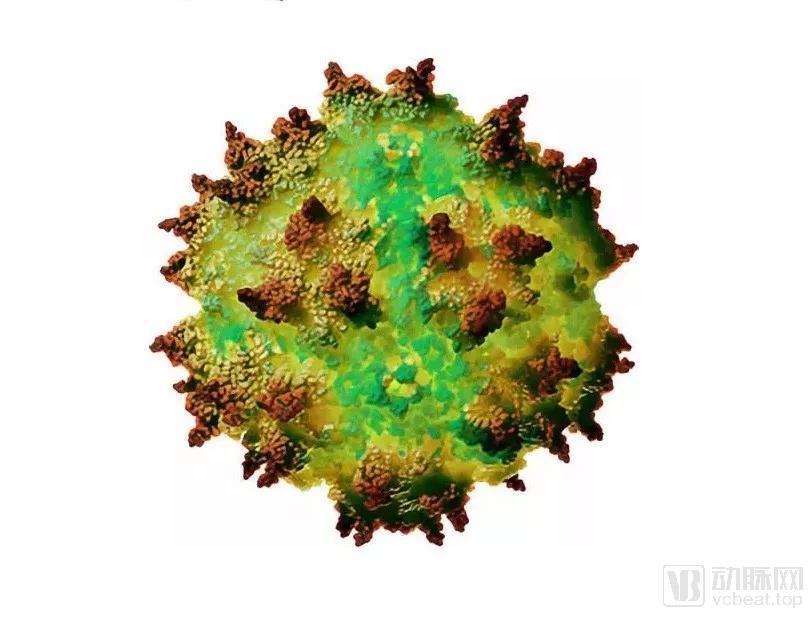
Zolgensma is an adeno-associated virus (AAV) vector-based gene therapy that delivers a transgene encoding the survival motor neuron (SMN) protein into patients via the AAV9 viral vector.
Inclusion Criteria and Study DesignThe three published clinical trial datasets include: one Phase I, open-label, dose-comparison, multicenter trial named STRONG (for patients with Type 2 SMA older than 6 months); one Phase III, open-label, single-arm, single-dose, multicenter trial named STR1VE (for patients with Type 1 SMA younger than 6 months); and one Phase III, open-label, single-arm, multicenter trial named SPR1NT (for SMA patients aged ≤6 weeks with two or three copies of the SMN2 gene).
Patients with various types of SMA can reduce their risk of death and improve motor function by receiving Zolgensma treatment.
Structure of the AAV9 Viral Vector
Source: Avexis Official Website
Genentech Announces Oral Drug for Spinal Muscular Atrophy
Risdiplam Achieves Positive Results in Two Clinical Trials
Genentech Announces Trial Results of Oral Spinal Muscular Atrophy Drug Risdiplam in Two Clinical Trials, with Data Indicating That Risdiplam Can Be Used to Treat Patients with Type 1, Type 2, and Type 3 SMA.
Risdiplam is an oral SMN2 RNA splicing modifier that increases the levels of mRNA producing functional SMN protein by modulating the splicing process of SMN2 RNA.
Inclusion Criteria and Study DesignIn the Phase III clinical trial, patients with Type 1, Type 2, and Type 3 SMA received treatment.
Among the 17 patients with type 1 SMA who received treatment, 7 infants (41.2%) were able to sit independently for 5 seconds, 9 infants (52.9%) were able to maintain head control, and 1 infant (5.9%) achieved the motor milestone of standing. In studies involving patients with type 2 and type 3 SMA, after 12 months of treatment, the average SMN protein expression level more than doubled, and 58% of patients showed an improvement of more than 3% in their MFM32 scores compared to baseline.
Opdivo Fails in Phase III Clinical Trial for Glioblastoma Multiforme
BMS Announces That Opdivo Failed to Meet the Primary Endpoint of Prolonging Overall Survival in the Phase III CheckMate-498 Clinical Trial for Glioblastoma Multiforme
Opdivo is a PD-1 inhibitor.
Inclusion Criteria and Study DesignCheckMate-498 is a phase 3, randomized, multicenter study in which the positive control group received temozolomide chemotherapy and radiotherapy. The primary endpoint was overall survival (OS), and secondary endpoints included progression-free survival (PFS) and the 2-year overall survival rate.
Compared with the positive control group, OS in the experimental group was not significantly improved.
Xencor's Bispecific Antibody Targeting PD-1 and ICOS
Completion of Dosing in the First Patient
Xencor Announces First Patient Dosed in Phase 1 Clinical Trial of Its Investigational Bispecific Antibody XmAb23104
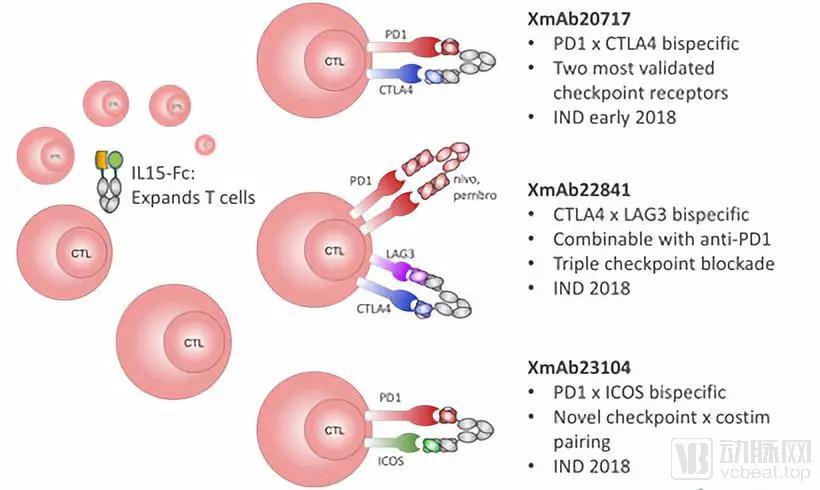
XmAb23104 is a bispecific antibody that simultaneously targets PD-1 and ICOS (an immune costimulatory receptor), thereby promoting the activation of tumor-specific T cells.
Inclusion Criteria and Study DesignDUET-3 is a Phase 1, multiple-dose, dose-escalation clinical study to evaluate the safety and tolerability of the drug in patients with advanced solid tumors.
Clinical trials are ongoing.
Xencor has deployed multiple bispecific antibodies in the field of oncology immuno-oncology (IO).
Source: Xencor official website
StanCell CAR-T Project ICTCAR014
Positive Prospects in Clinical Research in China
At the 2019 Annual Meeting of the American Society of Gene & Cell Therapy (ASGCT), researchers reported that Ictier Therapeutics’ CAR-T candidate, ICTCAR014, had successfully treated two patients with refractory diffuse large B-cell lymphoma, demonstrating promising prospects.
ICTCAR014 is an anti-CD19 CAR-T cell product engineered with a dominant-negative PD-1 molecule. These novel CAR-T cells exhibit enhanced tumor-killing capacity and demonstrate a more memory-like phenotype.
Inclusion Criteria and Study DesignTwo patients have received treatment, and recruitment for additional patients is ongoing.
Following infusion of autologous CAR-T cells, the patient exhibited significant tumor shrinkage, with SUVmax values on PET/CT decreasing in the context of a sustained response (from 34.48 to 3.89; from 25.02 to 2.38).
The World's First Antisense Oligonucleotide Drug for the Treatment of FCS
Waylivra Granted EU Marketing Authorization
Ionis Pharmaceuticals and its subsidiary Akcea Therapeutics announced that Waylivra (volanesorsen), an antisense oligonucleotide drug jointly developed by the two companies, has received conditional marketing authorization from the European Union for use as an adjunctive therapy in adult patients with familial chylomicronemia syndrome (FCS). This marks the first approved treatment for FCS worldwide.
Waylivra is an antisense oligonucleotide drug that reduces the production of ApoC-III protein, which affects metabolism.
Inclusion Criteria and Study DesignApproval is based on the results of the Phase 3 clinical APPROACH study, the Phase 3 clinical COMPASS study, and the ongoing open-label extension study of APPROACH.
Compared with the placebo group, treatment with Waylivra reduced patients' triglyceride levels by 94%.
Viela Bio Anti-CD19 Monoclonal Antibody
Met Endpoints in Phase 3 Clinical Trials
Viela Bio announced that its investigational anti-CD19 monoclonal antibody, inebilizumab, met the primary and key secondary endpoints in a Phase 3 clinical trial for the treatment of neuromyelitis optica spectrum disorder (NMOSD). Inebilizumab is expected to have a Biologics License Application (BLA) submitted mid-year.
Inebilizumab is a high-affinity humanized monoclonal antibody targeting CD19, which effectively binds to the CD19 antigen on the surface of B cells and eliminates cells producing autoantibodies.
Inclusion Criteria and Study DesignThe N-Momentum clinical trial enrolled a total of 231 patients.
Inebilizumab met the primary endpoint of the trial, reducing the risk of relapse by 77% in anti-AQP4 antibody-positive patients and by 73% in the overall patient population compared with the placebo group.
AstraZeneca’s BTK Inhibitor Meets Phase 3 Clinical Endpoints
AstraZeneca’s novel Bruton’s tyrosine kinase (BTK) inhibitor, Calquence (acalabrutinib), met the primary endpoint in a Phase 3 clinical trial for patients with relapsed/refractory chronic lymphocytic leukemia.
Calquence is a novel BTK inhibitor developed by AstraZeneca.
Inclusion Criteria and Study DesignA total of 310 patients with chronic lymphocytic leukemia (CLL) who had received prior therapy were randomized into two groups to receive either Calquence monotherapy or a combination regimen of rituximab plus idelalisib or bendamustine.
Patients in the experimental group achieved a statistically significant improvement in PFS.
FDA Approves PfizerTreatment of CardiomyopathyNew Drug Launch
Pfizer announced that its drugs Vyndaqel (tafamidis meglumine) and Vyndamax (tafamidis) have received FDA approval for the treatment of cardiomyopathy caused by wild-type or hereditary transthyretin-mediated amyloidosis (ATTR-CM). This also marks the first FDA-approved therapy for ATTR-CM.
The two approved drugs are two oral formulations of the transthyretin stabilizer tafamidis.
Inclusion Criteria and Study DesignApproval was based on the pivotal Phase 3, randomized, double-blind, placebo-controlled global clinical trial named ATTR-ACT.
Trial results demonstrated that Vyndaqel reduced the risk of all-cause mortality by 30% and the risk of cardiovascular-related hospitalization by 32%, while also improving other functional measures in patients.
Merck Announces Its 15-Valent Pneumococcal Conjugate Vaccine
Achieved Phase II Clinical Endpoints
Merck & Co. Announces That Its Investigational 15-Valent Pneumococcal Conjugate Vaccine V114 Met the Primary Endpoint in Phase 2 Clinical Trials.
V114 is a novel 15-valent pneumococcal polysaccharide conjugate vaccine that elicits immune responses in vaccinated children against 15 common serotypes causing pneumococcal disease.
Inclusion Criteria and Study DesignThe randomized, double-blind Phase 2 clinical trial named V114-008 included a total of 1,050 healthy infants who received vaccination.
Trial results demonstrated that V114 was non-inferior to the 13-valent pneumococcal conjugate vaccine (PCV13) in terms of immunogenicity. For the two newly included serotypes, 22F and 33F, the proportions of participants in the V114 group who met the predefined immunogenicity criteria exceeded 98% and 87%, respectively.
AstraZeneca Chronic Obstructive Pulmonary Disease
New Drugs for Maintenance Therapy Approved for Market Launch
Duaklir, a chronic obstructive pulmonary disease drug co-developed by AstraZeneca and Circassia Pharmaceuticals, has recently received FDA approval for market launch.
Duaklir is a fixed-dose combination of the long-acting muscarinic antagonist aclidinium bromide and the long-acting β2-agonist formoterol fumarate.
Inclusion Criteria and Study DesignThis approval is based on the results of three Phase 3 clinical studies (ACLIFORM, AUGMENT, and AMPLIFY) as well as the Phase 4 ASCENT clinical study.
The degree of disease exacerbation in patients with chronic obstructive pulmonary disease (COPD) receiving treatment was significantly reduced.
BioMarin Enzyme Replacement Therapy
Approved by the EU for the Treatment of Phenylketonuria
BioMarin Pharmaceutical Announces EU Approval of Palynziq (pegvaliase injection) for the Treatment of Patients Aged 16 Years and Older with Phenylketonuria
Palynziq is a pegylated phenylalanine ammonia lyase.
Inclusion Criteria and Study DesignApproval based on the results of the 36-month Phase 3 clinical trial named PRISM-2.
Trial data showed that the mean phenylalanine levels in treated patients decreased from a baseline of 1,233 µmol/L to 565 µmol/L at 12 months (n=164), 345 µmol/L at 24 months (n=90), and 341 µmol/L at 36 months (n=48).
The First Lambert-Eaton Myasthenic Syndrome
Pediatric Drug Approved for Market Launch
Recently, the FDA approved the marketing of Ruzurgi (amifampridine), developed by Jacobus Pharmaceutical Company. Ruzurgi is indicated for the treatment of Lambert-Eaton myasthenic syndrome (LEMS) in patients aged 6 to 17 years. This marks the first FDA-approved pediatric medication for LEMS.
The active ingredient of Ruzurgi is 3,4-diaminopyridine.
Inclusion Criteria and Study DesignThis approval is based on clinical trial data in patients with Lambert-Eaton myasthenic syndrome (LEMS), along with pediatric dosing regimens derived from pharmacokinetic modeling and safety data in the pediatric population.
Trial data show that patients receiving Ruzugi treatment experienced a slower decline in motor function than the placebo group.

❖Novartis Announces Acquisition of Takeda/Shire’s Dry Eye Drug Xiidra for $5.3 Billion ($3.4 Billion Upfront + $1.9 Billion in Milestone Payments). Xiidra received FDA approval in 2016 and achieved global sales of $387 million in 2018. Although Novartis previously divested Alcon, it retained its ophthalmic drug R&D division.
❖Spectrum Pharmaceuticals Announces Asset Purchase and License Agreement with ImmunGene, Securing Exclusive Rights to the FIT Antibody-Interferon Fusion Drug Delivery Platform—Initially Developed by UCLA Scientists—and Two Products Derived from It, for $3 Million Upfront and $156 Million in Milestone Payments
❖Pfizer announced the acquisition of Therachon, a clinical-stage biotechnology company focused on developing innovative therapies for rare diseases, for an upfront payment of $340 million plus potential additional milestone payments of $470 million. Therachon’s lead investigational drug, TA-46, is a first-in-class biologic for the treatment of achondroplasia.
❖Mustang Bio Announces Enrollment of First Patient in MB-104, a Clinical Trial of CAR-T Therapy Targeting CS1 Protein (Also Known as CD319/CRACC/SLAMF7) for Multiple Myeloma. The team considers CS1 protein a promising target that will enable the company to carve out a new path amidst the crowded competition surrounding BCMA-targeted therapies.
❖Shattuck Labs Announces Initiation of Phase 1 Dose-Escalation and Expansion Clinical Trial for Bispecific Antibody Candidate SL-279252, Which Simultaneously Blocks PD-L1 Inhibitory Signaling and Activates OX40 Signaling. Takeda Has Currently Secured the Development and Commercialization Rights to SL-279252.
❖Harbour BioMed and Chia Tai Tianqing Pharmaceutical Announce Formal Signing of Strategic Product Development Collaboration Agreement to Jointly Develop and Commercialize Innovative Antibody Therapeutics in Oncology Immunology and Immune-Mediated Diseases. The two parties will leverage Harbour BioMed’s fully human transgenic mouse platform and Chia Tai Tianqing’s extensive preclinical drug development resources to jointly advance the discovery of innovative fully human antibody therapeutics.
❖Gilead Sciences and Goldfinch Bio Enter into R&D Collaboration to Discover, Develop, and Commercialize Innovative Therapies for Diabetic Nephropathy and Other Rare Kidney Diseases. Goldfinch Bio Will Receive a $55 Million Upfront Payment, $54 Million in Platform Funding, and Potential Milestone Payments Totaling $1.95 Billion.
❖Skyhawk Therapeutics and Takeda Enter into R&D Collaboration Agreement; Skyhawk’s RNA-Targeting SkySTAR Platform to Support Takeda in Developing Innovative Small-Molecule Therapies for Specific Neurological Disorders
❖Amgen Announces Collaboration with Precision Medicine Company Syapse to Support Cancer Drug Development Using Real-World Data. Syapse is a biotechnology company that integrates fragmented clinical, molecular, treatment, and health outcomes data to facilitate precision medicine. Its data-sharing network aggregates real-world medical information from multiple hospital systems.
❖WuXi AppTec Announces Acquisition of U.S. Clinical Research Services Company PharmapacePharmapace provides high-quality data and statistical analysis services for all phases of clinical trials, regulatory submissions, and post-marketing support. Upon completion of the acquisition, Pharmapace will become a wholly-owned subsidiary of WuXi Clinical Development (WuXi Xingda), WuXi AppTec’s clinical CRO arm.