
April 22, 2019–April 27, 2019,This week, there were 14 new drug data entries, including 4 for oncology, 3 for dermatology, 2 each for hematology and pain management, and 1 each for hepatology, infectious diseases, and orthopedics.
●Gilead’s Highly Anticipated Phase 3 Trial of Selonsertib, a Novel NASH Drug, Fails. Previously, industry experts believed that the first approved NASH therapy would emerge from either Intercept Pharmaceuticals’ Ocaliva or Gilead Sciences’ selonsertib. It now appears that selonsertib has little chance of success, prompting Gilead to pin its hopes on combination therapy trials involving selonsertib, cilofexor, and firsocostat. Gilead made a significant bet in the NASH field by acquiring a series of related assets, but the outcomes have thus far been disappointing.
●Skyrizi (AbbVie, for psoriasis) was approved for market launch this week, while Taltz (Novartis, for non-radiographic axial spondyloarthritis) is poised to submit its New Drug Application (NDA). Both drugs target the IL-23/IL-17 signaling pathway, as does secukinumab (Novartis, for psoriasis). This pathway is implicated in various autoimmune inflammatory conditions, and numerous pharmaceutical companies are actively engaged in its research and development.
●Following the approval of nivolumab/ipilimumab last year as a first-line treatment for advanced renal cell carcinoma, the second immune checkpoint inhibitor combination therapy, Keytruda/Inlyta, has been approved as a first-line treatment for advanced renal cell carcinoma.
●Eli Lilly’s soft tissue sarcoma drug, Lartruvo, is set to be withdrawn from the market following unsatisfactory results in its Phase 3 clinical trial. Approved two years ago as the first new therapy for soft tissue sarcoma in over four decades, the drug generated approximately $350 million in revenue in 2018.
FDA Approves AbbVie’s
Skyrizi (risankizumab) for the treatment of psoriasis
AbbVie Announces FDA Approval of Skyrizi (risankizumab), an IL-23–Specific Inhibitor Developed by the Company, for the Treatment of Moderate-to-Severe Psoriasis
This novel drug is a humanized monoclonal antibody targeting IL-23, which binds to the p19 subunit of IL-23 and selectively blocks the IL-23 signaling pathway.
Inclusion Criteria and Study DesignThis approval is based on AbbVie’s global psoriasis clinical trial program, which includes four Phase III clinical trials.
Skyrizi can significantly clear skin symptoms, with over 80% of patients achieving a 90% reduction in skin symptoms after one year of treatment, and more than 50% of patients achieving complete clearance of skin symptoms.
FDA Approves Bausch Health’s Duobrii
For the treatment of psoriasis
This week, the FDA approved Bausch’s marketing application for Duobrii, a psoriasis treatment, which is expected to be officially launched in June this year.
Duobrii is a topical lotion composed of 0.01% halobetasol propionate and 0.045% tazarotene.
Inclusion Criteria and Study DesignTwo Phase 3, multicenter, randomized, double-blind clinical trials evaluated the safety and efficacy of Duobrii in 418 patients.
Patients treated with Duobrii experienced significant symptom relief, and its safety profile was validated in both the short and long term.
FDA Approves First Therapy for Pediatric Lupus
GSK’s Benlysta (belimumab) for the treatment of systemic lupus erythematosus has received FDA approval for use in pediatric patients, marking the first therapy approved by the U.S. FDA for treating pediatric lupus patients. The drug was initially approved in 2011 for the treatment of lupus.
Belimumab is a humanized monoclonal antibody that specifically binds to B-lymphocyte stimulator to inhibit B cells.
Inclusion Criteria and Study Design93 pediatric patients with lupus erythematosus were enrolled to receive 52 weeks of intravenous Benlysta treatment.
A higher proportion of pediatric patients receiving Benlysta plus standard therapy achieved symptom relief compared with those receiving placebo plus standard therapy, and the trial met its clinical endpoint.
First U.S. Drug for Severe Malaria Granted Breakthrough Therapy Designation
Expected to file for marketing approval this year
La Jolla Company Announces Breakthrough Therapy Designation for Its Investigational Drug LJPC-0118 for the Treatment of Severe Malaria
LJPC-0118 is a patented compound with an undisclosed mechanism of action.
Inclusion Criteria and Study DesignLJPC-0119 has conducted two randomized, controlled clinical trials.
In the treatment of severe *Plasmodium falciparum* malaria, the active ingredient of LJPC-0118 demonstrated superior efficacy compared to quinine, effectively reducing patient mortality.
Eli Lilly’s IL-17A Antagonist Achieves Positive Phase 3 Clinical Results
Plan to submit regulatory applications this year
Eli Lilly’s IL-17A inhibitor Taltz (ixekizumab), indicated for the treatment of non-radiographic axial spondyloarthritis (nr-axSpA), met its primary endpoint in a Phase 3 clinical trial, positioning the company to submit a regulatory application to the FDA later this year. If approved, it would become the first IL-17A antagonist for the treatment of nr-axSpA.
Taltz is an anti-IL-17A monoclonal antibody.
Inclusion Criteria and Study DesignAn open-label, single-arm, single-dose, multicenter clinical trial. A total of 22 patients received treatment.
Among the 22 patients who received treatment, 21 survived with no adverse events, and their motor function improved compared to baseline.
The IL-23/IL-17 Signaling Pathway Is Associated with Multiple Autoimmune Diseases
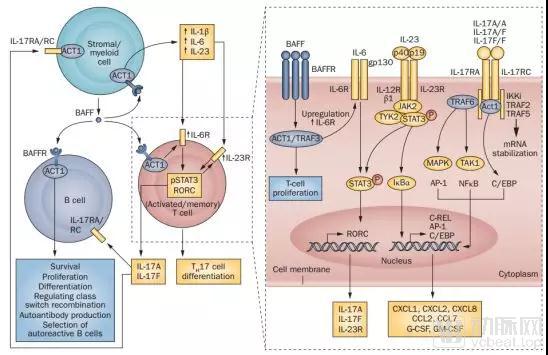
Data source: Nature Reviews
Autolus CD19/CD22 Dual-Target CAR-T Therapy
Obtained FDA Orphan Drug Designation
The FDA recently granted orphan drug designation to Autolus Therapeutics’ CD19/CD22-targeted CAR-T therapy, AUTO3, for the treatment of acute lymphoblastic leukemia (ALL). This therapy has the potential to become the optimal treatment for pediatric ALL.
AUTO3 contains two chimeric antigen receptors, with each receptor independently targeting CD19 and CD22.
Inclusion Criteria and Study DesignThis approval is based on data from Phase 1/2 clinical trials.
Experimental results demonstrate that this therapy more effectively addresses antigen escape and exhibits a superior safety profile compared to other CAR-T therapies.
CRISPR Therapeutics Hematopoietic Stem Cell TherapyFDA-approved
Fast Track Designation for the Treatment of Transfusion-Dependent β-Thalassemia
CRISPR Therapeutics and Vertex announce that the CTX001 therapy, developed through their collaboration, has been granted Fast Track designation by the FDA for the treatment of transfusion-dependent beta-thalassemia.
CTX001 is an autologous hematopoietic stem cell therapy utilizing CRISPR/Cas9 gene editing.
Inclusion Criteria and Study DesignAn open-label Phase I/II clinical trial will evaluate the safety and efficacy of a single dose of CTX001 in patients aged 18–35 years with transfusion-dependent β-thalassemia of non-β0/β0 subtypes. The first patient was treated in February this year.
The trial is ongoing.
Keytruda in Combination with Inlyta
Approved for First-Line Treatment of Advanced Renal Cell Carcinoma
FDA Announces Approval of Merck’s Keytruda in Combination with Inlyta (axitinib) for First-Line Treatment of Advanced Renal Cell Carcinoma (RCC).
Keytruda is an anti-PD-1 monoclonal antibody. Inlyta is a tyrosine kinase inhibitor (TKI) developed by Pfizer.
Inclusion Criteria and Study DesignThis approval is based on the randomized, double-blind, active-controlled Phase 3 clinical trial named KEYNOTE-426. A total of 861 patients with advanced renal cell carcinoma were randomized into two groups to receive treatment.
Patients receiving the Keytruda/Inlyta combination therapy demonstrated a longer progression-free survival (15.1 months vs. 11.1 months), with interim analysis showing that this regimen reduced the risk of death by 47%.
IBI318, a PD-1/PD-L1 Bispecific Antibody Co-developed by Eli Lilly and Innovent
China Phase I Clinical Trial: First Patient Dosed
Innovent Announces First Patient Dosed in China Phase I Clinical Trial of IB1318, a PD-1/PD-L1 Bispecific Antibody Co-developed with Eli Lilly. This Marks the World’s First PD-1/PD-L1 Bispecific Antibody to Enter Clinical Trials.
IB1318 bridges PD-1-expressing T cells and PD-L1-expressing tumor cells, while simultaneously blocking the signaling pathways of both.
Inclusion Criteria and Study DesignThe Phase I clinical trial CIBI318A101, initiated in China, will be used to evaluate the safety, tolerability, and antitumor activity of monotherapy in subjects.
Clinical trial in progress.
Novel Immunotherapy for Triple-Negative Breast Cancer
INT230-6 Receives FDA Fast Track Designation
INT230-6, a novel immunotherapeutic injectable developed by Intensity Therapeutics using its DfuseExSM technology platform, has been granted Fast Track designation by the FDA.
INT230-6 consists of two potent anticancer agents and one permeation-enhancing molecule, which rapidly disperse and penetrate into cancer cells via proprietary technology.
Inclusion Criteria and Study DesignIntensity is conducting a Phase 1/2 clinical study of the drug (NCT0358289).
Preclinical studies have demonstrated that treatment with the INT230-6 intratumoral model significantly improves overall survival in patients with advanced cancer.
Gilead’s New NASH Drug Selonsertib
Suffering a Second Phase III Clinical Trial Failure
Gilead recently announced that its drug Selonsertib, for the treatment of non-alcoholic steatohepatitis (NASH), failed to meet the primary endpoint in the second Phase 3 trial, Stella-3. In February this year, Selonsertib missed the primary endpoint in its first Phase 3 study.
Selonsertib is a small-molecule inhibitor of ASK1. ASK1 is an enzyme that promotes inflammatory responses and surface fibrosis.
Inclusion Criteria and Study DesignStella-3 is a randomized, double-blind, placebo-controlled Phase 3 clinical trial. The primary endpoints include the proportion of patients with improvement in fibrosis by at least one stage according to the NASH CRN classification without worsening of NASH at Week 48, and event-free survival rate at Week 240.
A study of 802 patients showed that the proportions of patients who experienced at least a one-stage improvement in fibrosis without worsening of NASH at 48 weeks were 12.1% and 9.3% among those receiving 6 mg or 18 mg of selonsertib daily, respectively; neither group met the 13.2% observed in the placebo group.
NASH is the most common chronic liver disease worldwide. There are currently no specific therapeutic agents available; the mechanisms of action for drugs currently in clinical trials primarily involve anti-metabolic, antioxidant, and anti-fibrotic effects.
Current Major Therapeutic Targets and Pathways for NASH
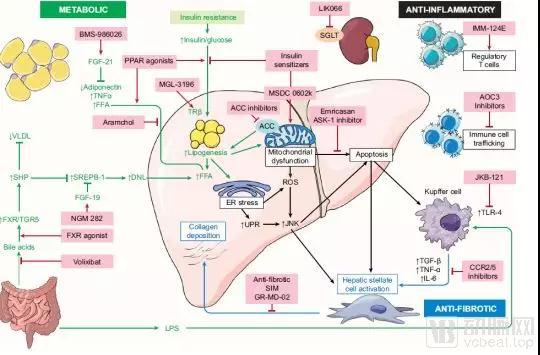
Data Source: Journal of Hepatology
Eli Lilly's Soft Tissue Sarcoma Drug Lartruvo
Withdrawal from the market due to unsatisfactory post-marketing clinical trials
Eli Lilly Announces Withdrawal of Soft Tissue Sarcoma Drug Lartruvo (Olaratumab) After Two and a Half Years on the Market. In the post-marketing Phase 3 ANNOUNCE trial, Lartruvo failed to demonstrate a survival benefit in the overall treatment population. The drug was previously approved in October 2016, marking the first FDA-approved therapy for soft tissue sarcoma in more than 40 years. Global sales revenue for Lartruvo reached $305 million in 2018.
Olaratumab is a monoclonal antibody drug targeting the platelet-derived growth factor receptor (PDGFR).
Inclusion Criteria and Study DesignThe ANNOUNCE trial is a randomized, double-blind, Phase 3 clinical study of Lartruvo in combination with doxorubicin.
Lartruvo in combination with doxorubicin failed to prolong survival in patients with soft tissue sarcoma compared with doxorubicin alone (20.4 months vs. 19.7 months), and even showed inferior median progression-free survival relative to doxorubicin monotherapy (5.4 months vs. 6.8 months).。
Teva Pauses Clinical Study of Ajovy for Cluster Headache
Based on the analysis of experimental results indicating that Ajovy (fremanezumab) was unlikely to meet the primary endpoint during the treatment period for cluster headache, Teva decided to discontinue the clinical development program of Ajovy for this indication.
Teva’s product is the second calcitonin gene-related peptide (CGRP) monoclonal antibody approved for marketing worldwide, having received approval in September 2018 for the preventive treatment of migraine in adults.
Inclusion Criteria and Study DesignThe suspension of the research program is primarily based on the Phase 3 clinical trial ENFORCE study for episodic cluster headache.
Futility analysis indicated a low probability of the drug achieving the primary endpoint, defined as the change from baseline in the mean weekly frequency of cluster headache attacks, during the 4-week treatment period.
Pfizer/Eli Lilly Announce Novel Anti-NGF Drug
Phase 3 Clinical Trial Results of Tanezumab,Grim Outlook
Pfizer and Eli Lilly recently announced the top-line results of the Phase 3 clinical trial for tanezumab, a novel non-opioid analgesic jointly developed by the two companies; the results were disappointing.
Tanezumab is a humanized monoclonal antibody that targets and inhibits nerve growth factor (NGF).
Inclusion Criteria and Study DesignClinical trial A4091058 was a randomized, double-blind, active-controlled, multicenter, parallel-group study in which patients with moderate-to-severe disease received either subcutaneous tanezumab or oral NSAIDs for a total of 56 weeks of treatment.
Only high-dose tanezumab demonstrated significant efficacy, but it was also associated with a markedly increased incidence of joint-related adverse events; the safety concerns observed are consistent with previous findings from studies on NGF inhibitors.

●Lilly Announces Collaboration with Avidity Biosciences to Develop RNA Therapeutics Using Avidity’s Antibody-Oligonucleotide Conjugate Platform. This platform offers superior pharmacokinetic and biodistribution profiles compared to conventional technologies, while avoiding the toxic side effects associated with lipid-based oligonucleotide delivery.
●Henlius Announces Marketing Application for Its Biosimilar Trastuzumab HLX02, the First Trastuzumab in China to File for Market Approval Based on Head-to-Head International Multicenter Phase III Clinical Trials Conducted in Accordance with the 2015 “Technical Guidelines for the Research and Evaluation of Biosimilars (Trial)”. Roche’s trastuzumab has been marketed globally for 21 years, achieving global sales of USD 6.848 billion in 2018 and approximately RMB 2.7 billion in China.
●Hansoh Announces NDA Submission in China for Its Class 1 Novel Drug, Osimertinib Mesylate, for the Treatment of Patients with Locally Advanced or Metastatic Non-Small Cell Lung Cancer Harboring EGFR T790M Resistance Mutations. This Marks the Second Third-Generation EGFR-TKI to Seek Market Approval Following Aivitinib.
●Hengrui Announces Clinical Trial Approval of DDO-3055, a Novel Drug for Anemia in Chronic Kidney DiseaseHengrui has announced that its new drug DDO-3055, indicated for the treatment of anemia associated with chronic kidney disease (CKD), has received approval for clinical trials. The drug is positioned to compete with roxadustat. To date, Hengrui has invested approximately RMB 13.1 million in the research and development of DDO-3055.
●Eli Lilly announced the sale of its two antibiotics marketed in China, Ceclor and Vancomycin (Vancocin), along with its Ceclor manufacturing plant in Suzhou, to Yiteng Pharmaceutical for $375 million. The transaction is expected to be completed in the second half of 2019 or early 2020. Going forward, Eli Lilly will focus more on the development of innovative drugs in China.
●KeWang Pharma recently announced a strategic partnership with U.S.-based Bio-Techne Corporation to leverage Bio-Techne’s antibody library for the development of innovative immuno-oncology antibody therapeutics.
●Fulcrum Therapeutics Announces Acquisition of Global Rights to GSK’s Former Cardiovascular Drug Losmapimod, Following Its Clinical Failure, for Up to 10% Equity Stake; Fulcrum Will Continue to Explore the Drug’s Potential in Treating Facioscapulohumeral Muscular Dystrophy (FSHD)