

TKBB Dental Charts a Differentiated Path in China's Maturing Chain Dental Market Through Advanced Implantology
With the development of the national economy, the overall consumption level of urban residents has increased, and there is a clear trend of consumption upgrading in the medical services industry. As people pay more attention to improving their quality of life, the demand for oral health maintenance and treatment has risen significantly. Public data shows that China sees approximately 250 million dental visits annually. In recent years, domestic chain dental clinics have made substantial progress. What will be the direction of future development? This is a question that practitioners in the chain dental sector need to consider.
As China’s largest dental chain, Taikang ByBo Oral has adopted a differentiated development strategy that integrates “academia, technology, and distinctive specialties.” To advance its dental implant expertise, Taikang ByBo leverages the group’s talent pool and draws on tens of thousands of annual clinical cases within the group. Grounded in evidence-based medicine, it continuously pursues innovation and has established the IDDC (Implant Diagnosis and Design Center) for complex dental implant cases. The center focuses on developing multi-pathway solutions for high-difficulty implant cases, thereby strengthening its distinctive capabilities and competitive advantages in implant dentistry. Taikang ByBo is committed to the continuous improvement of dental implant techniques. In line with the ongoing digitalization and networking of modern medicine, it empowers clinicians through digital tools to achieve standardization and consistency in implant procedures.
Professor Zhou Lei, Chairman of the Academic Committee on Dental Implantology at ByBo Oral Medical Group (Taikang), told VCBeat, “Humans have only two sets of natural teeth: primary teeth and permanent teeth. Once permanent teeth are lost, the biomechanical forces exerted on teeth restored by other methods differ fundamentally from those on natural teeth. Natural teeth transmit occlusal forces directly to the alveolar bone, and dental implants most closely mimic this force distribution pattern.”

Professor Zhou Lei (Photo provided by the interviewee)
However, not every patient with missing teeth is a suitable candidate for straightforward dental implant placement. Patients with severe maxillary bone atrophy and insufficient bone volume require bone augmentation procedures to increase the bone quantity in the implant site. Commonly used bone augmentation techniques include bone grafting, guided bone regeneration (GBR), bone splitting, maxillary sinus floor elevation, and distraction osteogenesis.
How to Provide the Best Treatment Plan for Patients: Professor Zhou Lei Believes It Should Be Based on the Principles of Evidence-Based Medicine, Namely: “Carefully, Accurately, and Wisely Apply Available Reliable Clinical Evidence, Combined with Physicians’ Professional Expertise and Clinical Experience, to Select Personalized Treatment Plans Suitable for Patients, While Fully Reflecting Their Preferences and Values.”
Professor Zhou Lei explained, “Tooth loss is not typically a life-threatening condition. Patients seek dental implants primarily to improve their quality of life. Therefore, while advancing technological innovations and addressing clinical challenges in oral implantology, we must also strive to enhance patient experience, ensuring that treatment and care are delivered in a comfortable and relaxed manner.”
ByBo Oral, in its technological innovation, conducts technical exploration based on evidence-based medicine, continuously promoting the development of bone augmentation techniques toward simplicity, minimal invasiveness, and reliability.
Taking maxillary sinus floor elevation as an example of bone augmentation techniques, the presence of the maxillary sinus constitutes a major obstacle to dental implantation in the posterior maxilla. Maxillary sinus floor elevation involves detaching and lifting the Schneiderian membrane from the sinus floor, followed by the placement of bone graft materials between the elevated membrane and the bony floor. This procedure effectively increases the vertical height of the alveolar bone at the sinus floor, thereby meeting the requirements for dental implant placement. Currently, this approach is regarded as the most effective and reliable method for addressing insufficient bone volume in the posterior maxillary region.
Maxillary sinus floor augmentation is a safe and reliable technique; however, it demands high levels of surgical skill and theoretical knowledge from the practitioner. Improper execution may lead to complications such as Schneiderian membrane perforation, hemorrhage, and infection.
In light of this technique, Professor Zhou Lei, having accumulated extensive clinical experience in maxillary sinus floor augmentation, continues to explore ways to perform the procedure more safely, simply, and minimally invasively, while also investigating strategies to ensure long-term stability following implant placement after maxillary sinus floor augmentation.
While scaling new heights in technological complexity, ByBo Oral Medical Group is also making significant efforts to standardize and ensure consistency in its technical practices.
Li Qiang, Deputy Director of the Academic Committee on Dental Implantology at ByBo Oral Medical Group and Director of the ByBo IDDC Implant Consortium, stated, “Leveraging our extensive network of over 200 clinics across more than 50 cities in China, we enhance technical training through online consultations and implant treatment planning. This enables dentists at individual clinics to receive one-on-one mentorship from experts, either remotely or via hands-on, on-site instruction. For complex cases, internal referrals ensure that patients receive optimal treatment.”
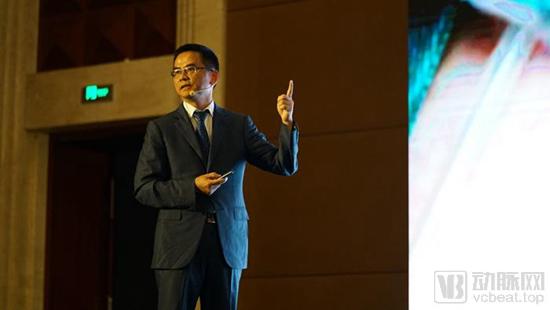
Director Li Qiang (Photo provided by the interviewee)
In addition, Taikang ByBo has established a three-tier physician responsibility system through digital technologies.
Professor Zhou Lei stated, “Healthcare traditionally follows a three-tier physician responsibility system. This signifies that any treatment plan should be the product of teamwork, collaboratively developed by professors, attending physicians, and resident physicians. However, in the dental industry, it is often the case that a single dentist determines the entire treatment process. Through digitalization, Taikang ByBo incorporates the opinions and guidance of senior experts into the design of patient treatment plans, ensuring that implant surgeries performed at any Taikang ByBo location adhere to unified standards and quality.”
Regardless of whether the implant case is simple or complex, the dentist comprehensively evaluates the patient’s overall oral condition and formulates a preoperative plan in advance. All aspects of the dentist’s intended approach and the subsequent surgical workflow are predefined. Through repeated practice, the attending dentist can achieve proficiency in digital technologies, thereby steering dental implantology toward greater precision, minimally invasive techniques, and standardization. This enhances implant outcomes and strengthens the reputation of Taikang ByBo.
Within ByBo’s strategic framework of in-depth breakthroughs through “academics + technology + service,” the IDDC Center for Diagnosis and Treatment Planning of Complex Dental Implant Cases serves as the vanguard of technological innovation and development.
Taking zygomatic and pterygoid implantation as an example, this is a technique for treating patients with severe bone deficiency. The zygomatic implant technique involves placing implants into the zygomatic bone, the hardest bone in the human face. Pterygoid implantation involves placing dental implants into the "pterygoid plate," an extremely hard bone structure located near the junction of the maxillary tuberosity and the pharynx. These two techniques are also vividly referred to as "soilless cultivation" techniques.
Xiong Jingyu, Standing Committee Member of the Oral and Maxillofacial Imaging Professional Committee of the Beijing Stomatological Association and Chairman of the Academic Committee of Oral and Maxillofacial Surgery at ByBo Oral Medical Group (Taikang), stated: “For cases involving severe maxillary atrophy, zygomatic and pterygoid implant techniques can eliminate the dependence on bone grafting, significantly meeting patients’ needs for fixed occlusion, and expanding the scope of dental implantology. These approaches also reduce complications and shorten surgical time.” Performing zygomatic and pterygoid implant surgeries requires a thorough understanding of the adjacent arteries, veins, and nerves in the surgical field; damage to these anatomical structures can lead to various complications.
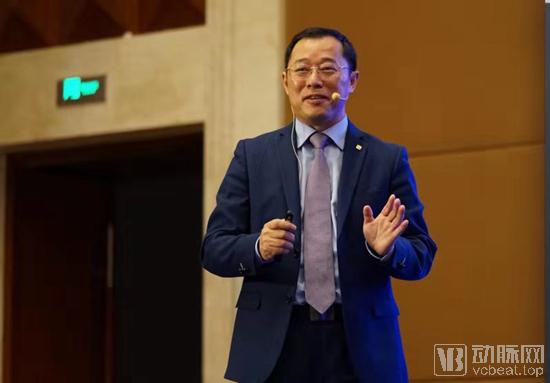
Dr. Xiong Jingyu (Photo provided by the interviewee)
Director Li Qiang stated, “Due to the longer implant length, superior placement, deeper positioning, and close proximity to critical anatomical structures, zygomatic implantation is highly technique-sensitive. We adopted this technology at an early stage and have practiced it for an extended period, conducting research on a large number of complex implant cases and accumulating extensive practical experience.”
Zygomatic and pterygoid implantation provides an alternative option for cases with severe maxillary atrophy. Some patients can even complete full-mouth implant restoration in a single day, with immediate loading.
This is particularly true in China, where limited public awareness of oral health has led to a higher prevalence of complex cases compared to abroad. Director Li Qiang stated, “The number of cases requiring zygomatic implant surgery is lower overseas than in China. In developed countries, greater oral health awareness means that dental care primarily focuses on basic treatments. Consequently, the proportion of dental implant services offered by foreign institutions is generally low, whereas in China, large-scale dental medical institutions derive a significantly higher share of their business from dental implants.”
The ability to conquer the pinnacle of highly complex technologies is inseparable from the continuous exploration by physicians at the IDDC Center. Take Dr. Xiong Jingyu, an expert at the IDDC Center, as an example. A graduate of West China University of Medical Sciences with a specialty in oral and maxillofacial surgery, Dr. Xiong participated in maxillofacial surgeries—excluding ophthalmic procedures—during his advanced clinical training. These experiences provided him with the confidence to expand the boundaries of dental implantology, while the drive to resolve patients’ complex clinical challenges has been his motivation for mastering high-difficulty techniques.
The IDDC Center, established under the leadership of several experts from ByBo Oral, serves multiple functions: to provide every patient with the optimal treatment plan, actively explore new technologies, and drive technological advancements in the dental implant industry. This year marks the second anniversary of the IDDC Center, and ByBo Oral has a long journey ahead.