

Infervision Achieves Breakthrough with 21 Deep Learning Research Papers Accepted at RSNA 2019, Powered by InferScholar® Center

Infervision
Artificial Intelligence Product Developer
Clinical Practice and Research Are Two Core Components of a Physician's Career.
For a long time, assisting physicians in diagnosis and treatment has been the foothold for many medical AI companies to establish themselves in the industry. However, most enterprises have focused solely on the clinical care process, overlooking the core needs of “scientific research.” Infervision was among the earliest companies to identify this demand. By developing the AI-powered research platform InferScholar® Center, it aims to provide physicians with efficient research support.
Deep learning is the most cutting-edge technology in the field of medical imaging today, holding the greatest potential for development and innovation. However, due to a general lack of technical background and effective tools among physicians, the number of deep learning research findings that can be published remains limited, even at top-tier global medical imaging conferences such as the RSNA Annual Meeting.
。
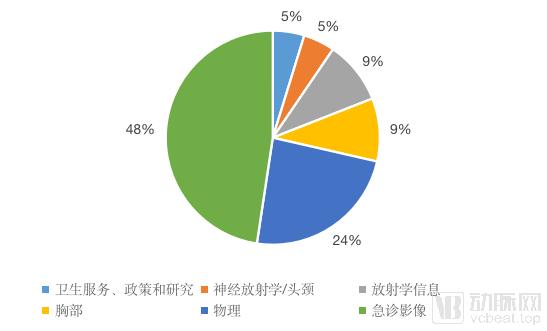
In April 2019, Infervision’s AI Scholar Research Platform and its team of scientists assisted multiple partner hospitals in launching their first large-scale clinical research initiatives based on deep learning and submitting abstracts to the Radiological Society of North America (RSNA), drawing widespread attention within the industry. Four months later, radiologists from around the world who had submissions accepted by RSNA began receiving confirmation notices. The results showed that a total of 21 deep learning-based research achievements from Infervision and its partner hospitals were accepted for presentation, including 6 Scientific Papers (oral presentations) and 15 Scientific Posters. This figure surpassed the total number of RSNA acceptances in the field of deep learning by scholars from mainland China in 2018.
Infervision informed VCBeat that these 21 research achievements were contributed by a total of ten institutions, comprising nine partner hospitals and Infervision itself. Among the partner hospitals are many renowned Grade-A tertiary hospitals, including China-Japan Friendship Hospital, The First Affiliated Hospital of Zhengzhou University, Zhongshan Hospital Affiliated to Dalian University, Union Hospital Affiliated to Fujian Medical University, and Beijing Children’s Hospital. The studies cover various fields such as physics, thoracic imaging, emergency radiology, and neuroradiology.
The AI research platform, InferScholar® Center, plays a pivotal role in RSNA submissions. This integrated medical artificial intelligence solution, combining hardware and software, facilitates research in medical imaging big data management and analysis, data annotation, deep neural network model construction, radiomics feature extraction, omics feature analysis, and machine learning model development. It supports deep learning and radiomics modeling for various imaging modalities, including X-ray, CT, MRI, PET/CT, pathological slides, and digestive endoscopy. In addition to medical imaging data, it integrates structured clinical text information to investigate diverse medical hypotheses.
Physicians participating in the study can leverage InferScholar® Center to build proprietary AI models for research, autonomously selecting data, architectures, logic, parameters, and other elements for AI incubation. This approach ensures that the AI aligns more closely with the specific characteristics of medical practices, thereby facilitating greater scientific achievements from a clinical perspective. The launch of this product addresses current physician needs: an increasing number of medical researchers not only wish to utilize AI products but also aim to conduct independent clinical AI research by leveraging their advantages in medical big data and clinical experience.
In terms of specific operations, physicians need only enter the relevant data via the interface and configure the corresponding parameters to complete the preparation. For each parameter adjustment, the system provides a visualized output, allowing physicians to optimize the existing model based on the predefined structure. Once the preparation is complete, the platform processes the provided data using its mature algorithms, and physicians simply await the platform’s execution and the resulting outputs.
In terms of security, InferScholar® Center fully addresses the safety requirements of clinical medical research by adopting an integrated hardware-software appliance model that is delivered directly to hospitals. Notably, the system can operate in an environment completely isolated from the internet, ensuring that data remains within the hospital premises and eliminating any risk of leakage for all scientific research data, model algorithms, and research outcomes.
Currently, Infervision’s InferScholar® Center is the only truly integrated research platform that combines deep learning models, radiomics, and other functionalities, providing substantial support for hospital-wide, all-disease, multi-modal, and large-scale scientific research.
For Infervision, this is not a product built from scratch. Its development has already incorporated Infervision’s own requirements, extensive needs from partner hospitals, as well as real-world applications and feedback. Since its launch, numerous typical cases have emerged, such as research projects at Shanghai Changzheng Hospital and submission support for the RSNA.
Research capability is, in fact, a marker of a medical AI company’s technological reserves and development potential.
Infervision boasts the industry’s unique “dual-institute” framework. Its Global Clinical Research Institute (iCR) is responsible for clinical research collaborations with hospitals, leveraging Infervision’s leading AI products and services to support scientific research at partner institutions. Meanwhile, its Advanced Research Institute primarily undertakes the company’s internal scientific research and product pre-development tasks.
“The Dual-Hospital” system brings together Dr. Shen Yun, Dean of iCR, along with numerous industry leaders and outstanding scientists, strengthening the AI research platform InferScholar® Center. This tripartite research framework constitutes Infervision’s core strength.
The technical capabilities of InferScholar® Center and the service capabilities of the global clinical research collaboration academy (iCR) were key to achieving breakthrough progress in submissions to RSNA 2019. Dr. Shen Yun stated that this achievement belongs not only to Infervision and its nine partner hospitals, but also to every radiologist and scientist in China who leverages deep learning technology for scientific research.
In fact, the outputs of Infervision’s tripartite research and development system extend beyond RSNA. Recently, joint research findings by Infervision and Nanjing Drum Tower Hospital were published in EBioMedicine, a subsidiary journal of The Lancet. The study proposed methods to reshape radiology workflows using AI technology and has attracted widespread attention. Furthermore, research results from collaborations with top-tier Grade 3A hospitals, such as Shanghai Changzheng Hospital and Fuwai Hospital of the Chinese Academy of Medical Sciences, have been successively published, demonstrating the robust capabilities of Infervision’s multidimensional research ecosystem.
In 2019, many leading AI imaging companies sought to find their own direction amidst the transformation. For Infervision, its research platform undoubtedly became an important avenue for expanding its business lines.
By expanding its business based on the actual needs of physicians, Infervision not only effectively helps doctors address their research requirements but also plays a significant role in its own development. Leveraging its research platform, Infervision can attract more top-tier medical talent while simultaneously enhancing its brand visibility through the dissemination of research outcomes.
As Dr. Shen Yun stated, “The achievements belong to every Chinese scholar.” Infervision’s research platform not only assists doctors and the company itself but also plays a pivotal role in promoting Chinese medical research outcomes on the global stage.
By simultaneously advancing auxiliary clinical diagnosis and treatment alongside auxiliary scientific research, Infervision has bridged the gap between the two, driving clinical practice toward research and enabling research to reshape the path of clinical care. Undoubtedly, this was the most significant step taken by Infervision in 2019.