

RegionTech: Pioneering AI-Driven Healthcare Solutions Centered on Physicians' Real Needs
Unlike most developers of medical assistive devices that are hospital-oriented or patient-centric, Yanjing Information Technology (Shanghai) Co., Ltd. (hereinafter referred to as “Yanjing Tech”) has chosen a development path centered on physicians. This R&D approach faced considerable skepticism during the company’s early stages. However, for Zhao Liang, who has worked in tertiary Grade A hospitals for over a decade, focusing on the critical needs of physicians is the key to effectively implementing artificial intelligence in clinical settings.
Zhao Liang is the founder of Yanjing Technology. When he served as a department director at a Grade 3A hospital, computer-aided diagnosis (CAD) was already gaining widespread adoption. However, he told VCBeat that these auxiliary devices played only a superficial role in clinical settings, failing to address physicians’ core unmet needs.
Meanwhile, Zhao Liang candidly stated that the future development of healthcare will undoubtedly rely on the integration of artificial intelligence (AI) technology. However, the effective implementation of AI in clinical settings hinges on three key factors: national policies, primary care information systems, and interdisciplinary talent proficient in both medicine and computer science.
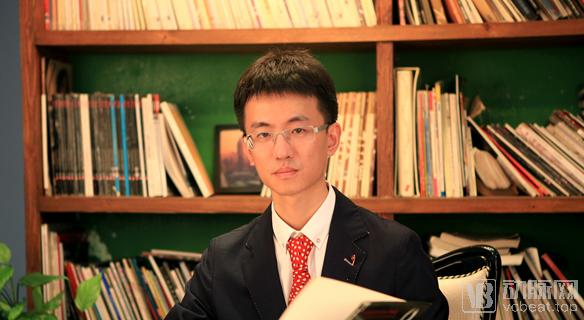
Zhao Liang, Founder of Yanjing Technology (Image provided by the company)
Zhao Liang himself is an interdisciplinary talent who possesses both technical expertise and medical proficiency. He holds a Bachelor’s degree in Physics from Nankai University, a Master’s degree in Medical Physics from the University of Surrey in the United Kingdom, and a Ph.D. from the Digital Medicine Research Center at Fudan University. In 2016, he resigned from his stable position as a department director at a hospital to found Yanjing Technology.
In addition to Zhao Liang, the company’s partnership team comprises three other partners: founding partner Wu Xiaoqiang, founding partner Wang Jinxiang, and managing partner Wang Rui. Dr. Wu Xiaoqiang, who holds a Ph.D. in Engineering from the University of California, Los Angeles (UCLA) and previously served as Chief Architect at Autodesk China Research Institute, currently provides strategic guidance on the company’s product architecture design. Wang Jinxiang serves as the company’s Chief Technology Officer, bringing over a decade of experience in software engineering. Wang Rui oversees the company’s business operations, leveraging more than ten years of experience in managing commercial teams.
Yanjing Tech was founded with RMB 5 million in startup capital. “When the company was first established, we encountered difficulties in recruiting talent. As a startup, our brand recognition was limited, yet we had high expectations for candidates, which significantly narrowed our pool of viable applicants over an extended period,” described Zhao Liang, reflecting on the challenges faced during the early stages of entrepreneurship. “In addition to internal recruitment hurdles, we also confronted external obstacles. Yanjing Tech has always adhered to a physician-centric approach in product development. However, the prevailing market sentiment at the time favored using technological products to disrupt healthcare. Our core values diverged from this mainstream perspective and lacked market acceptance, which adversely impacted our fundraising efforts.”
Zhao Liang regarded all of this as a valuable learning experience. To his relief, two years later, people increasingly emphasized the integration of products with users and began to focus on clinical scenario-driven research and development.
The fundamental distinction between a physician-centric R&D approach and a product-centric one lies not only in differences throughout the development process but also in whether physicians ultimately adapt to the product or the product is tailored to fit physicians’ needs. Zhao Liang’s objective is to ensure the product seamlessly aligns with clinical workflows, enabling physicians to enhance their efficiency without any sense of friction—so intuitively that the device becomes virtually imperceptible during use.
Developing a product requires a clear understanding of the specific needs it aims to address for physicians; however, these needs vary significantly across different medical specialties. The first step in adopting a physician-centric approach to R&D is to gain a thorough understanding of what doctors truly require—a task that appears straightforward but is, in fact, quite challenging.
Zhao Liang explained, “In response to physicians’ personalized needs, other developers of medical auxiliary devices can only attempt to match those needs with their off-the-shelf products, which often fail to precisely meet clinicians’ essential requirements. Yanjing Technology, by contrast, translates physicians’ specific needs into technical specifications and customizes an AI-powered assistant to support accurate diagnosis, thereby improving the success rate of clinical diagnosis and treatment.”
Taking the clinical decision support needs of physicians for Moyamoya disease as an example, Moyamoya disease is a rare cerebrovascular disorder in which accurate diagnosis and treatment planning are critical. Responding to physicians’ needs, Yanjing Technology employed medical physics to develop domain-specific models and demonstrated preliminary operational performance through engineering translation. Through iterative refinement in close collaboration with clinicians, the company achieved rapid product iteration. Within just two months, Yanjing Technology delivered a customized, comprehensive toolset that enables physicians to accurately assess disease status during diagnosis and formulate corresponding treatment plans.
As of now, Yanjing Technology has participated in the research and development of more than ten AI-assisted physician projects. By leveraging advanced technologies such as edge computing and IPFS, the company has built a decentralized distributed system to ensure secure, precise, and efficient data flow, thereby intelligently responding to healthcare demands.
According to Zhao Liang, Yanjing Technology has partnered with dozens of Grade 3A hospitals, gathering requirements from hundreds of physicians. The company is also collaborating with leading academic institutions to develop corresponding AI-assisted diagnostic tools.
“Everyone likes to talk about using AI to empower doctors, but Yanjing Technology positions itself as using AI to connect doctors and thereby create value.” Zhao Liang described the positioning of Yanjing Technology in this way, adding, “Not all medical problems can be solved through technology. Yanjing Technology plays the role of a ‘transformer.’ After customizing AI-assisted tools for doctors, it gathers those who use the tools on its technical platform, connecting physicians’ needs with technological products to provide them with substantive assistance.”
Facing the group of doctors with special needs, Yanjing Technology customizes AI-assisted products for them to create value. Doctors can communicate with technical personnel on Yanjing Technology's technology platform, prompting the platform to develop corresponding intelligent applications that are fed back to the doctors. When enough doctors gather on the platform, forming a specialized community platform, all platform doctors can use Yanjing Technology's products for their daily work.
Zhao Liang told VCBeat that Yanjing Technology has currently supported the development of several physician groups, including those in oral and maxillofacial surgery. The company provides AI-assisted tools to maxillofacial surgeons to help enhance their aesthetic surgical capabilities. In the future, Yanjing Technology is poised to develop a network platform where physicians and technology mutually drive each other’s advancement.
Currently, Yanjing Technology has completed a RMB 5 million angel financing round in 2018. The company is actively seeking the next round of financing, and the proceeds will be mainly used for product promotion.