

Lanfan Medical Acquires Swiss Heart Valve Company NVT to Enter High-Growth TAVR Market

Bluesail Medical
Producers of Medium-Low Value Consumables and High-Value Medical Devices
On the evening of August 2, Bluesail Medical Co., Ltd. (abbreviated as: Bluesail Medical, 002382.SZ) announced its intention to acquire 100% equity interest in New Valve Technology (abbreviated as: NVT), a Swiss developer and manufacturer of transcatheter interventional heart valves, with a total consideration of RMB 1.39 billion for the acquisition and subsequent capital injection.
This acquisition will help Bluesail Medical further expand its portfolio of high-value consumables in the cardiovascular field, bringing in a flagship medical device at the forefront of international technology—the Transcatheter Aortic Valve Replacement (TAVR) system.
With this move, Bluesail Medical’s product portfolio in the field of cardiovascular and cardiac disease treatment devices has expanded from coronary stents, drug-coated balloons, and left ventricular assist devices (artificial hearts) to the structural heart disease sector, making its industrial landscape more diverse and comprehensive. The outline of Bluesail Medical as a multinational platform company in the cardiovascular field is becoming increasingly clear.
So, how should we interpret the TAVR landscape? And what kind of company is NVT, which was acquired by Bluesail Medical?
TAVR: The Future Mainstay in the Treatment of Aortic Valve Disease
According to the announcement by Bluesail Medical, NVT is a medical device company specializing in the field of heart valves, with its core product being the Allegra™ TAVR system, which is primarily used to treat aortic stenosis.
The aortic valve is one of the four valves that regulate blood flow into and out of the heart. Located between the left ventricle and the aorta, it functions like a one-way valve: when closed, it prevents backflow of blood from the aorta into the left ventricle; when open, it facilitates the pumping of blood from the left ventricle into the aorta during cardiac contraction.
If the aortic valve becomes diseased or dysfunctional, it can lead to blood regurgitation and reduced blood flow into the aorta, resulting in insufficient systemic perfusion. Mild cases may present with fatigue, dizziness, and palpitations, along with limited exercise tolerance, while severe cases can progress to heart failure, syncope, cardiogenic shock, or even sudden cardiac death.
Aortic Stenosis (AS) is one of the most common valvular heart diseases worldwide, with a prevalence of approximately 7% among individuals aged 65 and older. Once symptoms of severe aortic stenosis manifest, the average two-year survival rate is 50%, and the five-year survival rate drops to merely 20%, indicating high morbidity and mortality. When the condition progresses to severe symptomatic aortic stenosis, valve replacement therapy is required. With global population aging, the number of patients affected by this disease continues to rise sharply.
TAVR, or Transcatheter Aortic Valve Replacement, is a revolutionary cutting-edge technology for treating aortic valve stenosis and represents one of the most rapidly advancing frontiers in interventional cardiology. As a minimally invasive valve replacement procedure, TAVR eliminates the need for open-chest surgery. Instead, it utilizes transcatheter techniques via vascular access to deliver and deploy a prosthetic heart valve at the aortic valve site, thereby completing the valve replacement and restoring valvular function.
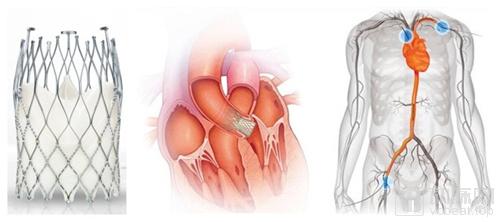
TAVR
Prior to the advent of TAVR, treatment options for many patients with aortic stenosis were limited. Surgical aortic valve replacement (SAVR) was considered the optimal choice; however, the majority of patients faced prohibitively high surgical risks and died without receiving treatment due to their inability to tolerate open-heart surgery.
TAVR, a minimally invasive interventional therapy, emerged in this century. Its safety and efficacy have been confirmed by multiple large-scale, multicenter, prospective randomized controlled trials and clinical registry studies. Compared with traditional surgical SAVR, which requires open-chest surgery, TAVR, as a new surgical approach, demonstrates numerous advantages:
1) Efficacy is comparable to that of surgical SAVR;
2) Interventional procedures are minimally invasive and highly safe, making them suitable for a broader patient population;
3) The surgical procedure is less complex than SAVR and has better accessibility;
4) Rapid postoperative recovery with significant pharmacoeconomic advantages.
Given the significant advantages demonstrated by TAVR, coupled with the ongoing research and development upgrades of valve products and the accumulation of clinical experience among physicians, TAVR is poised to become the primary treatment modality, gradually replacing SAVR as the mainstream therapeutic approach for aortic stenosis.
In October 2018, the highly anticipated “Clinical Pathway for Transcatheter Aortic Valve Replacement (TAVR) in China 2018” was officially released, establishing a standardized pathway for the development of TAVR procedures in China and ushering in a new era of minimally invasive treatment for valvular heart disease.
Industry Giants Enter the TAVR Market, Targeting a Billion-Dollar Opportunity
In recent years, TAVR has remained a hot topic in cardiovascular academia and investment, with its prospects generally viewed favorably. Professor Martin Leon, Chair of TCT, predicts that by 2025, the global market value of TAVR will surpass that of coronary drug-eluting stents.
Since the first TAVR procedure was performed worldwide in 2002, more than 400,000 patients globally have undergone TAVR. Throughout this period, TAVR has continuously expanded its indication boundaries owing to its superior clinical outcomes. Notably, Edwards Lifesciences’ PARTNER series of clinical trials, along with Medtronic’s CoreValve US, SURTAVI, and EVOLUT LOW RISK clinical studies, have progressively extended TAVR indications from high-risk patients with severe aortic stenosis to those at intermediate and even low surgical risk.
Key milestones include: FDA approval for high-risk indications in 2011; approval for intermediate-risk indications in Europe and the United States in 2017; and the publication of excellent clinical results for relevant low-risk indications in 2019. With the expansion of indications and technological maturation, the volume of TAVR procedures has grown rapidly.
According to the latest data from the TVT CHICAGO conference, approximately 125,000 TAVR procedures were performed globally in 2018, with an annual growth rate exceeding 20%. In the United States and Germany, the annual volume of TAVR procedures has already surpassed that of traditional surgical interventions.
In contrast, transcatheter aortic valve replacement (TAVR) has emerged as a premier sector within the medical device industry. Industry data indicate that the global TAVR market reached $3.5 billion in 2018, was projected to exceed $5 billion by 2021, and is expected to nearly double to $7 billion by 2024. The compound annual growth rate (CAGR) from 2018 to 2024E stands at 12%, surpassing that of most other medical device subsectors globally and placing the field in a phase of rapid expansion.
Global leaders in the medical device industry have successively made strategic moves in this field, demonstrating strong consensus on the significant market potential of TAVR products.
In 2004, Edwards Lifesciences completed the acquisition of the Israeli interventional aortic valve technology company Percutaneous Valve Technologies (PVT) for $155 million, integrating its TAVR business with Edwards’ internal division. In 2007, it launched the world’s first commercialized TAVR product in Europe, thereby entering a phase of rapid growth. Over the following twelve years, Edwards Lifesciences maintained a steadfast strategic focus on the TAVR sector, investing heavily in the development of four generations of TAVR systems, which drove explosive growth in the company’s TAVR product revenue.
According to Edwards Lifesciences' annual report, TAVR products generated nearly $2.3 billion in revenue in 2018, accounting for 61.4% of its total revenue—more than half. Its stock price has also risen steadily alongside the development of TAVR products, achieving a legendary tenfold increase in market capitalization over a decade.
Medtronic acquired CoreValve for $850 million in 2009, marking the starting point for the development of its TAVR business. Boston Scientific expanded its European market by acquiring Symetis, a Swiss heart valve manufacturer, for $435 million in 2017.
Following the completion of its acquisition of NVT, Bluesail Medical will become the fifth company globally, after Edwards Lifesciences, Medtronic, Boston Scientific, and Abbott, to hold CE certification for TAVR products. Due to upcoming changes in EU CE registration regulations, it is expected that few companies, particularly Chinese enterprises, will be able to introduce TAVR products to the European market within the next two to three years. In China’s domestic TAVR market, only Venus Medtech and MicroPort CardioFlow’s minimally invasive TAVR products have currently received approval from the CFDA for market launch.
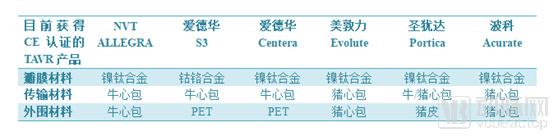
Although TAVR started late in China and is still in its infancy, it has developed rapidly. There are approximately 2.8 million patients with severe aortic stenosis in China, the vast majority of whom have not yet received treatment. Since the first TAVR procedure was performed in 2010, only more than 100 hospitals in over 20 provinces and municipalities have carried out nearly 2,000 TAVR procedures. This indicates that TAVR products have enormous market growth potential in China.
Bluesail Medical also announced that, concurrently with the release of this proposal, it will establish a subsidiary in China focused primarily on interventional devices for structural heart disease. Upon completion of the transaction, the company will immediately initiate clinical registration for TAVR in the Chinese market, leveraging NVT’s long-accumulated patents and core technologies as well as Biosensors International’s R&D capabilities in cardiovascular devices.
As China stands on the eve of a TAVR market boom, Bluesail Medical is poised to capitalize on the substantial growth dividends in the Chinese TAVR sector by leveraging its internationally leading product technologies, following the completion of clinical registration in the Chinese market within approximately three years. According to VCBeat (WeChat ID: vcbeat), Bluesail Medical will build on this foundation to continue expanding its R&D pipeline into interventional devices with broader market prospects, such as mitral and tricuspid valve systems, thereby securing its future position in the heart valve disease market.
According to Haitong Securities, the number of TAVR procedures will maintain explosive growth in the coming years. By 2025, the annual number of TAVR procedures in China is projected to reach 22,000. From 2027 to 2030, the TAVR industry is expected to enter a period of stable growth, with a compound annual growth rate (CAGR) of 26%. It is estimated that 113,000 TAVR procedures will be performed nationwide in 2030, driving the domestic terminal market size for TAVR valves to approximately RMB 14.7 billion. In the global market, estimates from the TVT Chicago conference suggest that the number of TAVR procedures worldwide will approach 290,000 by 2025. With global population aging and the development of the Chinese market, the ultimate global market potential for TAVR is estimated to reach USD 10–15 billion.
The continuous expansion of indications, the significant increase in the volume of TAVR procedures, and the ongoing upgrades in product technology have driven the rapid growth of the global TAVR industry. TAVR is poised to replicate the successful model of coronary stents in China, achieving high-speed development.
Renewed Push in Overseas M&A: Securing Targets at Reasonable Valuations
NVT was founded in 2007, with its headquarters in Muri, Switzerland, and its primary operations based in Hechingen, Germany. NVT’s TAVR product, Allegra™, received CE marking in 2017 and is currently being marketed across Europe. Only four major medical device giants—Edwards, Medtronic, Boston Scientific, and Abbott—have had similar products approved for marketing in Europe, offering a glimpse into the global technological leadership of NVT’s products.
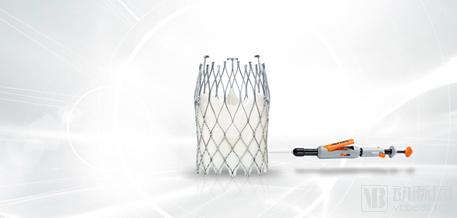
Allegra™ TAVR System
According to senior M&A professionals at international investment banks, the valuations for minority equity financings of TAVR-related companies that have not yet obtained CE registration currently range between RMB 1.2 billion and RMB 3 billion. In contrast, industry giants such as Medtronic and Boston Scientific previously acquired heart valve companies at valuations as high as USD 850 million and USD 435 million, respectively. By comparison, NVT, as the only TAVR asset available for sale with CE certification in the international market, clearly offers an attractive and scarce opportunity with its overall valuation of approximately EUR 140 million.
Significant synergies were likely the core reason enabling Bluesail Medical to acquire this high-quality asset at a favorable price. The intersection between Bluesail Medical and NVT had already begun earlier; in July 2018, Bluesail Medical entered into an agency agreement with NVT for the exclusive distribution of the Allegra™ product in the United Kingdom and Ireland.
From today’s perspective, Bluesail Medical has long been well aware of the performance, reputation, and market potential of NVT’s products. This acquisition is a natural outcome driven by its confidence in the product’s market prospects. Biosensors International, Bluesail Medical’s cardiovascular and cerebrovascular device platform, has its European headquarters in Switzerland and maintains a sales team of over one hundred people in Europe. Following the acquisition of NVT, both parties will fully leverage the synergies with Biosensors International’s European marketing network and customer resources, enabling more effective market entry and rapid commercialization of NVT’s products.
Meanwhile, in many countries and regions across Southeast Asia, Latin America, and other parts of the world that recognize CE certification, sales can commence immediately after completing a streamlined registration process, thereby maximizing the potential of Biosensors International’s global sales network and creating greater value.
Zhong Shuqiao, Vice President and Chief Capital Officer of Bluesail Medical, stated: “This acquisition of NVT will enable Biosensors International, a subsidiary of Bluesail Medical, to rapidly acquire mature products and technologies in the structural heart disease business, directly launch sales of its superior TAVR products in the European market and many other countries worldwide, and secure new growth drivers. Following the completion of the transaction, we will immediately initiate clinical trials in China, with the expectation of obtaining Chinese registration approval in approximately three years, thereby positioning ourselves to capitalize on the rapid growth phase of the Chinese TAVR market. Compared with other domestically produced alternatives, NVT’s TAVR product offers unique differentiated competitive advantages and is exceptionally user-friendly. We are confident that it will provide more options for physicians and patients in China.”
Reviewing Bluesail Medical’s M&A trajectory—from acquiring Biosensors International, the world’s fourth-largest manufacturer of cardiac stents, taking a stake in Suzhou Tongxin, a leading R&D enterprise specializing in fully magnetically levitated artificial hearts, to now increasing its investment in NVT to strengthen its position in the premium TAVR segment—each strategic move demonstrates clear industrial logic. The company consistently targets top-tier, scarce assets globally, with all investments closely aligned with the high-growth cardiovascular and cardiac medical device sectors, underscoring its international perspective and strategic vision.
Through this acquisition, Bluesail Medical has rapidly entered and precisely penetrated the TAVR market, acquiring industry-leading cutting-edge technologies and products. Meanwhile, it has fully leveraged synergies with its subsidiary Biosensors International’s global coronary intervention sales network and customer resources, realizing economies of scope and creating new profit growth drivers.
Since entering the high-value consumables sector, Bluesail Medical has adhered to a dual-drive development strategy of “organic growth + inorganic expansion” to deeply cultivate the medical device market. This overseas acquisition will further broaden Bluesail Medical’s product portfolio in international markets and reinforce its strategic layout in the Chinese market, propelling Bluesail Medical to evolve into a multinational medical device platform enterprise with China as its core and a global outreach.