

Song Donglei Decodes How Donglei Neurosurgery Group Served Over 6,500 Patients and Performed 3,000 Surgeries in Four Years to Successfully Establish a Physical Hospital
“Being good doctors in China, building a high-level international brain hospital with humanistic care, providing safety and assistance to patients, and fostering progress and happiness among employees” is the vision of Donglei Brain Hospital.
“Providing patients with safe, trustworthy, and compassionate medical care; upholding the dignity of Chinese physicians; and promoting high-level, high-efficiency development of social healthcare.” This is the mission of Donglei Brain Hospital.
Cerebrovascular Disease, Brain Tumors, Functional Neurosurgery, Spinal and Spine Specialty, Neurology, Sleep Disorders, Neurocritical Care, Neurorehabilitation......
The paramount importance of the brain is self-evident. Given its complexity and the high risks associated with neurological interventions, the siphon effect exerted by leading institutions and top-tier experts in the field has become increasingly pronounced. Against this backdrop, patients are flocking not only to tertiary Grade A hospitals but also to physicians with high public recognition.
In September 2015, Song Donglei joined forces with several other renowned neurosurgeons to establish China’s first independent physician group specializing in brain care, embarking on a path of independent practice. Four years later, the group has grown to include 24 physicians, provided consultations and treatment for over 6,500 patients, and performed 3,000 surgeries. The physical hospital entity they are developing is also poised to become operational soon.
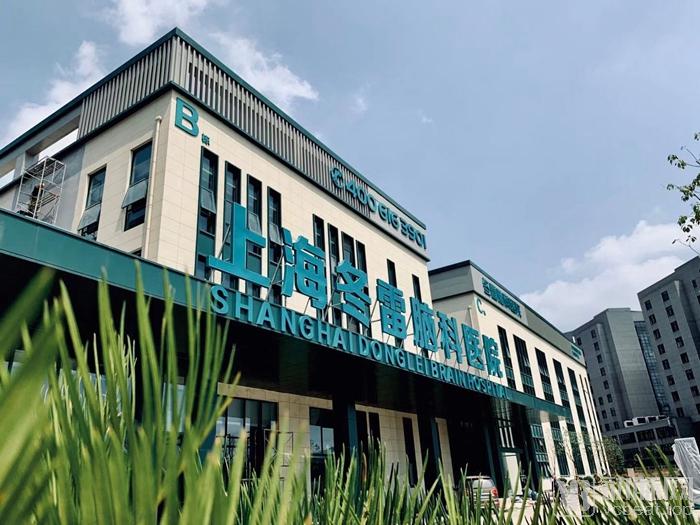
Exterior View of Donglei Brain Hospital (Image source: Provided by the company)
Donglei Brain Hospital is the first hospital in China established and built by a physician group. To understand how physician groups establish physical hospitals, VCBeat (WeChat ID: vcbeat) interviewed Song Donglei to gain further insights into the core priorities after a physician group launches a brick-and-mortar hospital.
Reviewing the development history of Donglei Brain Hospital: In September 2015, Donglei Brain Hospital was officially established; in October of the same year, the Donglei Brain Hospital Ruici Outpatient Base was founded. Relying on Shanghai Punan Hospital, the first surgical center—the Donglei Brain Hospital Clinical Base at Punan Hospital—was established, and the company secured angel-round financing amounting to tens of millions of yuan.
Leveraging this round of financing, Donglei Brain Hospital accelerated its early-stage team building, attracted multiple neurosurgeons to join on a full-time basis, and established a marketing and operations team. Subsequently, it forged multi-site practice partnerships with public and private hospitals in various regions, including Zhejiang and Jiangsu provinces. In 2016, it founded a training academy, and in 2017, it recruited local physicians in Sichuan Province to establish the Sichuan Branch of the Donglei Brain Hospital Physician Group.
2018 was a year of explosive growth for physician groups, with the number of newly registered physician group enterprises exceeding one thousand. Against this backdrop, the first batch of physician group enterprises, after three to four years of development, began seeking new opportunities. It was also in this year that Winter Lei Brain Hospital initiated its Series A financing round, raising over RMB 100 million, primarily to construct the Winter Lei Brain Hospital in Shanghai’s New Hongqiao area. This marked Winter Lei Physician Group’s entry into the capital-intensive model of building specialized physical hospitals.
In Song Donglei’s view, not all physician groups are capable of establishing physical hospitals. “Many founders of physician groups currently lack expertise in talent management, operations, and corporate culture. Running a hospital is not merely about operating a physician group; therefore, it is essential to accurately assess one’s own capabilities.”
First, there must be an expert team.
For a neurosurgical specialty, the expert team must be multidisciplinary. Currently, Donglei Brain Hospital boasts 40 experts and physicians, organized into six medical service teams: the Cerebrovascular Team, the Brain Tumor Team, the Spinal Cord and Spine Team, the Functional Neurosurgery Team, the Neurocritical Care Team, and the Neurorehabilitation Team.
Led by Professor Song Donglei, a renowned expert known as the “Dual-Gun Specialist,” our full-time physicians hold master’s or doctoral degrees from Huashan Hospital, doctoral degrees from Beijing Tiantan Hospital, and other prestigious institutions. They have long trained under distinguished mentors such as Professor Song Donglei and Professor Zhang Junting of Beijing Tiantan Hospital. Most have completed advanced fellowships in neurosurgery at leading domestic and international centers, including Huashan Hospital, Tiantan Hospital, the Barrow Neurological Institute (BNI) in the United States, and the University of Toronto Western Hospital in Canada.
Second, maintain a strong reputation.
A strong reputation is built on the high-quality services provided by Donglei Brain Hospital. Specializing in "specialized neurological diagnosis and treatment" and "lifecycle brain health management," Donglei Brain Hospital also offers specialized medical services in cerebrovascular diseases, brain tumors, functional neurosurgery, spinal and spinal cord disorders, neurology, sleep disorders, neurocritical care, and neurological rehabilitation.
In addition to its medical services, Donglei Brain Hospital is committed to delivering the optimal patient experience, fully addressing patients’ psychological needs and empowering them to face their illnesses with stability and composure. For instance, during treatment at Donglei Brain Hospital, efforts are made to preserve patients’ hair, and the hospital has independently developed specialized cleaning and care protocols to minimize the risk of infection. The hospital also guarantees that expert surgeons personally perform all operations and maintains a strict no-red-envelope (no under-the-table payments) policy.
Third, establish a strong management team
Whether it is a physician group or a hospital, relying solely on physicians is insufficient to sustain the expansion and operations of Donglei Brain Hospital. Song Donglei recognized this early on; therefore, since the inception of the physician group, he has deliberately cultivated and integrated a management team. The management team developed at Donglei Brain Hospital includes professionals responsible for medical quality management, hospital operations management, administrative management, brand building, nursing services, and other key areas.
Fourth, maintain strong operational metrics
To date, Donglei Brain Hospital has served over 6,500 patients, performed approximately 3,000 complex neurosurgical procedures, and provided treatment to numerous high-profile individuals. Many of these patients had previously been turned away by other hospitals.
Song Donglei stated that securing investor favor requires robust data. Hospitals are capital-intensive projects, necessitating significant investment in facilities, equipment, and a diverse range of talent. In contrast, physician groups operate under an asset-light model. By integrating human resources with core technical expertise and collaborating with other institutions, they can diversify their services and achieve scalability.
In 2018, Mayo Clinic reported a net income of $799 million from its healthcare services. Indeed, the Mayo Clinic’s operational model has long served as a benchmark for physician groups in China. The aspiration to build an ideal hospital that prioritizes patient needs while doubling physicians’ incomes has long been ingrained in the minds of these entrepreneurs.
In Song Donglei’s view, hospital establishment by physician groups possesses three core advantages that are irreplaceable by other institutions:
First, compared with capital-driven hospital operations, doctors have greater say in the hospital, ensuring that the hospital’s operational direction aligns more closely with physicians’ “patient-first” philosophy;
Second, hospitals possess more high-quality medical resources. Currently, there is a relative scarcity of top-tier physician talent, making the “physicians first, hospital second” model more competitive;
Third, physicians participate in hospital administration. As professional management teams often lack in-depth understanding of medical practice, collaboration between physicians and these teams is more conducive to achieving the hospital’s long-term development.
For Donglei Brain Hospital, establishing its own physical hospital entity is driven by the needs of its own development. Song Donglei frankly admits that he is currently dissatisfied with domestic hospitals in the field of neurology. For instance, public hospitals are overcrowded, resulting in a poor patient service experience; physicians receive low compensation and are burdened with numerous administrative tasks, preventing them from focusing on clinical care. Meanwhile, private hospitals tend to be small in scale and have unreasonable talent hierarchies.
Beyond this, as physician groups reach a certain stage of development and seek to expand and strengthen, they must increase their service volume, build stronger teams, recruit more physicians, and establish independent training programs—all of which require a core operational base. Naturally, from an investment perspective, asset-light physician groups do not yield particularly high returns; greater value is realized by investing in the construction of clinics and hospitals and then pursuing chain-based expansion.
Regarding the core points that physical hospitals need to pay attention to, Song Donglei stated that although they are the same as other hospitals, Donglei Brain Hospital will carry out each item in detail.
1. Environment
Donglei Brain Hospital has an approved capacity of 300 beds, to be opened in phases, with a total area of approximately 18,000 square meters. From the outset of the design process, Dr. Song Donglei gave full consideration to patient comfort, aiming to provide patients and their families with a more spacious and brightly lit environment.
The hospital’s overall interior design features a warm and inviting aesthetic, departing from the traditional uniform white color scheme commonly seen in hospitals. Donglei Brain Hospital predominantly employs light, low-saturation hues. All patient rooms at Donglei are clean and tidy single or double rooms, equipped with sofas and other amenities to facilitate family caregiving. Additionally, the hospital houses a leisurely café bar to cater to the diverse needs of patients and their families.
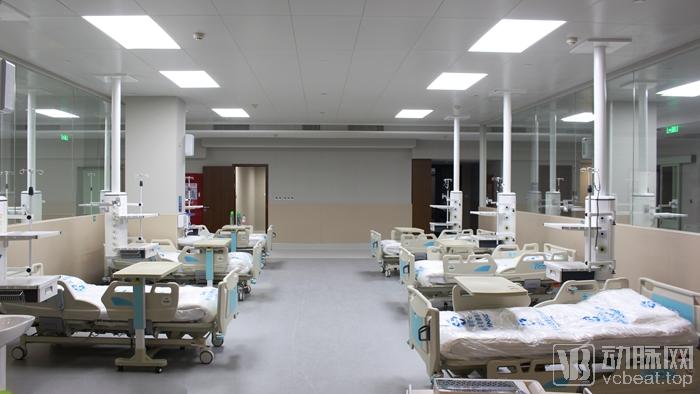
Winter Lei Brain Hospital Ward Photo (Image source: Provided by the company)
In addition, Donglei Brain Hospital strictly controls the surgical environment and ICU environment.
Second, Equipment
“Neurosurgery is so complex that the required equipment must be top-tier and diverse,” Song Donglei firmly told VCBeat. Donglei Brain Hospital primarily uses high-end equipment from major brands such as Siemens, including a Siemens 3.0T MRI scanner, a Siemens 128-slice CT scanner, and a Siemens flat-panel dual C-arm angiography system; advanced intraoperative navigation systems, neuroelectrophysiological monitoring devices, microscopes, and neuroendoscopes; additionally, it is equipped with Nihon Kohden sleep monitoring systems, among others.
Third, Expert Team and Management & Operations Team
Compared with physician groups, hospitals require a more diverse talent pool. In addition to medical specialists, Dong Fating, COO of Winter Lei Brain Hospital, previously co-founded a Sino-foreign joint venture general hospital, where he served as Vice President overseeing infrastructure, marketing, administration, operations, and external communications. He is currently responsible for the hospital’s overall operational management.
Hu Suyun, Executive Dean of Winter Lei Brain Hospital, has many years of experience in nursing management, medical insurance management, and hospital administration. She previously served as Director of the Nursing Department and Director of the Medical Insurance Office at Shanghai Minhang Traditional Chinese Medicine Hospital, and held positions as Dean of Nursing and Executive Dean at a Sino-foreign joint venture hospital. In 2016, she joined the Winter Lei Brain Doctor Group at the invitation of Professor Song.
Chen Chonghuan, CFO of Shanghai WinterRay Brain Hospital, holds a Master’s degree in Finance from Loyola University Chicago and is a U.S. Certified Public Accountant (CPA). He previously served as Vice President of Finance at a multinational corporation and as Finance Director for the Asia-Pacific region. He joined Shanghai WinterRay Brain Hospital as CFO in 2018.
Fourth, excellent patient experience
“Patient Needs First” is the core value of Winter-Ray Brain Hospital. “Our patients come from all over the country. Although they all suffer from brain disorders, the specific types of conditions are highly diverse,” said Song Donglei. “Therefore, we strive to offer a wide range of diagnostic and therapeutic services.”
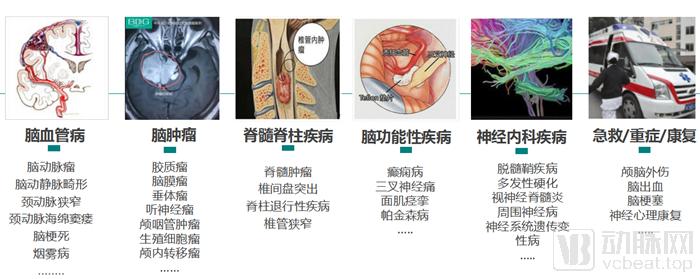
Scope of Diagnosis and Treatment at Donglei Brain Hospital
In addition to providing treatments for a wide range of diseases, Donglei Brain Hospital is also equipped with a Brain Health Screening and Management Center, a Sleep Health Management Center, and a Multidisciplinary Diagnosis and Treatment Center for Complex and Refractory Brain Disorders in the Yangtze River Delta. Notably, Donglei Brain Hospital has established a specialized Postoperative Adjuvant Therapy Center for brain tumor patients. The center features Class 100 laminar flow wards and a dedicated ICU, offering comprehensive solutions for the postoperative treatment of malignant brain tumors.
To ensure patient experience, Donglei Brain Hospital has established a comprehensive and streamlinedHealth Screening/Diagnosis and Treatment Service Process:
First, multi-channel consultation and diagnosis. Medical assistance from doctors can be obtained through the national toll-free hotline, WeChat, remote video consultations, Haodafu, and official websites.
Second, Specialty Expert Outpatient Clinics. Patients are accompanied by professional assistants throughout their visit, have access to a multi-tiered selection of experts, enjoy one-on-one consultations lasting over 20 minutes, and benefit from pre-scheduled examinations arranged in advance to minimize waiting times.
Third, high-quality inpatient services. Shanghai Winter-Ray Brain Hospital ensures timely scheduling of treatments and surgeries, strives to minimize length of stay, and provides continuous follow-up by case managers throughout the diagnosis and treatment process.
Fourth, improve post-diagnosis services. Shanghai WinterRay Brain Hospital will arrange for customer service follow-ups, remote consultations, and follow-up visit scheduling.
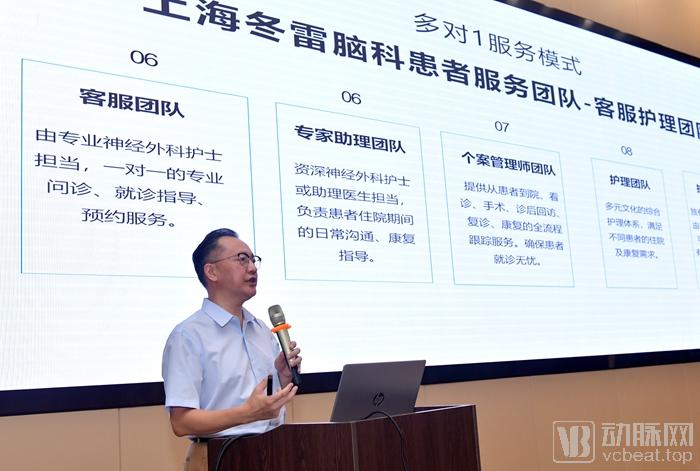
Song Donglei, Founder of Winter Ray Brain Hospital (Source: Provided by the company)
It is worth mentioning that Donglei Brain Hospital has establishedMulti-to-One Service Model:
Within the medical team, professors are responsible for overseeing and controlling the quality of care for difficult and complex cases; attending physicians are responsible for surgical diagnosis and treatment; associate chief physicians assist attending physicians with surgeries and patient management; resident physicians handle the daily management of inpatients; and the medical technology team is responsible for auxiliary examinations, diagnostics, and surgical assistance.
The customer service team is staffed by professional neurosurgery nurses who, together with on-duty specialist physicians, provide patients with one-on-one professional consultations, medical guidance, and appointment scheduling services. The expert assistant team, composed of senior neurosurgery nurses or assistant physicians, is responsible for daily communication and rehabilitation guidance during patients’ hospitalization. The case management team offers end-to-end tracking services, covering the entire patient journey from arrival, consultation, and surgery to post-discharge follow-up, re-examination, and rehabilitation. The nursing team meets the inpatient and rehabilitation needs of diverse patients through a multicultural, comprehensive care system. The caregiving team, comprised of junior nurses, utilizes a proprietary training system to deliver effective rehabilitation and nursing care to patients.
Regarding future planning, Donglei Brain Hospital has established a dual-drive model comprising both the hospital and a physician group. Song Donglei stated that he hopes more physicians will join Shanghai Donglei Brain Hospital, where they can first excel as clinicians, then earn reasonable, transparent income and gain professional respect. He expressed his hope for the steady development of the Shanghai Donglei Brain Hospital entity, with plans to gradually open second and third hospitals in the future.
VCBeat has learned that Donglei Brain Hospital has currently launched its Series B financing round, raising RMB 60 million, which will be primarily used for the operation of the brain hospital and the purchase of equipment.