

How Hezhan Elderly Care Achieved 98% Occupancy and Navigated Chongqing's Competitive Market with Capital Support
Recently, the third “Doers’ Sharing Session,” co-hosted by Yuyan Elderly Care and Longfor Chunshan Wanshu·Chongqing Xinyicheng Yinian Apartment, was held in Chongqing. The event invited several seasoned practitioners in the elderly care sector to share their insights. Among them, Chongqing Hezhan Elderly Care Industry Development Co., Ltd. (hereinafter referred to as “Hezhan”) secured an investment from China Cinda Asset Management Co., Ltd. in 2015, at a valuation of RMB 125 million, and introduced Shanghai Aosite as an investor in 2018, at a valuation of RMB 250 million. To date, Hezhan operates five facilities with nearly 2,000 beds.
Hezhan’s first project (Chongqing Hezhan Tianchi Elderly Care and Nursing Center) serves over 800 residents, with an occupancy rate of 98% in the independent living area and 90% in the assisted and skilled nursing areas. Among the residents, 50% are teachers, 32% are civil servants, 11% are physicians, and 7% are corporate employees (with retired cadres accounting for more than 75% of the total resident population). The average age of the residents is 83 years.
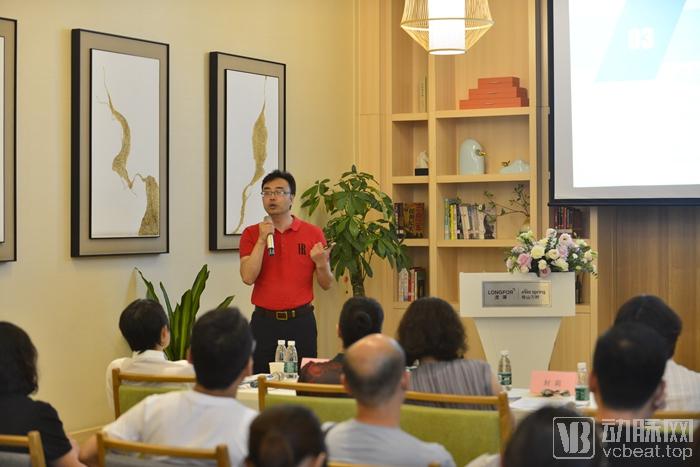
Guo Bin, Chairman of Hezhan (Image source: Provided by the organizer, Yuyan Elderly Care)
In light of Hezhan Elderly Care’s achievements, VCBeat (WeChat ID: vcbeat) has compiled the speech by Guo Bin, founder and general manager of Hezhan Elderly Care, on “The Development Path of Local Elderly Care Enterprises in Chongqing.”
"Elderly Care Is Now Crying Wolf"
Hezhan Elderly Care officially entered the elderly care sector in 2013, making it a newcomer to the industry. On a personal note, I previously worked in the port and shipping business. My transition into the elderly care industry was inspired not only by my elderly family members but also by the downturn in the shipping sector, which prompted me to seek a career change.
In 2003, shipping rates were high, with freight costs from Chongqing to Shanghai reaching RMB 160 per ton. However, by 2012, the price had dropped to RMB 22 per ton. During this period, many perceived the industry as lucrative due to the high freight rates and flocked into the shipping business en masse. This surge in market participants subsequently drove prices down. In fact, the elderly care sector in Chongqing has encountered a similar issue.
Over the past two to three months, I have visited numerous elderly care institutions, many of which are no longer viable and are being sold off even at a loss. The elderly care sector is now facing a severe crisis. When we entered this industry in 2013, Chongqing had only one such facility: the Qinggang Geriatric Care Center affiliated with the First Affiliated Hospital of Chongqing Medical University (hereinafter referred to as “Qinggang”). In recent years, however, elderly care institutions in Chongqing have sprung up one after another, including Chongqing Hongshan Elderly Care Industry Co., Ltd. (hereinafter referred to as “Hongshan”), Longfor Chunshan Wanshu, Sino-Ocean Chunxuanmao, and Bailingbang (Chongqing) Health and Elderly Care Industry Group (hereinafter referred to as “Bailingbang”), among others.
With the influx of capital, Chongqing’s elderly care sector is on the verge of entering a phase of intense competition. To outsiders, the industry appears profitable, as facilities such as Hezhan Tianchi, Hongshan, and Longshan (an institution under the “Bailingbang” brand) seem fully occupied. In reality, however, only a handful of nursing homes in Chongqing are at full capacity, and very few are actually profitable. Taking Hezhan as an example, it operates a nursing home in Yuzhong District (one of Chongqing’s nine main urban districts and an older established area). Despite its prime location, high-quality renovations, and affordable pricing of just over RMB 3,000 per month, its occupancy rate stands at only 30%.
Another looming threat is community-based elderly care, which is emerging with formidable momentum. Previously, community-based elderly care facilities lacked inpatient beds; however, current policies in Chongqing mandate that such facilities must provide beds, backed by substantial policy support. Each community service center is equipped with dozens of beds, incurs no rental costs, and receives over RMB 2 million in subsidies for renovation. Consequently, these facilities offer lower prices while maintaining decent hardware conditions. As a result, Hezhan experienced a relatively high move-out rate in the recent period, as many seniors transferred to these community-based facilities.
Why Are Elderly Care Facilities Not Fully Occupied?
There is a common misconception in the elderly care sector regarding data. While there are 240 million people aged 60 and above nationwide, with over 7 million in Chongqing, these figures can be misleading. Consider this: would individuals who are just 60 years old actually move into nursing homes? The average age of residents in nursing homes across China is currently 85. In Chongqing, there are only about 500,000 people aged 85 and above, yet the city has 210,000 nursing home beds. The pool of individuals with an urgent need for such care is therefore limited, and many within this group are still reluctant to reside in nursing homes.
Another factor is pricing, as purchasing power in Chongqing is relatively weak. Taking Hezhan as an example, many visitors express high satisfaction with both its hardware facilities and services, yet still perceive it as too expensive. For elderly care institutions with our profile, after accounting for costs such as labor, rent, and underfloor heating, a monthly fee of over 3,000 yuan represents the lowest possible price. However, the average salary of an ordinary working-class senior in Chongqing is only around 3,000 yuan. Would they allocate their entire income to nursing home care? This ultimately reflects an issue of market acceptance.
The elderly care sector in Chongqing has seen rapid development over the past two to three years. With the entry of many large-scale institutions, the quality of elderly care services in Chongqing has been improving. Seniors in Chongqing are now placing greater emphasis on the quality of care facilities. For instance, our facility, which opened six years ago, was considered to have good conditions at the time, but it no longer meets the expectations of many seniors today. Therefore, we have initiated renovation projects this year, including interior upgrades, exterior room improvements, and hardware enhancements.
Therefore, for elderly care institutions to develop, hardware facilities are one of the most critical factors; if the physical infrastructure is inadequate, seniors will simply not choose your facility.
Emphasize Talent Development
Some people refer to Hezhan as a training school for Chongqing’s elderly care industry, since many of our managers and staff members go on to work at other elderly care institutions after leaving us. This brings up the issue of talent development. We generally do not poach personnel from other elderly care organizations, as such practices can create misconceptions. For instance, if one facility offers a director a monthly salary of 8,000 yuan, another might offer 12,000 yuan, and yet another 15,000 yuan, leading to instability and high turnover among management staff.
Our talent development approach at Hezhan involves assigning young employees to the nursing department for two to three years. All of our management personnel are promoted from within the nursing staff. Only those who are genuinely willing to perform these duties—such as washing elderly residents’ feet and assisting with perineal hygiene—and who are committed to settling into this work, can be truly cultivated as future leaders.
Regarding talent retention, I have given further thought to the matter: we must meet employees’ salary expectations; implement a leave policy akin to He Li’s; address employees’ personal and family concerns; foster positive interpersonal relationships; provide clear pathways for career advancement; and create a learning environment that meets employees’ needs.
Elderly care institutions should leverage the power of capital
For elderly care institutions to pursue independent growth in the future, it will be difficult without capital support behind them. In Chongqing, Hezhan was the earliest to receive capital investment. In 2015, China Cinda Asset Management Co., Ltd. invested with a valuation of 125 million yuan; in 2018, Shanghai Aosite invested with a valuation of 250 million yuan; and in 2019, it officially signed a cooperation agreement with China Resources Weilin.
Take a nursing home operated by my friends as an example. It was established by several partners who contributed RMB 3 million of their own capital and borrowed an additional RMB 7 million to launch and operate the facility. However, due to persistently low occupancy rates, they lack the funds to repay the loans. Without backing from major investors, self-operation remains highly challenging.
I am currently quite perplexed. Should I continue operating? Should I continue expanding? And if so, how? Under the current circumstances, each new facility incurs losses; without capital support, how can an enterprise develop? To my knowledge, several well-known elderly care institutions in Chongqing are also operating at a loss, but they are backed by strategic capital investments, which ensures their survival.
There are too many well-funded players in the elderly care industry. Only after capital enters can companies unite to withstand competition; otherwise, smaller institutions will gradually be eliminated. Therefore, a company’s own strength is insufficient; it must rely on capital. With capital infusion, corporate development accelerates rapidly. Even if a company is reluctant to expand aggressively, its investors will push it forward. Those that grow too slowly will quickly be overwhelmed by the red ocean and never recover.
Developing Elderly Care Services Requires Distinctive Characteristics
“When I reported my thoughts to the leaders of Chongqing Municipality, I outlined the current state of elderly care. The leader told me, ‘Guo Bin, you need to shift your mindset. You must not do the same thing as others; otherwise, you will be stuck in direct competition with peers. To surpass them in such a competitive landscape, you would have to exert extraordinary effort. If you remain similar to them, you will not achieve growth. If you claim your service is superior, others will offer even better service. If you boast about your hardware facilities, others will have more advanced ones. Hezhan enjoys greater brand recognition now because it entered the market earlier, but if it fails to launch new projects within the next two years, it will quickly be overshadowed.’”
How can we resolve this dilemma? To my knowledge, elderly care institutions across China are offering homogeneous services with little differentiation. They all focus on improving hardware, service quality, and management standards. However, if everyone follows the same approach, every facility ends up looking alike, ultimately trapping them in a red ocean market.
I have given this much thought, and Hexian may be shifting its strategic direction. Hexian is now transitioning into a new elderly care model, specifically the CCRC (Continuing Care Retirement Community) model. The land for this project has already been acquired, regulatory approvals have been obtained, the project has been officially registered with the National Development and Reform Commission (NDRC), and planning permissions have largely been secured. Construction permit applications are imminent, with an estimated launch in approximately two years. The project encompasses a total floor area of 56,000 square meters and offers over 1,100 beds.
Unlike most CCRC models, our project adopts an integrated approach combining residential living, healthcare, and commercial services. We have observed that seniors generally prefer a lively atmosphere over quiet solitude. Located in the city center and surrounded by residential developments, our project features a self-developed commercial street with publicly accessible amenities, including a supermarket, heated swimming pool, fitness center, and cinema. With children and young people frequenting the area, the overall ambiance mirrors the vibrancy of life outside.
Our design features a fully modern, garden-style aesthetic that feels like home. The floor plans are also well-suited for elderly care, with studio apartments measuring 40 square meters and one-bedroom units spanning 70 square meters.
Unlike traditional elderly care institutions, which typically serve residents with an average age of 85, our project targets self-reliant seniors aged 60 and above, thereby expanding the potential customer base to over 7 million individuals. This demographic can also benefit from community-based elderly care services, such as on-site dining facilities for independent meals and emergency call systems for home accidents. The facility features more than 100 medical care beds and is located in close proximity to a hospital, ensuring convenient access to medical treatment.