

Junlin Healthcare Global New Drug Update · Issue 16
Aug 05, 2019 15:49
CST Updated
15:49

July 29, 2019–August 4, 2019: A total of 10 new drug data entries were recorded this week, including 5 in oncology, 2 in CNS, 2 in gene therapy, and 1 in metabolism.
❖Turalio, a CSF1R inhibitor developed by Daiichi Sankyo, has been launched, marking the first approved CSF1R inhibitor. Many domestic companies are targeting CSF1R, but they primarily focus on its role in mononuclear phagocytes (especially macrophages), aiming to combine innate immunity with adaptive immunity agents like PD-1 inhibitors for cancer treatment. However, data released at the end of 2017 from Five Prime Therapeutics’ trial of FPA008 combined with Opdivo showed significant adverse events (AEs), prompting investors to reconsider the mechanism of action of CSF1R. Whether Chinese companies can achieve new breakthroughs in this target remains to be seen.
❖Eli Lilly announced that the combination of its CDK4/6 inhibitor with fulvestrant significantly improved overall survival (OS) in patients with HR+/HER2- advanced breast cancer, with benefits observed in both premenopausal and postmenopausal patients. However, less than a week later, Novartis also reported similar results. CDK4/6 is a well-established target, but intense competition only surged after Pfizer confirmed its mechanism of action in Phase II clinical trials. Currently, Ibrance has demonstrated significant progression-free survival (PFS) benefits but has failed to meet OS endpoints in several clinical trials. In 2018, global sales of Ibrance reached approximately $4.2 billion, while Verzenio and Kisqali each generated around $250 million. With Eli Lilly and Novartis now sequentially demonstrating OS benefits, they are expected to aggressively erode Pfizer’s market share.
Turalio, a CSF1R inhibitor developed by Daiichi Sankyo, has been launched.
For the treatment of adult patients with symptomatic tenosynovial giant cell tumor (TGCT)
The U.S. FDA Approves Daiichi Sankyo’s Colony-Stimulating Factor 1 Receptor (CSF1R) Inhibitor Turalio (pexidartinib) for the Treatment of Adult Patients with Symptomatic Tenosynovial Giant Cell Tumor (TGCT)
Pexidartinib is an innovative oral small-molecule inhibitor of CSF1R. The CSF1R-mediated signaling pathway is the primary driver of abnormal cell proliferation in the synovium.
Phase 3 trial: A total of 120 patients received pexidartinib (n=61) or placebo (n=59).
39% of patients treated with pexidartinib achieved a response after 25 weeks of treatment, compared with 0% in the placebo group (p<0.0001). The partial response rate was 23%, and the complete response rate was 15%.
FDA Grants to Nektar’s NKTR-214 and BMS’s Opdivo Combination
Breakthrough Therapy Designation for Combination Therapy,Treatment of Melanoma Patients
FDA Grants Breakthrough Therapy Designation to Nektar’s Investigational Therapy Bempegaldesleukin (NKTR-214) in Combination with BMS’s PD-1 Inhibitor Opdivo (Nivolumab) for the Treatment of Patients with Previously Untreated Unresectable or Metastatic Melanoma
Bempegaldesleukin is an IL-2 signaling pathway agonist that preferentially binds to the CD122 receptor.
Treatment of Patients with Previously Untreated Unresectable or Metastatic Melanoma: A Phase 1/2 Clinical Trial
The combination therapy achieved an overall response rate (ORR) of 53%. Furthermore, at a median follow-up of 12.7 months, the complete response rate reached 34%, with the proportion of patients achieving complete response continuing to increase as follow-up duration extended.
Data on the Combination Therapy of NKTR-214 and Opdivo
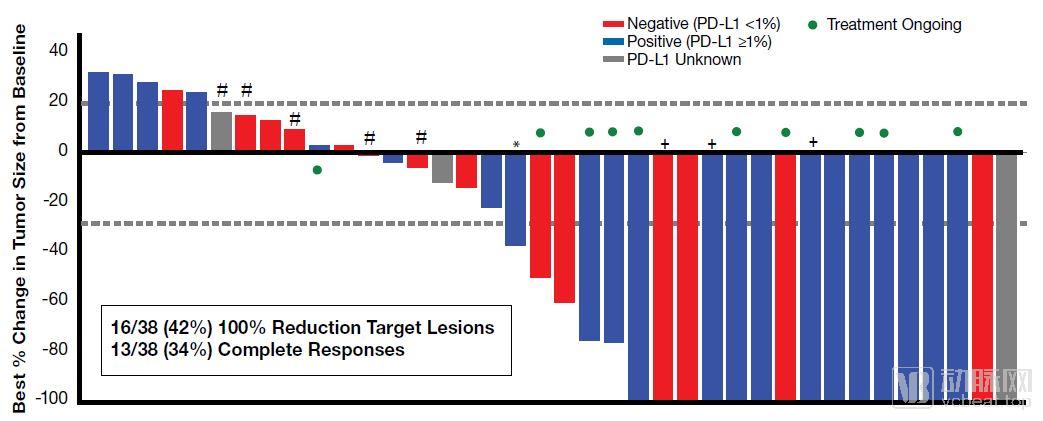 Data Source: ASCO
CDE Announcement: Novartis Submits Application for the Prevention of Migraine in Adults
Erenumab Injection Receives Implied Approval for Clinical Trials
According to the latest announcement from the Center for Drug Evaluation (CDE) of China’s National Medical Products Administration (NMPA), erenumab injection, submitted by Novartis (China) Biomedical Research Co., Ltd. for the prevention of migraine in adults, has received implicit approval for clinical trials.
Erenumab is the first FDA-approved preventive treatment for migraine. It was approved for marketing in the United States in May 2018 and works by blocking the activity of calcitonin gene-related peptide (CGRP), a molecule involved in migraine attacks.
In the Phase 3b trial, 246 patients with episodic migraine were randomized to receive once-monthly subcutaneous injections of erenumab or placebo.
Among patients receiving erenumab, 30.3% experienced a reduction of at least 50% in the number of migraine days, compared with 13.7% in the control group.
Combination of the CDK4/6 inhibitor Kisqali with fulvestrant,
Significantly prolonged overall survival (OS) in female patients with HR+/HER2- breast cancer in Phase 3 trials
The CDK4/6 inhibitor Kisqali (ribociclib), in combination with fulvestrant, significantly prolonged overall survival in a Phase 3 clinical trial involving postmenopausal women with hormone receptor-positive, human epidermal growth factor receptor 2-negative (HR+/HER2-) advanced or metastatic breast cancer.
Kisqali is a selective CDK4/6 inhibitor that helps slow cancer progression by inhibiting the CDK4 and CDK6 proteins.
In MONALEESA-3, 484 postmenopausal female patients were randomized to receive Kisqali plus fulvestrant, and 242 were assigned to receive placebo plus fulvestrant; in MONALEESA-7, 672 premenopausal patients received similar regimens.
In MONALEESA-3, the PFS for female patients treated with Kisqali was 20.5 months, compared with 12.8 months in the placebo group; in MONALEESA-7, the PFS for those treated with Kisqali was 23.8 months, versus 13 months in the placebo group.
Amicus Therapeutics Announces Its Gene Therapy for the Treatment of CLN6 Batten Disease
Positive interim results achieved in Phase 1/2 clinical trial
Amicus Therapeutics Announces Positive Interim Results from Its Phase 1/2 Clinical Trial of Investigational AAV-CLN6 Gene Therapy, Demonstrating Halting of Disease Progression in CLN6 Batten Disease
Amicus aims to achieve long-term, or even lifelong, relief of patient symptoms with a single treatment by delivering functional genes via adeno-associated virus (AAV) vectors into the central nervous system through intrathecal injection.
The patients who received gene therapy in this study were aged between 19 and 66 months.
After 16 to 25 months of treatment, 7 out of 8 patients experienced halted disease progression or stabilization, as evidenced by unchanged Hamburg scores or stabilization following a fluctuation of one point. In contrast, patients with CLN6 Batten disease typically exhibit a decline of at least 2 to 3 points on the Hamburg scale within the first two years.
Bayer announces U.S. FDA approval of Nubeqa for market launch,
Treatment of Patients with Non-Metastatic Castration-Resistant Prostate Cancer (nmCRPC)
Bayer Announces U.S. FDA Approval of Nubeqa (darolutamide) for the Treatment of Patients with Non-Metastatic Castration-Resistant Prostate Cancer (nmCRPC)
Darolutamide is an androgen receptor antagonist that binds to the androgen receptor (AR) with high affinity and exhibits potent antagonistic activity.
In a randomized, double-blind, placebo-controlled Phase 3 clinical trial involving 1,509 patients, participants received either darolutamide plus androgen deprivation therapy (ADT) or placebo plus ADT.
The median metastasis-free survival (MFS) was 40.4 months in the darolutamide group versus 18.4 months in the control group (p<0.0001). Darolutamide reduced the risk of metastasis or death by 59%.
Alkermes and Biogen announced a treatment
Phase 3 Clinical Trial of Relapsing-Remitting Multiple Sclerosis (RRMS) Achieves Positive Top-Line Results
Alkermes and Biogen Announce Positive Top-Line Results from Phase 3 Clinical Trial for Relapsing-Remitting Multiple Sclerosis (RRMS)
Diroximel fumarate is an oral prodrug of fumarate. It is rapidly converted to monomethyl fumarate in the body.
EVOLVE-MS-2 is a randomized, double-blind, active-controlled, 5-week Phase 3 clinical trial designed to evaluate the gastrointestinal (GI) tolerability, including duration and severity, of diroximel fumarate compared with Tecfidera in patients with relapsing-remitting multiple sclerosis (RRMS).
The proportion of patients who withdrew from the trial due to adverse events (AEs) was 1.6% in the diroximel fumarate group and 6.0% in the Tecfidera group. Among these, the proportion of patients who withdrew due to gastrointestinal (GI) adverse events was 0.8% in the diroximel fumarate group and 4.8% in the Tecfidera group.
Eli Lilly Announces CDK4/6 Inhibitor Verzenio in
Significantly Prolongs Overall Survival in Patients with HR-Positive and HER2-Negative Breast Cancer
Eli Lilly Announces That CDK4/6 Inhibitor Verzenio (abemaciclib) Significantly Prolongs Overall Survival in Phase 3 Trial for Patients with HR-Positive, HER2-Negative Advanced Breast Cancer
Verzenio is a CDK4/6 inhibitor. CDK4/6 is activated by binding to D-type cyclins.
In the MONARCH 2 randomized, double-blind, placebo-controlled Phase 3 clinical trial, 669 patients with HR-positive, HER2-negative metastatic breast cancer received treatment with Verzenio + fulvestrant or placebo + fulvestrant.
Verzenio + fulvestrant met the key secondary endpoint of overall survival
Aeglea BioTherapeutics Announces Breakthrough Therapy Designation for Its Investigational Therapy, Pegzilarginase
For the treatment of arginase 1 deficiency (ARG1-D)
Aeglea BioTherapeutics Announces FDA Grants Breakthrough Therapy Designation to Investigational Therapy Pegzilarginase for the Treatment of Arginase 1 Deficiency (ARG1-D)
Pegzilarginase is an enhanced human arginase that promotes arginine metabolism in the body.
Phase 1/2 Clinical Trial and Phase 2 Open-Label Extension Study
Data indicate that blood arginine levels in patients decreased and remained stable following pegzilarginase administration.
Mechanism of Action of Pegzilarginase
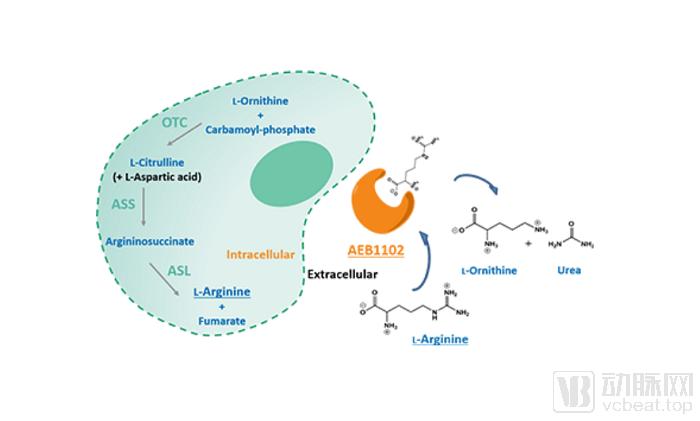
Source: Aeglea
Editas Medicine and Allergan jointly announced,
Patient enrollment begins for the Phase 1/2 clinical trial named Brilliance
Editas Medicine and Allergan jointly announced that patient enrollment has begun for the Phase 1/2 clinical trial named Brilliance, marking the world’s first clinical trial of CRISPR gene editing in humans.
AGN-151587 (EDIT-101) is a CRISPR-based gene-editing therapy that packages the Cas9-encoding gene and two guide RNAs (gRNAs) into an AAV5 viral vector.
The open-label Brilliance clinical trial plans to enroll approximately 18 patients, including both adult and pediatric (aged 3–17 years) participants. Each enrolled patient will receive a single subretinal injection of AGN-151587 in one eye.
To be announced
❖During its second-quarter 2019 earnings conference call, Amgen announced the latest development progress on its KRAS G12C inhibitor, AMG 510. AMG 510 not only demonstrated efficacy in patients with non-small cell lung cancer (NSCLC), but also achieved partial responses in patients with colorectal cancer (CRC) and appendiceal cancer.
❖Exact Sciences, a company focused on cancer screening technologies, and Genomic Health, a genetic testing company, announced that they will merge to form a new, large-scale cancer diagnostics company. The deal is valued at $2.8 billion.
❖Mylan and Pfizer announced that they have entered into a definitive agreement under which Mylan will combine with Upjohn, Pfizer’s off-patent branded and generic medicines business, to create a new global pharmaceutical company dedicated to improving patient outcomes worldwide.
❖Merck & Co. announced its H1 2019 financial results, reporting global sales of $22.575 billion. Keytruda generated $4.903 billion in revenue during the first half of the year, significantly surpassing Opdivo, and is projected to officially join the $10 billion club this year.
❖ Japan Approves First Human-Animal Hybrid Embryo Experiment, Expected for Organ Transplantation. The researcher leading this trial is Professor Hiromitsu Nakauchi of the Institute of Medical Science at the University of Tokyo, who is also a professor at Stanford University.