

Medical Imaging Salon in Chongqing Analyzes Industry Status, Challenges, and Opportunities from Five Perspectives
On July 26, 2019, the “MedTech Industry Salon Series: Medical Imaging” event was successfully held in Chongqing.
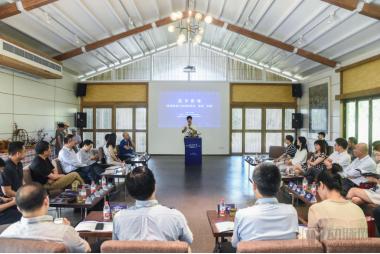
Medical Imaging Salon On-Site
This salon was jointly hosted by VCBeat, Chongqing GTJA Ruian Equity Investment Fund, Chongqing International Medical Innovation Center, and Chongqing Science and Technology Venture Capital Co., Ltd. Centered on the current status, challenges, and opportunities of AI applications in medical imaging, the event invited distinguished guests including Dr. Wang Jian, Director of the Department of Radiology at Southwest Hospital; Dr. Lv Fajin, Director of the Department of Radiology at the First Affiliated Hospital of Chongqing Medical University; Professor Yao Xiaohong from the Institute of Pathology at Southwest Hospital; Professor Wu Jian, Vice Dean of the National Institute of Health and Medical Big Data at Zhejiang University; Mr. Bi Yuanfeng, Co-founder of VCBeat; Mr. Luo Shiming, Executive Director of VBInsight (Eggshell Research Institute); and representatives from innovative enterprises in the industry. The salon aimed to establish a high-quality platform for communication among professionals in the medical imaging sector, facilitate information exchange, and thereby promote the development of the entire industry.
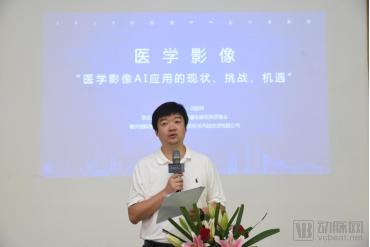
Xu Hui, Chairman of Chongqing Kefeng Venture Capital
In recent years, smart healthcare has gradually become a hotspot for industry investment and development, as well as a primary focus for investors. Xu Hui, Chairman of Chongqing Science and Technology Venture Capital, analyzed the progress of the four major business models in smart healthcare. Regarding their level of maturity, he stated, “When we discuss smart healthcare and observe its numerous applications, the most advanced and relatively mature area at present is the integration of AI with medical imaging, ultrasound, and cytology.”
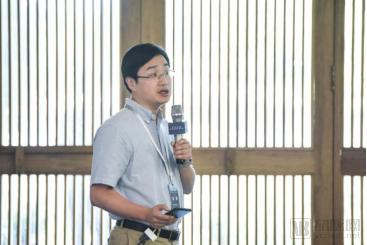
Wu Jian, Deputy Director of the Institute of Health Big Data, Zhejiang University
Wu Jian, Deputy Director of the Health Big Data Research Institute at Zhejiang University, shared insights from a global perspective, covering the academic frontiers of medical AI laboratories, the current state of industrial development, and the progress of Zhejiang’s Artificial Intelligence Innovation Institute. He noted that global healthcare data surged from 1.3 trillion units in 2013 to 2,000 trillion units in 2016, representing an enormous volume. The accumulation of such data will play a significant supportive role in enabling self-management for patients with chronic diseases.

Luo Shiming, Executive Director of VCBeat
From the perspective of an industry observer, Luo Shiming, Executive Director of VCBeat Institute, provided a brief overview of the current state of integration between artificial intelligence (AI) and healthcare. He examined key aspects including the entrepreneurial landscape of medical AI imaging teams, regulatory and R&D applications, data standardization, and hospitals’ attitudes toward AI. Regarding how enterprises should build their core competitiveness in the future, Mr. Luo shared his insights: “Securing substantial early-stage financing does not constitute comprehensive competitiveness. As market acceptance grows, VCBeat evaluates the maturity of companies using two indicators: the clinical stage reached and the approximate number of partner hospitals. Around 500 hospitals serve as a threshold. In the next phase, key indicators will likely include the number of successful hospital bids and the models of industrial collaboration.”
After gaining a macro-level understanding from the perspectives of capital, research, and industry, the panelists engaged in a roundtable discussion on the current applications of AI in the healthcare sector, examining the topic through five distinct lenses: research versus clinical application, public versus private sectors, demand-side versus solution providers, hardware versus software providers, and investment versus projects.
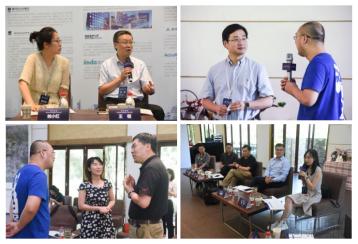
Medical Imaging Salon: Roundtable Discussion
Currently, the application of AI in healthcare is primarily focused on the disease diagnosis and treatment phase, assisting physicians in improving efficiency and reducing misdiagnosis. The integration of AI with imaging and pathological diagnosis has also become a relatively mature area of application. However, challenges and difficulties remain in its practical implementation.
Lv Fajin, Director of the Department of Radiology at the First Affiliated Hospital of Chongqing Medical University, stated, “We have been applying artificial intelligence (AI) in medical imaging for over a year, and it has become an essential requirement for diagnosing conditions such as pulmonary nodules. However, the greatest challenge lies in the fact that medical imaging AI relies on image observation and analysis. The images we produce directly influence the AI’s judgments, making quality control of imaging the most critical factor. How can the AI make accurate assessments if the images are substandard or excessively large, thereby obscuring many details?”
Following Director Lv’s remarks on quality control, Wang Jian, Director of the Department of Radiology at Southwest Hospital, stated, “Quality control is indeed important and worth our efforts. We also hope that AI vendors will not only provide automatic error correction but also enhance their predictive capabilities.”
To address quality control challenges, industry leaders such as Ye Hongwei, R&D Director at MinFound Medical; Huang Yedong, CEO of Infervision Network; and Li Chaoyang, Senior Vice President at Deepwise AI, shared their platforms’ approaches. Mr. Ye stated, “For quality control issues, we classify lung images into five grades. For instance, scans that do not cover the entire lung are deemed unacceptable and fall into the lowest grade, while excessive noise constitutes the second grade, with further classification based on radiation dose, scanning parameters, and other factors. Artificial intelligence technologies are also incorporated in this process.”
Mr. Huang stated, “On our platform, every examination conducted in hospitals undergoes AI-driven quality control, with both the reporting physicians and reviewing physicians subject to a one-time AI quality check. Approximately 40,000 reports are reviewed by AI each day, and this has become a key performance indicator for bonus calculations in some hospitals.”
Mr. Li stated, “In terms of quality control, we have deployed the equipment at the scanning station. If a red light illuminates after a scan, it indicates non-compliant elements; these are flagged to require a retake, and failure to retake will be recorded. Only if all indicators show green lights, signifying compliance, will the data be transmitted for report generation.”
AI applications in pathological diagnosis also face quality control challenges. Furthermore, Professor Yao Xiaohong from the Institute of Pathology at Southwest Hospital noted that physicians’ acceptance of digital slides remains low. Nevertheless, she remains optimistic: “Previously, diagnoses relied on microscopy. With the advent of slide digitization, if new residents are prohibited from using microscopes from the outset and trained exclusively on digital platforms, after five to six years, they will likely regard this approach as superior and no longer rely on traditional microscopy. Breaking entrenched habits is ultimately a matter of adapting to new practices.”
From the current perspective of AI imaging development, quality control remains a challenging issue of concern to clinicians. Based on the responses, each company has adopted its own approach to address this challenge. Looking toward future developments, clinicians are also focused on how to better integrate imaging with pathological diagnosis. Director Lv stated, “Currently, determining whether a patient has squamous cell carcinoma or adenocarcinoma still relies on pathological examination. The bottleneck in imaging lies in the difficulty of accurately identifying cytological subtypes. However, given the future trend in medicine from minimally invasive to non-invasive approaches, precise imaging guidance is essential.”
Currently, most AI diagnostic companies rely on relatively homogeneous data sources. Some focus exclusively on medical imaging, others on pathology, while some integrate additional data types—such as neuropsychological assessments, electroencephalograms (EEG), and electrocardiograms (ECG)—to aid in disease diagnosis. For the same condition, data sources may vary or be multimodal. Given this landscape, there is still a long way to go in consolidating these diverse datasets into a unified framework, followed by data cleaning, analysis, and integration to generate comprehensive diagnostic outcomes.
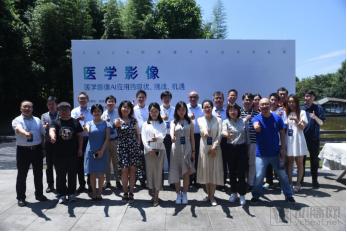
Group Photo of the Medical Imaging Salon