

Recent Moves of China's Top Internet Healthcare Platforms: Ping An Good Doctor, WeDoctor, Medlinker, DXY, Chunyu Doctor, and Haodf in the Past Six Months
With clear policy guidance and surging corporate enthusiasm, internet healthcare is ushering in an unprecedented period of opportunity. Taking internet hospitals as an example, the latest data from the National Health Commission shows that there are already 158 internet hospitals across China; meanwhile, VCBeat (WeChat ID: vcbeat), through its analysis of publicly available data, has found that more than 200 companies have participated in the development of internet hospitals.
However, internet hospitals represent only a segment of the broader internet healthcare landscape. The entire internet healthcare ecosystem now spans the full patient care journey, encompassing extensions of hospital medical services and pharmaceutical distribution channels, as well as online-to-offline patient education. Internet healthcare business models are diversified and offer extensive opportunities for exploration.
Amid the rapid advancement of internet healthcare, what moves have leading companies in this sector made over the past six months, and what explorations have they undertaken for the industry? Based on data collected by VCBeat’s “Dongguan” channel, we have compiled an analysis across multiple dimensions, including public corporate events, external partnerships, and new product launches.
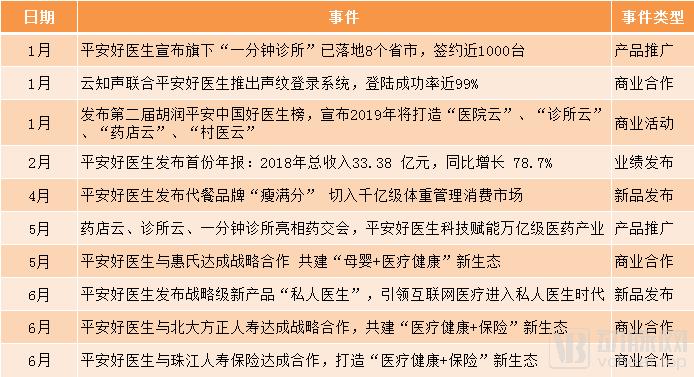
Major New Developments at Ping An Good Doctor in the First Half of the Year, Source: VCBeat Dongguan Channel
In the first half of this year, Ping An Good Doctor frequently launched new products and forged commercial partnerships, with 10 major developments recorded.
Before charting this year’s business trajectory, let us first examine Ping An Good Doctor’s 2018 annual report. According to the report, Ping An Good Doctor’s core businesses are divided into four major segments: Family Doctor Services, Consumer Healthcare, Health Mall, and Health Management & Interaction.
Among the four major segments, family doctor services constitute the core business. The annual report also reveals that the family doctor services segment demonstrated robust growth, with a year-on-year increase of 69.6%. In light of Ping An Good Doctor’s developments in the first half of the year, the launch of its “Private Doctor” service and partnerships with Wyeth, Peking University Founder Life Insurance, and Zhujiang Life Insurance were all centered around this core business.
“Private Doctor” is a strategic new product launched by Ping An Good Doctor, positioned to provide comprehensive, high-quality medical and health services to over 200 million members of the new middle class. This demographic boasts higher incomes and strong purchasing power, with elevated expectations for health management both for themselves and their families. By targeting this segment, “Private Doctor” is expected to boost the conversion rate of paying users, thereby enhancing the overall revenue generation capability of the family doctor division.
With the launch of new products, Ping An Good Doctor has been identifying precise target customers through various commercial partnerships. For instance, it entered into a strategic partnership with Wyeth Nutrition to provide private doctor services to members of the Wyeth Mom’s Club; formed a strategic alliance with Founder Meiji Life Insurance to deliver one-stop medical and health services to its insurance clients, leveraging its private doctor offerings; and established a strategic cooperation with Zhujiang Life Insurance to provide diversified “medical health + insurance” solutions.
In addition, at the press conference for the 2nd Hurun Ping An China Good Doctor List in January this year, Wang Tao, Chairman and CEO of Ping An Good Doctor, announced that the company would build “Hospital Cloud,” “Clinic Cloud,” “Pharmacy Cloud,” and “Village Doctor Cloud” in 2019, while further accelerating its internationalization strategy. Relevant plans were also outlined in the annual report.
Among these initiatives, “Hospital Cloud” will partner with physical hospitals to pool advantageous resources from all parties and jointly build a new type of “Internet Hospital”; “Clinic Cloud” will leverage AI medical technology and refined operational management to deploy a clinic network, comprehensively empowering primary care diagnosis and treatment; “Pharmacy Cloud” will create a new retail pharmacy model centered on healthcare services; and “Village Doctor Cloud” will support the development of rural healthcare by providing a suite of assistance products—including exclusive mobile apps, integrated testing devices, and multi-scenario remote training—to village doctors in remote areas, thereby comprehensively improving the healthcare standards in assisted villages.
Currently, Ping An Good Doctor is rapidly advancing a large number of internet hospitals based on its Hospital Cloud platform. Its Pharmacy Cloud and Clinic Cloud solutions were showcased at the 81st China National Pharmaceutical Trade Fair. The Village Doctor Cloud’s exclusive app for village doctors has also been launched and put into use. Meanwhile, its internationalization strategy, represented by technology exports, has made substantial progress, further enhancing its comprehensive one-stop ecosystem.
One month after the 2019 Spring Festival, WeDoctor announced a major strategic move, unveiling its most significant organizational upgrade in two years. The company established two core business lines—G2G (Government-to-Government, referring to government-purchased services) and B2C (Business-to-Consumer, referring to market-purchased services)—to deepen its exploration in the digital healthcare sector and promote the development of an integrated platform linking digital medical care, pharmaceuticals, and health insurance.
From connecting patients with hospitals in the 1.0 era, to establishing internet hospitals in the 2.0 era that link patients, hospitals, and doctors to achieve integrated online and offline diagnosis and treatment, WeDoctor has ushered in the 3.0 era this year. This new phase vertically connects cities and villages, while horizontally expanding across healthcare services, pharmaceuticals, medical insurance, and elderly care. As a result, WeDoctor has formed a data-driven digital health network, which serves as its core platform for continuous deepening of engagement across the industry value chain.
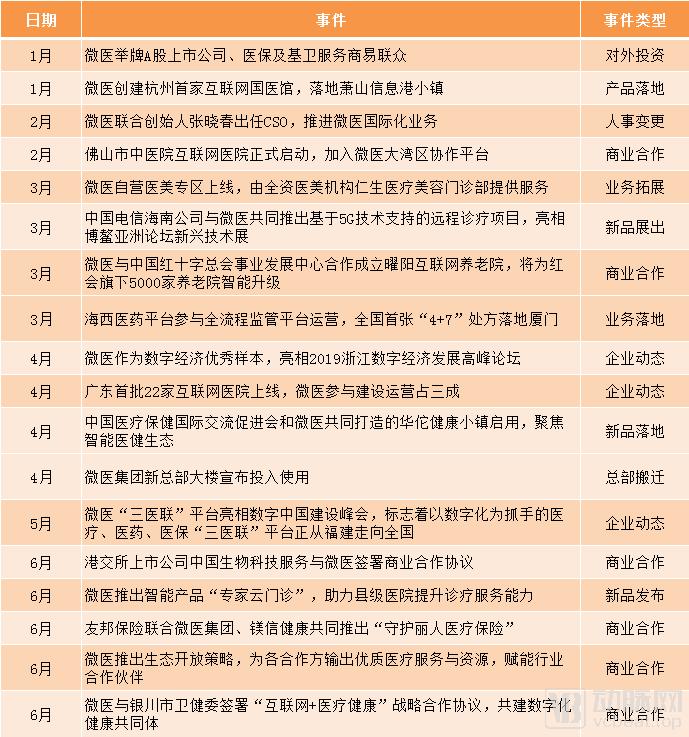
Major New Developments at WeDoctor in the First Half of the Year, Source: VCBeat Dongguan Channel
According to VCBeat’s Dongguan data, WeDoctor announced 18 new external developments in the first half of the year. Among these events, which directly relate to business operations—such as product launches or implementations, business expansion, and commercial partnerships—all fall under the 2G (government-facing) business line, except for the Internet-based Traditional Chinese Medicine Clinics, the self-operated medical aesthetics section, and the “Guardian Beauty” medical insurance, which belong to the 2C (consumer-facing) business line.
It can be inferred that WeDoctor’s business expansion in the first half of the year primarily focused on its Government-to-Government (G2G) business line. Serving mainly governments at all levels and hospitals, this G2G segment assists local governments in building regional healthcare communities, implementing the “4+7” centralized drug procurement program, and establishing intelligent medical insurance administration platforms. Its offerings include products such as Primary Care Cloud, WeDoctor Pharmacy, and WeDoctor Insurance.
How to Break Through in the 2G Business Line? WeDoctor Chairman Liao Jieyuan Proposes the "Three Integrations" Methodology.
At the Digital Health Sub-forum of the Second Digital China Summit held this May, Liao Jieyuan stated that to successfully navigate the development path of “Internet + Healthcare,” it is essential to achieve “three integrations.” First, integrate internal and external hospital services by connecting hospitals, doctors, and patients. Second, bridge the gap between urban and rural areas; currently, Weiyi Cloud Mobile Clinic Vehicles have reached over 600 townships across China, with plans to expand to nearly 2,000 townships this year. Third, achieve integration among medical care, pharmaceuticals, and health insurance.
From its origins as Guahao.com to the Wuzhen Internet Hospital, WeDoctor had, as of March 2019, connected more than 2,700 key hospitals and 280,000 physicians across 30 provinces and municipalities in China, with over 190 million real-name registered users. Thus, WeDoctor has achieved a relatively mature stage in the first aspect of “integration.” The second and third aspects of “integration” will represent WeDoctor’s future expansion directions, which largely align with the objectives of its government-facing (2G) business line.
In bridging the urban-rural divide, WeDoctor has partnered with Huangzhou District in Huanggang City, Hubei Province, to pilot the reconstruction of an “Internet + Healthcare” information service and support system aligned with the management structure and operational mechanisms of local medical consortia. Through unified planning and design of the information infrastructure, existing primary healthcare information systems were uniformly replaced and upgraded. The innovatively launched “Four-Network Integration” model has achieved interconnectivity among various health information systems, with all data stored on the National Population Health Information Platform. Meanwhile, the system connects vertically with tertiary hospitals at the provincial (Hubei) and municipal (Huanggang) levels, as well as with primary healthcare institutions, village clinics, and community health stations; horizontally, it integrates with regulatory departments including health commissions, medical insurance bureaus, and finance departments, thereby supporting a five-in-one health service model encompassing prevention, treatment, rehabilitation, health education, and management.
In June this year, WeDoctor entered into a strategic partnership with the Yinchuan Municipal Health Commission to advance the integration of healthcare services, pharmaceuticals, and health insurance, launching the construction of China’s first provincial-capital-level Healthcare Community. The two parties will jointly establish a municipal population health information platform centered on electronic medical records, as well as a regional intelligent tiered diagnosis and treatment system. This initiative aims to comprehensively promote the implementation of projects across healthcare, pharmaceuticals, health insurance, medical education, and elderly care. Vertically, it will achieve interconnectivity among medical and public health data systems across healthcare institutions at all levels within the city; horizontally, it will integrate various application systems covering public health, medical services, health insurance, centralized drug procurement, and supply. These efforts will accelerate the formation of a healthcare service system based on individual resident health profiles, establishing a new model of healthcare delivery and health insurance coverage centered on health.
VCBeat has compiled five new developments from Medlinker in the first half of the year. Combined with its previous business layout, it is evident that Medlinker’s strategy of entering through specialized care and expanding into internet hospital services is making the pathway connecting “physicians, pharmaceuticals, and patients” increasingly clear.
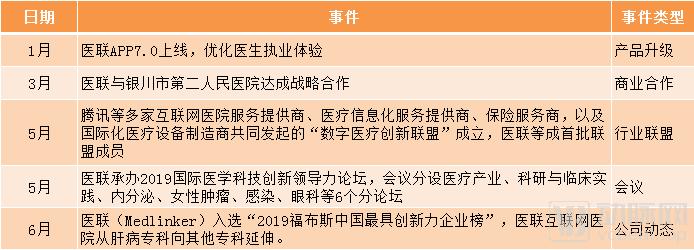
Medlinker’s Key New Developments in the First Half of the Year, Source: VCBeat Dongguan Channel
Since early 2018, Medlinker has been vigorously developing its internet hospital business. Chronic disease specialties have long been a hallmark of Medlinker’s internet hospital, with hepatology being a core area of focus since its inception.
In early 2018, Medlinker began piloting a specialty internet hospital service for liver diseases, with hepatitis C as the entry point. Within one year, it assembled nearly 16,000 hepatologists across China. Six months after its launch, the platform had enrolled more than 8,000 patients with hepatitis C, and thousands of these patients were cured.
At the end of 2018, Gilead’s new hepatitis B drug was launched. The first batch of medications sold out within 20 minutes of being listed on the Yilianyun Cloud Pharmacy, demonstrating that the internet hospital model can significantly improve the accessibility of innovative drugs.
Subsequently, Medlinker has partnered with leading domestic insurance companies and public welfare organizations to alleviate patients’ financial burdens through initiatives such as Patient Assistance Programs (PAPs), and to manage disease risks via commercial insurance. Spanning screening and prevention, diagnosis and treatment, follow-up management, patient education, and insurance coverage, Medlinker Internet Hospital strives to create a comprehensive, patient-centered solution.
This year, during the ninth World Hepatitis Day, Medlinker joined forces with Gilead Sciences to launch a “100-Hospital Containment Campaign,” a cross-sector initiative uniting medical institutions, enterprises, government agencies, and public welfare organizations in a concerted effort to eliminate hepatitis B and C. The campaign consisted of nationwide screening and free clinic activities targeting hepatitis B and C viruses. Spanning two weeks, the initiative covered 72 cities across 29 provinces, with participation from over 120 hospitals and more than 1,000 healthcare professionals, cumulatively screening over 20,000 individuals.
Yilian Internet Hospital has expanded from its specialty in hepatology to other medical disciplines, covering multiple disease areas such as HIV, endocrinology, oncology, and orthopedics this year, gradually growing into one of the leading internet hospital platforms in China.
Wang Shirui, Founder and CEO of Medlinker, stated that the company will continue to refine its diversified layout in the healthcare sector. While consolidating its physician platform, Medlinker will vigorously expand its internet hospital services. By integrating medical resources—including physicians, pharmaceutical companies, healthcare institutions, and pharmacies—the company aims to create greater social and commercial value, thereby benefiting both medical professionals and the public.
From the perspective of Medlinker’s strategy, more specialties will be integrated into Medlinker’s Internet Hospital platform. Medlinker will also collaborate with more pharmaceutical companies to facilitate integrated online and offline academic promotion, physician education, and patient education, thereby improving drug accessibility.
DXY boasts 5.5 million professional users in the healthcare industry, including 2.1 million physicians, accounting for approximately 71% of the total number of doctors in China. Physicians have always been DXY’s core resource; therefore, DXY has extended its services to the physician community from career development to personal protection.
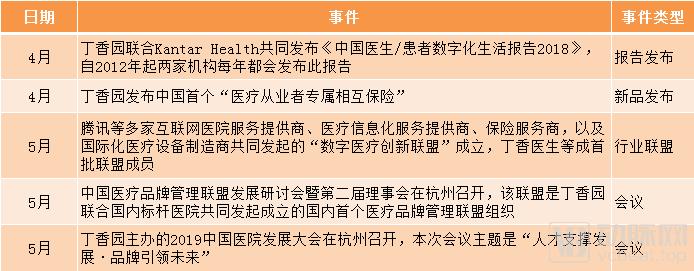
Major New Developments at DXY in the First Half of the Year, Source: VCBeat Dongguan Channel
In April 2019, DXY and Zhonghui Property Mutual Insurance Cooperative jointly launched the “DXY Renyi Mutual Insurance Plan,” the first mutual insurance product in China specifically designed for healthcare professionals.
Not only does it focus on the personal health protection of medical professionals, but DXY’s positioning in the internet healthcare industry is also shifting further toward the broader health industry. Since the beginning of this year, Li Tiantian, founder and chairman of DXY, has stated in media interviews that the company will “focus on the broader health industry and the creation and production of high-quality, safe service content,” and that its “core brand is transitioning toward the broader health sector.”
The reasons for this shift can also be found in a report by DXY.
In April 2019, DXY, in collaboration with Kantar Health, jointly released the “2018 Report on the Digital Lives of Chinese Doctors and Patients.” The report’s data show that Chinese patients spend an average of 26 hours per week online, with 7 hours devoted to medical-related activities, accounting for 29%—a 3-percentage-point increase from 2017.
Among these, patients are most interested in basic disease knowledge/science popularization education, health and wellness information, as well as drug information and usage instructions. However, patient satisfaction with medically related information found through online searches is not high; 84% of patients question the medical information they obtain online.
The above data indicate that while patients are spending more time engaging in medical-related activities online, they remain skeptical of most medical information obtained from the internet. Therefore, it is worth exploring how companies can identify opportunities within this contradictory dynamic by providing practical and authoritative medical information—a direction that aligns with DXY’s current consumer-facing (C-end) business initiatives.
For example, DXY Doctor and DXY Mom, under the DXY brand, are two core science communication IPs that provide users with reliable information, with all content reviewed by professionals in relevant fields. The content matrices of these two core IPs cover platforms such as WeChat Official Accounts, Weibo, Douyin, and Zhihu. Leveraging DXY’s high-quality physician resources, they deliver educational content on health, maternal care, and parenting, along with corresponding paid courses.
According to data from the DXY marketing platform, the total user base across all platforms in the DXY matrix exceeds 35 million. The WeChat follower count for Dingxiang Mama (DXY Mom) surpasses 5.1 million, including over 200,000 paying users. In addition to paid knowledge services, these two major IPs generate revenue through content-driven e-commerce, brand marketing, and research reports. Their commercial clients span industries such as home appliances, personal care, and maternal and infant food and products.
The two core IPs have attracted a large base of consumer users, which not only generates revenue directly from the IPs but also strengthens DXY’s corporate brand. When users place sufficient trust in the brand, they may turn to DXY for medical consultation and treatment when faced with illness, making DXY Internet Hospital and DXY Clinic viable channels for care.
Currently, DXY has a total of 140 job openings on Lagou.com, among which 50 are related to DXY Doctor and DXY Mom, accounting for more than one-third of the total vacancies. This highlights the significant role these two major IPs play in DXY’s overall business.
Furthermore, DXY’s business activities in the first half of the year included the following: In January, it hosted the 2019 National Health Conference, focusing on the assessment of national health status and trends, and released the “2019 National Health Insights Report.” In May, the DXY Cloud Clinic opened in Fuzhou, marking a return to pediatric services. Also in May, the China Clinic Development Conference was held in Hangzhou, where Li Tiantian stated that clinics should not only serve patients but also address the public’s growing demands for healthier lifestyles. These initiatives further demonstrate DXY’s strategic shift toward the broader health and wellness sector.
In January 2019, Zhang Kun, the former CEO of Chunyu Yisheng (Spring Rain Doctor), stepped down. In its announcement, Chunyu Yisheng stated that under Zhang Kun’s leadership, the company had accumulated strong momentum for in-depth strategic development in the next phase. Following Zhang Kun’s departure, Zeng Boyi, co-founder and chairman of Chunyu Yisheng, assumed overall leadership. Although Chunyu Yisheng disclosed limited information during the first half of the year, it was evident that the company leveraged its big data advantages to steadily advance its online operations, thereby empowering its layout in offline primary healthcare services.
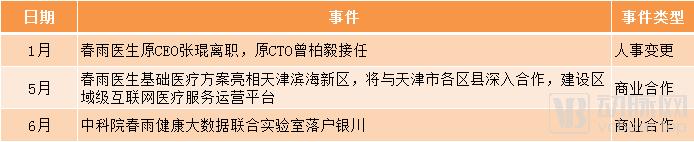
Major New Developments at Chunyu Doctors in the First Half of the Year, Source: VCBeat’s Dongguan Channel
In May this year, at the Smart Health and Medical Summit of the 3rd World Intelligence Congress hosted by the Tianjin Municipal Health Commission, Chunyu Doctor unveiled its primary care solutions and announced plans to deepen collaboration with all districts and counties in Tianjin to jointly build a regional internet healthcare service operation platform. Chunyu Doctor’s strengths in big data accumulation and application will serve as a key driver for the platform’s development.
In June of the same year, the CAS Chunyu Health Big Data Joint Laboratory was established in Yinchuan. Relying primarily on the Yinchuan Chunyu Internet Hospital, the joint laboratory will conduct research in healthcare big data and medical artificial intelligence. Meanwhile, it will carry out related studies on medical data security, health big data governance, standardized clinical pathways for “Internet + Healthcare,” and regulatory systems.
As early as 2015, Chunyu Doctor took the lead in data mining and exploration within the field of health big data. In May 2015, the Chunyu–University of Chinese Academy of Sciences Joint Laboratory for Health Big Data was established in Beijing. In December 2018, the joint laboratory’s project on the “Big Health Doctor-Patient Matching Model” passed the evaluation by a domestic expert panel. The appraisal opinion indicated that the structured processing technology for unstructured health big data and the data mining methods based on optimization theory and algorithms employed by the joint laboratory had reached an internationally advanced level. The department triage model, physician quality assessment model, and physician recommendation model, constructed based on this theoretical framework, have become essential tools for Chunyu Doctor’s daily intelligent doctor-patient matching.
Leveraging this theoretical framework and methodology, the joint laboratory has developed a doctor-patient matching system and a service distribution system that achieve high levels of speed, accuracy, and user satisfaction. The automatic triage accuracy rate remains above 90%, overall user satisfaction exceeds 95%, and precise doctor-patient matching is completed within an average of three minutes, enabling immediate online consultation. The system demonstrates the capability to distribute services at scale within a short timeframe.
For Chunyu Doctor, big data has more diverse application scenarios beyond improving the efficiency and quality of online consultation services. At the 2019 Summit on Innovation Practices in Primary Healthcare, hosted by VCBeat and Eggshell Research Institute, Zeng Boyi, Chairman of Chunyu Doctor, proposed that future healthcare will involve a shift in patient-centered medical service scenarios. After this shift, community healthcare service points will become the first public area users step into when leaving home, capable of supporting a wide range of medical services, making communities the ideal setting for implementing internet-based healthcare.
Community-based “Chunyu Health Kiosks” are positioned as experience stores for Chunyu Doctor. At these “Health Kiosks,” users can access online services such as virtual consultations, family doctor services, specialist care, and green-channel expedited referrals. From establishment to operation, a “Health Kiosk” requires only about 15 days, exemplifying a lean front-end with a robust back-end system. Compared with community unmanned pharmacies that lack a personal touch and community clinics constrained by licensing and qualified personnel, this community healthcare model is asset-light, offers more flexible problem-solving approaches, and provides a richer variety of back-end services. It can be rapidly replicated across communities, leveraging big data to standardize back-end processes and operations. As of the end of last year, 61 Chunyu Health Kiosks had been established across China, covering nine provinces and delivering medical services to more than 20,000 households.
Haodf Online has maintained its consistently low-profile style, with limited publicly disclosed information in the first half of the year; the most significant updates stemmed from the “China Haodf Summit.”
In January 2019, Haodf Online hosted the China Haodf Summit. At the summit, CEO Wang Hang announced a significant development: the Haodf platform had entered the era of team-based care.
Wang Hang introduced that in the past, a doctor typically had only dozens to hundreds of patients online. As doctors’ brand appeal has grown stronger, their patient bases have expanded significantly, with increasingly large followings. It is now very common for a single doctor to manage hundreds or even thousands of patients. On the Haodafu platform, there are 19,833 doctors who have served more than 500 patients, 12,291 doctors who have served more than 1,000 patients, 1,997 doctors who have served more than 5,000 patients, and 603 doctors who have served more than 10,000 patients.
To optimize resource allocation, Haodf introduced branded physician team-based consultations and undertook large-scale modifications to its underlying platform architecture to provide technical support for this model.
Team-Based Care: A branded physician serves as the lead expert, assembling an online team comprising physician assistants, junior physicians, nurses, and rehabilitation therapists to collectively serve patients. Physician assistants facilitate consultation processes, junior physicians handle routine responses, nurses provide daily care guidance, while rehabilitation therapists, dietitians, and technicians address their respective specialized areas. The lead expert conducts regular online ward rounds, makes critical decisions, and oversees overall medical quality.
Wang Hang stated that with the implementation of a team-based work mechanism, brand physicians’ capacity to serve patients would increase significantly, enabling them to accommodate twice as many patients or even an order of magnitude more, while maintaining high levels of service satisfaction within this expanded patient population.
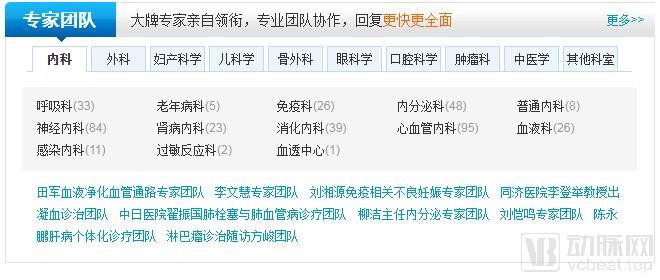
Expert Team Section of Haodf Online, Source: Haodf Online Website
Currently, the team-based care section has been launched on the PC version of Haodf. The page displays that 3,395 physician teams have joined, covering more than 30 primary medical specialties.
Wang Hang believes that as brand-name physicians establish one remote team after another, the geographic coverage of their services continues to expand into surrounding areas, with some brand-name physicians poised to develop their practices into future regional specialty medical groups.
Addressing the challenges of recruiting and managing physician teams, Wang Hang further proposed that Haodafu would provide multifaceted support to these teams. Such measures include: issuing calls to recruit and select team members, particularly targeting young physicians; pre-setting templates for team incentive mechanisms in the management backend, enabling compensation calculations based on workload; engaging experts in economics, management, and marketing to broaden the horizons of physician teams; and refining standards for online medical practice management to ensure safer online practice for physician teams.
For years, Haodf Online has revitalized underutilized medical resources through a “task assignment” model, with physicians from tertiary Grade A hospitals accounting for 73% of the platform’s total physician base. However, whether in offline or online settings, patients tend to seek out renowned specialists and experts. Consequently, when the volume of online consultations reaches a certain scale, an uneven distribution of medical resources emerges, similar to the offline scenario: individual specialists become overloaded with patients, potentially compromising service quality.
Haodf.com has long been deeply committed to serving doctors and patients, avoiding large-scale business expansion. The doctor teams established this year can also be seen as a further revitalization of medical resources.
A review of the latest developments among leading internet healthcare companies reveals that, although the volume of publicly disclosed information varies, it is evident that their business explorations are diverging: some are pursuing vertical depth, others horizontal expansion, and still others are gradually shifting their strategic focus. These enterprises have moved beyond the initial, broad concept of internet healthcare to identify paths better suited to their strengths, each building a distinctive and competitive business ecosystem. In the second half of the year, driven by policy incentives, market demand, and other factors, the internet healthcare sector is poised for even greater possibilities.