

JunLian Healthcare Global New Drug Bulletin · Issue 13

Legend Capital
Early-stage venture capital and growth-stage private equity investment institutions

July 8–14, 2019: A total of 7 new drug data entries this week, including 2 in oncology, 3 in gene therapy, and 2 in metabolic diseases.
❖BioMarin plans to submit regulatory applications for its gene therapy for hemophilia A to the U.S. FDA and the European EMA in the fourth quarter, marking the industry’s first regulatory submission for a hemophilia gene therapy. BioMarin’s product, valrox, has demonstrated impressive efficacy in significantly reducing Factor VIII usage during a three-year post-treatment observation period. Gene therapies have gained significant global momentum over the past two years, and it is expected that more such therapies will be implemented in China.
❖Mirati Announces Collaboration with Novartis to Combine KRAS G12C Inhibitor MRTX849 and Novartis’ SHP2 Inhibitor TNO155 for the Treatment of Advanced Solid Tumors Harboring KRAS G12C Mutations. KRAS has long been considered an undruggable target. However, since Amgen discovered that specific mutant structures of KRAS could serve as a breakthrough for drug development, numerous companies worldwide, including those in China, have begun to strategize around this target. Whether such a pivotal target can be so easily conquered, and whether domestic enterprises can rapidly overcome structural and patent barriers to keep pace, remains to be seen.
❖Chia Tai Tianqing’s investigational new drug, TQB3804, is regarded as a potential fourth-generation EGFR inhibitor and is poised to become the first of its kind in China to enter Phase I clinical trials. Over the past year, as osimertinib has increasingly solidified its position as the leading therapy for EGFR-positive non-small cell lung cancer (NSCLC), the industry has been eager to identify fourth-generation EGFR inhibitors as contenders for the throne. Currently, C797S inhibitors are considered among the most promising candidates. This continual emergence of innovative agents exemplifies one of the key appeals of the ongoing iteration in targeted therapies.
FDA Accepts Sanofi’s Submission for Anti-CD38 Monoclonal Antibody
Biologics License Application (BLA) for Isatuximab
The FDA has accepted Sanofi’s Biologics License Application (BLA) for the anti-CD38 monoclonal antibody isatuximab. This therapy, indicated for the treatment of relapsed or refractory multiple myeloma (RRMM), is expected to receive a response by April 2020.
Isatuximab is a monoclonal antibody targeting the CD38 receptor on the surface of plasma cells, which can trigger multiple distinct mechanisms of action to promote apoptosis and modulate immune responses.
In an open-label, randomized phase 3 clinical trial, isatuximab in combination with pomalidomide and dexamethasone for the treatment of patients with relapsed/refractory multiple myeloma (RRMM)
Isatuximab-based combination therapy significantly improved progression-free survival (PFS) (HR=0.59). The median PFS was 11.53 months, approximately twice that of the pomalidomide plus dexamethasone regimen (6.47 months).
BioMarin plans to submit applications to the U.S. FDA and the European EMA in the fourth quarter
Submission of Regulatory Application for Gene Therapy for Hemophilia A
BioMarin Pharmaceutical plans to submit regulatory applications for its gene therapy for hemophilia A, valoctocogene roxaparvovec (valrox), to the U.S. FDA and the European EMA in the fourth quarter. It is expected to be the first hemophilia gene therapy to enter the regulatory review stage.
Valrox is a gene therapy that uses an AAV5 viral vector to deliver a transgene expressing factor VIII.
In the Phase 1/2 clinical trial, patients received a single dose of gene therapy at 6×10¹³ vg/kg.
In the third year after treatment, the annualized bleeding rate (ABR) and factor VIII usage remained well controlled. Over the three-year treatment period, ABR and factor VIII consumption decreased by an average of 96%. Patients no longer required prophylactic factor VIII injections.
52 Weeks Post-Valrox Administration
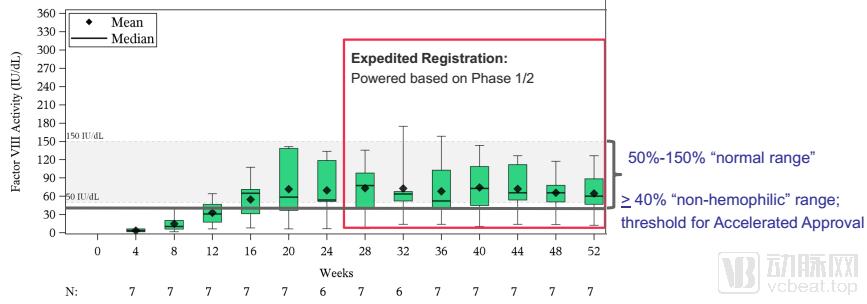
Data source: BioMarin
uniQure Announces Its Treatment for Severe or Moderate-to-Severe Type B
Phase 2b Clinical Trial Results of Gene Therapy for Hemophilia Patients
uniQure Announces Phase 2b Clinical Trial Results for ATM-061, Its Gene Therapy for Patients with Severe or Moderately Severe Hemophilia B
The gene therapy AMT-061 uses an AAV5 viral vector to deliver a transgene encoding the FIX Padua variant (FIX-Padua).
In an open-label, single-dose, single-arm, multicenter Phase 2b clinical trial, three patients with severe hemophilia B (endogenous FIX activity <1%) received a single intravenous infusion of AMT-061 at a dose of 2e13 vc/kg.
36-week follow-up data showed that after a single dose of 1AMT-061, all three patients exhibited sustained increases in factor IX (FIX) activity, with two patients achieving FIX activity levels within the normal range (>40% of normal values).
Sernova announces islet cells encapsulated in its unique Cell Pouch,
Good efficacy after implantation in patients with type 1 diabetes
Sernova Announces That Islet Cells Encapsulated in Its Proprietary Cell Pouch System Demonstrate Favorable Safety and Help Control Blood Glucose Levels in Patients with Type 1 Diabetes After Implantation
Sernova’s innovative therapy consists of a unique Cell Pouch, islet cells, and immune protection measures. The Cell Pouch system is a medical device designed for implantation into patients, fabricated from biocompatible and safe materials.
In a Phase 1/2 clinical trial, patients with type 1 diabetes and severe hypoglycemia unawareness were treated with this innovative therapy.
In the first patient to receive treatment, the cell encapsulation system was successfully integrated into the tissue. Ninety days post-treatment, assessments of glucose-stimulated insulin and C-peptide levels demonstrated that the islet cells transplanted into the patient were able to respond appropriately to fluctuations in blood glucose levels.
Sernova’s Cell Pouch System Can Be Successfully Integrated into the Human Body
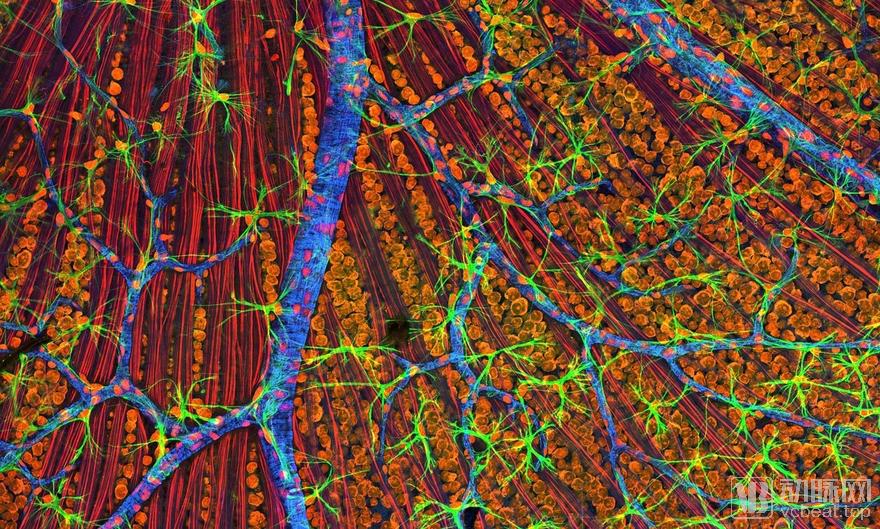
Source: FierceBiotech
Sarepta’s antisense RNA drug in three trials of its confirmatory post-approval studies,
Achieved positive outcomes in slowing the decline of lung function
Sarepta Therapeutics’ antisense RNA drug Exondys 51 (eteplirsen), for the treatment of Duchenne muscular dystrophy (DMD), achieved positive results in delaying pulmonary function decline across three trials in its confirmatory post-marketing studies.
Exondys 51 is a phosphorodiamidate morpholino oligomer developed by Sarepta that targets the splicing process of dystrophin pre-mRNA, aiming to induce exon 51 skipping to produce a truncated but functional dystrophin protein.
The product has been launched on the market, and the company is observing the decline in lung function among patients at different stages of disease progression.
Exondys 51 can slow the decline in lung function regardless of the stage of disease progression.
Camrelizumab Monotherapy as Second-Line Treatment by Hengrui Medicine
Phase 3 Study in Advanced Esophageal Squamous Cell Carcinoma Meets Primary Endpoint
The Phase 3 study of camrelizumab monotherapy as second-line treatment for advanced esophageal squamous cell carcinoma, developed by Hengrui Medicine (hereinafter referred to as the “ESCORT study”), has met its primary endpoint.
In a randomized, open-label, active-controlled, multicenter Phase 3 clinical trial, 448 patients were enrolled, with 228 patients receiving camrelizumab and 220 patients receiving investigator’s choice of chemotherapy. The primary endpoint was overall survival (OS).
The company claims that OS has significant advantages, and detailed results will be simultaneously presented at the CSCO and ESMO conferences in September 2019.
AstraZeneca's Hyperkalemia Drug: Sodium Zirconium Cyclosilicate
Marketing application in China accepted for review
AstraZeneca’s Marketing Application for Sodium Zirconium Cyclosilicate (Lokelma) for Hyperkalemia Accepted in China
Lokelma is a highly selective oral potassium binder that is tasteless and stable at room temperature. The drug was initially developed by ZS Pharma, and AstraZeneca acquired the development rights to this potential blockbuster drug after purchasing ZS Pharma for $2.7 billion in November 2015.
Lokelma underwent three double-blind, placebo-controlled trials and two open-label trials
Among patients receiving Lokelma treatment, 41.2% maintained normal pre-dialysis potassium levels (4–5 mmol/L) after a prolonged interdialytic interval, compared to only 1.0% in the placebo group.
❖Mirati Therapeutics Announces Collaboration with Novartis to Evaluate Mirati’s Investigational KRAS G12C Inhibitor MRTX849 in Combination with Novartis’ Investigational SHP2 Inhibitor TNO155 for the Treatment of Advanced Solid Tumors Harboring KRAS G12C Mutations in Clinical Trials
❖Chia Tai Tianqing’s investigational new drug, TQB3804, is poised to become the first in China to enter Phase I clinical trials. It not only overcomes the two major classes of common triple mutations that emerge after resistance to third-generation inhibitors develops, but also inhibits EGFR wild-type mutations and T790M mutations induced by first- and second-generation targeted therapies.
❖The Hong Kong Stock Exchange disclosed the listing application version of China Antibody Pharmaceuticals Limited in the issuer information, with CICC and Orient Securities as joint sponsors. China Antibody was founded in Hong Kong by Dr. Liang Ruian in 2001 and currently has six drugs under development, covering more than ten indications.
❖Bio-Thera Solutions’ application for listing on the STAR Market has been accepted. The company plans to publicly issue no more than 60 million A-share ordinary shares, raising a total of RMB 2 billion, primarily for drug research and development.
❖Jiyao Holdings announced on the evening of July 10 that it plans to acquire 100% equity interest in Xiuzheng Pharmaceutical Group Co., Ltd. through share issuance and other methods. This transaction is expected to constitute a major asset restructuring, and the company’s shares will be suspended from trading starting July 11.
❖China Tailing Pharmaceutical Group Co., Ltd. announced that it has conditionally agreed to acquire Hong Kong WD Pharmaceutical Co., Limited (Handu Pharmaceutical). Upon completion, the Company will hold approximately 52% of the total issued share capital of Handu Pharmaceutical, becoming its controlling shareholder. The total valuation is USD 100 million.