

Three Ministries Issue Joint Notice on Nationwide Implementation of Electronic Medical Billing Reform and System Integration
VCBeat (WeChat ID: vcbeat) has learned that the Ministry of Finance, the National Health Commission, and the National Healthcare Security Administration recently jointly issued the “Notice on Comprehensively Promoting the Reform of Electronic Billing Management for Medical Services.” The notice calls for the full implementation of reforms in electronic billing management for medical services and the widespread adoption of electronic medical billing invoices by the end of 2020. Health authorities in all regions are required to oversee local healthcare institutions in implementing these reforms, including upgrading information systems and adjusting business processes, and to ensure the use of nationally standardized medical billing invoices as prescribed.
The main contents of the “Notice” are as follows:
In accordance with the requirements of Cai Zong [2018] No. 62, all regions shall comprehensively implement the reform of electronic medical billing invoice management and promote the application of electronic medical billing invoices by the end of 2020, building on a thorough summary of the pilot experiences in fiscal electronic invoice reform.
Standardize the Format of National Medical Service Fee Receipts
Effective from the date of issuance of this Notice, the nationally unified formats for medical fee invoices are officially implemented, including the formats for electronic outpatient medical fee invoices, electronic inpatient medical fee invoices, machine-printed outpatient medical fee invoices, and machine-printed inpatient medical fee invoices. The coding of these invoices shall be prepared in accordance with the coding rules stipulated in Cai Zong [2018] No. 72. Meanwhile, the nationally unified format for electronic medical fee details is implemented to be used in conjunction with electronic invoices. In consideration of system upgrades and the actual conditions of invoice management, a one-year transition period is established in principle, during which the original invoice formats and the nationally unified invoice formats shall run in parallel across all regions until the end of 2020.
Implement Information System Upgrades and Integration
Finance departments in all regions shall ensure the effective implementation of reforms in the management of electronic medical billing invoices, achieve system integration with the Ministry of Finance’s platform, and enable nationwide one-stop inquiry, authenticity verification, and reimbursement posting for electronic medical billing invoices.
Health authorities in all regions shall supervise local medical and health institutions in implementing the reform of electronic billing management for medical services, ensuring the completion of information system upgrades and adjustments to business processes, and using medical fee receipts in the uniform national format as required.
Medical insurance departments in all regions shall, in accordance with the national requirements for the construction of a unified medical security information system, achieve interconnectivity and information sharing with finance departments, promptly provide feedback to finance departments on information such as the accounting and reimbursement of electronic medical fee invoices, and leverage the medical insurance network channels to facilitate information transmission with medical institutions, thereby ensuring the effective implementation of electronic medical fee invoice applications.
All medical and health institutions shall upgrade their information systems, adjust business processes, achieve system interoperability with the finance, health, and healthcare security authorities, implement the use of nationally unified medical fee invoices in accordance with regulations, and actively advance the reform of electronic medical fee invoice management.
Standardizing the Reimbursement, Accounting, and Archiving of Electronic Medical Billing Invoices
Pursuant to the provisions of Cai Zong [2018] No. 72, entities that meet the conditions specified in Articles 8 and 9 of the Measures for the Administration of Accounting Archives may perform accounting treatment based on the data files of electronic medical fee bills and archive them in accordance with the requirements for electronic record management. Entities that book and reimburse expenses using electronic medical fee bills shall promptly report information such as booking status, booking time, and booked amount to the finance department. Entities that do not meet the conditions specified in Articles 8 and 9 of the Measures for the Administration of Accounting Archives may use printed copies of the layout files of electronic medical fee bills for booking, archive both the electronic bills and their printed layout file copies, and establish a retrieval link between the printed layout file copies and the electronic bills. All entities shall establish and improve relevant internal control systems to ensure the authenticity and reliability of bills and prevent duplicate booking and reimbursement.
Medical and healthcare institutions shall standardize the entry of medical fee items and other information when issuing medical fee receipts. Specifically, the payer’s Unified Social Credit Code field shall be populated with the patient’s valid identification number, with certain digits masked to protect patient privacy.
Standardize the Completion of Medical Outpatient Fee Receipts
The charge items listed on medical outpatient fee receipts include consultation fees, examination fees, laboratory test fees, treatment fees, surgical fees, sanitary material fees, Western medicine fees, traditional Chinese medicine (TCM) decoction pieces fees, proprietary Chinese medicine fees, general diagnosis and treatment fees, and registration fees, as well as other outpatient and emergency charge items specified in the Government Accounting System, the Supplementary Provisions on Hospitals’ Implementation of the “Government Accounting System—Accounting Subjects and Financial Statements for Administrative Institutions” (Cai Kuai [2018] No. 24), and the Supplementary Provisions on Primary Medical and Health Institutions’ Implementation of the “Government Accounting System—Accounting Subjects and Financial Statements for Administrative Institutions” (Cai Kuai [2018] No. 25). The item information filled in the “Other Information” column includes business serial number, type of medical institution, gender, outpatient number, date of visit, type of medical insurance, medical insurance number, payment from the medical insurance pooled fund, other payments, payment from personal account, personal cash payment, personal out-of-pocket amount, and personal self-pay amount.
When issuing medical outpatient fee receipts, healthcare institutions shall list the items and their detailed breakdowns in the order specified above, first listing all fee items incurred during the current visit, and then listing the specific details included in each item according to the order of the incurred items. If there are too many detailed items to fit on the receipt, all detailed items should be listed in the medical fee detail statement.
Standardizing the Completion of Medical Inpatient Billing Receipts
The charge items listed on medical inpatient billing invoices include bed fees, consultation fees, examination fees, laboratory testing fees, treatment fees, surgical fees, nursing fees, sanitary material fees, Western medicine fees, traditional Chinese medicine (TCM) decoction pieces fees, proprietary TCM medicine fees, and general diagnosis and treatment fees, as well as other inpatient charge items specified in the Government Accounting System and the Supplementary Provisions on Hospitals’ Implementation of the “Government Accounting System—Accounting Subjects and Financial Statements for Administrative Institutions” (Cai Kuai [2018] No. 24) and the Supplementary Provisions on Primary Healthcare Institutions’ Implementation of the “Government Accounting System—Accounting Subjects and Financial Statements for Administrative Institutions” (Cai Kuai [2018] No. 25). The item information filled in the “Other Information” column includes business transaction serial number, type of medical institution, gender, medical record number, inpatient admission number, inpatient department, duration of hospitalization, prepayment amount, supplementary payment amount, refund amount, type of medical insurance, medical insurance identification number, payment from the pooled medical insurance fund, other payments, payment from personal account, personal cash payment, personal out-of-pocket payment, and personal self-pay expenses.
Medical and health institutions shall list items in the order of occurrence among the aforementioned charge categories when issuing medical inpatient fee receipts, and include the specific details contained in each item in the detailed statement of medical charges.
Clarify the items in the “Other Information” section
Transaction Serial Number: A serial number automatically generated by the billing system of medical and health institutions.
Type of Medical Institution: Categories of medical and health institutions as determined in accordance with the "Detailed Rules for the Implementation of the Regulations on the Administration of Medical Institutions" and the "Notice of the Ministry of Health on Revising Certain Contents of Article 3 of the Detailed Rules for the Implementation of the Regulations on the Administration of Medical Institutions."
Health Insurance Type: Valid values include Basic Medical Insurance for Employees, Basic Medical Insurance for Urban and Rural Residents (Basic Medical Insurance for Urban Residents, New Rural Cooperative Medical Scheme), and other medical insurance types.
Medical Insurance ID: The unique identifier for the insured in the medical insurance system.
Payment by the Basic Medical Insurance Pooled Fund: The amount of medical expenses incurred during the patient's current medical visit that is covered by the basic medical insurance pooled fund in accordance with relevant regulations.
Other Payments: The amount paid by funds or resources such as critical illness insurance, medical assistance, civil servant medical subsidies, large-sum supplementary insurance, and enterprise supplementary insurance, in accordance with regulations, from the medical expenses incurred by the patient during this medical visit.
Payment from Personal Account: Payment of insured persons' medical expenses (including those within and outside the scope of the Basic Medical Insurance Catalog) from their personal accounts in accordance with policy regulations.
Personal Cash Payment: The amount paid by an individual through cash, bank cards, WeChat, Alipay, and other channels.
Out-of-Pocket Expenses: The amount borne by the patient for medical expenses incurred during this visit that fall within the scope of the Basic Medical Insurance catalog and are subject to cost-sharing; also includes fixed-amount payments made by patients under bundled payment models such as diagnosis-related groups (DRGs), disease-specific packages, or per-diem rates. This item is included in the information for the special additional deduction for critical illness medical expenses under Individual Income Tax.
Out-of-Pocket Expenses: The portion of medical expenses incurred by the patient during this visit that falls outside the scope of the Basic Medical Insurance Catalogue and is therefore fully borne by the individual in accordance with relevant regulations.
Reconciliation of the above items: Total Amount = Payment by Basic Medical Insurance Pooling Fund + Other Payments + Personal Account
Payment + Individual Cash Payment
The items in the “Other Information” column, as standardized nationwide, shall be filled out one by one as shown in the figure. Each region may add personalized additional items based on actual management needs and continue filling them out sequentially. For items in the “Other Information” column that pertain to healthcare information, their meanings and content shall be interpreted by the health authorities and healthcare institutions, respectively; for those pertaining to medical insurance information, their meanings and content shall be interpreted by the medical insurance authorities.
Information displayed in the “Other Information” column of the medical fee receipt:
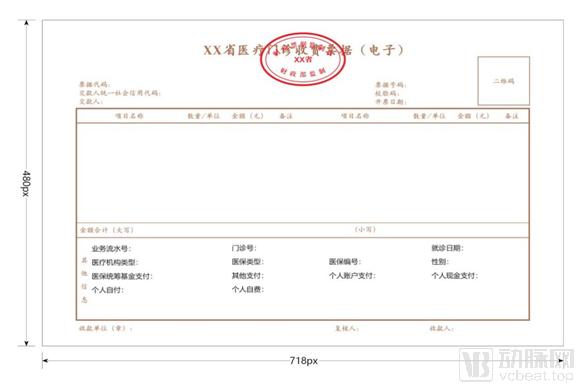
Medical Outpatient Fee Receipt (Electronic)
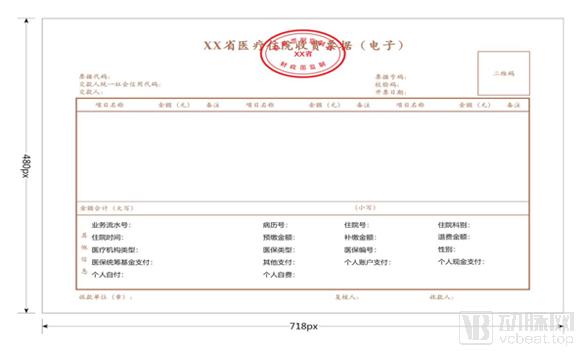
Medical Inpatient Fee Receipt (Electronic)
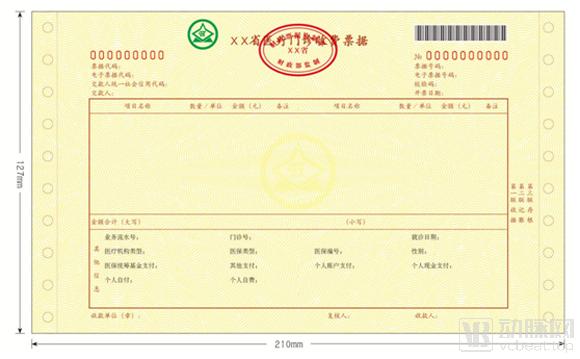
Medical Outpatient Fee Receipt (Machine-Printed)
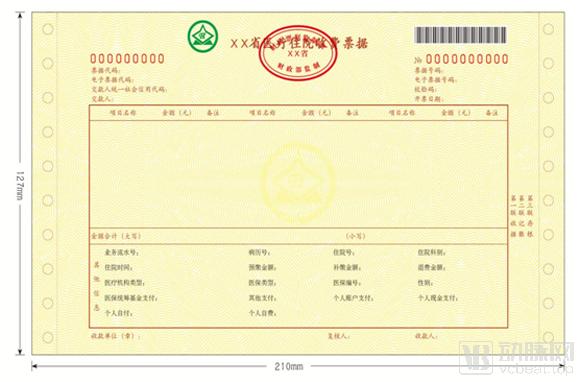
Medical Inpatient Fee Receipt (Machine-Printed)
(I) Ensure effective implementation. Finance, health, and medical insurance departments in all regions shall collaborate closely, formulate practical work plans tailored to local conditions, carry out the upgrading and integration of relevant systems, adopt nationally standardized formats for medical fee receipts as required, and advance the reform of electronic management of medical fee receipts.
(II) Strengthen communication and coordination. Finance, health, and medical insurance departments in all regions shall ensure effective coordination among themselves and enhance communication with healthcare institutions, payers, and reimbursement units to gain a comprehensive and objective understanding of the reform in the management of electronic medical billing invoices, promptly identify issues, carefully study solutions, and report to higher-level authorities in a timely manner.
(3) Strengthen public awareness campaigns. Finance, health, and healthcare security departments in all regions shall fully leverage media, internet, and other communication channels to promote the use of electronic medical billing invoices, enhance public awareness of such invoices, effectively improve the efficiency of invoice circulation and utilization, and achieve the goal of providing convenient and people-centric services.
Source: Official Website of the Ministry of Finance