

Is Medical Care a 'False Need'? Director Feng Li Decodes Longfor's Elderly Care Strategy Emphasizing Synergy Across Business Lines
Elderly care has long been intertwined with healthcare. It is understandable that older adults have medical needs; however, in actual practice, the utilization rate of these services falls far short of the perceived “level of demand.” As elderly care enters the 3.0 era, identifying seniors’ “true needs” and driving a “consumption upgrade” in eldercare services have become top priorities.
How Should a “Newcomer” Approach Elderly Care? In September 2018, Longfor Group crossed industry boundaries to enter the elderly care sector, with its first project, Longfor Chunshan Wanshu·Chongqing Xinyicheng Yinian Apartment (hereinafter referred to as “Yinian Apartment”), officially commencing operations. Unlike other real estate developers, Longfor emphasized a “service-oriented” strategy, pioneering entry into the elderly care market as a professional senior care institution.
Longfor integrates elderly care into its other core businesses, exploring a new model that combines commercial operations, Yinian Apartments (senior living), and long-term rental apartments. Located in Longfor’s self-held prime business districts, Yinian Apartments will future collaborate with Guanyu (Longfor’s long-term rental apartment brand). For example, young tenants may provide volunteer services to seniors in exchange for partial rent waivers.
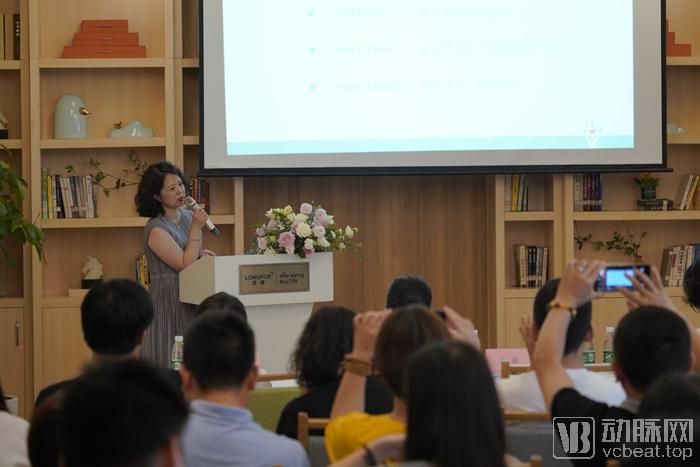
Image source: Provided by the organizer, Yuyan Elderly Care
At the third “Practitioners’ Sharing Session,” co-hosted by Yuyan Elderly Care and Longfor Chunshan Wanshu·Chongqing Xinyicheng Yinian Apartment, Feng Li, Director of Longfor Chunshan Wanshu·Chongqing Xinyicheng Yinian Apartment, delivered a presentation titled “Longfor Elderly Care’s Exploration of ‘Consumption Upgrading.’” To provide deeper insights into Longfor’s journey in elderly care, VCBeat (WeChat ID: vcbeat) has compiled the key points from the session for our readers.
From the current state of China’s elderly care consumption market, it can be mainly divided into three dimensions: policy, development trends and market potential, and operational capabilities. The data in this regard is familiar to those working in the elderly care sector, such as the huge appreciation space in China’s elderly care consumption market, with a scale reaching 3.79 trillion yuan, Chongqing entering deep aging with an elderly population accounting for 14.1%, and so on.
From my perspective, I believe these data reflect two issues:
First, issues related to family structure.Behind the massive elderly population of 249 million lies a unique family structure. Whether it is the “4-2-1” or “4-2-2” model, the “2” in the middle refers to the working-generation individuals born in the 1970s and 1980s, who are in their career ascent and bear the dual responsibility of caring for both aging parents and young children. This indicates that the issue of elderly care is undergoing a quantitative accumulation of demand as well as representing an inelastic necessity, a process that will inevitably evolve from quantitative change to qualitative transformation.
Second, the issue of demand.The uniqueness of elderly care lies in the significant heterogeneity among clients. The payers (often adult children) and the consumers (the elderly) are distinct groups, and individual seniors further differ in lifestyle habits, consumption patterns, and life philosophies, inevitably leading to diverse needs. This variability is precisely why current demand for elderly care services—whether institutional, community-based, or home-based—has not been effectively unlocked.
From the perspective of the overall market, elderly care consumption is facing a golden opportunity, demand for elderly care services is experiencing rigid growth, and the upgrade in elderly care consumption is undoubtedly poised for takeoff. However, if all the news were positive, people would not be grappling with so many difficulties and problems today.

Rooftop Garden of Yinian Apartment (Source: Provided by the Enterprise)
I believe the current issues can be summarized as “several pluses and several minuses.” The pluses: abundant policies, excessive idle resources, ample supply, and strong demand. The minuses: limited payment, low profitability, scarce standards, and few companies willing to engage.
First, there is supply and high demand, but a lack of payment mechanisms.
Demand and supply are interrelated issues. The elderly care sector, which emerged in 2012, has completed its first five-year phase and is now entering the second. Correspondingly, both demand and perceptions have evolved. Older adults are increasingly pursuing high-quality material and spiritual lives, as well as a greater sense of participation and engagement with society.
With the addition of such requirements, we have observed that the needs of the elderly have evolved from basic daily care to multi-level, diversified, and personalized demands. Their social roles have also shifted accordingly, transitioning from passive recipients of care to active seekers of social participation.
Taking Longfor’s inaugural project, Yinian Apartment, as an example, we conducted some research:
1、Research on the Payment SideCurrently, 66% of elderly residents cover all expenses within the apartment using their own pension income, while 34% rely on a combination of pensions, financial support from their children, and rental income. These figures indicate that the elderly themselves remain the primary payers at present.
There is a consensus that payment issues are an urgent problem to be addressed. Under current conditions, I believe the only viable approach to resolving payment challenges is through cost-shifting. First, elderly care service operators or senior care enterprises should receive all available government subsidies; second, the implementation and support of insurance policies constitute another avenue for addressing payment issues.
2、Research on Discourse PowerDuring the initial consultation phase for senior living admissions, decision-making power rests with family members. As seniors reside in relatively closed environments, they are less informed than their children about new institutions and emerging trends in the market. Therefore, adult children typically conduct facility visits on behalf of their parents, make preliminary assessments, and ultimately decide whether to proceed with admission. In reality, the decision carries equal weight, with both the senior and their family each accounting for 50% of the influence.
3、Research on the Needs of the ElderlyThe needs of self-care elderly individuals are more focused on spiritual well-being, entertainment, and social participation, whereas those requiring nursing care place greater emphasis on medical treatment and caregiving. However, have we ever considered whether these represent “genuine needs”? Our surveys among the elderly revealed that all respondents expressed a need for medical services. Yet, in actual operation, while the demand rate for medical services is high, the utilization rate is not correspondingly high. This discrepancy significantly diminishes the “genuine need,” causing it to devolve into a “pseudo-need,” and ultimately into a “false need.”
Second, product forms are highly homogenized, and the quality and standards of elderly care services vary significantly.
This issue is interconnected with the first question regarding “supply and demand.” When distorted data on elderly care service demand is obtained, the services and products provided fail to fully meet the actual needs of older adults. This mismatch leads to imbalances, resulting in dissatisfaction among seniors and reduced profitability for enterprises. Consequently, limited financial resources hinder further investment, exacerbating issues such as product homogenization and inconsistent service standards. These challenges create a vicious cycle in the elderly care sector, representing a significant problem currently facing the market.
Indeed, the elderly care market faces pain points, yet we also recognize its immense potential and room for growth. This calls for us to first identify the underlying issues, after which enterprises can develop their own solutions.
First, it is essential to identify the customer’s true needs. Whether these are genuine, false, or pseudo-needs, we must conduct an initial screening ourselves. During this screening process, telecom operators need to clearly determine what requires advance strategic positioning and from which dimensions such positioning should be implemented. This strategic layout should be executed across channels, marketing, and overall corporate strategy.
The foundation of elderly care lies in service. The core of consumption upgrading is undoubtedly service upgrading. To achieve this, I believe we must address genuine needs. By aligning with their own development strategies, operators can ultimately realize upgrades in both service and quality.
Longhu Elderly Care aims to achieve brand, space, and product upgrades, ultimately culminating in service enhancements that meet the demands of consumption upgrading. The goal is to transform current spending habits among seniors by gradually fostering healthier and more sustainable consumption patterns.
Longfor aims to build elderly care institutions that embody “vibrant spaces and warm services,” driving upgrades in eldercare consumption concepts, service scenarios, and quality. This approach seeks to continually enhance customers’ happiness index while fostering a healthy and sustainable industry ecosystem.
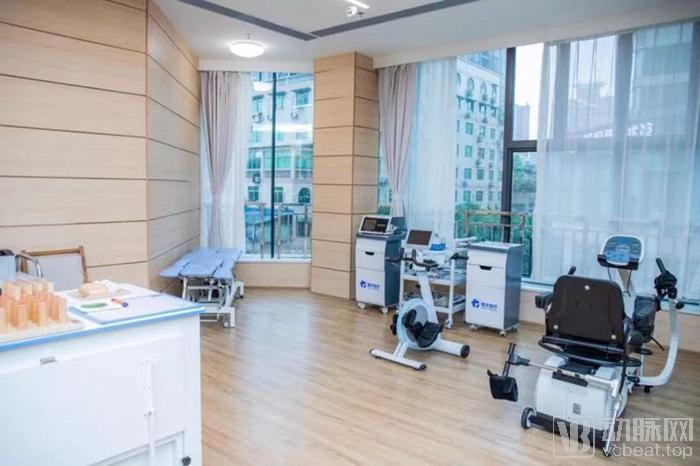
Yinian Apartment Fitness and Activity Room (Image source: Provided by the enterprise)
In terms of concrete implementation:
First, Brand
Longfor’s self-developed brand, “Chunshan Wanshu,” aims to extend the high quality of life seniors have previously enjoyed by delivering compassionate care. In line with Longfor’s corporate philosophy of “Treating You Well for Life” and implementing its “Space as a Service” strategy, the brand connects people with spaces through health and elderly care services. It provides customers with professional, warm, comfortable, and high-quality services, creating an environment that is “more professional than home and warmer than traditional institutions.”
Second, the spatial upgrade of Chunshan Wanshu
Longfor has implemented comprehensive age-friendly renovations across research and development, design, and retrofitting, covering aspects such as lighting, smart home technologies, and furnishings. The entire project features a fresh air ventilation system and underfloor heating throughout all areas, along with facility-wide intelligent management and alarm systems. The bathrooms utilize SMC (Sheet Molding Compound) aerospace-grade materials, which offer elasticity and provide significant cushioning in the event of an elderly resident’s fall. Additionally, the bathroom mirrors can be freely adjusted across a five-degree range. This design caters to residents requiring nursing care; as wheelchair users are shorter than standing individuals, they can adjust the mirror angle to view their full reflection.
Third, Product Upgrades
Chunshan Wanshu’s product upgrades have benefited from Longfor Group’s resource advantages. Leveraging Longfor’s four core business pillars—real estate development, commercial operations, long-term rental apartments, and smart services—we have established elderly care facilities that embody “urban symbiosis and community integration.” Adhering to the philosophy of “no distance, no detachment, no separation,” we are building elderly care institutions in the heart of urban centers.
While developing Yinian Apartments (CB), we will continue to build out the business formats of Community Care Centers (CC) and Home Care (HC), integrating elderly care services into communities and extending them to thousands of households. In addition, we will expand into Continuing Care Retirement Communities (CCRC). Indeed, Longfor’s greatest advantage in the elderly care sector, distinguishing it from some insurance-funded companies, is that Longfor inherently operates as a CCRC community system. Across China, Longfor possesses numerous high-quality residential communities. We have refined our professional elderly care services in the early stages by excelling in institutional, home-based, and community-based care models. Moving forward, we will integrate these professional elderly care services into various real estate projects, thereby establishing Longfor’s distinctive CCRC system.
"Although the products appear identical to consumers, our approaches and methodologies differ; this distinction constitutes our upgrade of elderly care products."
In fact, whether it involves brand enhancement, spatial optimization, or product upgrades, our ultimate goal in implementation is to achieve “Service Enhancement.” Simply put, service enhancement entails strengthening the team and building an operational system. Longfor has established four major service systems: the medical and nursing care system, the daily care system, the food and beverage system, and the social work system.
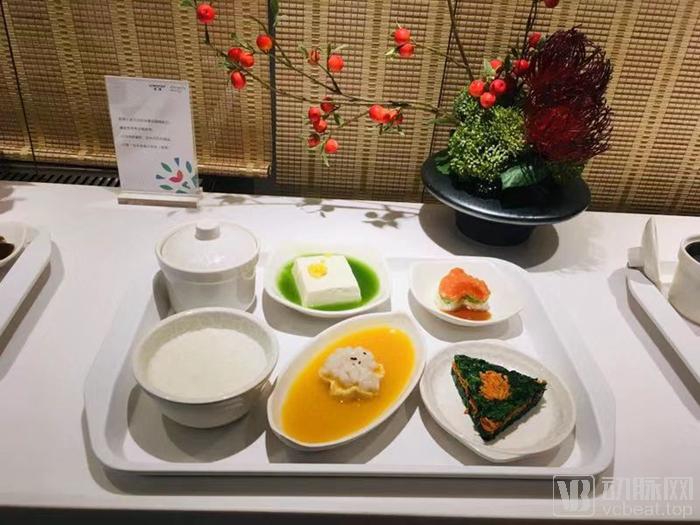
Dining at Yinian Apartment (Image source: Provided by the enterprise)
Regarding service upgrades, we propose four key terms: professionalism, warmth, comfort, and quality. We aim to progressively enhance our services across these four dimensions:
1. Professionalism
Medical and Elderly Care Team: Composed of physicians, rehabilitation therapists, nurses, and caregivers, providing 24/7 full-time service. Catering Team: Offers a "3+1" nutritional meal plan, consisting of three main meals and one supplementary meal, delivering personalized and diverse dining options for the elderly. In addition to regular meals, the team provides soft diets and minced foods for tube-fed residents, as well as therapeutic nutrition during medical treatment.
In terms of service details, for elderly residents requiring nursing care who dine in common areas, oral exercises or finger exercises are conducted under the guidance of caregivers 10 minutes before meals to prevent discomfort such as choking. Additionally, to enhance digestion, residents are encouraged to drink a small amount of plain water. Through our exploration of these subtle details, we have found them to be truly beneficial for the elderly.
Second, Warmth
Warmth is an atmosphere, encompassing the warmth we extend to the elderly, the warmth their families show us, and the warmth the elderly offer in return. Therefore, in addition to employing our own social workers, we have established a volunteer platform to facilitate interaction and joint activities between the elderly, young adults, and children. Furthermore, we regularly organize outings for the elderly.
Third, At Ease
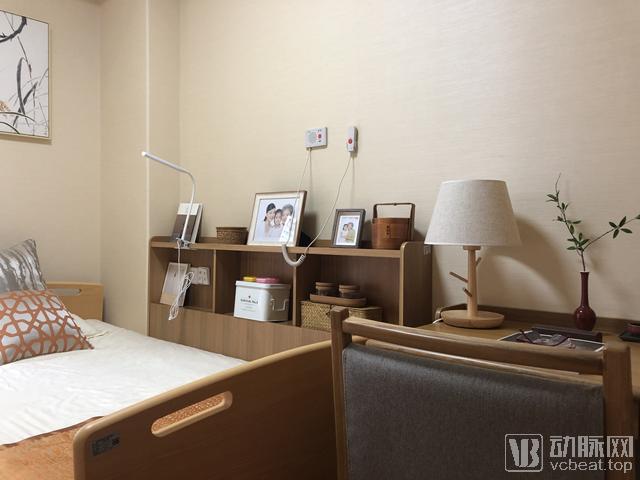
Chunshan Wanshu’s Bedside Table (Image source: provided by the company)
Our rooms do not feature traditional bedside tables for elderly residents; instead, we have installed long, narrow cabinets designed for placing small items. These surfaces allow seniors to display familiar personal belongings, while the central compartments provide storage for mobile phones, bags, tissues, and other essentials, fostering a sense of “home.” In terms of spatial design, each residential floor is equipped with two living rooms of different sizes, serving as communal activity spaces that create the impression of stepping directly from one’s private room into a shared living area. Furthermore, in the rooftop garden, we cultivate flowers favored by the elderly and offer them the opportunity to adopt specific plants, encouraging regular participation in gardening and maintenance activities.
Fourth, Quality
We have never defined Yinian Apartments as a “high-end elderly care institution,” but rather as a “high-quality elderly care institution.” We have found that seniors and their families do not necessarily seek services that are both expensive and premium; instead, they look for diverse service options at the same price point, or for higher-quality elderly care services.
Longfor has established its own elderly care brand, “Chunshan Wanshu,” aiming to inherit Longfor’s service DNA and leverage its resource advantages to achieve synergistic coexistence through integration with real estate, commercial operations, smart services, and long-term rental apartments.
For the elderly care business, we should focus on the present while strategically planning for the future, meeting customers’ growing and diversified service needs, and addressing the consumption upgrade demands of the elderly care market. Our elderly care team will continuously enhance service quality, leverage core market service values to strengthen brand premium capabilities, and establish a closed-loop ecosystem for elderly care services.