

XLEMENT Launches Novel Nanoplasmonic Sensor-Based SPR System, Dramatically Reducing Costs of High-End Biomolecular Interaction Analysis Equipment
VCBeat (WeChat ID: vcbeat) has learned that Quanzhun (Shanghai) Industrial Co., Ltd. (“Quanzhun”) recently launched a microplate product equipped with novel Nanoplasmonic Sensor chips, along with the corresponding StarGate SPR100 label-free biomolecular interaction analysis system, achieving a breakthrough in import substitution for surface plasmon resonance (SPR) instruments.
Over the past few decades, SPR instruments have been widely applied across all stages of drug discovery, screening, and testing, becoming the standard equipment for dynamic measurement of interactions between protein and nucleic acid molecules in the biopharmaceutical industry, thereby generating a global market demand worth billions of US dollars annually.
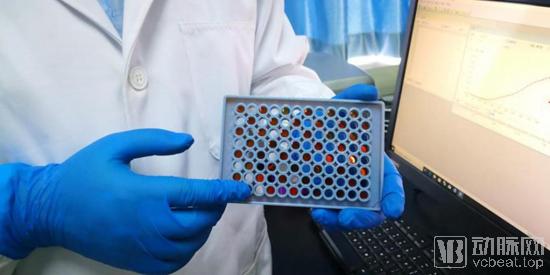
Quanzhun (XLEMENT) Novel Nanoplasmonic Sensor Chip
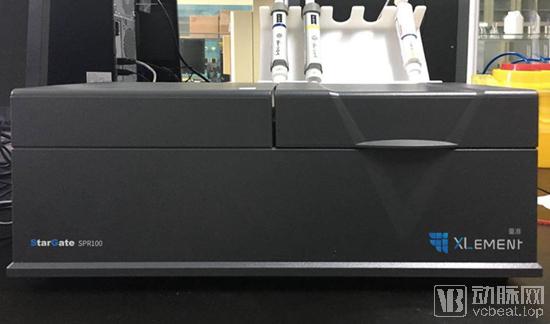
XLEMENT StarGate SPR100
(Multifunctional Protein-Protein Interaction Analyzer)
Currently, Western products with unit prices exceeding RMB 2 million, such as the GE Biacore SPR system, nearly monopolize the global SPR equipment market, making the high cost of SPR molecular interaction detectors affordable only for large pharmaceutical companies and CROs. XLEMENT’s StarGate SPR100, along with its compatible 96-well microplate consumables, is priced at less than one-tenth that of traditional Western products, while offering higher detection sensitivity and a lower limit of detection for molecular concentration. In breaking the foreign monopoly on upstream industry components, it not only helps large pharmaceutical companies and CROs improve drug development efficiency but also enables researchers at small and medium-sized pharmaceutical enterprises and scientific research institutions to utilize SPR molecular interaction detectors for new drug development and basic biological research.
It is understood that Quanzhun has exclusively introduced the latest U.S. intellectual property rights in nano-optical chip technology, integrating it with its independently developed sensor design and patented nanofabrication technologies. Since the inception of its R&D efforts, Quanzhun has collaborated with multiple domestic entities across industry, academia, research, and healthcare sectors—including the School of Life Sciences at Huazhong University of Science and Technology, Union Hospital affiliated with Tongji Medical College, Wuhan Optoelectronic Industry Technology Research Institute, and the Institute of Intelligent Sensor Technology at Jiangsu Industrial Technology Research Institute—to jointly conduct product application validation. The device has undergone independent testing in multiple scientific research laboratories, including the laboratory of Union Hospital.
Furthermore, Quanzhun is collaborating with leading pharmaceutical R&D CROs, including WuXi AppTec’s subsidiary Viva Biotech, to develop applications for its XLEMENT StarGate SPR100 system. As research and pharmaceutical use cases are rapidly implemented, Quanzhun has emerged as an international leader in building advanced R&D capabilities for surface plasmon resonance (SPR) instruments for molecular interactions, possessing the systematic capacity to swiftly launch new products and continuously iterate and upgrade existing ones.
Quanzhun, headquartered in Shanghai, China, specializes in the research, development, and production of label-free macromolecular new drug screening products and innovative intelligent in vitro rapid diagnostic solutions. The company was co-founded in 2016 by Professor Liu Gang, a national-level high-caliber talent, Fellow of the American Institute for Medical and Biological Engineering (AIMBE), Distinguished Professor at Huazhong University of Science and Technology, and Director of the Jiangsu Institute of Intelligent Sensing Technology, together with Mr. Xu Hao, Managing Partner at Infinity Group. To date, although still in the phase of launching new products and continuous R&D, Quanzhun has secured nearly 100 world-leading technological patents, including those related to the design and manufacturing of nanoplasmonic optical chips.
Professor Liu Gang is a leading expert in the field of NanoSPR sensors. He told VCBeat that the nanoplasmic resonance optical chip technology mastered by Quanzhun is a world-class platform-level technology. “Leveraging these patented technologies and our unique product manufacturing capabilities, we will continue to launch our core, distinctive products in three areas: molecular-grade smart home health hardware, label-free medical-grade molecular diagnostic devices, and high-end biopharmaceutical R&D equipment.”

Vodafone Foundation Wireless Medical Innovation Award
(Second from the left in the front row is Professor Liu Gang, core founder and technical inventor)
Nanoplasmonic optical resonance is an optical phenomenon generated by the collective oscillation of electron gas in metal metamaterial nanostructures surrounded by dielectric materials. Compared with traditional surface plasmon resonance (SPR), novel nanoplasmonic optical chips do not require optical coupling devices for excitation and possess a higher surface-area-to-volume ratio. With such sensor chips, the determination of kinetic constants for biomolecular interactions—previously achievable only with high-end SPR instruments costing millions of yuan—can now be accomplished using conventional, low-cost microplate readers.
The joint R&D team of Quanzhun developed a platform for measuring molecular interaction kinetic parameters, which integrates 96-well plate products based on nanoplasmonic optical sensing chips with customized microplate readers. The effectiveness of this system was validated using the C-reactive protein (CRP) and anti-CRP antibody system. Experimental results demonstrated that the current system achieves a label-free detection limit of 50 ng/mL for the dynamic binding of CRP antigen and antibodies, which is significantly lower than the physiological concentration of CRP in blood (1–3 μg/mL in healthy individuals). Furthermore, the kinetic curves obtained were nearly identical in trend to those generated by high-end imported surface plasmon resonance (SPR) biosensors. The kinetic parameters derived through fitting calculations were consistent with values reported in medical literature using imported high-end equipment, thereby fully validating the system’s efficacy in determining kinetic constants for biomolecular interactions.
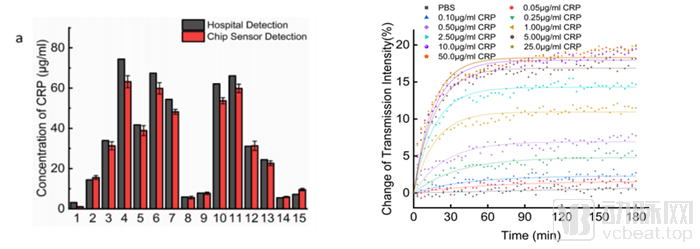
Detection of CPR in Serum Using Nanoplasmonic Sensor Chips in Microplate Wells
(a) Simultaneous quantitative detection of CPR in multiple serum samples using Quanzhun’s nanosensor chips and the equipment of the Department of Laboratory Medicine at Peking Union Medical College Hospital
(b) Dynamic antigen-antibody binding curves measured by the multifunctional protein molecular interaction analyzer from Quanzhun
This system offers the advantages of being label-free, minimally affected by background interference, high-throughput, applicable across a wide concentration range, and capable of simultaneously quantifying dynamic curves and reaction endpoints. In addition to detecting the dynamic interactions between antibodies or small-molecule drugs and target proteins, the system has been successfully applied in clinical hospital settings for the label-free quantitative determination of C-reactive protein (CRP) concentrations in blood. The CRP concentrations measured by this system show good correlation with those obtained using the conventional latex agglutination method employed in hospitals.
The research and development achievements in related technologies and products were published in the journal *Biosensors and Bioelectronics* under the title “Protein binding kinetics quantification via coupled plasmonic-photonic resonance nanosensors in generic microplate reader.” *Biosensors and Bioelectronics* is a top-tier international journal in engineering and technology, particularly in the field of sensor engineering. It is ranked in Tier 1 of the Chinese Academy of Sciences’ SCI journal classification, with a latest impact factor of 9.5, placing it within the top 10% of ESI journals. The co-first author of the paper and the lead for this technological product is Dr. Hu Wenjun, a young scientist at Quanzhun. During his doctoral studies, Dr. Hu studied under Professor Tasuku Honjo of Kyoto University, Japan—a world-renowned master in cancer immunology and recipient of the 2018 Nobel Prize in Physiology or Medicine. Upon returning to China after graduation, Dr. Hu has been engaged in the research and development of novel immune detection and drug screening technologies and products.
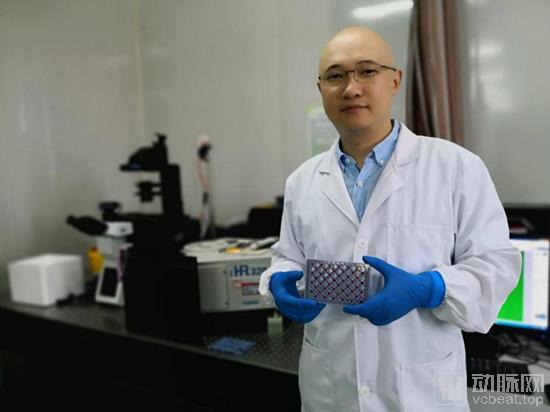
Hu Wenjun (Quantitative Scientist, M.D., Kyoto University)
As the demands of life sciences and drug R&D deepen, Quanzhun’s products for measuring biomolecular interactions and kinetic constants hold broad application prospects in areas such as drug target screening, antibody screening and optimization, drug activity assessment and mechanism analysis, basic medical research on tumors and pathogenic microorganisms, and food safety evaluation.
In fact, since its inception, Quanzhun has been committed to providing healthcare institutions and consumers with comprehensive smart medical testing products and solutions. Over the years, it has collaborated with multiple top universities and research institutions in China and the United States to independently develop proprietary technologies and products, and currently holds dozens of national and international patents. Among these, Quanzhun’s “Youmi,” the world’s first saliva-based smart device for optimized conception guidance—developed based on its self-developed mobile electrochemical impedance spectroscopy (EIS) micro-nano chip—is helping more women scientifically understand their bodies, identify their optimal windows for conception, and conceive healthy, intelligent babies.
Professor Liu Gang told VCBeat that Quanzhun has never stopped its strides, fulfilling its mission by continuously launching cutting-edge biomedical sensing products to benefit society and numerous families.