

Linkong Network Sets Sail with 'Hospital-Centric Internet 3.0' and Files IPO Prospectus
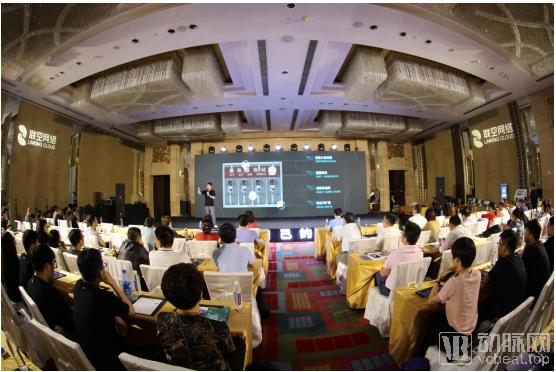
“The Liankong Yijia Product Launch and Liankong Network’s 4th Anniversary Celebration” was successfully held in Shanghai on August 1, 2019. Themed “Building Hospitals’ Own Internet 3.0,” the event brought together numerous users from medical institutions and partners.
In 2018, Liankong Network proposed the concept of “Building Hospitals’ Own Internet 2.0,” upgrading from addressing isolated issues to systematically reconstructing service models, evolving from function-oriented product portfolios to outcome-based comprehensive operational solutions, and transitioning from a delivery-and-acceptance evaluation framework to an outcome-based evaluation system. It integrated and launched unattended solutions, which, after ten months of intensive refinement and promotion, have been implemented in outpatient and inpatient settings across major hospitals.
After a three-month optimization of the outpatient process at the Eye, Ear, Nose, and Throat Hospital of Fudan University, the unattended service rate on the Alipay platform increased from 18% to 30%; following a nine-month overhaul of the inpatient process at Wuhan Central Hospital, the unattended service rate has approached 40%.
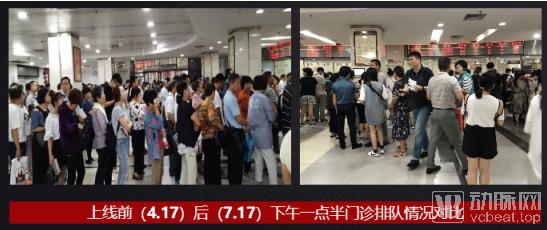
Outpatient Department of Eye, Ear, Nose, and Throat Hospital Affiliated to Fudan University
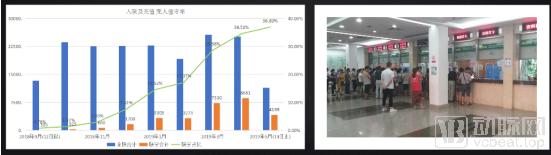
Wuhan Central Hospital
Meanwhile, through continuous exploration and practice, Liankong Network has applied the latest facial recognition technology to medical care scenarios. By integrating this new technology with existing systems, multiple hospitals—including the International Peace Maternity and Child Health Hospital and Huashan Hospital—have enabled facial recognition payment, while Peking University First Hospital has implemented facial recognition for report retrieval.
Kuang Hua, Founder and CEO of Liankong Network, candidly stated at the press conference that looking back, Liankong Network has consistently achieved high-speed growth at a rate of two to three times the industry average, continuing to lead the hospital mobile payment market. To date, the company has processed over 70 million transactions, with a cumulative transaction volume exceeding RMB 10 billion, serving more than 200 medical institutions across 23 provinces and municipalities in China.

Kuang Hua, Founder and CEO of Liankong Network
At this press conference, Kuang Hua, founder and CEO of Liankong Network, more firmly proposed the vision of “building hospitals’ own Internet 3.0.”
Version 3.0 represents a new breakthrough built upon Version 2.0. By establishing novel patient care pathways, it facilitates a shift from B2C to C2B and creates a closed-loop system for all-scenario medical journeys. Through secure payment systems, digital operations, and automated maintenance, it ensures safe and reliable internet-based infrastructure services. Version 3.0 is a smarter, more technologically advanced, and stylish solution that truly addresses patient needs and leverages the power of technology to assist healthcare institutions and their users.
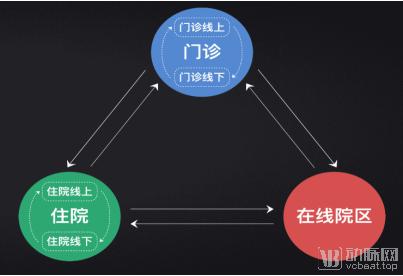
3.0 Closed-Loop Healthcare Journey Across All Scenarios
At this launch event, Li Bo, Chief Product Director of Liankong Network, provided a comprehensive introduction to the 3.0 product suite. The “Liankong Yijia Unattended Solution” integrates products and services, offering not only functional solutions that address key pain points but also customized service models, thereby achieving optimal unattended operations for both hospital outpatient and inpatient settings.
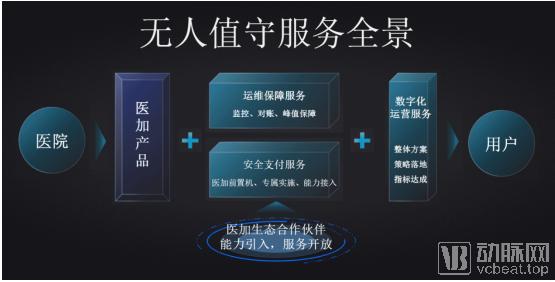
Liankong Medical Unattended 3.0
The realization of unattended outpatient scenarios is based on the use of electronic medical cards. In this 3.0 product release, the new electronic medical card features a more clearly defined task flow, an all-scenario coverage access code, and an omnichannel-aware message box, enabling patients to experience a seamless healthcare journey.
The Liankong Medical Self-Service Station is another highlight in activating core hospital scenarios. As an unattended service operation terminal, the K1 self-service kiosk integrates functions such as card issuance, appointment registration, check-in, and payment. Together with electronic medical cards, it serves outpatient scenarios, enabling unattended hospital operations.
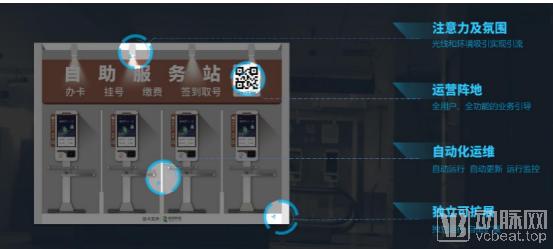
Liankong Medical Plus Self-Service Station
The implementation of unattended inpatient scenarios is based on the use of electronic admission certificates and the operating system (OS) of self-service inpatient kiosks. By utilizing electronic admission certificates to standardize the inpatient process, a single self-service kiosk OS can achieve a closed loop between mobile devices and the clinical setting.
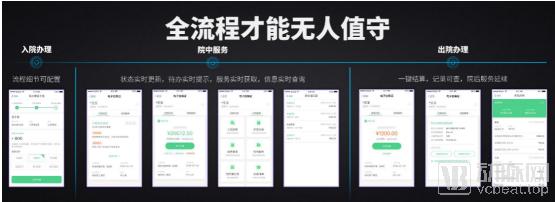
Standardized Process for Electronic Inpatient Admission Certificates
At the end of the product presentation, Li Bo summarized the features of the Yijia product in six Chinese characters: “For results, use Yijia.” As he stated, efficacy is the most powerful testament to a product’s value.

Li Bo, Chief Product Director of Liankong Network
Liankong Network’s upgrade from “building hospitals’ own Internet 2.0” to “building hospitals’ own Internet 3.0” involves more than just a single product; Version 3.0 places greater emphasis on outcome evaluation based on comprehensive operations.
“From initial IT services to current comprehensive operations; from process-based delivery orientation to outcome-based operational orientation—this is the core of Liankong Yijia’s Unattended Solution.”

In the future, Liankong Network will continue to refine and optimize its offerings on this foundation, leveraging its Liankong Yijia products to drive hospital informatization. It aims to help medical institutions rapidly build exclusive, next-generation patient service models and operational systems, enabling them to more easily embrace the internet and manage their resources with greater efficiency.