

Linkong Network Files IPO Prospectus: Empowering Over 200 Hospitals to Build Their Own Internet Hospitals and Pioneering a New Patient-Centric Care Pathway
On April 12, 2018, the Executive Meeting of the State Council approved in principle the “Opinions on Promoting the Development of ‘Internet + Healthcare’” (hereinafter referred to as the “Opinions”). On April 28, the “Opinions” were officially promulgated, stipulating that internet hospitals may be established with medical institutions as their supporting entities. The issuance of the “Opinions” energized Shanghai Liankong Network Technology Co., Ltd., as empowering hospitals to build their own internet hospitals has been its core value since its establishment in 2014.
Over the past four years, Liankong Network has expanded its coverage to 23 provinces and municipalities across China, serving more than 200 hospitals. It has met hospitals’ digitalization needs across multiple stages—including appointment scheduling, registration, consultations, hospitalization processing, and payment—thereby enhancing overall resource coordination and operational efficiency while improving the patient care experience.
In 2018, Liankong Network proposed the concept of “Building Hospitals’ Own Internet 2.0,” shifting its products from addressing isolated informatization challenges at individual hospitals to providing comprehensive internet-based solutions. This year, Liankong Network introduced “Building Hospitals’ Own Internet 3.0.” The most significant difference between version 3.0 and 2.0 lies in the transition from a B2C model to a C2B model, moving beyond merely digitizing hospital operations to adopting a patient-centric approach that creates a closed-loop self-service system and establishes a new pathway for medical care.
3.0 also aligns with the direction for smart hospital development issued by the National Health Commission. According to the “Notice on the Hospital Smart Service Grading and Evaluation Standard System (Trial),” the rating of smart hospital construction will place greater emphasis on patients’ healthcare experience, differing from previous approaches that indirectly improved patient experience by enhancing in-hospital informatization levels and boosting administrative efficiency.
Amid the surge in smart hospital development, how is Liankong Network helping hospitals enter the era of intelligent management and smart services? On August 1, at the launch event for Liankong Yijia products and the fourth-anniversary celebration of Liankong Network, VCBeat (WeChat ID: vcbeat) interviewed Kuang Hua, founder of Liankong Network.
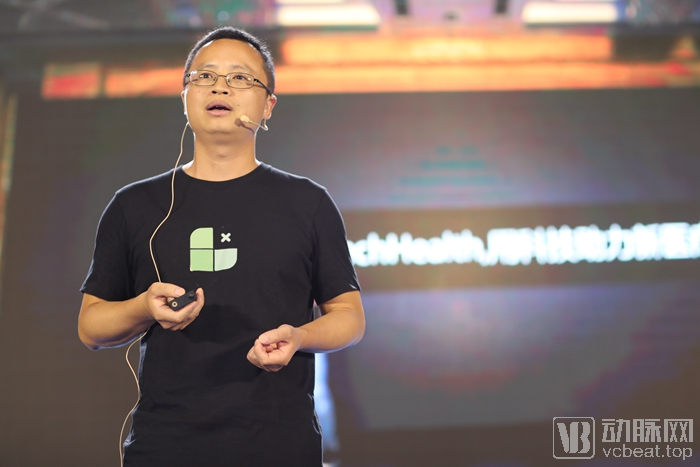
Kuang Hua, Founder of Liankong Network (Photo provided by the interviewee)
Looking back at Liankong’s previous development trajectory, its strategy has evolved from addressing individual hospital issues to solving holistic hospital challenges. “Unified Payment” and “Unattended Operations” are representative products in this regard.
In terms of focused breakthroughs, Liankong Network’s unified payment solution leads the hospital mobile payment market, serving over 200 hospitals and partnering with more than 50 service providers nationwide. Monthly transaction volume exceeds 3.8 million, with cumulative transaction value surpassing RMB 10 billion, while maintaining a rapid growth rate of two to three times.
The Unified Payment Platform can resolve issues such as the need for multiple financial reconciliations, information and financial regulatory oversight, as well as multi-campus and multi-channel payment challenges previously faced by hospitals. It enables hospital finance staff to save significant time previously spent on financial data reconciliation processes, while also addressing patients’ pain points related to repeated visits to settlement counters and online payment difficulties.
Hu Shijie, Deputy Director of the Information Center at Huashan Hospital Affiliated to Fudan University, stated, “The unified payment and reconciliation platform for multiple campuses has supported the development of Huashan Internet Hospital, enabling unified payment across multiple campuses and channels, and resolving issues related to multi-entity financial reconciliation and financial oversight.”
Quan Hao, Director of the Information Department at Shanghai Jing’an District Shibei Hospital, stated at the press conference that mobile payments currently account for 40% of the hospital’s total outpatient payment volume. In terms of reconciliation, automated reconciliation applications have comprehensively resolved issues such as refunds, cross-day transactions, and insufficient balances. The hospital has achieved balanced accounts for three consecutive months from May to July, demonstrating favorable application outcomes.
In addressing the overarching issue, Liankong Network’s “unattended” solution combines offline devices with online plugins to resolve the challenge of window queuing across the entire hospital.
In the traditional counter-based model, admission procedures and prepayment deposits can only be handled at service counters. For discharge services, settlement and manual refunds are exclusively processed at counters. In summary, hospital workflows in the traditional model are cumbersome and complex, with most operational steps relying heavily on manual processing. As a result, patients must expend considerable time and effort, making repeated trips throughout their medical care journey.
Taking the transformation of the hospitalization process as an example, Liankong Network’s unattended solution leverages smartphones and self-service kiosks to create a workflow without manual intervention, enabling 24/7 fully self-service hospitalization.
Li Bo, Chief Product Director at Liankong Network, stated, “Our unattended devices were designed to be intuitive for all patients. Users can log in via facial recognition to fulfill common needs such as appointment registration, card issuance, and payment processing. As offline terminals, these unattended devices also facilitate online user acquisition; during use, patients are guided to register for an electronic medical visit card.”
Unattended equipment has transformed the traditional hospital scene of overcrowding and jostling crowds. Li Bo likened this shift to a transition from guerrilla warfare to positional warfare. In the past, patients often had to rush around between outpatient halls and various hospital campuses, whereas unattended equipment integrates multiple functions to become a central hub addressing numerous patient needs.

Li Bo, Chief Product Director of Liankong Network (Photo provided by the interviewee)
The individual issues addressed and the comprehensive solutions laid out during the 2.0 era have also laid the foundation for the transition into the 3.0 era. Through a diversified product portfolio, hospitals can seamlessly provide smart services to patients.
Kuang Hua stated at the product launch event, “The traditional healthcare journey is provided by hospitals to patients, with staff delivering services to patients, which represents a B2C model. In contrast, the new C2B model enables patients to access all hospital services through self-service methods. This shift in the care pathway will significantly impact the development model and user system of internet hospitals, fundamentally transforming both their infrastructure and operational models compared to previous approaches.”
Previously, patients could only complete fixed tasks at designated service windows and had no visibility into the subsequent steps of their medical journey. In contrast, “Liankong Yijia” enables patients to access the entire healthcare process via their mobile phones.
Establishing a novel C2B healthcare journey requires internet technology to cover all scenarios of the patient care pathway. The Liankong Yijia product serves as such an internet service toolkit, where each tool supplements and enhances hospitals’ digital capabilities from a specialized domain.
Taking the electronic medical card in Liankong Yijia as an example, the electronic medical card is compatible with the social security card. The electronic medical card on the mini-program can guide patients through the entire medical process, performing identity verification at multiple stages including appointment registration, navigation, parking, payment, report retrieval, and medication pickup, thereby achieving a cardless experience throughout the entire medical journey. The message box in Liankong Yijia can also analyze patient behavior based on big data and remind users to complete the next steps in their medical process.
Li Bo stated, “The C2B model shifts product promotion from a forceful push within hospitals to leveraging existing trends, thereby uncovering user needs within specific scenarios.”
In the process of implementing solutions in hospitals, Liankong does not regard system go-live as the endpoint of product delivery, but rather as just the beginning. To this end, Liankong has established an outcome-based evaluation system. This is one of the reasons why Liankong Network has gained recognition from multiple top-tier tertiary Grade A hospitals.
Kuang Hua stated, “Taking our unified payment solution as an example, we do not provide hospitals with systems that go unused; instead, we focus on driving genuine transaction volume on the platform. In the event of any cash shortages during operations, Liankong provides a guarantee to cover the losses, ensuring that hospitals bear no financial risk.”
At the new product launch event hosted by Liankong Medical, Xie Shirong, Director of the Outpatient Office at the Eye, Ear, Nose, and Throat Hospital of Fudan University, stated, “We had previously implemented internet-based solutions, but overall adoption rates remained low. A key advantage of Liankong Network’s products is that we can objectively observe a rise in user engagement through data analytics. In practice, we no longer see frequent long queues at service windows.”
The rise in product utilization rates is inseparable from the operational investments made by the Liankong team. To ensure that unattended devices capture users’ attention at first glance, Liankong has even refined details such as device lighting. In addressing barriers to medical insurance payments, Liankong Network did not shy away from this challenge but chose to confront it head-on.
Kuang Hua stated, “Regarding medical insurance, we distinguish between two scenarios based on practical realities: first, whether online payment can cover the entire workflow for medical insurance cases; and second, whether integration with online medical insurance payment systems is feasible. These are, in fact, two distinct concepts. From the perspective of integrating medical insurance payments, there is a regional threshold to overcome. Even before the medical insurance payment interfaces were opened, we still had numerous channels to serve patients covered by medical insurance. For instance, the consultation-room payment system we implemented at the Eye & ENT Hospital of Fudan University successfully serves both medical insurance patients and self-pay patients. This approach moves the offline medical insurance card-swiping step into the physician’s consultation room. Although patients still need to insert their cards, they are spared from queuing at service windows.”
"Why should an IT company also prioritize operational capabilities? Kuang Hua stated that this stems from market demands."
Kuang Hua stated, “The C2B model is fundamentally different from the traditional one. In the past, we only needed to train a few hundred window staff members, ensuring they knew how to operate the system. However, as we now serve a continuously growing user base, our product must achieve comprehensive coverage across all usage scenarios.”
At the press conference, Liankong Network also signed a cooperation agreement with Xingkang Chain, a health technology company, to jointly explore the creation of a closed-loop system for managing patients' in-hospital and out-of-hospital health data.
Huang Bangyu, CEO of Xingkang Chain, stated, “Liankong Network’s product offerings are similar in form to those of certain healthcare IT companies; however, our most fundamental distinction lies in our DNA. We approach problem-solving from the patient’s perspective, aiming to establish a closed-loop system for user health management that seamlessly integrates in-hospital and out-of-hospital care.”
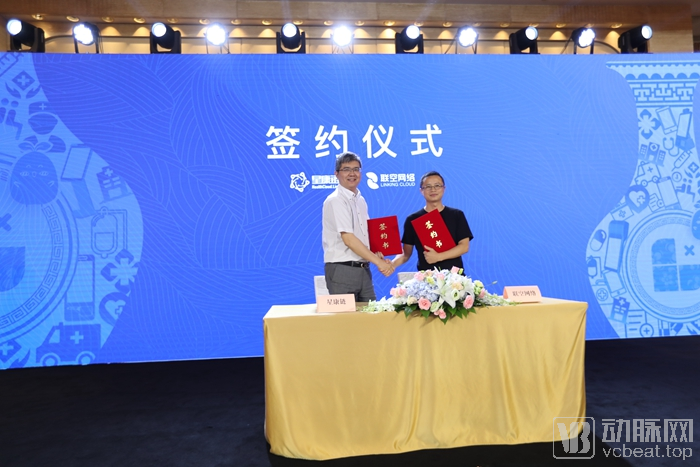
(Photo provided by the interviewee)
Moving forward, Liankong will continue to invest in product R&D, expanding its portfolio with more products that deliver value to hospitals. Liankong Network will also deepen its collaborations with external platforms.