

Biomind AI: Focused on Neurological AI with Series A Valuation Exceeding $500 Million, Pioneering a Diagnosis-to-Treatment Pathway for Medical AI
In June 2018, the “‘CHAIN’ Cup: The World’s First Human-Machine Competition in Neuroimaging Artificial Intelligence,” which was extensively covered by media outlets such as China Central Television (CCTV), Xinhua News Agency, and People’s Daily Online, featured a matchup between 15 top-tier neuroimaging physicians and an AI system named BioMind “Tianyi Zhi.” A total of 225 brain tumor MRI scans were interpreted. The physician group, consisting of 15 doctors who each evaluated 15 cases, completed the task within 30 minutes, achieving a concordance rate of 66% with pathological results. In contrast, the AI group, BioMind “Tianyi Zhi,” completed all 225 cases in 15 minutes, achieving a concordance rate of 87% with pathological results.
Behind the AI system BioMind “Tianyi Zhi” are not only Beijing Tiantan Hospital, home to its artificial intelligence research center, but also a specialized company focused on developing AI applications in the medical field—Beijing Ande Yizhi Technology Co., Ltd. (hereinafter referred to as “BioMind”).
BioMind has entered into a deep collaboration with Beijing Tiantan Hospital, jointly establishing CHAIN, the world’s first Artificial Intelligence Research Center for Neurological Diseases. This partnership has established a model for the close integration of clinical practice and AI: physicians at Tiantan Hospital propose research topics based on their clinical needs, and the Center evaluates these proposals to determine the development direction of corresponding AI products.
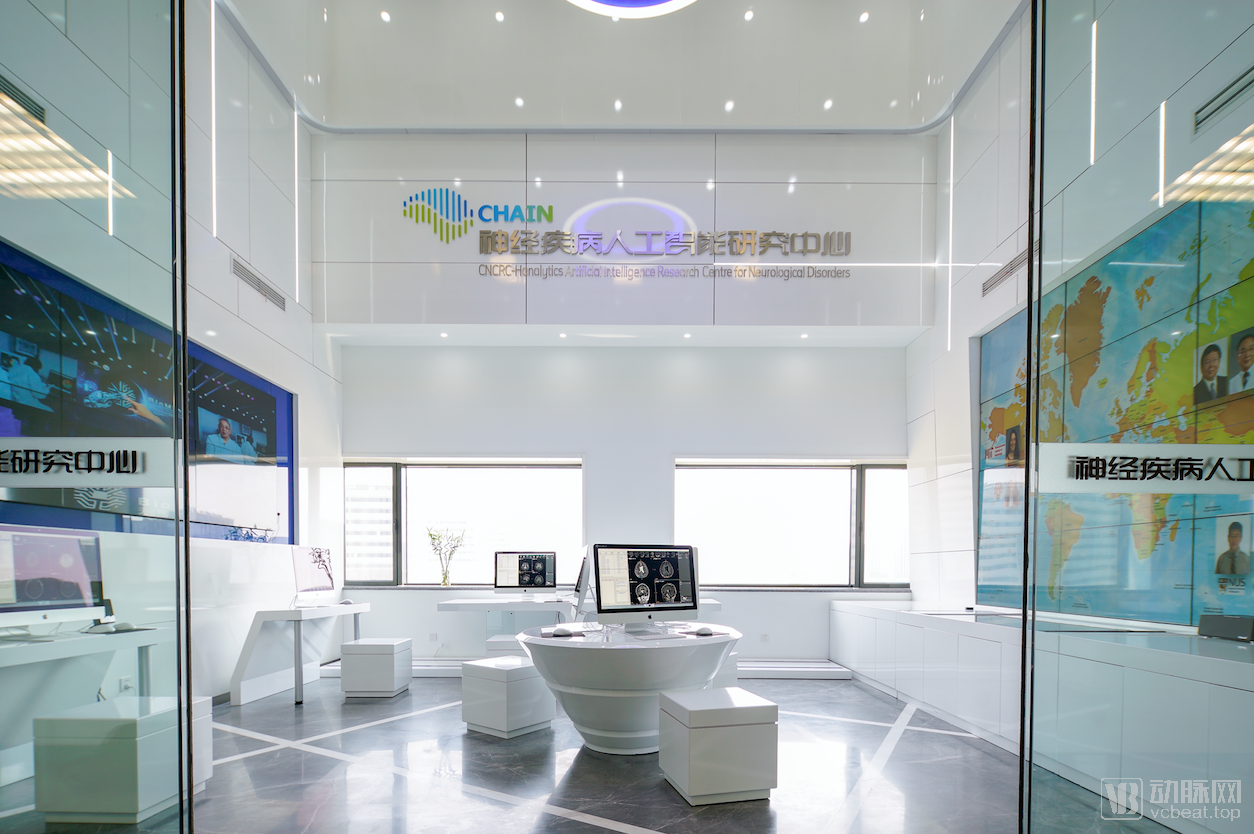
The First AI Research Center for Neurological Diseases, CHAIN (Image provided by the company)
BioMind is the collective name for the AI brands under BioMind (Beijing Ande Yizhi Technology Co., Ltd.). In addition to its flagship product, “Tianyi Zhi,” it includes a variety of AI-assisted products such as “Tianze,” an AI-powered diagnostic and therapeutic assistance system for cerebrovascular diseases. The company also has more than 20 reserve products in its pipeline.
BioMind: A Hardcore Team, Unwavering Commitment to Public Health
“China’s medical resources remain highly unevenly distributed, with significant disparities in the quality of care across different tiers of hospitals. Patients often travel to major provincial capitals for treatment, and many others flock to top-tier hospitals in first-tier cities. Ensuring that people can access expert medical services from leading hospitals close to home is an urgent issue that needs to be addressed.” This is how the founder of BioMind described the pain points in China’s healthcare market when discussing the original motivation behind starting the company.
“When I first met these young experts in deep learning, they all shared a common vision: to harness the advancements in deep learning technology to serve the healthcare industry and patients, enabling more people to enjoy healthier lives. Their passion deeply inspired me, which is why I decided to co-found BioMind, an AI-enabled healthcare company, with them.”
These young professionals, driven by a commitment to compassionate care, constitute the core team of BioMind. Wu Zhenzhou, Chief Technology Officer of BioMind, studied under Turing Award laureate Yoshua Bengio and has engaged in advanced deep learning research at institutions such as the Agency for Science, Technology and Research (A*STAR) and Microsoft Research. In 2017, Wu was invited to serve as an advisor to Singapore’s National AI Committee.
Professor Feng Jiashi, Chief Scientific Officer of BioMind, served as Chair of the Technical Committee for ICMR 2017 and Chair of the Regional Group for MM 2017. He was named one of the Top 10 Outstanding Young Innovators in the Asia-Pacific region among the “Innovators Under 35” by MIT Technology Review. He won the championship in the MS-Celeb-1M million-face recognition track of the MSR Image Recognition Challenge and received the Best Paper Award for TASK-CV at ICCV 2015.
In addition to the Chief Technology Officer and Chief Scientist, BioMind’s R&D team boasts an impressive lineup of talent, bringing together dozens of PhDs and postdoctoral researchers from prestigious institutions such as Harvard University, MIT, the University of Cambridge, Tsinghua University, the Chinese Academy of Sciences, and the National University of Singapore. For instance, Dr. Liu Kuien, BioMind’s intelligent data warehouse expert, has over 10 years of research and practical experience in heterogeneous data management and mining, and holds 15 related patents.
Tianyi Zhi: Covers over 60 diseases, with a diagnostic accuracy rate exceeding 90%
At the time of BioMind’s founding, there were already more than 10,000 artificial intelligence companies on the market, with over 1,000 of them being medical AI enterprises. Li Jingjue, CEO of BioMind Greater China, stated that the essence of medical AI lies in the deep integration of deep learning technology and clinical needs.
Li Jingjue introduced that in the medical field, there are numerous scenarios where AI can be applied, currently involving dozens of use cases, such as imaging diagnosis, clinical decision support, medical rehabilitation, and drug development.
“In the context of imaging-assisted diagnosis, application scenarios determine the direction of product development,” Li Jingjue further explained. For instance, AI for mammography is limited to breast diseases, and AI for gastroscopy is confined to gastric diseases, whereas AI applications for CT/MRI target the whole body, multiple anatomical sites, and a comprehensive range of disease types. “Tianyi Zhi” is an AI application designed for CT/MRI.
“For AI applications in CT/MRI, if the technology is limited to single anatomical sites or single diseases, it will not significantly enhance the clinical user experience. The development of ‘Tianyi Zhi’ began with neurological disorders of the head, expanding to otolaryngology and breast imaging, and further to cardiovascular conditions as well as thoracic and abdominal diseases, thereby achieving multi-site, comprehensive disease coverage for CT/MRI AI applications. This approach is driven by the actual demands of clinical scenarios,” said Li Jingjue, adding that this also reflects BioMind’s original intention in developing “Tianyi Zhi.”
“AI for CT/MRI imaging will inevitably be applied across all disease categories; in my view, this is the only viable path forward for this sector,” said Li Jingjue. “The overall R&D direction of Tianyi Zhi’s future products is precisely to cover multiple body regions and all disease types.”
BioMind has pioneered the global implementation of AI-assisted diagnosis for CT/MRI imaging of neurological disorders, covering more than 60 conditions including brain tumors, small vessel disease, and stroke. The diagnostic accuracy exceeds 90%, with certain conditions achieving an accuracy rate of over 96%.
Currently, "Tianyi Zhi" has been jointly developed with the PLA General Hospital (301 Hospital), achieving AI-based classification and diagnosis of breast diseases via MRI. Experts note that the diagnostic accuracy of MRI for breast diseases is significantly superior to that of mammography. On one hand, the PLA General Hospital boasts clinical technologies at a leading domestic level and possesses a large volume of high-quality case data. On the other hand, most companies in the global market are focused on developing AI diagnostics for mammography, while very few are capable of delivering AI-based MRI diagnosis for breast diseases.
It is worth noting that “Tianyi Zhi” is not limited to early disease screening; it also enables further precise diagnosis. For instance, it can classify brain tumors into nearly 30 categories (such as meningioma, vestibular schwannoma, medulloblastoma, and glioma) and automatically generate a structured report to assist physicians in making rapid diagnoses and improving work efficiency.
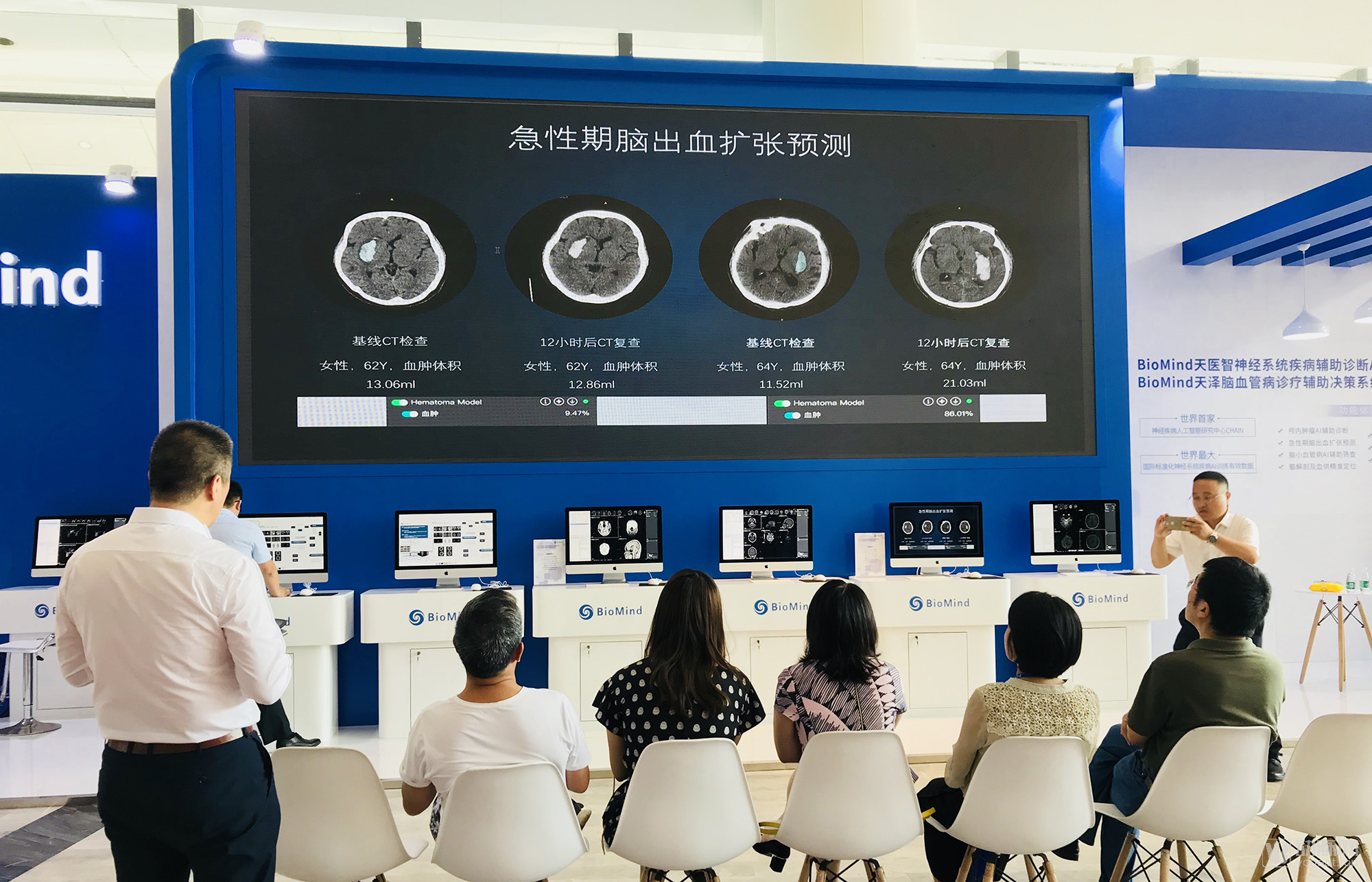
Tianyi Zhi: Prediction of Hematoma Expansion in Acute Intracerebral Hemorrhage (Image provided by the company)
In the diagnosis of certain conditions, BioMind provides even more pronounced clinical assistance through its high diagnostic accuracy. For instance, in predicting whether hematomas will expand within 24 hours in patients with intracranial hemorrhage within the first 6 hours, BioMind achieves an accuracy rate of 85%–90% using non-contrast CT scans. This assists physicians in promptly selecting the appropriate treatment regimen, significantly improving patient prognosis. Industry experts note, “For challenges that many clinical specialists consider difficult, AI can provide physicians with more precise diagnostic guidance by learning from large volumes of case data.”
Currently, “Tianyi Zhi” has obtained CE certification from the European Union and secured sales approvals in 26 countries, including Germany, Southeast Asia, Singapore, and Malaysia. “Tianyi Zhi” has completed its clinical trials; the U.S. FDA has accepted BioMind’s application, and the Center for Drug Evaluation of the China National Medical Products Administration (NMPA) has also accepted the Class III medical device registration application for “Tianyi Zhi.”
Tianze: A Comprehensive Diagnosis and Treatment Assistant for Cerebrovascular Diseases, Enabling AI Assistance at the Therapeutic Level
If “Tianyi Zhi” focuses on AI-assisted diagnostic imaging, then BioMind’s other product, “Tianze,” truly enables clinical decision support for physicians.
“Tianze” system was released in June this year. It is a diagnostic and therapeutic decision support system for cerebrovascular diseases. Li Jingjue frankly stated that “Tianze” can achieve the medical level of top experts at tertiary hospitals.
Such statements are not mere rhetoric; behind Tianze lies a dataset of over one million stroke cases from across China (including follow-up data spanning more than five years) and effective training on hundreds of thousands of historical cases from Beijing Tiantan Hospital.
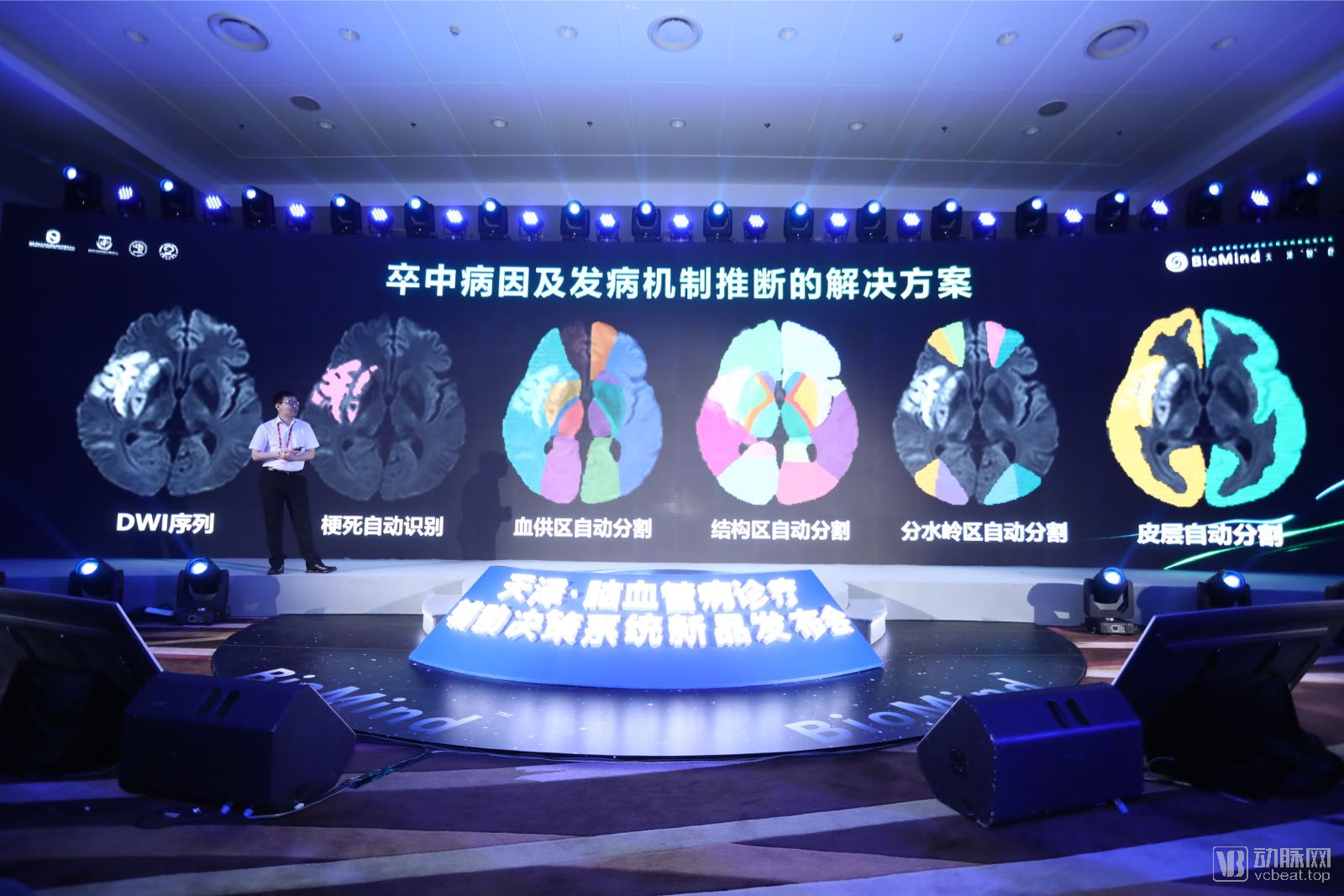
Tianze System Launch Event (Image provided by the company)
The founder of BioMind believes that three core factors determine the AI industry: algorithms, computing power, and data. Algorithms can be developed by recruiting top-tier talent, and computing power can be achieved through capital accumulation, whereas medical AI relies heavily on high-quality, effective data. However, data quality varies significantly across different hospitals. By partnering with Tiantan Hospital, a leading hospital in China, BioMind has not only ensured the validity of its data but also further guaranteed the quality and core competitiveness of its AI products.
From the moment a stroke patient is admitted, their CT/MRI images are uploaded into the “Tianze” system. Tianze autonomously analyzes whether the stroke is hemorrhagic or ischemic, further assesses the risk level of hyperacute ischemic stroke, determines whether mechanical thrombectomy or thrombolysis is required, and analyzes the pathogenesis and etiology in patients indicated for thrombolysis. It independently provides a subtype diagnosis of ischemic stroke based on the Chinese Ischemic Stroke Subclassification (CISS) system. By integrating the patient’s medical history, complications, and comorbidities, Tianze generates clinical decision-support recommendations and supplies physicians with relevant European and American guidelines, Chinese guidelines, and the latest scientific literature for reference.
In other words, “Tianze” represents a powerful integration of “AI + CDSS (Clinical Decision Support System),” enabling end-to-end decision support across diagnosis, treatment, and prognosis, rather than relying solely on knowledge graphs and knowledge bases for clinical decision-making.
Currently, BioMind is collaborating with Beijing Tiantan Hospital on the “Golden Bridge Project II: A Medical Quality Improvement Study of an AI-Based Clinical Decision Support System for the Diagnosis and Treatment of Cerebrovascular Diseases.” In this study, 17,400 patients with cerebrovascular diseases will be randomly selected from 50 to 100 hospitals across China to participate in a controlled trial, further validating the effectiveness of the “Tianze” system.
BioMind’s Series A Valuation Exceeds $500 Million, Facilitating the Downward Flow of High-Quality Medical Resources
BioMind’s original mission is to empower healthcare with AI, enabling the general public to access higher-quality medical resources. With its “Tianyi Zhi” and “Tianze” solutions, it can effectively enhance physicians’ diagnostic and treatment capabilities, allowing patients even in grassroots hospitals in third- and fourth-tier cities to receive expert-level medical care comparable to that provided by top-tier institutions such as Beijing Tiantan Hospital.
In addition to Tiantan Hospital, BioMind’s partners span the globe, including the Massachusetts Institute of Technology (MIT), the National University of Singapore, PLA General Hospital (301 Hospital), Zhejiang University, the Chinese Association for Artificial Intelligence, the Chinese Research Hospital Association, and the China Medical Equipment Association. The company will further develop AI products tailored to a broader range of medical scenarios and disease types.
Li Jingjue stated that the valuation model for medical AI enterprises has rapidly transitioned from the “talent × algorithm” formula of a few years ago to “talent + data × commercial value.” Today, the application value, promotional potential, social impact, and core competitiveness of medical AI products determine their deployment capabilities, business models, and sustainable profitability. These factors have become the foundation for assessing the value of medical AI companies. The era when AI startups relied on storytelling to command high “dream-based” valuations is now history; product quality will be the core of future competition among medical AI enterprises.
Currently, BioMind has completed its angel and Pre-A financing rounds. It is reported that the company’s valuation in its Series A round exceeds $500 million.