

InnoCare Pharma: First NDA Accepted and Two Novel Drugs Advance into Mid-to-Late Stage Clinical Trials
InnoCare
Innovative Drug Developer
Beijing InnoCare Pharma Tech Co., Ltd., a prominent name in China’s new drug development sector, is located in the southeast corner of the Peking University Medical Innovation Valley in Changping District, Beijing. Dr. Cui Jisong, co-founder and CEO of InnoCare, told VCBeat that the company relocated to the Peking University Medical Innovation Valley in 2017 because the area serves as a hub for pharmaceutical R&D institutions, gathering enterprises engaged in cutting-edge technology research and development. Additionally, the laboratory buildings meet the requirements for ceiling height and floor area essential for new drug R&D laboratories.
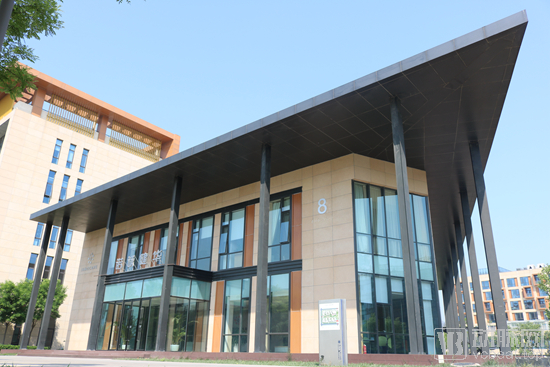
InnoCare's Office Building at Peking University Medical Innovation Valley
Subsequently, after relocating to its new laboratory, InnoCare entered a fast track for R&D. In its first year at the new facility, the company secured its first domestic clinical trial approval. The following year, it achieved a series of milestones: obtaining clinical trial approvals for two new drug candidates, securing over USD 200 million in financing, and undertaking national major special projects, while launching multiple clinical studies. Early this year, InnoCare received approval from the U.S. FDA for an investigational new drug application, consolidating its leadership position in the development of novel BTK inhibitors in China and joining the ranks of global top 10 pharmaceutical companies in competition.
InnoCare is dedicated to the development of international first-in-class novel drugs for the treatment of oncology and autoimmune diseases. With one-stop, fully functional new drug R&D centers in Beijing and Nanjing, the company addresses lymphoma, liver cancer, cholangiocarcinoma, and other solid tumors, as well as autoimmune diseases that are highly prevalent among Chinese patients.
Prior to founding InnoCare, Dr. Cui Jisong was already a highly influential Chinese-American female scientist in the U.S. pharmaceutical industry, where she participated in and led new drug development projects across multiple therapeutic areas at Merck & Co. Upon returning to China, Dr. Cui was invited to serve as General Manager and Chief Scientific Officer of BioDuro®, a wholly-owned subsidiary of PPD®, spearheading the expansion of the contract research organization (CRO) market for drug development in China.

Dr. Cui Jisong, Co-founder and CEO of InnoCare
From Head of China Operations at a multinational corporation to leader of a domestic innovative pharmaceutical company, Dr. Cui Jisong’s career path mirrors that of most founders of active innovative drug enterprises in China. This group of scientists, who went abroad for studies in the 1980s and 1990s, spent their formative years at large multinational pharmaceutical companies, and gained entry into mainstream society through their talent and hard work, returned to China to launch startups in their forties. They have formed a powerful, invisible network that enables the rapid pooling of knowledge and experience to overcome challenges inherent in new drug development—an area where domestic companies have traditionally lacked expertise.
“Drug development is akin to a high-wire act, requiring a delicate balance among potency, selectivity, druggability, metabolism, and safety. Along this path, it is common for countless preclinical studies and clinical trials to fail, resulting in the loss of billions of dollars,” stated Dr. Cui Jisong. “Talent is the critical variable in this equation.” InnoCare’s core competitiveness and primary driver of rapid growth stem from two key talent pillars: a robust Scientific Advisory Committee composed of life sciences leaders from Tsinghua University and Peking University, new drug R&D experts from multinational corporations, and leading medical specialists from top-tier Chinese hospitals; and a core R&D team consisting of scientists with extensive experience in new drug development at Fortune 500 pharmaceutical companies, who have successfully developed multiple patented drugs and products.
Currently, InnoCare has three innovative drugs in the clinical research stage, among which orelabrutinib (ICP-022) is progressing the fastest and is the most noteworthy. According to Dr. Cui Jisong, orelabrutinib is a small-molecule targeted drug developed against the BCR/BTK signaling pathway. Its corresponding therapeutic areas mainly include two categories: one is oncology, particularly B-cell-related lymphomas and chronic lymphocytic leukemia; the other is autoimmune diseases, such as systemic lupus erythematosus, rheumatoid arthritis, and Sjögren's syndrome.
BTK, short for Bruton’s tyrosine kinase, is a protein involved in B-cell signal transduction that influences cell differentiation and proliferation. Ibrutinib, the first approved BTK inhibitor, suppresses BTK enzymatic activity by forming a covalent bond with a cysteine residue in the enzyme’s active site, thereby controlling tumor cell growth. Launched in late 2013 as an oral blockbuster therapy for leukemia, this once highly celebrated targeted anticancer agent has brought hope for survival to numerous patients.
Currently, the only BTK inhibitors approved for marketing globally are ibrutinib (Johnson & Johnson, AbbVie), acalabrutinib (AstraZeneca), and zanubrutinib (BeiGene). As one of the hottest R&D tracks for small-molecule targeted therapies, BTK inhibitors have remained a key investment focus for major global pharmaceutical companies.
According to incomplete statistics from VCBeat, major international pharmaceutical companies such as Johnson & Johnson, AbbVie, AstraZeneca, Merck & Co., Takeda, Celgene, and Bristol Myers Squibb (BMS) have all established extensive pipelines of Bruton’s tyrosine kinase (BTK) inhibitors in development, with indications spanning two broad categories: oncology and autoimmune diseases. In China, InnoCare and BeiGene are the only two pharmaceutical companies for which we have found publicly available information on clinical trials of BTK inhibitors. Although the clinical trials launched in close succession by InnoCare and BeiGene for their respective BTK inhibitors share many overlapping indications, the two companies have each placed different emphases on their R&D investments. As observers of the healthcare industry, we welcome the rare and encouraging sight of domestic innovative pharmaceutical companies making parallel progress on a target long monopolized by large overseas pharmaceutical firms.
On November 20, 2019, the National Medical Products Administration (NMPA) of China accepted the New Drug Application (NDA) for orelabrutinib (ICP-022) for the treatment of patients with relapsed/refractory chronic lymphocytic leukemia (CLL)/small lymphocytic lymphoma (SLL).
It is understood that this NDA was submitted based on data from a multicenter, open-label clinical trial (Registration No.: CTR20180263) evaluating the safety and efficacy of ICP-022 in the treatment of relapsed or refractory chronic lymphocytic leukemia/small lymphocytic lymphoma. The efficacy and safety data for orelabrutinib will be presented at the 61st American Society of Hematology (ASH) Annual Meeting in December 2019.
As part of a global development program, InnoCare is conducting multiple clinical studies on orelabrutinib. Dr. Cui Jisong told VCBeat that, in addition to the first indication for which a New Drug Application (NDA) has been submitted, the company is also conducting efficacy evaluation studies in China for patients with relapsed/refractory mantle cell lymphoma (MCL), relapsed/refractory marginal zone lymphoma (MZL), relapsed/refractory central nervous system lymphoma (CNSL), and relapsed/refractory Waldenström’s macroglobulinemia (WM). In the United States, the Phase I clinical trial of orelabrutinib for B-cell malignancies was approved to initiate in May 2019.
Dr. Cui Jisong told VCBeat that InnoCare is advancing global clinical trials of orelabrutinib across multiple indications, with preliminary results demonstrating favorable safety and efficacy. “We are making every effort to advance our clinical trials, striving to provide better treatment options for patients.”
Benefiting from its initial capital accumulation and smooth ongoing R&D progress, InnoCare’s current pipeline includes, in addition to its BTK inhibitor, two Phase I clinical candidates—ICP-192 and ICP-105—that target distinct indications for diseases such as urothelial carcinoma/cholangiocarcinoma and hepatocellular carcinoma, respectively. Together with orelabrutinib, these assets form the company’s core product portfolio with established brand advantages.
In addition to these three clinical-stage drug candidates, InnoCare currently has six self-developed candidate drugs in the IND-enabling stage, with multiple preclinical candidates under simultaneous development. The company plans to file an Investigational New Drug (IND) application for at least one candidate each year in the future.
When asked how multiple new drugs were rapidly advanced to the mid-to-late stages of clinical trials, Dr. Cui Jisong cited two additional reasons beyond the development of a talent pipeline.
First, the R&D platform demonstrates significant advantages. InnoCare’s one-stop R&D platform supports the entire process of innovative drug development, ranging from mechanism research, target selection, compound design, synthesis, screening, and optimization, to process and formulation development, pharmacological and toxicological studies, and clinical trials. This provides a realistic possibility for effectively shortening the drug development cycle, improving drug quality, and accelerating market launch.
Second, strong independent innovation capability. Leveraging the innovative expertise of its R&D team, InnoCare has developed numerous domestic and international invention patents and a robust product pipeline. Upon successful commercialization, these drugs targeting solid tumors and autoimmune diseases with high prevalence among Chinese patients will effectively address the significant unmet treatment needs in China, providing more effective therapeutic options for patients both domestically and internationally.
“In the future, we will also consider facilitating the global expansion of high-quality projects and introducing external innovations to maintain the company’s operational vitality and sustainable development.” According to Dr. Cui Jisong, after several years of rapid growth, InnoCare has evolved into an integrated pharmaceutical enterprise combining R&D and manufacturing. It has established R&D centers in Beijing and Nanjing, with a combined area of 12,000 square meters, and built a one-stop R&D platform equipped with internationally advanced experimental facilities.
Currently, InnoCare has nearly 200 employees across various locations. Its R&D center in Nanjing focuses on different research areas than its Beijing counterpart, creating complementary advantages and leveraging respective strengths. Additionally, InnoCare is constructing a GMP-compliant pharmaceutical production base in Guangzhou that meets international standards, and has established branches in New Jersey and Boston, USA, to conduct business collaborations and manage clinical trials.
A representative from Peking University Healthcare Innovation Valley, where InnoCare is headquartered, stated that the company’s growth has fully met the valley’s initial expectations. “InnoCare has expanded rapidly, growing from a team of just a few individuals upon entering the Peking University Healthcare Innovation Valley to nearly 200 employees, advancing three projects into clinical trials, and establishing itself as a first-tier enterprise in China’s innovative drug sector.”
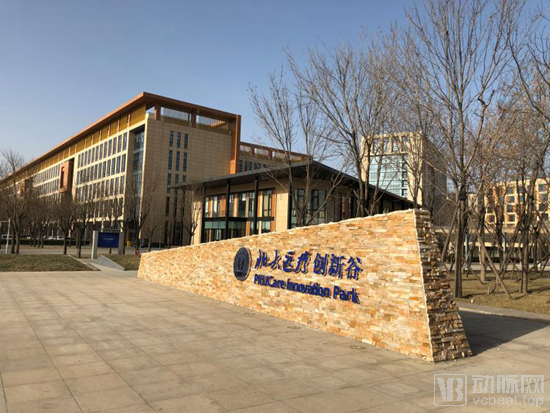
Entrance to Peking University Medical Innovation Valley
As the park operation and project incubation platform under Peking University Healthcare Industry Group, Peking University Healthcare Innovation Valley has provided indispensable software and hardware conditions for the development of InnoCare. Entrepreneurship is not a solitary heroic journey, but rather the result of collaborative efforts by multiple parties. So, how has the strength of Peking University Healthcare Innovation Valley contributed to the growth of InnoCare? For Peking University Healthcare Innovation Valley, supporting services and industrial ecosystem are the most important outputs from the park side.
In medical high-tech innovation parks, professionalism presents a high barrier to entry. Beyond precise positioning and specialized facilities, providing software capabilities that align with the development needs of park-based enterprises has become both a benchmark for assessing the park’s professional standards and a catalyst for accelerating enterprise incubation. In terms of supporting services, standardized corporate governance is the primary focus of Peking University Medical Innovation Valley’s enterprise services within the park. “As a key core vehicle for the innovative venture capital business of Peking University Healthcare Industry Group, Peking University Medical Innovation Valley first defines itself as a platform company.” On one hand, it provides the essential equipment and physical environment for innovation and entrepreneurship from the hardware side, gradually evolving into a technology-oriented professional incubator. On the other hand, from the soft-service perspective, it offers complementary resource matching and market channels for various stakeholders, including patent technologies, expert professors, maker communities, capital, markets, and third-party services.
Peking University Medical Innovation Valley facilitates interaction between Peking University Health Science Center’s medical, educational, engineering, academic, and research sectors and makers through services and strategic investments, while integrating the group’s industrial chain resources to serve as a platform, window, and hub. “Many of our ideas in drug development and business models receive timely responses from the park,” said Dr. Cui Jisong.
In terms of cultivating the industrial ecosystem, since its opening in 2014, Peking University Healthcare Innovation Valley has accumulated a large number of innovative clients, including star enterprises such as InnoCare, Genetron Health, and GenePlus. Its branded park model has exerted a profound influence within the industry.
According to relevant officials at Peking University Medical Innovation Valley, the park has attracted top-tier experts and scholars from both China and abroad, including seven academicians from China and the United States, 13 leading experts, three Changjiang Scholars, three participants in the Haiju Engineering Program, and over 100 industry experts and overseas returnees. Furthermore, Peking University Medical Innovation Valley is gradually forming an industrial ecosystem centered on high-growth niche sectors such as medical technology, biopharmaceuticals, medical devices, molecular diagnostics, and digital health.
As Dr. Cui Jisong noted, the industrial park has attracted a large number of upstream and downstream enterprises in the biopharmaceutical sector, many of which are becoming suppliers and partners of InnoCare, thereby creating favorable conditions for the company to establish an integrated full-chain drug development ecosystem. “In the future, while strengthening and expanding our own enterprise, we will leverage our resource and talent advantages to drive the collaborative development of other related companies in the park.”