

The Marketing Evolution of DTC Genetic Testing: From Celebrity Endorsements to Zero-Cost Trials
I first heard about direct-to-consumer genetic testing in 2016. At that time, the cost of a single test—which included ancestry analysis, genetic traits, and medication risk assessment—was RMB 999. Despite working in the medical technology industry, only a small minority of people around me had undergone such testing.
At that time, apart from industry insiders, the general public’s understanding of consumer-grade genetic testing was largely centered on the notion of “predicting the future”—that is, believing that test results indicated the presence of diseases rather than merely disease risks. Believers either feared the outcomes or dismissed them with contempt, while the majority treated these tests akin to horoscopes. Upon receiving their results, their first instinct was to compare them with their own personal circumstances to verify the accuracy of the findings. Just as gene technology analyzes people’s DNA, people were simultaneously scrutinizing the results provided by gene technology.
Eventually, the price of consumer-grade genetic testing was slashed in half, and more and more colleagues began asking me, “Which company’s products are worth recommending?” Moving from a wait-and-see attitude to growing eagerness, the breakthrough in pricing struck a chord with many more people.
By the end of 2018, Yuan Gene made a strong entry into the market. The emergence of new competitors reignited tensions in the previously relatively calm consumer genomics sector. Companies employed various innovative strategies, including influencer marketing, live-streaming sales, product placements in TV programs, celebrity endorsements, and the sudden introduction of “free testing.” Although only three leading companies dominated the landscape, the market was intensely competitive.
From initial internet-based marketing to the diverse promotional strategies seen today, we have observed that the promotion of consumer genetic testing is increasingly resembling that of mass-market consumer goods. This actually signifies that the market reach of consumer genetic testing is expanding and becoming more akin to a mainstream product.
Next, we will review the strategic maneuvers in the consumer genomics market since 2016 in chronological order, examining how several companies have employed creative marketing tactics.
Phase 1: Enhancing Life with Genetic Technology
Initially, constrained by costs and production scale, the products of both companies on the market were priced at 999 yuan. During that phase, the marketing strategies of 23Mofang and WeGene were relatively simple, primarily relying on WeChat marketing and limited advertising placements.
During the period when costs had not yet declined, consumer genetic testing companies targeted users’ vulnerabilities by appealing to their curiosity. Specifically, they leveraged creative content to promote testing panels and stimulate user interest. Compared with external advertising placements, these companies published more promotional content on their own platforms, with sales channels primarily focused on operating WeChat Official Accounts.
During this period, external marketing efforts were primarily driven by KOL marketing, with content relatively focused on advertisements on self-media platforms, subtitle group ads, and Weibo, among others.
In summary, the marketing strategies employed in the first phase of consumer genetic testing primarily aimed to stimulate curiosity among potential users, acquiring customers by appealing to their interest in ancestral origins and trait-related genes. The user base was predominantly composed of individuals born in the 1980s and 1990s.
Phase II: The Price Storm Hits, and the Influencer Economy Enters the Fray
In late 2016, 23Mofang began to secure funding frequently. By that time, 23Mofang had already established its own medical laboratory. Through improvements in automation levels and product processes, they achieved effective cost control. At that point, 23Mofang was already preparing for its first price reduction. According to previous interviews, Zhou Kun’s response at the time was: “We want to expand the market share.”
In August 2017, 23Mofang announced a price reduction for its products, lowering the price from 999 yuan to 499 yuan, with WeGene following suit shortly thereafter. This marked the first time that the price of consumer genetic testing products in China had dropped below 500 yuan. Benefiting from the high growth driven by the lower prices, both companies experienced a significant increase in their sample volumes.
Following the initial price cut, the two companies diversified their marketing strategies beyond mere price competition.
23Mofang joined the Xiaohongshu platform in late 2018. A search on Xiaohongshu yielded a total of 401 relevant posts. Among the influencers who posted about 23Mofang products, the one with the highest following had over 800,000 fans. Using the same method to search for WeGene, the search engine showed a total of 1,805 posts, with the most-followed influencer having 810,000 fans.
WeChat and Xiaohongshu’s recommendation systems remain limited to text-and-image content, with both companies gradually shifting toward video advertising during this period.
Bilibili is a well-known domestic video danmaku website and China’s leading youth culture community. Here, video creators are commonly referred to as “UP hosts.” In March 2018, WeGene initiated the first collaboration between a genetic testing company and “UP hosts.”
Benny, a content creator partnered with WeGene, is a moderately famous beauty blogger on Bilibili, with 1.54 million followers on the video platform. His sponsored video advertisement in collaboration with WeGene has garnered 248,000 views.
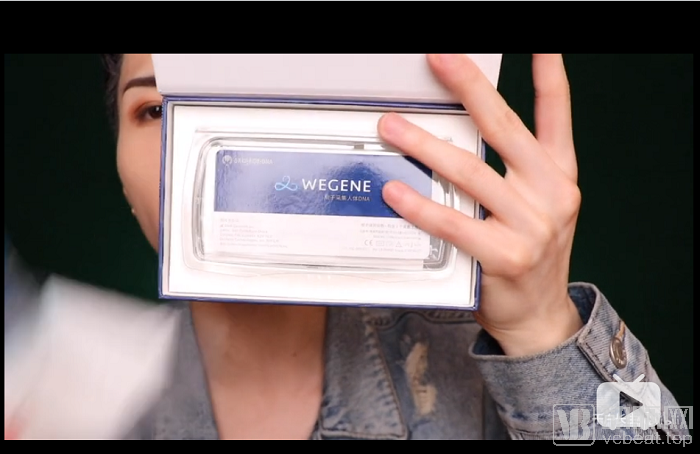
One month later, 23Mofang launched its video advertising campaign. The company partnered with “the original internet celebrity,” Papi Jiang, who has over 5 million followers on Bilibili. The video garnered 1.685 million views on the platform.
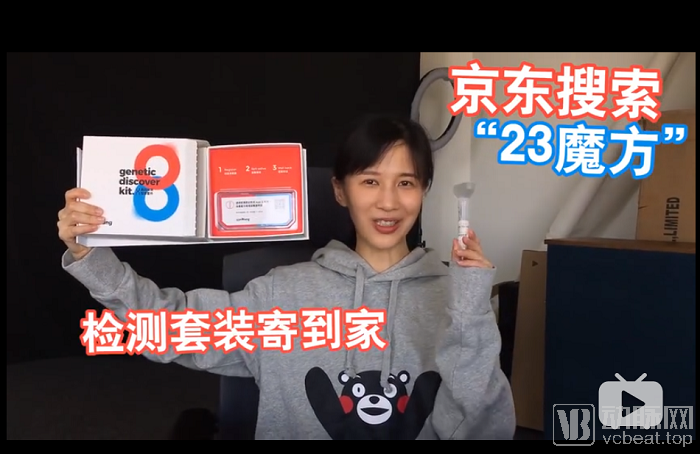
During this phase, genetic testing companies have adopted increasingly diversified marketing strategies that resonate more with the general public, while price reductions have spurred a wave of sales growth. WeGene has not disclosed changes in its sales volume following the price cut, whereas 23Mofang revealed that its sales had tripled.
Phase III: Price Wars Reignite, Promotions Escalate
In June 2018, the consumer genetic testing market saw another round of price reductions, with 23Mofang directly lowering its price to RMB 299. Benefiting from the high growth volume brought by the two price cuts, 23Mofang’s sample size increased from 40,000 to 200,000.
During an interview, Zhou Kun once set the ambitious goal of accumulating a sample size of 1.5 million by 2019. The primary reason for this further price reduction of the product is to increase its visibility and reach a broader audience.
WeGene did not follow suit with the latest price reduction, giving 23Mofang a competitive edge in pricing. During this phase, WeGene pursued an alternative strategy by frequently collaborating with other product companies to launch co-branded and bundled offerings, thereby embarking on a path of co-branding marketing.
The concept of co-branded marketing originated from a collaboration between WeGene and Honeywell masks in December 2017. At that time, 100 cities across China were affected by smog. Subsequently, WeGene integrated its own testing services and launched collaborative packages and co-branded products with COFCO Group, the personal care brand Anmei, and the zodiac comic blogger Tongdao Dashu.
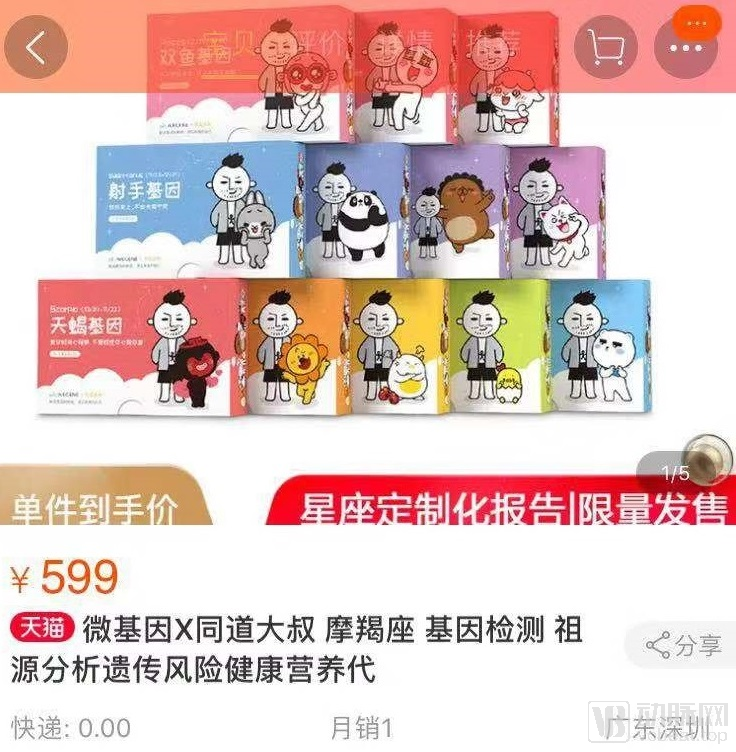
Screenshot date: July 2018
However, sales data from Tmall at the time indicated that not all co-branded products received positive market responses. For instance, the limited-edition zodiac-themed co-branded products launched in collaboration with Tongdao Dashu were priced slightly higher than regular items due to the inclusion of personalized zodiac reports, yet their sales volume fell far short of that of the standard products. Similarly, the facial mask products introduced in partnership with Anmei aimed to leverage the appeal of genetic technology to promote daily chemical goods. However, due to differences in the consumer bases of Anmei and WeGene, there was a significant disparity between the sales volume of these masks on WeGene’s Tmall store and Anmei’s own sales figures.
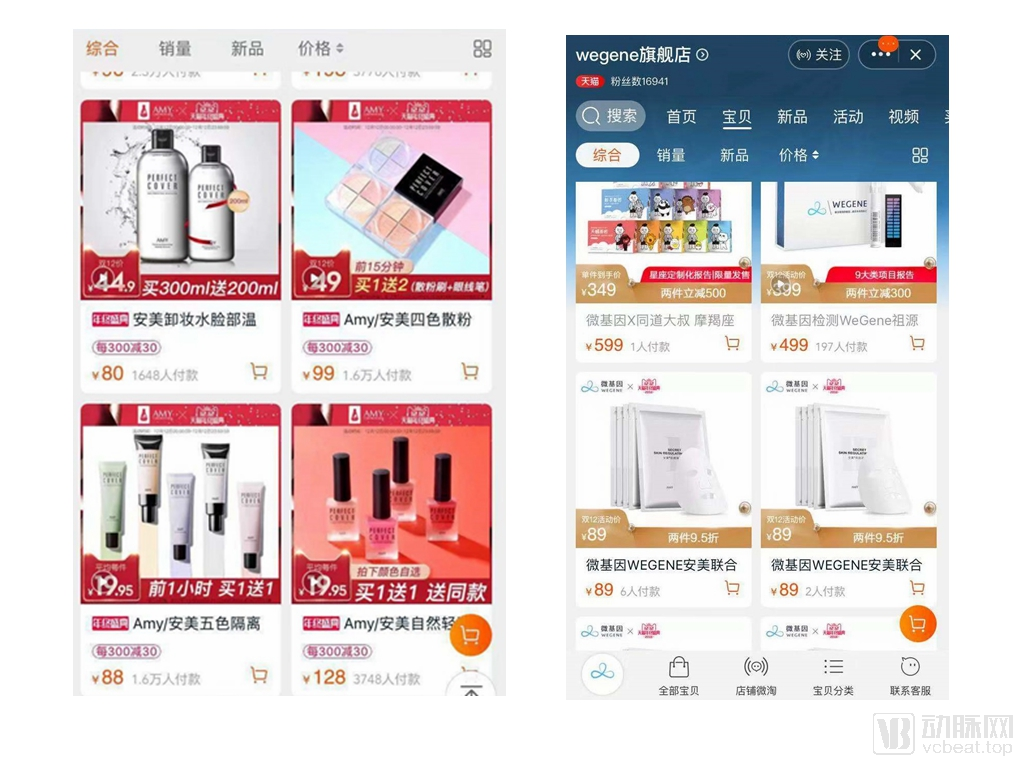
Screenshot date: July 2018
To date, WeGene has delisted its previous co-branded and collaborative products, with its Tmall store currently offering only two products: the “499 Test” and whole-genome sequencing.
Debut on Tmall's "Night of the Decisive Battle"
In November 2018, the Tmall Double 11 Shopping Festival returned. Unlike previous years, Taobao livestreamers began their promotional warm-ups in late October, with November 11 hailed as the “Night of the Final Showdown.”
Both 23Mofang and WeGene opened their Tmall stores in recent years, riding the wave to join the Tmall Double 11 shopping frenzy. This year marked the first time both companies conducted live-streamed sales on Tmall. If someone were to review the history of consumer genomics in China one day, there would likely be a page describing it as follows: As the clock struck 10:15, the compact live-streaming studio was filled with lights and props, with small white boxes neatly arranged on the table. The host energetically presented the product in hand, opening a white box no larger than a palm to reveal a plastic tube slightly thicker than a test tube, equipped with a small funnel. Within 2 milliliters of saliva lay the secrets encoded in 3 billion base pairs. This was the first time consumer-grade genetic testing entered the live-streaming commerce arena...
On the “Showdown Night” of the 2018 Double 11 Shopping Festival, WeGene invited celebrity Wu Chun (Jiro Wang), while 23Mofang brought on Xiao Xiao, host of the talk show *I Can I BB*. The live-streaming event on that day represented a novel endeavor for both companies, allowing them to capitalize on the sales boom driven by the Double 11 Shopping Festival. According to 23Mofang, the live stream generated approximately 10,000 units in sales that year.
Douyin, a short-video platform that has risen to prominence in recent years, has been included in 23Mofang’s advertising roster following the opening of its ad portal.
Of course, whether through short videos or live streaming, these initiatives lean toward new media and reach a relatively concentrated audience. In 2019, WeGene’s collaboration with the Hunan Satellite TV variety show My Little Boy marked the first time a genetic testing product appeared on television.

In one episode, guest Wu Yi brought fellow guest Chen Xiang to the WeGene laboratory, where he introduced and demonstrated this “miraculous” product to viewers. Concepts such as WeGene and consumer genomics have since entered the public consciousness through broadcast media.
When it comes to television advertising, the first genetic testing company to make this attempt was actually Ancestry, the pioneer of ancestry testing. Around 2016, the company began airing television advertisements, not only placing product placements in *America’s Next Top Model* but also sponsoring a celebrity genealogy documentary series on the US educational network TLC titled *Who Do You Think You Are?*
In terms of audience reach, marketing channels such as WeChat marketing, influencer marketing, and live streaming or television advertising campaigns cover increasingly larger populations, with consumer segments becoming less distinctly segmented. From a marketing perspective, consumer genetic testing appears to be transitioning from a niche market to the mass market.
A Shift in the Landscape: Yuan Gene Enters the Arena
In February 2019, Berry Genomics announced the joint establishment of a consumer-grade genetic testing company, Yuan Gene (Beijing Yuanyuan Gene Technology Co., Ltd.), with Prenetics Limited, an influential genetic testing company in the Southeast Asian and European markets. This move broke the original "duopoly" landscape of the consumer genetics market.
Yuan Gene’s CEO, Yan Jun, previously served as General Manager of Strategic Partnerships at Google China and as Vice President of Vipshop Group. The Chief Operating Officer formerly held the position of Chief Marketing Officer at 23Mofang, possessing extensive familiarity with the current landscape and competitive strategies of China’s consumer genomics market. Liu Le, the Marketing Director, previously worked as a Marketing Manager for PepsiCo in China. From a team perspective, Yuan Gene has aimed for the top position in the consumer genomics market since its inception.
Not only does it boast a strong team, but Yuan Gene also commenced formal operations in the second quarter of 2019, backed by an aggressive marketing campaign.
On April 22, Yuan Gene held its inaugural product launch event in Beijing under the theme “DNA Your Life: A Professional-Grade Choice,” aiming to advocate for professional-grade genetic testing. The brand also invited three special guests—G.E.M., Vanness Wu, and Gigi Leung—to attend the event in person. During the launch, G.E.M. revealed that she had invested in the project.
Celebrity endorsements and investment backing are linked to Prenetics, the company behind Circle Gene.
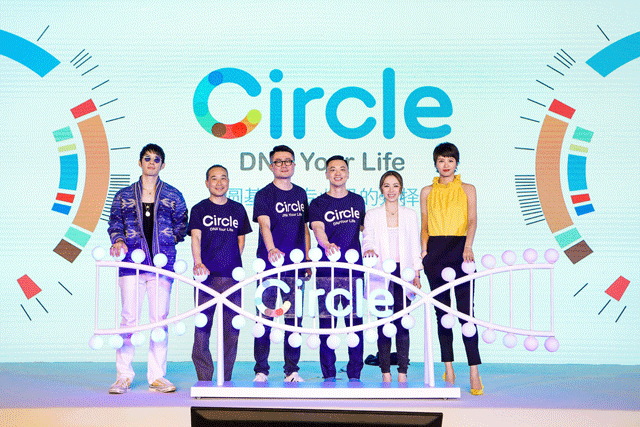
Image from the internet
At the press conference, Ma Luyi, General Manager of the Medical Health Department under the Life Services Business Group of JD Retail Group, represented JD.com at the event and announced a strategic partnership with Yuan Gene. At midnight that day, Yuan Gene’s products were launched exclusively on the JD.com platform, marking their nationwide debut. The Elite Joyful Living Edition, Health Care Edition, and Comprehensive Premium Love Edition are priced at RMB 880, RMB 1,380, and RMB 1,680, respectively.
The ability to sell whole-exome sequencing products at such prices is another advantage conferred by Berry Genomics, a shareholder of Yuan Gene.
Ma Luyi stated, “On the JD.com platform, we have over 300 million high-quality users who are demonstrating an increasingly strong demand for health-related solutions. Yuan Gene’s newly launched consumer-grade genetic testing product, based on Whole Exome Sequencing (WES) technology, is highly groundbreaking. We are delighted to offer this epoch-making genetic testing product directly to hundreds of millions of consumers.”
"Zero-Cost Screening"
With celebrity endorsements and a partnership with JD.com, Yuan Gene fired the opening shot of its product launch, loudly proclaiming to the consumer market, “Yuan Gene is here.” As JD.com’s “6.18” Shopping Festival approached in June, Yuan Gene once again joined forces with JD.com to roll out an unprecedented price-cutting campaign in the consumer genomics industry.
On June 1, 2019, Yuan Gene ran a promotion on the JD.com platform. The Elite Lohas Edition, originally priced at RMB 880, was available with a RMB 100 discount coupon, bringing the final price to RMB 780. Additionally, customers received a JD.com E-Card worth RMB 800 after placing their order. This meant that customers not only obtained the Yuan Gene Elite Lohas Edition product for free but also had RMB 20 remaining on their JD.com E-Card.
Less than a day after its launch, 4,000 units of the product were snapped up.
However, “0-yuan sequencing” was not actually pioneered by Yuan Gene. In February 2019, 23Mofang launched a standalone ancestry testing product and gradually began experimenting with zero-cost sequencing in the following months.
Almost simultaneously with the launch of Yuanjiyin’s campaign, 23Mofang also joined forces with JD.com to showcase its marketing prowess. On May 30, 23Mofang launched a promotional event via its WeChat official account, offering its ancestry testing kit at a flash-sale price of RMB 199. Customers who purchased the kit also received a JD.com E-card worth RMB 200.
On June 5, 23Mofang launched a “Invite Friends for Free Genetic Testing” campaign on its mobile app. All users who have already received their reports (including Standard Edition, Ancestry Edition, and Children’s Edition) can invite friends to experience 23Mofang’s “Ancestry Genetic Testing” free of charge.
On June 25, 23Mofang published a WeChat article titled “Free Genetic Testing! I’m Serious…” and launched a free ancestry testing campaign. On July 23, 23Mofang held a press conference at Chengdu Tianfu Software Park, officially announcing a comprehensive upgrade to its genetic testing model and introducing a free ancestry testing program for new users.
New users joining the program can enjoy, free of charge, 23Mofang’s globally unique service that matches genealogical records and helps locate relatives through genetic testing. Additionally, they have the option to pay for an upgrade to the full-version genetic testing report, unlocking further insights into genetic risks, drug responses, nutritional needs, fitness and exercise, and skincare management.
“We believe that as the volume of data grows, innovative applications based on genetic testing, such as disease prediction, will eventually become a reality,” said Zhou Kun at the press conference. “We are immensely proud and fortunate to live in an era where we can undertake such meaningful work, creating a better future by digitizing life.”
Following the conclusion of the free ancestry testing campaign, 23Mofang once again upgraded its testing offerings. The original trial version, which solely included ancestry analysis, has been enhanced into a new trial product encompassing five categories: ancestry, genetic traits, genetic risks, nutritional needs, and drug response.
KOL Marketing Goes Free: The Truth Behind “Zero-Cost Testing”
User Education
“For the past few years, 23Mofang has consistently relied on a sales model driven by KOL (Key Opinion Leader) marketing. However, in recent years, we have gradually come to realize that the era of KOLs is behind us.” When asked about the rationale behind launching its “Free Genetic Testing” product, 23Mofang responded, “The cost of such marketing campaigns is high, yet their effectiveness has declined compared to the past. We believe it is time to adjust our business model accordingly.”
Whether leveraging key opinion leaders (KOLs) or offering “zero-cost testing,” new products require substantial investment in market education to gain traction. A review of rapidly emerging brands in recent years, such as Didi, Ele.me, and Luckin Coffee, reveals that they all secured market share and educated consumers through extensive discounts and promotional offers.
After completing the “$0 Screening,” users will receive results for a subset of the tests included in the standard package. To access the full set of results, they can pay to upgrade within the app—a model somewhat akin to Helix’s marketing strategy. All users who opt for the “$0 Screening” are potential paying customers; unlocking more “genetic secrets” requires a paid upgrade. The “$0 Screening” includes partial test results, and after experiencing the service firsthand and receiving these tangible, personal insights, users may be more easily persuaded to convert. Although specific figures have not been disclosed, 23Mofang reports that the conversion rate among “$0 Screening” users is relatively encouraging.
Data Accumulation and Monetization
Overseas, a critical monetization pathway for consumer genomics is through pharmaceutical companies, involving the sale of de-identified data to these firms. However, as seen with 23andMe, the high-price sale of data is underpinned by years of substantial investment. Given the current state of drug development in China, the route of monetizing data through pharmaceutical companies will not be smooth. Therefore, for domestic enterprises, beyond market share, how they leverage their data assets will be key to their future competitiveness. Regardless of the monetization channel, “possessing data” is the prerequisite for any realization of value.
Whether through price reductions or free-testing strategies, the ultimate goal of testing companies is to expand their market share and grow the pool of potential consumers. For these enterprises, future competition will revolve around sample volume; larger sample sizes can enhance the accuracy of test results and may even enable advanced data applications based on deeper insights derived from data analysis.
On the other hand, from a cost perspective, even when users undergo free tests, laboratories actually perform standard-version testing on the samples. Behind the “zero-cost testing” model lies substantial financial expenditure; market competition and data accumulation are both predicated on capital-driven maneuvering.