

Venshin Cloud Cuts Medical Terminal Downtime from 2 Hours to 1 Minute with Innovative Hybrid Desktop Virtualization
Modern hospital information systems are supported by thousands of terminal desktops. Whether you are queuing to register, consulting with a doctor, or paying for and collecting medications, you will notice that terminals connected to various medical devices are present in every corner of the hospital. The stable operation of these terminals is indispensable for every prescription, laboratory test report, and CT scan.
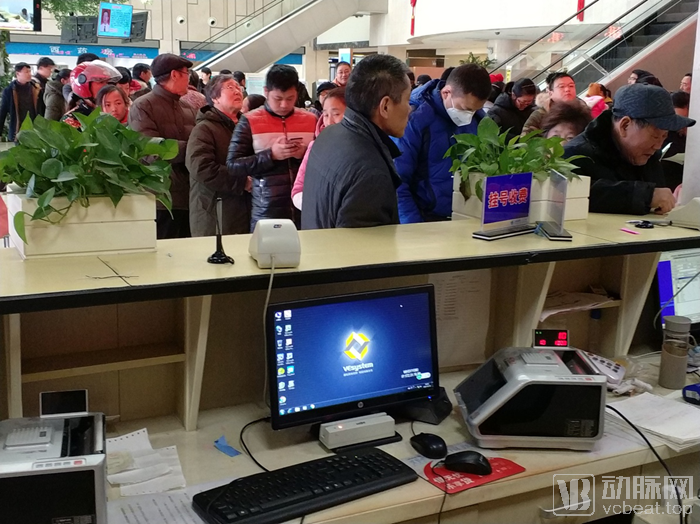
Hospital Registration Window (Image source: Provided by the enterprise)
According to data from the Yidianzu enterprise computer rental platform, the average time required to repair a malfunctioning corporate computer is 120 minutes. However, in the healthcare industry, where business continuity is critical, this two-hour downtime not only results in substantial economic losses but also poses a threat to patients’ lives and health.
In 2009, He Qinlin, the founder of virtual terminal management theory and a senior information security expert in China, established Beijing Hexin Chuangtian Technology Co., Ltd. (hereinafter referred to as “Hexin Chuangtian”), dedicated to providing users with integrated solutions ranging from data center construction to terminal desktop cloud services. It is reported that Hexin Chuangtian’s cloud desktop solution can reduce computer system troubleshooting time from 120 minutes to just one minute, enabling one IT administrator to handle the workload previously requiring seven people.
“When we were working on security back then, we realized that the weakest link in security is the endpoint. Since security protection for data centers has become relatively mature, endpoints—which are numerous and geographically dispersed—are often the most vulnerable to issues. At that time, we hoped to have a product that could centrally manage and protect all endpoints, thereby significantly enhancing the overall security posture of the information system. This is how we identified the market opportunity in desktop virtualization,” He Qinlin told VCBeat (WeChat ID: vcbeat).
He Qinlin stated that desktop cloud technology has been developing in China for ten years, having first been introduced to the country by VMware and Citrix. These two companies championed cloud desktop products centered on backend computing, adopting Virtual Desktop Infrastructure (VDI). In this architecture, all computing and storage resources are concentrated on the server side, leveraging networks to ensure business continuity, while the client end functions merely as a display monitor.
Given the availability of open-source VDI technologies for reference, most domestic cloud desktop vendors have adopted the VDI architecture to develop their cloud desktop products. The first desktop cloud technology promoted in hospitals was also VDI; around 2012, many hospitals in China implemented this solution. However, due to VDI architecture’s heavy reliance on network connectivity, poor peripheral compatibility, and high server investment costs, the end-user experience was suboptimal.
Moreover, most hospitals have already procured high-performance terminal computers. If a VDI solution relying on backend computing were adopted, these existing devices would become unusable. Consequently, after several years of promotion, the approach gradually fell into disuse, and the healthcare industry subsequently became a “no-go zone” for cloud desktops for a period of time.
To address these issues, Hexin Chuangtian not only considers how to manage endpoint computers when designing desktop cloud solutions but also leverages the computing, storage, and GPU resources of these endpoints themselves, ensuring that customers’ IT investments are not wasted.
On the other hand, unlike cloud desktop vendors that rely on traditional backend VDI technology, Hexin Chuangtian has chosen to advocate for Virtual OS Infrastructure (VOI), which emphasizes front-end computing. He Qinlin told VCBeat that the advantages of front-end computing are mainly reflected in four aspects:
First, the performance of existing terminals can be fully leveraged;
Second, it has low bandwidth consumption, so hospital networks do not require upgrades or renovations;
Third, it offers strong compatibility with peripheral devices; according to actual deployment statistics, it is compatible with over one hundred types of hospital peripherals.
Fourth, minimal server investment is required, with a single server capable of managing 1,000 terminal computers;
It is worth noting that while Hoxton chose the front-end computing route, Intel proposed Intelligent Desktop Virtualization (IDV) technology, which advocates precisely for front-end computing.
By enhancing the computational power of local terminals and optimizing data storage, access, and analysis on client devices, the burden on cloud servers can be significantly reduced. Edge computing is better suited for scenarios involving complex business logic, high requirements for data timeliness, and stringent system stability.
Although front-end computing is advantageous, it lacks support for mobile devices. Following breakthrough advancements in front-end computing, VeeTrust integrated front-end and back-end computing, merging the three mainstream technical architectures of desktop cloud into a unified solution, and launched the VeeTrust Next-Generation Medical Desktop Cloud for the healthcare industry.
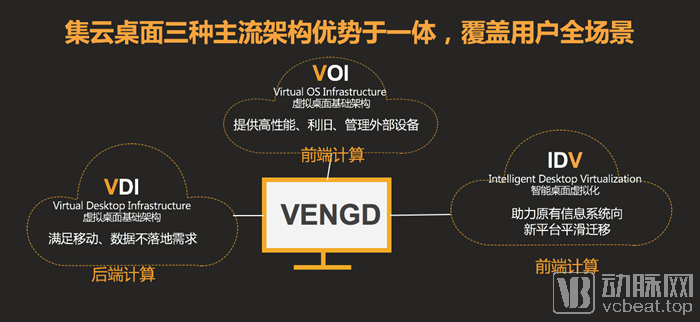
Hexin Next-Generation Cloud Desktop 3V Integrated Architecture
Hexin’s Next-Generation Cloud Desktop, VENGD, introduces a novel cloud desktop delivery model that integrates the advantages of VOI, VDI, and IDV architectures. It establishes a “front-end and back-end hybrid computing” mode, leveraging server resources for centralized computing while utilizing terminal resources for distributed computing. Capable of managing 99% of hospital desktop scenarios, it rearchitects the underlying system and enhances platform performance, thereby effectively addressing various challenges related to centralized management, efficient operations and maintenance, and security and availability for business terminals.
VOI is primarily deployed in hospital settings that demand high business continuity, high performance, and support for complex peripherals, such as billing offices, physician workstations, clinical laboratories, and operating rooms. VDI is mainly utilized in mobile workflows, including mobile nursing stations and remote access for physicians on the go. IDV is predominantly applied in scenarios where new hardware must run legacy business systems; for instance, newly purchased computers equipped with Intel 8th-generation CPUs or later cannot run Windows 7, yet certain hospital business systems are only compatible with Windows 7 or even Windows XP. In such cases, IDV technology provides an effective solution.
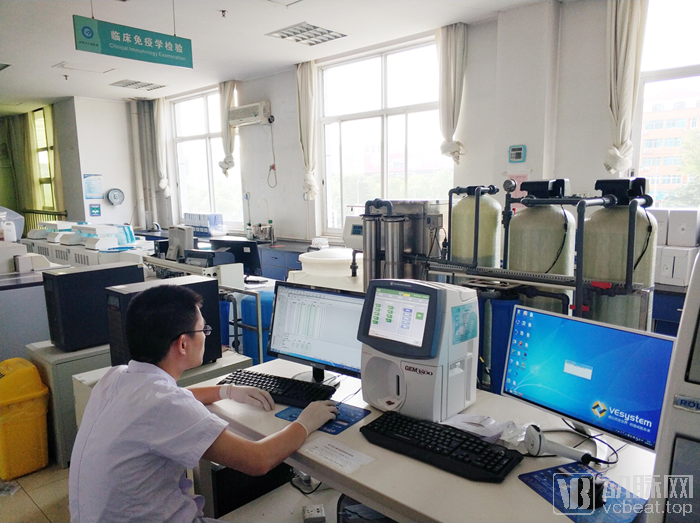
Hospital Laboratory (Image source: Provided by the company)
“Only through the integration of three technical architectures can hospital terminal devices be managed on the largest scale. Yichun People’s Hospital in Jiangxi Province is the first Grade-A tertiary hospital in China to practically implement a desktop cloud solution with over 1,000 endpoints,” said He Qinlin. “Following Yichun People’s Hospital, an increasing number of hospitals in China have adopted Vesync’s 3V integrated cloud desktop solutions at the scale of more than 1,000 endpoints.”
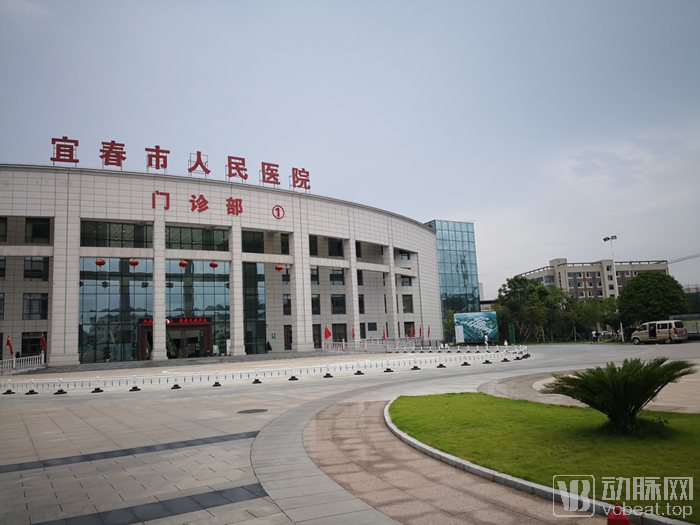
Yichun People's Hospital (Image source: Provided by the enterprise)
After achieving comprehensive coverage across all hospital scenarios, Hoxin’s next-generation medical desktop cloud solution has gradually extended its reach to the development of regional medical consortia. In 2019, Hoxin Creativity supported the construction of the smart healthcare cloud for the Ningde Municipal Health Commission, providing IT infrastructure support to 1,575 village clinics under its jurisdiction.
It is reported that village clinics in Ningde City are geographically dispersed, covering diverse terrains such as mountainous areas and islands. Due to a shortage of IT operations and maintenance (O&M) personnel, IT O&M work at these clinics was previously difficult to carry out, severely affecting villagers’ access to medical care. Currently, all 1,575 village clinics have adopted Hoxton’s next-generation cloud desktop solution for their office access devices, enabling unified O&M management and control while ensuring secure network access.
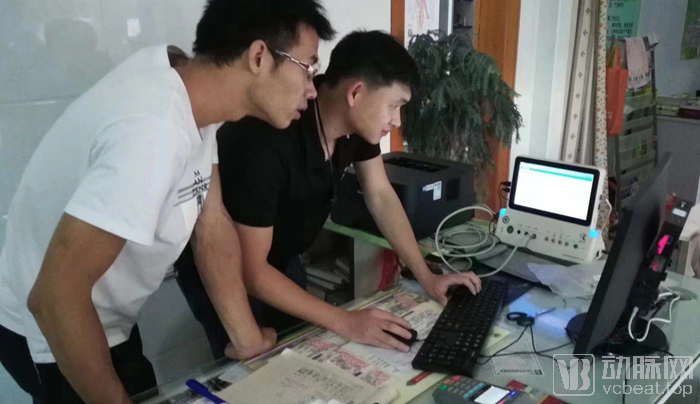
Commissioning of Equipment for Village Clinics Connected to the Ningde Health Commission (Image source: Provided by the enterprise)
“We are gratified that Hexin’s next-generation medical desktop cloud has truly enhanced the capacity of primary healthcare services, accelerating the establishment of a medical consortium care model characterized by ‘initial diagnosis at the primary level, two-way referrals, separate management of acute and chronic conditions, and coordinated care between upper- and lower-tier institutions,’ thereby thoroughly addressing the public’s difficulties and high costs in accessing medical care. This is the core driving force behind Hexin Chuangtian’s relentless dedication to the healthcare sector,” said He Qinlin.
According to IDC research, China's total IT spending on healthcare cloud reached RMB 5.05 billion in 2018 and is projected to reach RMB 16.88 billion by 2023. The cloud-based transformation and upgrading of the healthcare industry has become urgent. As a typical application of cloud computing, desktop cloud will emerge as the preferred solution for the healthcare sector's cloud transition.
In recent years, desktop cloud solutions have seen rapid adoption in the healthcare industry. He Qinlin attributes this trend to the inherent nature of desktop cloud technology, which is designed to help hospitals address the challenges of unified, centralized management, operations and maintenance, and security for large-scale endpoint devices.
Previously, terminal operations and maintenance (O&M) relied primarily on manual labor. In a standalone mode, each O&M engineer could manage only 150 terminals. As domestic Grade A tertiary hospitals typically have at least 1,000 terminals, this would require seven engineers for maintenance. Engineers spent their days repetitively installing operating systems, updating software, applying patches, and scanning for and removing viruses. Furthermore, in the event of a terminal failure, reinstalling the operating system and application software alone would take at least two hours.
In the practice at Yichun People's Hospital, Hexin Chuangtian's next-generation medical desktop cloud has achieved unified and centralized management of all terminal computers across the hospital, reducing the number of operations and maintenance engineers from seven to one. More importantly, the mean time to repair terminal failures has been shortened from two hours to one minute, significantly enhancing the continuity of hospital operations.
After a decade of refinement, Vesync’s next-generation medical desktop cloud has served nearly 100 hospitals across China, including Nanfang Hospital, Xiamen Zhongshan Hospital, Zhuhai People’s Hospital, Xinjiang Traditional Chinese Medicine Hospital, Honghu People’s Hospital, and Yuyao Second People’s Hospital. It is reported that Vesync has secured Series A strategic investment from Qi-Anxin.