

Junlin Healthcare Global New Drug Insights Weekly Digest – Issue 17
Aug 12, 2019 17:19
CST Updated
17:19

Aug 5–11, 2019: A total of 8 new drug data entries were recorded this week, including 4 in oncology, 1 in metabolism, 2 in CNS, and 1 in dermatology.
❖A Historic Milestone in NSCLC Treatment: AstraZeneca Announces FLAURA Study Results, Demonstrating Significant Overall Survival Advantage of Osimertinib Over First-Generation TKIs as First-Line Therapy for NSCLC. This marks the first targeted therapy to show a survival benefit in EGFR-positive NSCLC in nearly two decades. Furthermore, the FLAURA study indicates that upfront third-generation TKI therapy yields significant survival benefits compared to sequential first- then third-generation treatment, thereby solidifying osimertinib’s leading position among EGFR-targeted agents. With third-generation TKIs now dominant, is the advent of fourth-generation agents still distant? This question has become one of the most hotly debated topics in EGFR-positive NSCLC.
❖The FDA recently issued a statement alleging that Novartis’s marketing application for the SMA1 gene therapy Zolgensma contained fabricated data, sending shockwaves through the market: “Could Novartis, of all companies, have done this?” Zolgensma is one of the most significant achievements in gene therapy; priced at $2.1 million per dose, it is the most expensive drug in pharmaceutical history and can significantly improve motor development in children with SMA1. Currently, Novartis has issued statements strongly supporting Zolgensma, and the FDA has indicated that these data issues have not altered its assessment of the therapy’s efficacy and safety. Therefore, while Zolgensma is likely to weather this storm and remain on the market, Novartis may still face certain civil or criminal penalties.
Rhythm announces that its investigational therapy, setmelanotide, in
Positive Top-Line Data Achieved in Two Pivotal Phase 3 Trials for the Treatment of Obesity
Rhythm Pharmaceuticals announced that its investigational therapy, setmelanotide, achieved positive top-line data in two pivotal Phase 3 trials for the treatment of obesity due to pro-opiomelanocortin (POMC) deficiency and leptin receptor (LEPR) deficiency, respectively.
Setmelanotide is a “first-in-class” melanocortin-4 receptor (MC4R) agonist.
Phase 3 Clinical Trials: Controlled Studies Conducted Separately in Patients with POMC and LEPR Deficiencies
In patients with POMC-deficient obesity, the median weight loss was 31.9 kg; in patients with LEPR-deficient obesity, the median weight loss was 16.7 kg.
The U.S. FDA Accepts Blueprint’s New Drug Application for Avapritinib
For the treatment of GIST patients with PDGFRA exon 18 mutations
Blueprint Medicines Announces FDA Acceptance of New Drug Application (NDA) for Avapritinib for the Treatment of Adult Patients with Gastrointestinal Stromal Tumors (GIST) Harboring PDGFRA Exon 18 Mutations
Avapritinib is a Type I inhibitor that targets the active conformation of kinases. It inhibits multiple protein kinases harboring KIT and PDGFRA gene mutations.
For patients with GIST harboring PDGFRA exon 18 mutations, or as a fourth-line therapy for the treatment of GIST
ORR reached 86%. As a fourth-line therapy for patients with GIST, the ORR was 22%, with a median duration of response (DOR) of 10.2 months.
Avapritinib exhibits high selectivity.
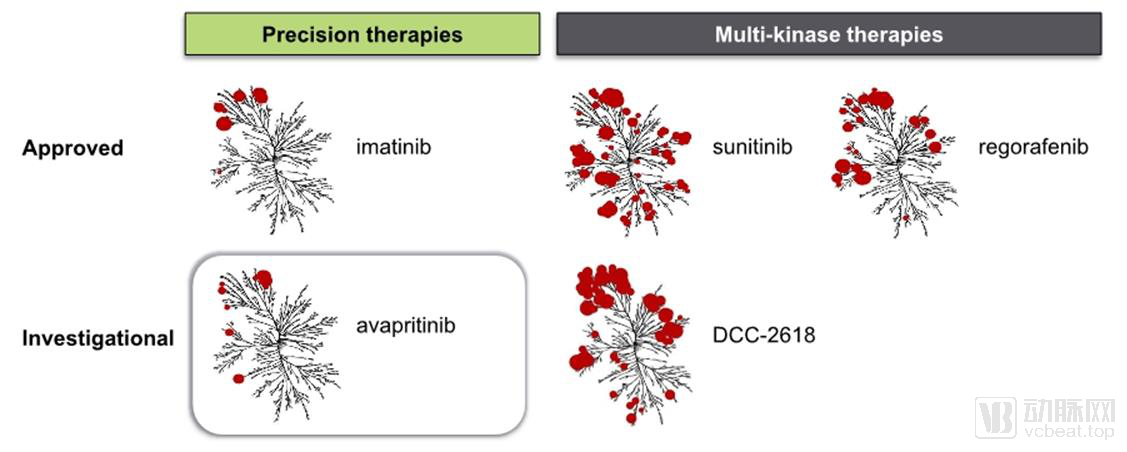
Data Source: blueprint
Athenex Announces Oral Formulation of Paclitaxel for the Treatment of Metastatic Breast Cancer
Met the Primary Endpoint in Pivotal Phase 3 Clinical Trial
Athenex Announces That Its Oral Formulation of Paclitaxel Combined with Encequidar Met the Primary Endpoint in a Pivotal Phase 3 Clinical Trial for the Treatment of Metastatic Breast Cancer, Demonstrating Significantly Superior Efficacy Compared to Traditional Intravenous Paclitaxel
Encequidar, a novel P-glycoprotein (P-gp) inhibitor, serves as the cornerstone of the company’s oral drug development platform, enabling the oral administration of paclitaxel.
A Phase 3 Clinical Trial Comparing the Safety and Efficacy of Oral Paclitaxel Monotherapy versus Intravenous Paclitaxel Monotherapy in Patients with Metastatic Breast Cancer
Compared with intravenous paclitaxel, oral paclitaxel demonstrated significant improvement in the primary efficacy endpoint. The overall response rate (ORR) was 36% in the oral paclitaxel group versus 24% in the intravenous paclitaxel group.
Lynparza (olaparib) in the treatment of metastatic castration-resistant prostate cancer (mCRPC)
Positive Results Achieved in Phase III Clinical Trial for Male Patients
Merck & Co. (MSD) and AstraZeneca Announce Positive Results from the Phase 3 PROfound Trial of Lynparza (olaparib) in Men with Metastatic Castration-Resistant Prostate Cancer (mCRPC)
Lynparza is a “first-in-class” PARP inhibitor that was first approved by the FDA in December 2014.
The Phase 3 trial primarily evaluated the efficacy and safety of Lynparza compared with enzalutamide or abiraterone as second-line treatment in patients with metastatic castration-resistant prostate cancer (mCRPC) harboring mutations in any of the 15 genes associated with the homologous recombination repair pathway.
In male patients with metastatic castration-resistant prostate cancer (mCRPC) harboring BRCA1/2 or ATM gene mutations, Lynparza demonstrated statistically significant and clinically meaningful improvements in the primary endpoint of radiographic progression-free survival compared with enzalutamide or abiraterone.
Alkahest announced that its investigational therapy GRF6019 in
Positive Results Achieved in Phase 2 Clinical Trial for Patients with Mild-to-Moderate Alzheimer’s Disease
Alkahest Announces Positive Results from Phase 2 Clinical Trial of Investigational Therapy GRF6019 in Patients with Mild-to-Moderate Alzheimer’s Disease (AD)
GRF6019 is a patented plasma fraction containing multiple proteins.
Subjects received intravenous administration of 100 mL or 250 mL of GRF6019 for five consecutive days during Week 1, followed by a second five-day treatment course during Week 13, with a 12-week treatment-free interval between each dosing regimen.
GRF6019 demonstrated a favorable safety and tolerability profile, with cognitive assessments showing no decline in participants over the 6-month trial period.
Regeneron Announces Dupixent (dupilumab) in the Treatment of
Phase 3 Clinical Trial for Severe Atopic Dermatitis in Children Achieves Positive Topline Results
Regeneron Pharmaceuticals and Sanofi announced that Dupixent (dupilumab), a blockbuster drug jointly developed by the two companies, achieved positive top-line results in a pivotal Phase 3 clinical trial for the treatment of severe atopic dermatitis in children.
Dupixent is a humanized monoclonal antibody that inhibits the overactive signaling of interleukin-4 (IL-4) and interleukin-13 (IL-13). It is the first and only biologic therapy to demonstrate positive outcomes in pediatric patients with atopic dermatitis.
In the Phase 3 clinical trial, 367 patients aged 6–11 years with severe atopic dermatitis were randomized into three groups: the first group received Dupixent 300 mg subcutaneously every 4 weeks; the second group received 100 mg every 2 weeks (<30 kg) or 200 mg every 2 weeks (>30 kg); and the third group received placebo every 2 or 4 weeks.
70% of patients in the group receiving Dupixent every 4 weeks and 67% of patients in the group receiving Dupixent every 2 weeks achieved at least a 75% improvement in skin symptoms (EASI-75), compared with only 27% of patients in the placebo group.
Dupixent can inhibit Th2-induced related pathways.
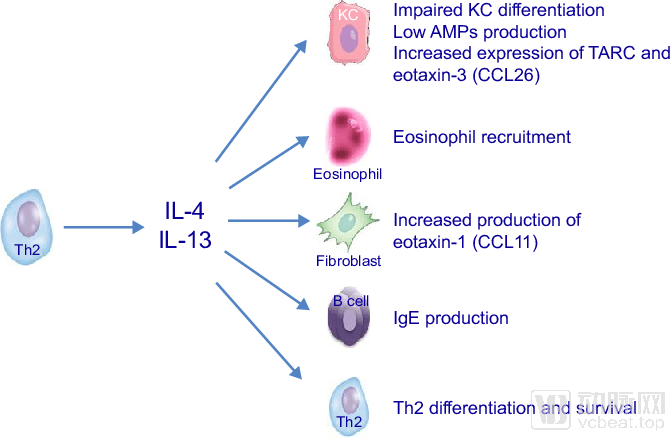
Data source: ResearchGate
Leap Company announced that its DKK1 antagonist, in combination with Keytruda, for the treatment of advanced
Positive Trial Results Achieved in Clinical Trials for Gastric Cancer Patients
Leap Therapeutics Announces Positive Trial Results for DKN-01, an Antagonist Targeting the Novel Target DKK1, in Combination with Keytruda for the Treatment of Patients with Advanced Gastroesophageal Junction Adenocarcinoma/Gastric Cancer with High DKK1 Expression
DKN-01 is a humanized monoclonal antibody targeting the DKK1 protein, which regulates the Wnt signaling pathway.
Among the 10 evaluable patients with high DKK1 expression, the therapy achieved a median PFS of over 22 weeks and a median OS of nearly 32 weeks, along with an ORR of 50% and a DCR of 80%.
Eli Lilly and Company announced that its new drug Emgality (galcanezumab-gnlm) in
Positive Results Achieved in the Phase 3 Clinical Trial CONQUER
Eli Lilly Announces Positive Results from Phase 3 CONQUER Trial of New Drug Emgality (galcanezumab-gnlm), Demonstrating Significant Reduction in Monthly Migraine Days
Emgality is a humanized monoclonal antibody targeting CGRP, playing a significant role in the acute treatment of headache attacks.
The study enrolled 462 patients with chronic (n=193, 41.7%) or episodic migraine (n=269, 58.2%), who had documented failure of two to four different standard preventive pharmacotherapies for migraine.
Patients treated with Emgality experienced a reduction of 4.1 days in monthly migraine days, whereas those treated with placebo experienced a reduction of 1.0 day.
❖Moderna announced that its investigational mRNA cancer vaccine, mRNA-4157, will advance into Phase 2 clinical trials. This personalized neoantigen cancer vaccine marks the company’s second development program to enter Phase 2 clinical testing. Moderna will also continue its collaboration with Merck & Co. to evaluate mRNA-4157 in combination with Merck’s PD-1 inhibitor Keytruda as adjuvant therapy for patients with melanoma.
❖ AstraZeneca Announces Positive Results from Pivotal Phase 3 Trial of Tagrisso (Osimertinib) in Previously Untreated Patients with Locally Advanced or Metastatic NSCLC Harboring EGFR Mutations. Tagrisso Is the First Drug to Demonstrate a Statistically Significant Improvement in Overall Survival (OS) in These Patients, and It Also Improves Progression-Free Survival (PFS) in Patients with Central Nervous System Metastases
❖Eureka Therapeutics Announces Initiation of Phase 1/2 Clinical Trial of ET140202 Artemis T-Cell Therapy for Liver Cancer in the United States. This multicenter, open-label, dose-escalation clinical trial is designed to evaluate the safety and efficacy of ET140202 Artemis T-cell therapy in patients with advanced hepatocellular carcinoma (HCC).
❖Guardant Health, a biotechnology company focused on developing liquid biopsy tests for cancer, announced that its Guardant360 liquid biopsy assay can accurately detect microsatellite instability (MSI) in patients. Results from a study involving 1,145 patient blood samples showed that Guardant360 achieved concordance with standard tissue-based testing methods in 98.4% of samples for determining MSI status.
❖Zolgensma Makes Headlines Again, Not for Milestones or High Drug Prices, but for Alleged Data Manipulation. The U.S. FDA stated that Novartis submitted a Biologics License Application (BLA) containing falsified data and did not notify the agency until one month after Zolgensma’s approval. Nevertheless, the FDA maintains that Zolgensma should remain on the market.