

MedCircle: Empowering 300,000 Registered Doctors with 80% Monthly Engagement Through Efficient, Academic, and Compliant WeChat-Based Communities
As digital applications become increasingly prevalent in the healthcare industry, online learning for physicians has evolved from a mere supplement to traditional offline education into a primary channel for professional development, peer exchange, and enhancement of clinical competencies. Concurrently, healthcare companies are finding it progressively more challenging to reach their target customers—specific physician segments. In response to these practical challenges, digital medical communication has quietly emerged, establishing an innovative, highly efficient bridge between enterprises and physicians that facilitates engagement in ways previously unseen.
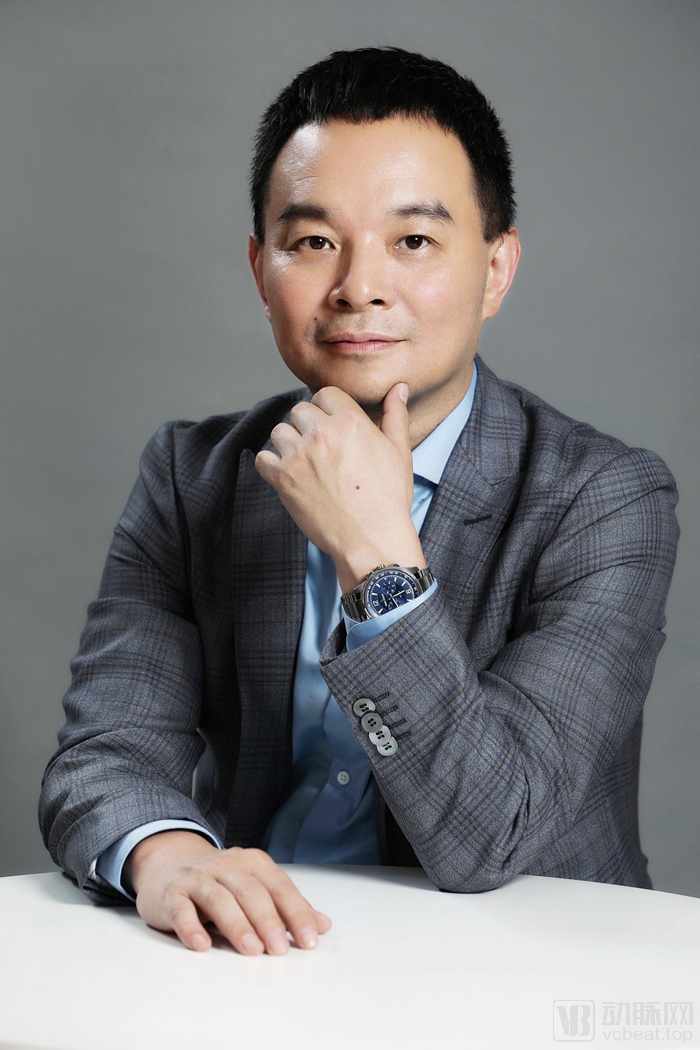
Shen Feiyan, Founder and CEO of Yijie (Image source: Provided by the company)
“Creating a barrier-free space for medical communication is the primary goal I set when founding Yijie,” Shen Feiyan, founder and CEO of Yijie, told VCBeat (WeChat ID: vcbeat). Yijie Information Technology (Shanghai) Co., Ltd. (also known as “Yijie”) was established in 2015 as a professional online education platform for physicians, currently operating nearly 1,000 physician communities. In 2018, the average monthly active user (MAU) rate across these communities reached approximately 50%, and by the first half of 2019, it had surpassed 80%. Compared with other medical communities, such high MAU rates make Yijie’s underlying business logic and core value worth exploring.
To summarize the core business of Yijie in one sentence, it is medical communication based on the WeChat platform. According to Kantar data, since 2015, the proportion of Chinese doctors obtaining information online has exceeded that offline, with WeChat being a frequently used tool. Shen Feiyan believes that it is precisely because Yijie has leveraged WeChat’s overwhelming dominance in China’s social media landscape that the engagement level of its physician community far surpasses that of other physician communities. Compared with communities built on standalone apps or official accounts, WeChat-based communities offer greater control over traffic, directly translating into improved reach, efficiency, and frequency of user engagement.
All 1,000+ medical communities under Yijie operate according to a standardized logic—systematically categorized by dimensions such as geography, specialty, and topic—to attract each participating physician to the community most relevant to their interests. Additionally, Yijie’s communities have introduced an “Assistant” feature within each group, responsible for guiding physicians through activities such as reading, discussion, and online lectures, while providing complimentary one-on-one academic support. With this online “super concierge,” physicians can discuss and study clinical cases anytime and anywhere, breaking away from the traditional model limited to in-person networking. Even more appealing to users is the platform’s facilitation of case discussions between brands and physicians, which helps doctors rapidly resolve complex clinical challenges online, significantly saving time and improving work efficiency.
By leveraging WeChat communities, Yijie has established an ecosystem centered on physicians’ learning and professional practice. This platform enables busy doctors to utilize fragmented time to access industry updates, cutting-edge clinical advancements, and clinical guidelines. Furthermore, it allows them to employ various tools provided by Yijie for patient education and management.
Shen Feiyan introduced that there are currently 300,000 doctors registered on the Yijie social platform. Given that the total number of licensed practicing physicians in China is close to 3 million, it can be estimated that one out of every ten registered doctors in China is a user of Yijie. “As a former physician, I feel proud to provide valuable information to one-tenth of China’s doctors,” said Shen Feiyan.
Shen Feiyan believes that, in addition to the inherent advantages of WeChat, the secret to the strong vitality of medical communities lies in their profound insight into users and their nearly stringent high standards for content.
In terms of industry trends and user insights, Shen Feiyan, as the founder, undoubtedly serves as a trailblazer in the medical community. He graduated from Shanghai Medical University in 1993 with a major in Clinical Medicine. After three years of practice as a general surgeon, he embarked on an entrepreneurial journey, successively establishing marketing consulting branches for several international communication groups in China to build their healthcare and pharmaceutical brands, and providing strategic consulting services to numerous pharmaceutical brands. Meanwhile, he has maintained his identity as a physician, personally hosting various offline medical conferences every year and sustaining long-term, close relationships with doctors at all levels—from top-tier experts to frontline primary care practitioners.
Ensuring high-quality content dissemination has always been the top priority for Yijie. Since its inception, Yijie has maintained an exceptionally strong in-house medical editorial team. Furthermore, to enforce rigorous content standards, Yijie has engaged over one hundred leading experts across various specialties; some are responsible for overseeing professional accuracy and scientific validity, while others directly participate in content creation and distribution. In early 2019, to further strengthen content oversight, Yijie announced the appointment of Dr. Ma Ji, who possesses dual expertise as a clinician and in pharmaceutical R&D, as its Chief User Officer, thereby elevating the strategic importance of content to the corporate level.
Regarding the rationale behind this initiative, Shen Feiyan candidly stated that four years of operational experience have enabled the medical community to more clearly recognize that physicians belong to diverse learning communities and engage in varied modes of interaction, necessitating targeted solutions to address the specific “pain points” of different physician segments. For instance, challenges include meeting the personalized learning needs and scheduling constraints of junior, mid-career, and senior physicians as well as specialists, and facilitating cross-level communication among these groups. The principle that “content is king” has spurred the creation of the Chief User Officer position.
The relentless pursuit of content excellence has garnered positive feedback from the physician community and the broader healthcare industry. Currently, academic content produced by VCBeat has been endorsed by physician associations, its monthly active users are steadily rising, and it has established long-term partnerships with nearly ten multinational corporations.
The original intention behind establishing the Medical Community was to empower physicians, facilitating peer-to-peer exchange and enhancing the academic influence of each physician user by improving clinical skills, optimizing patient prognosis and care, and increasing patient satisfaction. Shen Feiyan often likens the Medical Community to a “bridge.” By creating an online communication platform, it builds a bridge between healthcare companies and physicians, fostering sustained dialogue and interaction that ultimately generates commercial value. However, he also points out that China has a vast number of physicians who are geographically dispersed and highly specialized. Therefore, for enterprises seeking to build online communities, the operational barriers are considerable. Success requires a deep understanding of the product’s core advantages and the integration of content, operations, and technological platforms.
“Companies should approach the decision of whether to build or outsource online medical communities with caution,” said Shen Feiyan. She cited Pasteur, a renowned pediatric vaccine manufacturer, as Yijie’s first client. In early 2017, Pasteur approached Yijie, seeking to leverage Yijie’s expertise in managing its proprietary physician community to jointly explore digital academic marketing. Initially, the community comprised only 300 physicians from vaccination sites. Through Yijie’s sustained operational efforts, the community expanded to 15,000 members within two years. Yijie has helped Pasteur connect with over 6,000 vaccination sites, and the project maintained a monthly active user (MAU) rate of above 80% across all communities in the first half of 2019. The high MAU rates and the client’s progressive scaling—from small-scale pilots to broader implementation—reflect strong recognition of the value of Yijie’s communities by both physician users and corporate clients.
“Things are changing. As healthcare reform enters a deeper phase—exemplified by the rollout of the ‘4+7’ volume-based procurement program in recent years and the pharmaceutical industry’s current emphasis on ‘channel penetration into lower-tier markets’—it remains highly questionable whether traditional marketing models can still help pharmaceutical companies achieve their performance targets,” said Shen Feiyan. Two decades ago, when foreign pharmaceutical companies first entered China, they only needed to establish a presence and recruit sales representatives in a few first- and second-tier cities. Today, however, companies face nearly 3,000 county-level markets, where relying solely on sales representatives is insufficient for effective market coverage and brand promotion.
Shen Feiyan believes that medical communication based on the WeChat platform can effectively reverse the predicament faced by enterprises. It not only improves the return on investment (ROI) of pharmaceutical marketing by enhancing communication efficiency with physicians, but also provides doctors with a better user experience in the process. “Using WeChat for medical communication not only breaks through geographical limitations to achieve broader coverage, but is also more popular among users in terms of communication style—it offers greater immediacy than email and avoids the intrusiveness associated with phone calls. An increasing number of physicians have become accustomed to medical exchanges via WeChat,” he said.
When discussing how to integrate pharmaceutical companies’ product information with clinical academic content, Shen Feiyan stated, “Stay true to the original mission, and you will achieve your ultimate goal. The medical community’s objective is to benefit patients through medical communication. Therefore, product education information disseminated via medical platforms must be patient-centric, objective, and compliant; such information also serves as a supplementary knowledge resource for physicians’ clinical learning.” In his view, the mission of the medical community is to “create a barrier-free space for medical exchange,” employing innovative communication methods to help patients acquire accurate disease knowledge and diagnostic and treatment solutions, while assisting enterprises and physicians in identifying appropriate patients for service provision and standardized disease education. These two objectives are not contradictory.