

MaiZhiYu Technologies Files Prospectus: Pioneering Remote Pulse Diagnosis with Over 80% Fidelity via 'PulseFax Machine'
For Traditional Chinese Medicine, the four diagnostic methods—inspection, auscultation and olfaction, inquiry, and palpation—are indispensable and must be integrated for comprehensive assessment.
As policies regarding internet hospitals become clearer, TCM internet hospitals are gradually developing. While video consultations can address the diagnostic methods of inspection, auscultation/olfaction, and inquiry, pulse diagnosis remains a significant challenge for practitioners.
Beijing Maizhiyu Technology Co., Ltd. (hereinafter referred to as “Maizhiyu”) was established in April 2018 and is a technology service provider dedicated to modern pulse diagnosis education and traditional Chinese medicine (TCM) telemedicine.
The company focuses on the research and development of pulsation simulation devices and supporting SaaS platforms. Within six months of its establishment, it developed the “PulseFax Pulse Recovery Instrument,” a smart hardware device that successfully enables remote pulse diagnosis.
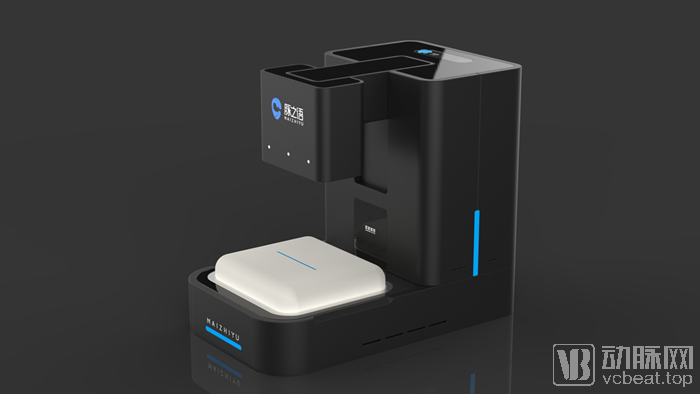
Product Image of Mai Zhi Yu (Source: Provided by the company)
Li Junfeng, founder and CEO of Mai Zhi Yu, told VCBeat (WeChat ID: vcbeat) that the acquisition and reproduction devices developed by Mai Zhi Yu can capture information on the cun, guan, and chi positions as well as the superficial, middle, and deep levels in Traditional Chinese Medicine (TCM) pulse diagnosis. These devices can reproduce pulse characteristics such as strength, rate (slow or rapid), and rhythm (sluggish or urgent), as well as vascular features including width and elasticity. The similarity of the pulse waveforms displayed on the reproduction terminal exceeds 80%.
Modern technology has enabled the documentation of Traditional Chinese Medicine (TCM) through text, images, audio, and video, allowing countless TCM students to access the clinical case records of renowned veteran practitioners. However, a significant limitation remains: descendants and remote learners cannot perform palpation.
It is well known that medical graduates cannot immediately diagnose and treat patients; they must undergo clinical training and supervised practice before engaging in independent practice. This issue is even more pronounced in the field of Traditional Chinese Medicine (TCM). When experienced TCM practitioners mentor students, they often describe patients’ signs and symptoms verbally, leaving students to rely primarily on listening, observing, and memorization for learning.
"Each individual has a unique pulse. Pulse diagnosis relies on tactile perception, which cannot be fully conveyed through language alone. Moreover, patient pulses are not always readily accessible for palpation; insufficient practice in pulse taking hinders the formation of sensory memory."
The launch of the "Mai Zhi Yu" pulse fax machine inspired Li Junfeng with an idea: to record the diagnostic reasoning and medication techniques employed by renowned veteran TCM practitioners during patient consultations, and combine these recordings with patients’ pulse waveforms, tongue images, and medical records to create dynamic, multi-dimensional case studies. These resources would serve as valuable tools for TCM students and primary care physicians to analyze and gain deeper insights.
Guided by this philosophy, Maizhiyu has established an internet-based TCM service brand—“Online Apprenticeship.” Adopting a model that integrates medical practice with education, Maizhiyu enables renowned senior TCM practitioners to share recorded clinical sessions and produce dynamic case studies. Leveraging its platform and proprietary device, the MaiFu Instrument, Maizhiyu provides practical case resources to 690,000 TCM students and 2 million primary-care physicians, thereby strengthening their pulse diagnosis and clinical practice skills.
“Research on the Objectification of Pulse Diagnosis” has been ongoing for over sixty years, involving numerous R&D manufacturers, ninety percent of whose products are pulse diagnosis and pulse waveform acquisition devices. Li Junfeng stated, “As the first holder of the original research patent, our Internet-based Pulse Fax Pulse Reproduction Instrument extends physicians’ sensory capabilities in inspection, auscultation, inquiry, and palpation, pioneering a new category of traditional Chinese medicine diagnostic equipment.”
Compared with one of the earliest pulse diagnosis instruments, the Maifu Instrument mainly has three advantages:
First, physicians are not required to learn pulse waveforms, analyze them, or remap the pulse waveform data to their existing knowledge;
Second, there is no need to worry about misdiagnosis due to the completeness of the built-in knowledge base;
Third, it is easy to use, requires no training, and is readily accepted.
It is worth mentioning that Maizhiyu’s platform and devices also facilitate the recruitment of overseas apprentices by renowned senior TCM practitioners, enabling them to conduct teaching across time and space.
“Traditional TCM master-apprentice programs have limited annual enrollment. However, the online mentorship model based on VCBeat’s Pulse Fax enables more accessible and convenient transmission of TCM knowledge, helping students better comprehend and internalize teachings while allowing masters to train tenfold or even a hundredfold more apprentices,” said Li Junfeng. “This holds extraordinary significance for promoting TCM culture; only by extending pulse diagnosis overseas can we truly help the world understand TCM and China.”
“Data acquisition devices are plentiful in the current market, but there is a shortage of equipment for reproduction and validation. It is difficult to verify the actual acquisition performance and accuracy,” said Li Junfeng. “With our reproduction equipment, the reproduction results can be easily validated.”
It is understood that Mai Zhi Yu has undergone several iterations in the research and development of its data acquisition devices. In terms of data content, the system has evolved from two-dimensional information acquisition to multi-dimensional information acquisition. Regarding acquisition methods, it has progressed from single-point measurement to a comprehensive process covering the three pulse positions (Cun, Guan, and Chi), the three depths (Fu, Zhong, and Chen), and the three palpation techniques (Ju, An, and Xun). Technologically, the development approach has shifted from independent integrated development to collaborative development with sensor and component manufacturers.
Mai Zhi Yu approaches the true pulse condition through high-frequency acquisition, with a sampling rate of 1000 Hz and a reproduction rate of 200 Hz. The acquisition end employs a 5×15 array sensor to capture the three-part, three-dimensional pulse conditions of patients. The reproduction end achieves an accuracy of 5 micrometers, with a waveform similarity exceeding 80%. The device utilizes artificial intelligence technology, employing machine learning algorithms to make the reproduced data infinitely close to the acquired data.
However, Li Junfeng was not satisfied with this result. “The previous generation of products was not user-friendly enough and had too many operational constraints. Although it could measure the cun, guan, and chi positions as well as the fu, zhong, and chen pulse depths, it failed to achieve automatic pulse locating and automatic adjustment of acquisition pressure,” he revealed. “The version currently under development will be fully automated. Furthermore, we are addressing the size issue; we have always aimed to make the Pulse Diagnostic Instrument compact enough to fit into a clothing pocket, becoming an essential precision instrument for TCM practitioners.”
Li Junfeng told VCBeat, “Currently, we can transmit patients’ pulse data to the fingertips of remote physicians, enabling them to make diagnoses. In the future, as data accumulates, we can leverage machine learning to assist physicians in generating diagnostic recommendations. Moreover, continuous pulse monitoring may even allow us to predict certain diseases, empowering individuals to take preventive measures before conditions develop.”
“I actually conceived this idea while I was at Sogou. I had considered bringing it to fruition there, but as Sogou is an internet search engine company, it was unable to support my vision. Therefore, I had no choice but to resign and start my own venture,” said Li Junfeng. “Sogou is a company that seeks breakthroughs in applications through artificial intelligence technology. It provided me with significant intellectual inspiration to leverage AI, the internet, and smart hardware to transform the current landscape of traditional medical devices from both technological and operational perspectives.”
Half of the team members at Mai Zhi Yu come from hardware companies, and the other half from internet companies. Li Junfeng stated, “Because we do not want to produce traditional medical devices, we aim to make our equipment more efficient, smarter, and more precise. Therefore, the core algorithms were developed jointly by machine learning engineers and embedded development engineers.”
In terms of clinical validation, Mai Zhi Yu is currently being evaluated through Cifang Chain Clinics, co-founded by Li Junfeng. Data shows that the accuracy rate exceeds 80%.
In addition to hardware, Mai Zhi Yu has also developed a supporting SaaS platform to help traditional Chinese medicine (TCM) hospitals or TCM departments in general hospitals implement internet hospital services. Patients can connect with doctors simply by following the official WeChat account.
VCBeat has learned that Maizhiyu is currently raising RMB 10 million in its Series A funding round, primarily to support continued R&D of its devices and the market rollout of its products.