

Deep Dive into AI Applications in Healthcare: Nanning Symposium on August 23 to Explore Innovation and Collaboration
Driven by market demand,Artificial Intelligence May SolveMedical ThreeAngle Problem
As public emphasis on health continues to grow and demand for medical services rises steadily, the imbalance between the supply and demand of medical resources has become increasingly pronounced. To break through the "impossible trinity" of healthcare, it is essential to introduce new technological increments.
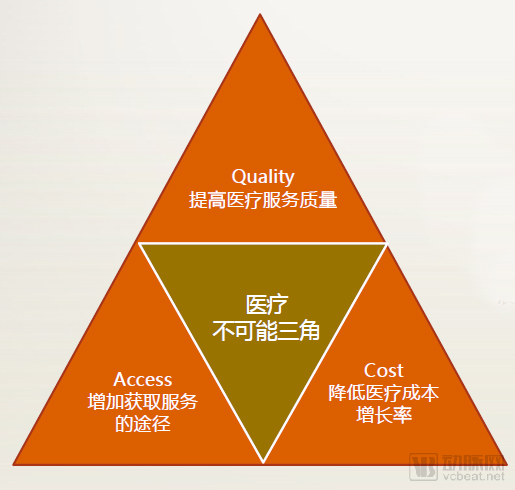
AI Technology Could Help Restructure the Healthcare System, Improve Efficiency, and Reduce Costs: On one hand, AI-assisted diagnostic and treatment functions developed for specific diseases based on big healthcare data can alleviate physicians’ workload while facilitating the decentralization of medical resources to primary care hospitals. On the other hand, it helps establish verifiable and reproducible medical standards, thereby advancing reforms toward standardized medical services.
Policy Guidance, Capital Boost,Rapid Development of the Medical AI Industry
In June 2016, the State Council issued the Guiding Opinions on Promoting and Regulating the Application and Development of Health and Medical Big Data, clearly stating that health and medical big data is an important foundational strategic resource for the country, and that it is necessary to regulate and promote the integration, sharing, open access, and application of such data. The year 2016 is also known as the inaugural year of artificial intelligence.
On July 20, 2017, the State Council issued the Development Plan for New-Generation Artificial Intelligence, which called for the promotion and application of new AI-driven models and methods in treatment, and the establishment of a rapid and precise intelligent healthcare system. In terms of openness, the state encourages various medical and health institutions to advance the collection and storage of big data in health and medicine, strengthen application support and operational and maintenance technical safeguards, and open up channels for data resource sharing.
On the other hand, capital’s preference for “AI + Healthcare” has been increasing year by year. According to data from the VCBeat Database, global venture capital investment in medical AI surged from RMB 745 million in 2013 to RMB 14.085 billion in 2017, representing a compound annual growth rate (CAGR) of approximately 100%. From January to August 2018, there were 64 financing deals in the global medical AI sector, totaling RMB 7.901 billion. This influx of capital has further propelled the development of the entire industry.
Leading the Way in Medical Imaging AI,China’s Medical AI Applications Are Flourishing
Artificial intelligence has moved beyond the stage of academic research and is now in the phase of practical application. Based on global startup practices, specific applications in the healthcare sector include disease risk insight and risk management, medical research, medical imaging and diagnosis, lifestyle management and monitoring, mental health, nursing care, emergency room and hospital management, drug discovery, virtual assistants, and wearable devices. Among these, AI-assisted diagnosis and treatment, AI-enabled medical imaging, AI-driven drug discovery, and AI-powered health management are currently the key areas of focus.
According to statistics from the VCBeat database, in 2018, there were 96 medical AI companies in China, primarily focused on medical imaging and electronic medical record/literature analysis, while fewer companies were engaged in hospital management, disease screening, and prediction. The application of AI in medical imaging in China has become relatively mature, with related products playing an increasingly prominent role in clinical auxiliary diagnosis and treatment. Statistics from VCBeat show that in the field of AI + medical imaging, Huiyi Huiying’s CT pulmonary nodule screening system has been deployed in more than 480 hospitals, with a daily examination volume exceeding 45,000 cases; Shangong Yixin’s “Huiyan” diabetic retinopathy screening system has partnered with over 300 hospitals, with a daily examination volume exceeding 2,000 cases; Yitu’s intelligent diagnostic systems for pediatric growth and development and for mammography have been implemented in more than 100 Grade A tertiary hospitals.
Seminar on Applications of Artificial Intelligence in Healthcare to Be Held Soon,In-Depth Exploration of Opportunities and Challenges in Development
Although China has made progress in medical artificial intelligence (AI), the persistent challenges of difficult and costly access to healthcare remain severe. Addressing these issues requires leveraging “AI + Healthcare” to enhance productivity in the medical sector. Key questions demanding resolution include: How can medical AI improve hospital diagnosis and treatment capabilities? How can regulators and project proponents advance harmoniously? What are the viable models for collaboration between AI enterprises and hospitals? How should specific application scenarios for AI technology integration into hospitals be designed? What obstacles currently hinder such collaborations, and are there referenceable experiences and solutions? Furthermore, are there more effective innovative cooperation models across key segments of the industry chain to foster industrial development?
To this end, the Guangxi Zhuang Autonomous Region Big Data Development Bureau and the Chinese Society of Health Informatics and Medical Big Data jointly hosted the event, with co-organizers including the Zhejiang Medical Data Industry Research Association, the Ruiyi AI Research Center of Zhejiang University, Alibaba Cloud Computing Co., Ltd., and others.“2019 Symposium on Advancing the Application of Artificial Intelligence in Healthcare Settings”To be held in Nanning, Guangxi on August 23, 2018.
The conference will invite representatives from local governments, as well as experts from academia, the healthcare sector, and industry. Centered on the theme of “Advancing the Application of Artificial Intelligence in Healthcare Scenarios” and focusing on “AI + Medical Imaging,” the event will pool collective wisdom and efforts. In light of Guangxi’s local context, participants will discuss hot topics, pain points, and practical issues related to medical AI, with the aim of charting a blueprint and pinpointing the direction for the application and implementation of medical AI in Guangxi. The conference seeks to foster relevant collaborations and jointly promote the application and development of artificial intelligence in medicine.