

2019 China Health Industry Summit (Westlake Summit): National Pharmaceutical Market Growth to Remain Modest Long-Term, with Efficacy and Efficiency as Core Drivers
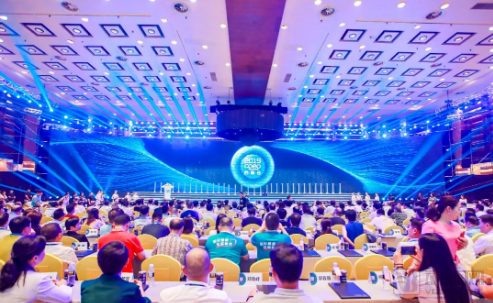
On August 13, the annual West Lake Health Industry Conference (Xipu Meeting) opened in Boao, Hainan. This year’s conference theme was “Rebirth from the Ashes: Paving the Way for the Industry’s Future.” As a deep strategic media partner of the Xipu Meeting, VCBeat (WeChat ID: vcbeat) attended the event and provided comprehensive coverage.
Currently, China’s health and wellness industry is undergoing unprecedented changes. Amidst this profound transformation, Wu Han, President of Sinohealth Information, the organizer of the Westphal Conference (Xipu Hui), delivered a keynote address titled “Pursuing Efficacy and Efficiency: Moving Forward Through Negative Entropy.” He proposed that China’s health industry must undergo a phoenix-like rebirth, with the path to success lying in the relentless pursuit of efficacy and efficiency.
The reform of the drug review and approval system has accelerated, the consistency evaluation of generic drugs is steadily advancing, the “4+7” volume-based procurement has been fully implemented, the new edition of the National Essential Medicines List has been released, the first batch of the National Key Monitoring List for Rational Drug Use has been published, adjustments to the National Reimbursement Drug List are imminent, provincial supplementary reimbursement lists will be abolished, and the three major documents of the Healthy China Initiative have been issued simultaneously. The dense rollout of new national policies has left the pharmaceutical industry overwhelmed.
“As we anticipated, the healthcare industry landscape has undergone a dramatic transformation,” said Wu Han.
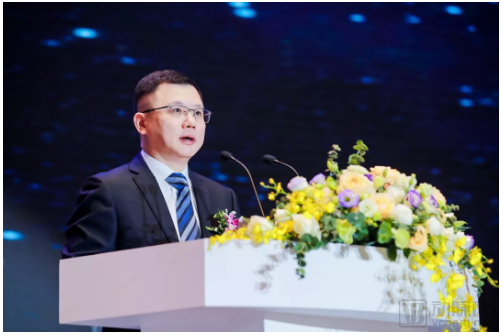
Wu Han, President of Zhongkang Information
“It is particularly noteworthy that, while introducing new policies, the competent authorities have safeguarded their timely implementation through frequent inspections and increased costs for violations, significantly shortening the industry’s adaptation period,” Wu Han pointed out. The pace of R&D in biologics, novel medical devices, and materials has accelerated, improving the efficiency of technology transfer. The internet has begun to deeply penetrate the health industry, enhancing service efficiency and extending service reach in the commercial sector, while fostering new business models. Artificial intelligence (AI) has started to be applied in clinical diagnosis and treatment, drug development, and business efficiency improvement, yielding positive results. Furthermore, advancements in 5G and quantum computing will further expand the scope for AI R&D and application.
Amidst rapid change, the people’s aspiration for a healthy life remains constant.
“The huge population base, the advent of an aging society, and the high prevalence of chronic diseases mean that there is a vast unmet health demand in China, with broad prospects for the development of the health industry,” said Wu Han.
Wu Han believes that the dramatic changes in the environment will trigger three major shifts in the pharmaceutical industry.
First, the changing landscape of the pharmaceutical market.
Nationwide drug consumption growth will remain at a moderate-to-low level for the long term, with a growth rate of 5.8% in 2018 and an expected further decline to 4% in 2019.
Under the influence of policies such as volume-based procurement, monitoring of adjuvant drug use, management of the new National Reimbursement Drug List, and DRG (Diagnosis-Related Groups) payment, the structure of the pharmaceutical market will be reshaped: the generic drug market will shift from its current state of high volume and high value to one of high volume but low value, ushering in an era of slim margins; meanwhile, the market share of patented drugs will gradually increase, while some products with uncertain efficacy will exit the market.
Similarly, under the influence of policy, channel structures are also evolving. In 2018, tertiary industry pharmacies and urban primary healthcare institutions demonstrated prominent growth momentum. Retail pharmacies, long considered poised for substantial expansion due to the separation of prescribing and dispensing, achieved a moderate drug sales growth rate of 6.7%. However, constrained by the lack of coordinated support in policy, supply-to-retail alignment, and technological integration, the outflow of prescription drugs from medical institutions to pharmacies has progressed slowly, resulting in growth that fell short of expectations.
Meanwhile, influenced by public opinion and new medical insurance policies, the growth rate of certain high-weight drugs, precious and fine medicinal materials, and non-pharmaceutical products has declined significantly, with negative growth observed in some categories and provinces. As a result, the nationwide aggregated growth of the pharmaceutical retail industry in China was only 4.85% in 2018, and the full-year growth across all categories is projected to be 4.5% in 2019.
“Although growth has slowed, we believe that the long-term trend toward the separation of prescribing and dispensing remains unchanged, as it is a more efficient measure. As policies, supply-retail integration, and technological synergies are gradually put in place, the position of pharmacies as the main channel for drug supply will continue to rise,” said Wu Han. He added that in the future, the retail industry needs to clearly define its value proposition in three market segments: “National Health Insurance + Generic Drugs,” “Commercial Insurance + Patent or Originator Drugs,” and “Prevention and Self-Medication + Health Management.”
Next is the transformation of the health service supply market.
In the future, the non-profit nature of the public health resource guarantee system will become more prominent, with national centralized procurement, pass-through pricing, and high-volume low-price mechanisms to meet citizens' basic healthcare needs.
Meanwhile, driven by policy and demand, for-profit institutions—including private hospitals, specialized clinics, and health examination and health management organizations—will develop more rapidly as an effective supply of resources to meet multi-level health needs. The provision of medical services is shifting from the previous dominance of non-profit institutions toward a balanced supply between for-profit and non-profit entities.
Third is the transformation of the payment structure.
Currently, healthcare financing in China primarily relies on two channels: the national basic medical insurance and out-of-pocket payments, with commercial health insurance accounting for only about 3%. In recent years, however, major insurance companies have significantly intensified their efforts to expand into the medical and health insurance sector. According to statistics from the China Banking and Insurance Regulatory Commission (CBIRC), the premium volume of medical and health insurance reached RMB 525.1 billion in 2018, representing a 24% year-on-year increase.
Driven by the combined forces of supply and demand dynamics and new national health insurance policies, commercial insurance will emerge as the second most important payment mechanism after state-run basic medical insurance, with the proportion of out-of-pocket payments continuing to decline. As the share of commercial insurance payments increases, a second centralized price-negotiating buyer will emerge in the market.
Driven by environmental imperatives, policy reforms must target improvements in effectiveness and efficiency. Reforms centered on health insurance payment mechanisms directly address this critical issue by eliminating inefficient supply and creating space for more efficient resource allocation.
With the comprehensive coverage of national medical insurance and the rise of commercial insurance as a major payment method, effectiveness and efficiency have become the common metrics by which payers evaluate providers.
“Market opportunities will be reserved for cost leaders, technology leaders, and brand leaders,” said Wu Han. “Change is painful; only the fittest will survive. Yet change is also promising, as we usher in a healthcare industry where quality prevails.”
The path to validation lies in the relentless pursuit of efficacy and efficiency. Wu Han cites the renowned “negative entropy” theory, emphasizing the importance of advancing through negative entropy.
As one of the epochal intellectual achievements of the 20th century, the theory of “negative entropy” posits that living organisms feed on negative entropy, and that the essence of metabolism is “the organism’s successful effort to rid itself of the entropy it inevitably produces during its lifetime.”
“The 2019 Xipu Conference, themed ‘Rebirth from the Ashes: Charting the Future of the Industry,’ aims to help the industry clarify its direction and plan for the future through an in-depth analysis of the economic, policy, and social landscapes. Through discussions on business model innovation, management model innovation, and technological innovation in the new environment, along with guidance from experts rich in practical experience, we hope to better map out our development path. Furthermore, by exploring methodology focused on effectiveness and efficiency across various new scenarios, we aim to adapt more quickly to the new environment and overcome the period of adjustment,” said Wu Han.
The 2019 Xipu Conference was a session benchmarked against the globally influential “J.P. Morgan Healthcare Conference,” serving as China’s home-ground “Global Healthcare Industry Conference.”
“As a major economic power, a country with a large population, and a leading nation in the health industry, it is essential for us to establish a health industry conference rooted in China and oriented toward the global market. This platform will leverage a global perspective to aggregate high-quality resources, expand industrial boundaries, foster ecosystem collaboration, and drive industrial transformation,” said Wu Han.
To this end, in addition to upgrading the main conference, the current CHC will concurrently host the “Innovation Strategy Launch Event for Leading Health Industry Enterprises,” the “Health Industry Capital Summit,” and the “International Health Big Data and Artificial Intelligence Summit.” Strategy, foresight, technology, innovation, capital, and collaboration will become more prominent hallmarks of CHC, enhancing its industrial value.
Of particular note, starting this year, the “Innovation Strategy Launch Conference of Leading Enterprises in China’s Health Industry” will become an integral component of the West Pu Conference. As industry pioneers, the strategic deployments of these leading enterprises shape the competitive landscape and serve as a bellwether for future trends.
According to VCBeat, this year’s Xipu Conference was hosted by SinoHealth Information. The event brought together more than 5,000 industry elites, including hundreds of policy research experts, over 1,000 brand industrial enterprises, more than 1,800 mainstream chain pharmacies and pharmaceutical commercial enterprises in China’s health industry, over 300 capital institutions, more than 120 new-technology companies, as well as cross-sector participants such as over 200 health management organizations and commercial insurance providers.
Over the course of the five-day conference, participants will forge new connections based on a renewed division of roles, exploring key topics such as systemic reform, value positioning, supply-side structure, service orientation, and ecosystem development.