

Ping An Good Doctor Launches Premium 'Private Doctor' Service, Secures Over RMB 300 Million in Contracts on Day One
On August 13, Ping An Good Doctor officially launched its strategic product, “Private Doctor,” and entered into partnerships with 29 global industry leaders, including China Mobile Internet Co., Ltd., BAIC Group, China CITIC Bank, Wyeth Nutrition, China Everbright Bank, Minsheng Insurance, Zhujiang Life Insurance, and Peking University Founder Life Insurance. The total value of the signed agreements exceeded RMB 300 million.
The “Private Doctor” product leverages its self-established team of renowned medical experts, supplemented by a comprehensive support ecosystem comprising external medical institutions, testing and inspection laboratories, and pharmacies, to provide users with 7x24 online consultation services, second opinions from leading specialists, outpatient appointment coordination at offline hospitals, health management, and chronic disease management.
Online consultations and virtual visits are the primary entry points for internet-based healthcare, yet these services also suffer from low usage frequency. How can “Private Doctor” leverage this foundation to integrate resources? How can it rapidly generate substantial revenue? This approach not only addresses user acquisition challenges but also empowers partners. VCBeat(WeChat ID: vcbeat)Attended the “Private Doctor” strategy launch event and provided an interpretation based on information released at the conference and interviews with Bai Xue, COO of Ping An Good Doctor.
Ping An Good Doctor’s “Private Doctor” service is essentially a family doctor offering, launched in a favorable policy environment. Since 2016, the Chinese government has introduced a series of major policies to steadily advance the Healthy China initiative, encourage the development of internet-based healthcare, and promote innovation in family doctor service models.
In 2016, the Central Committee of the Communist Party of China and the State Council issued the Outline of the “Healthy China 2030” Plan, which proposed to focus on popularizing healthy lifestyles, optimizing health services, improving health security, building a healthy environment, and developing the health industry. It emphasized integrating health into all policies, accelerating the transformation of development models in the health sector, safeguarding and promoting people’s health in a comprehensive and lifecycle-oriented manner, and significantly raising overall health levels.
To improve population health, it is essential to address the unequal distribution of medical resources and promote a tiered diagnosis and treatment system. In this context, the Guiding Opinions on Promoting Family Doctor Contract Services were issued, stipulating the scope of family doctors’ services and the payment and fee-collection mechanisms. In 2018, the Guiding Opinions on Standardizing the Management of Family Doctor Contract Services further encouraged privately run primary healthcare institutions to provide appropriate contract-based services tailored to local conditions. At present, priority groups for family doctor contract services include the elderly, pregnant and postpartum women, children, persons with disabilities, individuals living in poverty, members of families affected by special family planning circumstances, as well as patients with hypertension, diabetes, tuberculosis, and severe mental disorders.
The Healthy China Initiative has been elevated to the level of national strategy. Key approaches to health management are reflected in concepts such as tiered diagnosis and treatment, family doctor services, chronic disease management, and diversified healthcare offerings. These elements are integrated into Ping An Good Doctor’s “Private Doctor” product. Leveraging an expert panel composed of renowned physicians from the top 100 hospitals nationwide, the Private Doctor service provides comprehensive, proactive medical and health services, including 24/7 online consultations, second opinions from leading specialists, assistance with scheduling outpatient visits at offline hospitals, general health management, and chronic disease management.
At the launch event for the “Private Doctor” strategy, Wang Tao, Chairman and CEO of Ping An Good Doctor, introduced the origins of the product.
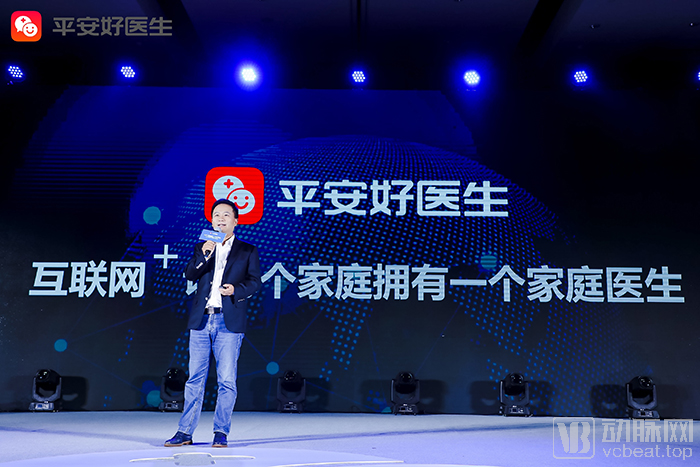
Wang Tao, Chairman and CEO of Ping An Good Doctor
“Family doctors, electronic health records, and health management plans are the three initiatives our company committed to pursuing since 2014,” said Wang Tao. To stay true to these goals, “Private Doctor” underwent five years of preparation, marked by the following key milestones:
In 2014, Ping An Good Doctor was established, with a firm commitment to recruiting top-tier physicians onto its online platform to provide full-time services to internet users. To this end, it assembled China’s first in-house medical team built by an internet healthcare company. Meanwhile, the company also defined its dual-engine, dual-service strategy of “Healthcare + Health Management.”
In 2015, the Ping An Good Doctor app was launched, initiating the development of an AI-powered intelligent consultation system. By year-end, registered users exceeded 30 million, with daily consultations surpassing 100,000.
In 2016, Ping An Good Doctor completed a $500 million Series A financing round, and its registered user base surpassed 100 million by the end of the year; it also partnered with Ping An Life Insurance to provide family doctor services to Ping An Life Insurance customers.
In 2017, it completed a $400 million Pre-IPO financing round and obtained an internet hospital license, officially transitioning from online consultation to online medical diagnosis and treatment.
In 2018, it was listed on the Hong Kong Stock Exchange, becoming the world’s first publicly traded internet healthcare company. It fully launched its “Internet Healthcare + Insurance” service—Jiuyi 360—with membership surpassing one million.
In 2019, the strategic product “Private Doctor” was launched.
As can be seen from the above nodes, Ping An Good Doctor established health management as a key objective at its inception, thereby progressively evolving from online consultation to medical diagnosis and treatment, and further to providing family doctor services for users. The family doctor services, primarily targeting insurance customers, cover comprehensive health management throughout the entire process, including disease prevention, medical care, and rehabilitation. While generating revenue from this model, Ping An Good Doctor also expands the scope of insurance services, assists insurance companies in enhancing their risk control capabilities, and ultimately strengthens the differentiated competitive advantage of insurance products. This model laid the foundation for the development of private doctor products. However, at that stage, the product offerings were not sufficiently refined, and the customer structure remained relatively singular.
“After five years of preparation, the time has truly come to realize our vision, so we are launching our private physician service,” said Wang Tao.
The “Private Doctor” product targets the middle-class demographic and features three main characteristics:
Professional Medical Team. Our private physicians, who provide direct services, are 100 renowned specialists from prestigious hospitals such as PLA General Hospital (301 Hospital) and Ruijin Hospital. With over 15 years of clinical experience, they are all part of Ping An Good Doctor’s in-house medical team, ensuring ample online availability. Additionally, we have contracted 5,000 physicians listed on the “Hurun–Ping An China Top Doctors List” and 1,000 overseas doctors to provide second-opinion consultations.
Comprehensive Support System. "Private Doctor" collaborates with 800 Grade-A tertiary hospitals for referrals; maintains in-depth partnerships with the world’s top ten hospitals to arrange medical consultations when necessary; and works with over 2,000 testing and inspection centers, enabling users to schedule tests through their private doctors, with reports directly transmitted back to the physicians upon completion.
Swift service. We provide proactive healthcare services, including 24/7 online medical consultations, second opinions from renowned specialists, arrangements for outpatient visits at offline hospitals, health management, and chronic disease management. Users can add their private doctors on WeChat to communicate anytime and anywhere, just like with acquaintances. The aforementioned 100 renowned specialists serve as private doctors who interact directly with users, while referrals, laboratory tests, and examinations are facilitated by our support team. Furthermore, “Private Doctors” partners with 32,000 pharmacies to deliver medication to your doorstep within one hour.
# How Should “Private Doctor” Products Be Positioned in the Internet Healthcare Industry?Bai Xue, COO of Ping An Good Doctor, stated that, in fact, the product has not yet placed significant emphasis on differentiation. Given that the market is still in its early stages, it is more critical to cultivate the market and enhance users’ awareness and acceptance of this service model.
In 2011, Shanghai took the lead in piloting the family doctor program. Family doctor service teams were established, with general practitioners as the core, supported by public health physicians and community nurses, to provide residents with basic medical care, public health services, and health management. Subsequently, the family doctor contract service was gradually rolled out nationwide. However, due to China’s large population, the substantial size of key groups such as the elderly and patients with chronic diseases, coupled with a shortage of general practitioners, family doctors have been burdened with heavy workloads. This has led to the prominent issue of “contracts without actual services,” resulting in insufficient sense of gain among residents. In the past two years, through intelligent tools, family doctor services have gradually begun to shift their focus from the quantity of contracts to the quality of service delivery.
“Although the government is promoting it, users are still relatively unfamiliar with family doctors overall,” said Bai Xue. She noted that the main challenges in cultivating the market lie in the details: providing users with a sense of exclusive personalization and building warm, familiar relationships. Further product segmentation is an important approach to achieving this.
Currently, the predominant family structure in China is the “4-2-1” model, with the “4-2-2” configuration becoming increasingly common. This refers to households comprising four elderly parents (from both spouses), the couple themselves, and one or two unmarried children, each member having distinct health needs. To provide personalized coverage for the entire family’s needs, the “Private Doctor” service is segmented into three versions tailored to different age groups: Adult, Pediatric, and Geriatric. Each version offers services specifically designed to address the unique pain points of its target users.
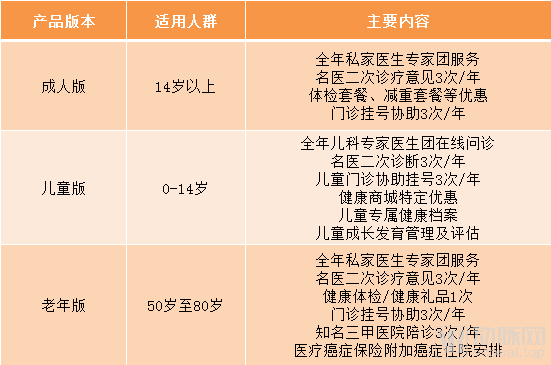
A Niche Version of “Private Doctor”
For instance, the adult version focuses on addressing issues such as disease prevention, weight loss, and appointment scheduling. In addition to assisting with appointment registration, the pediatric version offers growth and development management and assessment services to alleviate the parenting anxiety commonly experienced by young parents. Given the high incidence of diseases among the elderly, many of whom already suffer from chronic conditions and are often excluded from commercial medical insurance, the “Private Doctor” service not only provides the highly sought-after companion consultation services but also includes cancer insurance, thereby resolving the issue of many elderly individuals being denied coverage by commercial insurers.
Recently, Si Jia Yi Sheng (Private Doctor) launched a specialized version tailored for diabetes patients. Bai Xue explained that to refine its operations, the company will further develop vertical-specific products. “We will leverage an AI-powered intelligent consultation system to enhance physicians’ efficiency. Meanwhile, we will test and determine a reasonable upper limit on the number of users served by Private Doctor during operations, so as to ensure service quality.”
“Private Doctor” was launched for trial operation in June this year and has been running for two months to date. Bai Xue revealed that B-end clients currently constitute the majority of its business. At the strategic launch event for “Private Doctor,” Ping An Good Doctor reached cooperation agreements with 29 enterprises, with a total signed contract value reaching RMB 300 million. These enterprises span industries including automotive, maternal and infant care, finance, telecommunications, insurance, and pharmaceutical retail. The annual subscription fees for various versions of “Private Doctor” range from RMB 499 to RMB 1,999 per year, representing relatively small individual transaction amounts. In contrast, corporate contracts secured through enterprise partnerships involve large-scale deals, with individual contract values ranging from several million to tens of millions of yuan. This is the direct reason why “Private Doctor” rapidly surpassed the RMB 300 million mark.
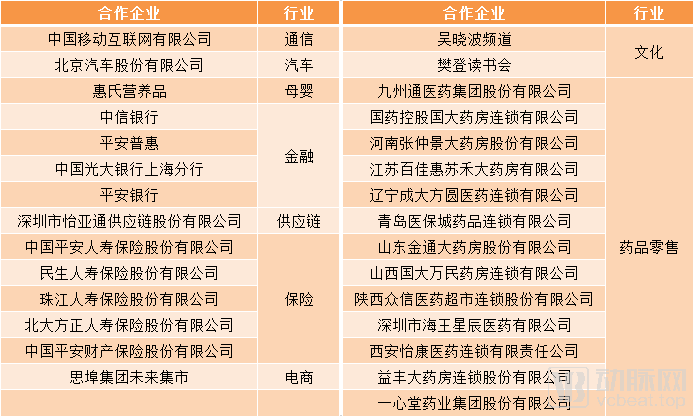
“Private Doctor” Partner Enterprises
Why Was It Possible to Rapidly Expand into the B2B Market? Bai Xue explained that Ping An Good Doctor began providing services to B2B clients in 2017. At that time, it was believed that enterprises were primarily concerned with employee health management, so the focus was mainly on offering medical check-ups and other health management services to corporate employees. “However, while planning our Private Doctor service, we discovered that companies also place significant emphasis on their end customers and are willing to allocate budgets and incur costs to deliver differentiated services to them. Therefore, we recognized this as a substantial market opportunity.”
Given that the service is fundamentally a family doctor offering, centering on the “family” scenario is crucial. Therefore, Ping An Good Doctor also emphasizes the key element of household consumption in its customer acquisition strategy. Corporate partners such as Beijing Automotive Group, China CITIC Bank, Wyeth Nutrition, and China Everbright Bank all exhibit strong household consumption attributes, and their core user bases align well with the target demographic for “private physician” services.
At the launch event for the “Private Doctor” strategy, Qu Feng, President of Wyeth Nutrition Greater China, stated that selling infant formula is not only about selling health but also about building trust. “We often ask ourselves what else we can offer users beyond infant formula. This requires us to address the pain points faced by mothers. For instance, what should a new mother do when her child develops a fever in the middle of the night? Should she and her husband take a taxi to the children’s hospital, wait in line for two hours, and then spend just two minutes with the doctor before getting medication and heading home?” In light of such concerns, Mr. Qu believes that leveraging Ping An Good Doctor to provide pediatric health management services can effectively address these urgent needs of mothers.
Zhang Chunzhong, Deputy General Manager of the Institutional Client Department at China CITIC Bank’s Head Office, believes that Ping An Good Doctor’s health management services and bank financial institutions’ wealth management services can be effectively integrated under the right conditions.
Zhang Yonggang, Assistant to the Dean of BAIC Motor Corporation’s Automotive Research Institute and Head of the Intelligence Department, stated that BAIC’s focus on users includes health as a key aspect. This shared priority led to a natural partnership with Ping An Good Doctor. The two parties will share data in terms of medical and information resources, promoting corresponding services to the households and enterprises of end customers.
Furthermore, the pharmacy setting attracts a large number of patients with chronic diseases, aligning with the target user profile of “Private Doctor.” On the other hand, the services provided by “Private Doctor” can help pharmacies enhance the quality and breadth of their offerings. Therefore, “Private Doctor” has also signed agreements with 12 pharmaceutical retail enterprises to provide corresponding services to chronic disease patients purchasing medications.
Bai Xue stated that in the second half of this year, Ping An Good Doctor will continue to focus on enterprises related to health and wellness consumption, intensify its efforts in B2B services, customize diverse solutions for clients, and rapidly scale up revenue. “Consumer-facing (C-end) users are relatively fragmented, requiring market cultivation and channel development. We are establishing C-end user acquisition channels through pharmacies and clinics, which will be rolled out sequentially in the second half of the year. Therefore, we anticipate strong growth in our B2C business next year.”
Based on the aforementioned trajectory of “user acquisition,” Private Doctor can rapidly scale its user base in the short term through B-side clients, adopting a B2B2C model. This approach not only secures large orders but also shifts part of the burden of user acquisition to partners. However, since these partners serve precise niche segments with inherent, strong demand for corresponding health management services, user referral does not constitute a burden for them. On the contrary, offering the Private Doctor product to their users through mechanisms such as points redemption serves as a key driver for enhancing customer satisfaction.
However, as the end users of the product are in the consumer market (C-end), “Private Doctor” continues to prioritize its B2C business, albeit as a secondary strategic objective.
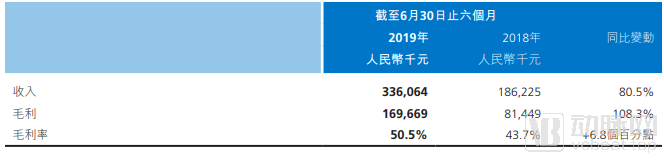
Ping An Good Doctor's H1 Online Healthcare Business Revenue Data, Source: Interim Report
Ping An Good Doctor’s recently released interim results report for 2019 shows that online healthcare is its core business, with online healthcare revenue reaching RMB 336 million in the first half of the year, a year-on-year increase of 80.5%. The proportion of online healthcare revenue to the group’s total revenue rose from 12.3% for the full year of 2018 to 14.8% in the first half of 2019.
“Private Doctor,” as part of the online healthcare business segment and a strategic-level product, will receive greater resource allocation from Ping An Good Doctor. At the “Private Doctor” strategy launch event, Wang Tao outlined the product’s mid-term goal: to provide private doctor services to 10 million households over the next three to five years. Given that the Private Doctor service involves close collaboration with doctors, hospitals, pharmacies, third-party testing and inspection agencies, and enterprises, Ping An Good Doctor is expected to further expand its network of referral hospitals and testing/inspection institutions, enhance its offline pharmacy footprint, and empower more partner companies in its next phase of development.
Driven by its established goals, what kind of performance results Ping An Good Doctor will deliver this year, and what impact its core products will have on the industry, are worth anticipating.