

InsHealth Files IPO Prospectus: Tackling Three Core Pain Points in China's Health Insurance Industry Through Innovation in Risk Control and Integrated Care
In the era of universal health coverage, nearly every citizen is covered by a state-mandated health insurance plan that provides reimbursement for medical expenses up to a specified limit when they fall ill.
Although basic medical insurance has extensive coverage, it is subject to limitations such as the three catalogs of reimbursable items and annual payment caps, meaning it cannot cover all medical expenses. In this context, commercial health insurance has emerged to meet the personalized insurance needs of different population groups. By effectively integrating and complementing each other, basic medical insurance and commercial health insurance together fulfill the public’s need for comprehensive protection.
In China, commercial health insurance accounts for approximately 12% of the overall insurance market, whereas in mature insurance markets such as the United States, its share is around 40%. Innovative health insurance products are conducive to expanding the market share of health insurance. The insurance industry has been committed to innovation in this sector; however, to achieve meaningful innovation, several key industry pain points must be addressed.
Commercial health insurance cannot enhance coverage without implementing rational risk control. However, for professionals in the insurance industry, healthcare represents a novel domain; they often lack precise insights into policyholders’ health conditions and treatment risks. Identifying clients’ medical risks, managing costs effectively within these risks, and developing an insurance model that is both effective and economical constitute a significant challenge in innovating health insurance products.
To enable insurance professionals to accurately assess clients’ medical risks, it is essential to impose stringent qualification requirements on the professionals themselves. The healthcare industry is characterized by high technical barriers. Insurance practitioners specializing in health insurance must not only understand which diseases are insurable and which are not, but also comprehend the various treatment modalities for different diseases, as well as their incidence rates and cost ratios. This necessitates a certain level of medical knowledge. Given the complex structures of health insurance products, one of the most significant challenges in innovating health insurance lies in the high difficulty of cross-sector integration between “insurance” and “healthcare.”
In addition to risk control and technical barriers, innovative health insurance also critically relies on medical data, which depends on the development of foundational medical data infrastructure in the market. If market data systems are inadequately established, it becomes more difficult to mine and analyze medical information, making it impossible to obtain accurate data on disease incidence rates, drug cost ratios, and other relevant metrics. This hinders effective management of patients’ medical risks and compromises the actuarial soundness of health insurance pricing.
For over a decade, the health insurance industry had been plagued by persistent pain points. When this startup initially resolved them one by one, no insurance company believed it was possible. After a year of repeatedly validating its risk control logic, the company secured a partnership with China Taiping Insurance and jointly launched its first health insurance product, “Taiping Medical Care Worry-Free Million Medical Insurance.” Within six months of its launch, the product became the best-selling health insurance offering among comparable million-yuan medical insurance competitors on multiple insurance platforms.
This company is Inshi Health. Founded in 2017, Inshi Health empowers end-to-end risk control management for health insurance through its technology platform. Guided by the principles of “multi-dimensional innovation, multi-platform collaboration, multi-stage risk control, and specialized division of labor,” it is committed to building a professional innovation platform for health insurance. To date, Inshi Health has partnered with more than 30 insurance companies, launched over 40 health insurance products, and provided financial insurance cooperation solutions for the services and products of numerous medical institutions as well as pharmaceutical and medical device companies.
How Did Inshi Health Overcome Challenges to Achieve Innovation in Health Insurance?
Ji Chunhui, the founder of Yingshi Health, graduated from Shanghai Medical University. With a professional background in medicine, he joined ICBC-AXA Life Insurance after graduation. During his tenure, he served as head of multiple functional departments, including Director of Marketing Resources, Director of Customer Service at the corporate headquarters, and Underwriting Manager at the corporate headquarters. He also participated in the development of various insurance products and the core systems of the company.
Having worked in the insurance industry for many years, Ji Chunhui has accumulated extensive industry experience and gained a deep understanding of the numerous challenges involved in implementing commercial health insurance. With his medical background combined with his professional experience in insurance, Ji Chunhui was motivated to contribute to innovative healthcare solutions. After resigning from ICBC-AXA Life Insurance, he decided to embark on an entrepreneurial venture aimed at thoroughly revolutionizing health insurance.
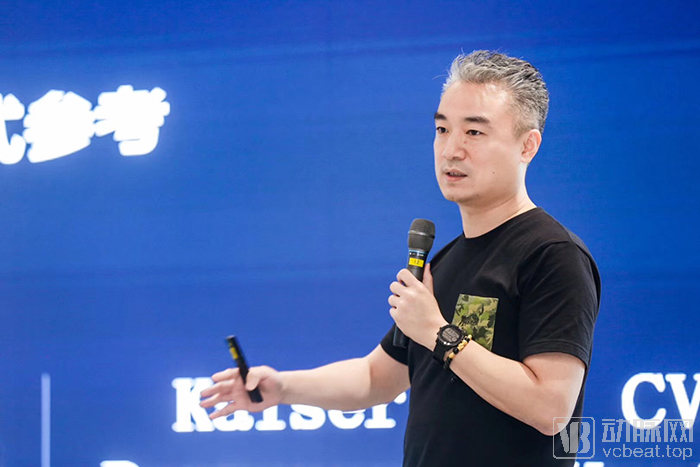
Ji Chunhui, Founder of Inshi Health
As early as 2013, Ji Chunhui had already founded Xinyu Information Technology, an internet-based oncology big data company. By 2016, it had become the largest oncology medical big data company in China at that time. Medical data is an indispensable component of innovative health insurance, which further solidified Ji Chunhui’s resolve to implement innovative health insurance solutions.
Establishing a startup inevitably requires preliminary market research. In mid-2016, Ji Chunhui partnered with Xu Jun (now co-founder of Yingshi Health) to visit more than twenty insurance companies, conducting six months of market research to identify viable product models and strategic directions for the company’s future. During the initial exploration phase, Yingshi Health sought to address a single core pain point. However, practical implementation revealed that the health insurance business is highly complex, with numerous pain points spanning the entire process. These issues are closely interconnected and must be addressed simultaneously, meaning that any innovation in health insurance by Yingshi Health would require the concurrent resolution of multiple industry-wide challenges.
At the inception of Yingshi Health, the development of medical data infrastructure was in full swing. Hospital data systems were continuously improving, medical industry associations were spearheading large-scale data research projects, and medical data companies were emerging in great numbers. This trend laid a solid foundation for innovation in health insurance. Leveraging Ji Chunhui’s own medical data resources, he collaborated with multiple medical data firms to mine and analyze their data, thereby developing relevant data models that were applied to the design of innovative health insurance products.
Data-related challenges are being gradually resolved as the broader data infrastructure improves. In addressing the second major hurdle in health insurance—namely, the high barriers to cross-sector medical integration—it is essential to highlight the background of InsureHealth’s team. Ji Chunhui, founder of InsureHealth, possesses unique cross-disciplinary expertise spanning healthcare, insurance, data, and the internet, laying a critical foundation for the success of its business model.
Meanwhile, Ji Chunhui has assembled a dedicated medical team comprising professionals from leading medical schools, healthcare institutions, and pharmaceutical companies. For instance, company partner Ji Jingwen holds a degree in Public Health from Shanghai University of Traditional Chinese Medicine and an MBA from Fudan University. She has previously worked at prestigious organizations such as Zhongshan Hospital and Roche, accumulating extensive experience in the healthcare sector. Beyond building its team, Ying Shi Health conducts in-depth research within the medical industry to identify genuine needs for solutions. It also investigates the various requirements of insurance institutions. By integrating these insights, the company designs comprehensive solutions that address the needs of multiple stakeholders.

Co-Partner at Inshi Health &Chief Medical OfficerJi Jingwen
In the critical area of risk control, Yingshi Health has pioneered a “pre-claims” logic. Under traditional health insurance models, reimbursement occurs after the disease episode has concluded, with policyholders submitting claims for medical expenses incurred. Ji Chunhui told VCBeat, “Discrepancies in disease understanding between policyholders and insurers often lead to disputes over costs under traditional reimbursement schemes, resulting in significant waste of human and financial resources. Yingshi Health’s approach shifts the claims process upstream by integrating claims logic into service delivery, thereby transforming the service workflow into a risk control mechanism and turning ‘services’ into a profit center for insurance companies.”
Specifically, by adopting a localized HMO model tailored to health insurance, Inshi Health intervenes with policyholders who require hospital care and health management before any potential claims arise. During the medical treatment process, Inshi Health assigns dedicated personnel to accompany patients throughout their journey, providing guidance on medication and medical procedures, and clarifying whether specific expenses fall within the scope of insurance coverage. Expenses covered by the policy are reimbursed by the insurer, while those outside the scope trigger alerts to the policyholder; if the policyholder insists on proceeding with such expenses, they must bear the costs out-of-pocket. This approach significantly reduces the risk of post-claim disputes and enhances the customer experience.
“For health insurance, the core competitiveness lies not in price advantage but in resource advantages for service implementation. Within the entire health insurance industry, Inshi Health has achieved the best performance in both service management and customer experience,” commented Ji Chunhui on Inshi Health’s philosophy of prioritizing service.
Currently, Inshi Health’s health insurance business covers more than 200 cities and over 6,000 hospitals across China. Internationally, it extends to thousands of medical institutions in multiple countries and regions, including Europe, the United States, and Japan. The company has established partnerships with nearly 30 insurance providers, such as PICC, CPIC, China Taiping, AXA Insurance, and Fosun United Health. Together, they have launched nearly 40 innovative health insurance products, including insurance for patients with chronic diseases (e.g., diabetes insurance), critical illnesses (e.g., cancer patient insurance), pharmaceuticals (e.g., genetic targeted drug insurance), diagnostic tests (e.g., HPV testing insurance), and overseas medical coverage, all dedicated to delivering an enhanced experience for policyholders.
Yingshi Health has completed three rounds of financing, receiving two rounds from Morningside Venture Capital in August 2017 and June 2018, respectively, and one round from CICC Hui Cai in March 2019. The company is currently undertaking its Series A financing, the proceeds of which will be used to build a more comprehensive data actuarial platform and strengthen platform-based collaborations with the healthcare industry and insurance institutions.