

AI-MDT Multidisciplinary Expert Intelligent Health Management Service Empowers Physical Examination Centers and Pharmacies to Achieve Service Capability Transformation
The State Council’s Opinions on Implementing the Healthy China Action pointed out that deaths from chronic non-communicable diseases, such as cardiovascular and cerebrovascular diseases and diabetes, account for 88% of total deaths. Therefore, it is essential to shift the focus upstream, place greater emphasis on prevention, promote a transition from a disease-treatment-centered approach to a health-centered one, and improve the population’s health status.
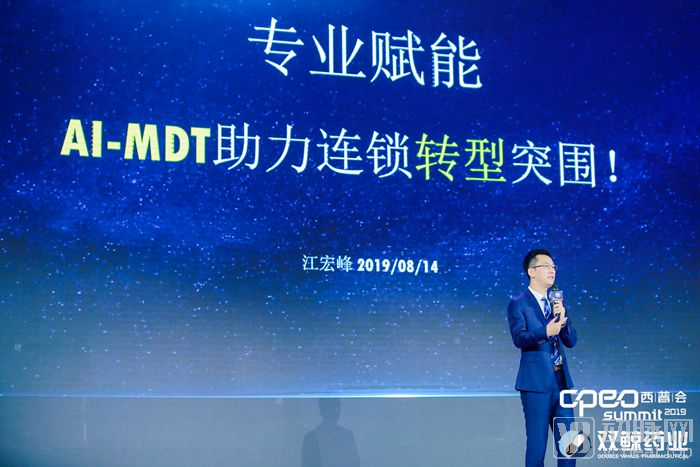
At the 2019 West China Pharmaceutical Conference (Xipu Conference), Sinohealth unveiled its newly developed health management system solution for individuals in the pre-chronic disease stage (sub-health or “pre-disease” state) following physical examinations, titled “AI-MDT Multidisciplinary Expert Intelligent Health Management Service.” Jiang Hongfeng, General Manager of AI-MDT Operations at Sinohealth, pointed out during the conference that chronic non-communicable diseases (NCDs), commonly referred to as chronic diseases, include conditions such as hypertension, diabetes, hyperlipidemia, cardiovascular and cerebrovascular diseases, and cancer. According to statistics, China has over 270 million hypertensive patients and more than 97 million diabetic patients. Additionally, the population with prediabetes is approximately 150 million (data from the “Healthy China Action”), representing remarkably high figures.
Cardiovascular and cerebrovascular diseases have become the leading cause of death among Chinese residents, accounting for more than 40% of all causes of death (data from the "Report on Cardiovascular Diseases in China 2018"). Meanwhile, chronic conditions such as hypertension, hyperglycemia (diabetes), and hyperlipidemia (dyslipidemia) are significant contributors and major risk factors for cardiovascular and cerebrovascular diseases.
In the face of China’s severe chronic disease burden, how healthcare examination institutions, pharmacies, and community health management organizations—as key players in the pharmaceutical and health industry—can break through bottlenecks, unlock their potential, enhance public health, fully support the national Healthy China Initiative, and achieve leapfrog development has become the most critical issue for all relevant institutions in the sector.
First, regarding health examination institutions, their current positioning remains focused on testing or screening at the front end of healthcare, functioning essentially as external diagnostic laboratories for hospitals. They continue to adopt disease diagnostic criteria, with their primary role being to determine whether an individual is diseased. If the diagnostic criteria are met, the individual is considered potentially diseased and referred to a hospital for further confirmation and treatment. If the criteria are not met, even if the test results are close to the diagnostic threshold and indicate a “pre-chronic disease” stage, the feedback often consists merely of brief general wellness advice such as “pay attention to your diet, get adequate rest, quit smoking, and limit alcohol consumption.” There is a lack of extended downstream services, specifically the absence of more advanced, professional intervention plans and health management services that could effectively prevent chronic diseases.
Furthermore, regarding offline pharmacies, their current positioning remains confined to the role of aggressive promotion of pharmaceuticals and health supplements, essentially functioning merely as backend sales channels. This role is becoming increasingly difficult to sustain. On one hand, pharmaceutical sales face intense competition from hospitals; patients seeking medical care tend to purchase medications directly at hospitals due to the convenience. On the other hand, pharmaceutical sales, particularly those of health supplements which constitute a significant market share, are confronted with fierce competition from e-commerce platforms, where lower prices are attracting a growing number of consumers. Whether offline pharmacies can extend their services to the front end, elevate their service dimensions, provide professional health analysis, assessments, and health management recommendations prior to purchase, guide consumers in making informed choices about health supplements, and effectively improve health and prevent diseases during the "pre-chronic disease" stage, will be the key determinant of their future growth potential.
Finally, regarding community health management institutions, their current positioning is primarily to divert functions from hospitals, namely providing daily healthcare, addressing minor health issues, and supporting rehabilitative therapy. Compared with large hospitals, community health institutions have significant deficiencies in professional capabilities and technical resources, making it difficult for them to provide large-scale, high-quality health management services to the community population during the pre-chronic disease stage.
Jiang Hongfeng stated that, in response to the aforementioned shortcomings and bottlenecks, Sinohealth has leveraged its decade-long health big data from the pharmaceutical industry and large-scale chain physical examination institutions, and collaborated with multidisciplinary experts from renowned Grade A tertiary hospitals across China to jointly develop the nation’s first AI-MDT (Artificial Intelligence-based Multidisciplinary Team) intelligent health management service. This initiative comprehensively empowers physical examination centers, pharmacies, and community health management organizations, significantly enhancing their capacity to serve individuals at risk of chronic diseases and rapidly improving public health management standards.
AI-MDT Intelligent Health Management Service with Multidisciplinary ExpertsThe AI-MDT Intelligent Health Management Service with Multidisciplinary Experts comprises two main components. The first is a Precision Health Analysis and Assessment Report generated by multidisciplinary experts, which conducts in-depth, comprehensive re-analysis of general health checkup results, interprets the clinical significance of indicator values, identifies chronic disease risks, and provides personalized health management plans. The second is a mobile-based intelligent health management system that implements strict supervision and management of lifestyle factors for individuals in the pre-chronic disease stage. Among the five major determinants of health, medical care accounts for only 8%, while lifestyle factors account for 60%, representing the largest proportion; since the vast majority of chronic diseases are lifestyle-related, this approach aims to fundamentally reverse disease trends.
Therefore, by integrating AI-MDT multidisciplinary expert intelligent health management services, physical examination institutions can go beyond merely performing preliminary disease screening. They can also conduct risk assessments for pre-disease stages, provide personalized health management plans, and implement rigorous lifestyle health management—including indicator monitoring, follow-up reminders, nutritional dietary monitoring, fitness tracking, and stress relief guidance. This approach addresses the critical issue where the vast majority of individuals in the pre-chronic disease (sub-health) state lack access to professional health services after their physical examinations.
The integration of AI-MDT (Artificial Intelligence-driven Multi-Disciplinary Team) intelligent health management services into offline pharmacies will comprehensively elevate the dimension of pharmacy services. By providing multi-disciplinary expert health analysis, assessment, and management services—as well as professional and authoritative guidance on the selection and usage of health supplements—that are unavailable or difficult to obtain through e-commerce platforms, these pharmacies can help consumers correctly choose health products to effectively improve their health. This will encourage individuals in pre-disease or early-stage chronic disease conditions, and even those with established diseases, to return from online e-commerce channels to offline pharmacies.
Integrating community health management institutions with AI-MDT (Artificial Intelligence–Multidisciplinary Team) intelligent health management services provided by multidisciplinary experts will significantly enhance health management capabilities, enabling community-wide coverage of multidisciplinary expert health analysis and assessment as well as chronic disease prevention, thereby comprehensively improving the overall health status of the community.
The launch of the AI-MDT (Artificial Intelligence-Multidisciplinary Team) intelligent health management service, powered by multidisciplinary experts, will elevate the service capabilities and standards of health checkup institutions, offline pharmacies, and community health management organizations to a new dimension. By enabling early control of chronic diseases and reversing disease trends, it aims to comprehensively improve public health, thereby facilitating the full implementation and execution of the Healthy China Initiative.