

Shuanghu Think Tank Medical Session: International Innovation in Diabetes Therapeutics
Recently, the Shuanghu Think Tank Medical Innovation Seminar was successfully held at The Westin Beijing Jinmao.
Shuanghu Thought Exchange is an offline, invitation-only industry salon organized by Shuanghu Capital. Each session brings together experts and scholars, senior executives from large corporations, CEOs of startups, and investors to discuss the current state and trends of industry development, uncover entrepreneurial and investment opportunities, and promote industrial upgrading and growth.
In the healthcare sector, Shuanghu Capital has established a comprehensive global footprint by investing in top-tier medical funds. Its partners include OrbiMed, Sofinnova Investments, 5AM Ventures, Honghui Capital, Taifu Capital, and Sherpa Investment. Additionally, the firm selectively makes direct equity investments in outstanding innovation-driven startup teams, such as PACT Pharma and Semma Therapeutics. Shuanghu Capital’s healthcare team operates out of Beijing and San Francisco, bringing extensive industry resources and investment expertise to the table.
This issue of the Shuanghu Think Tank Forum focuses on medical technology innovations in diabetes and investment opportunities in entrepreneurship. The event was well-attended by distinguished guests, including Dr. Hongkui Deng, Boya Chair Professor at Peking University and Chang Jiang Scholar; Dr. Dan Han, Vice President of Biological Research and Development at Novo Nordisk; Professor Jianzhong Xiao, Director of the Department of Endocrinology and Metabolism at Beijing Tsinghua Changgung Hospital; and Dr. Bastiano Sanna, CEO of Semma Therapeutics. Additionally, founding teams from ZhiTai Bio, Chengyi Biopharma, Yanjian New Drug, Yinuo Pharma, Shunzhi Technology, TangTang Quan, and Chongqing Youyou Baby Women’s and Children’s Hospital were present, alongside professional investors from institutions such as Honghui Capital, Lilly Asia Ventures, Mifang Capital, Qiming Venture Partners, Vientiane Capital (Chenxing VC), Sherpa Investment Partners, Taifu Capital, and Yuexiu Industrial Fund.
Shuanghu Capital’s portfolio company, Semma Therapeutics, aims to leverage pluripotent stem cell differentiation technology to help patients with type 1 diabetes restore their ability to autonomously produce insulin, thereby fundamentally eliminating their dependence on exogenous insulin injections. As the founder of Semma Therapeutics and a father of two children with type 1 diabetes, Douglas Melton—a Harvard University professor, Director of the Harvard Stem Cell Institute, and President of the International Society for Stem Cell Research—has led his team through more than a decade of efforts. Currently, Semma has achieved large-scale production of pancreatic beta cells derived from pluripotent stem cells. Dr. Bastiano Sanna, CEO of Semma, traveled specially from Boston to the conference venue to share with us the company’s latest progress in the production of pancreatic beta cells and the development of encapsulation devices for transplantation.
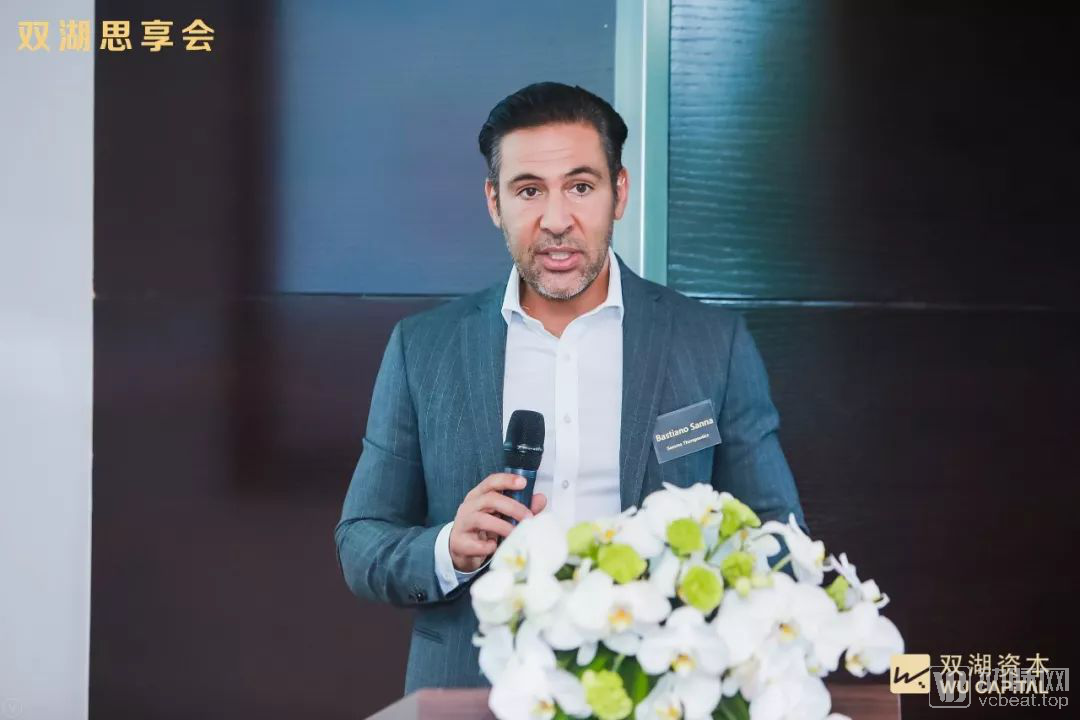 Semma Therapeutics CEO Dr. Bastiano Sanna
Professor Deng Hongkui, Director of the Peking University Stem Cell Research Center, led a research team in using small-molecule compounds to induce the reprogramming of somatic cells into pluripotent stem cells. This achievement has opened up an entirely new pathway for somatic cell reprogramming, bringing new possibilities for the future application of regenerative medicine in the treatment of major diseases. Professor Deng believes that stem cell therapy holds significant potential for the treatment of diabetes, but the clinical safety and efficacy of such therapies still require further validation. Professor Deng, Dr. Sanna, and other experts present engaged in vigorous and in-depth discussions on issues including the activity and stability of artificially induced pancreatic beta cells in the human body, potential immunogenicity, and the design of specific clinical trials.
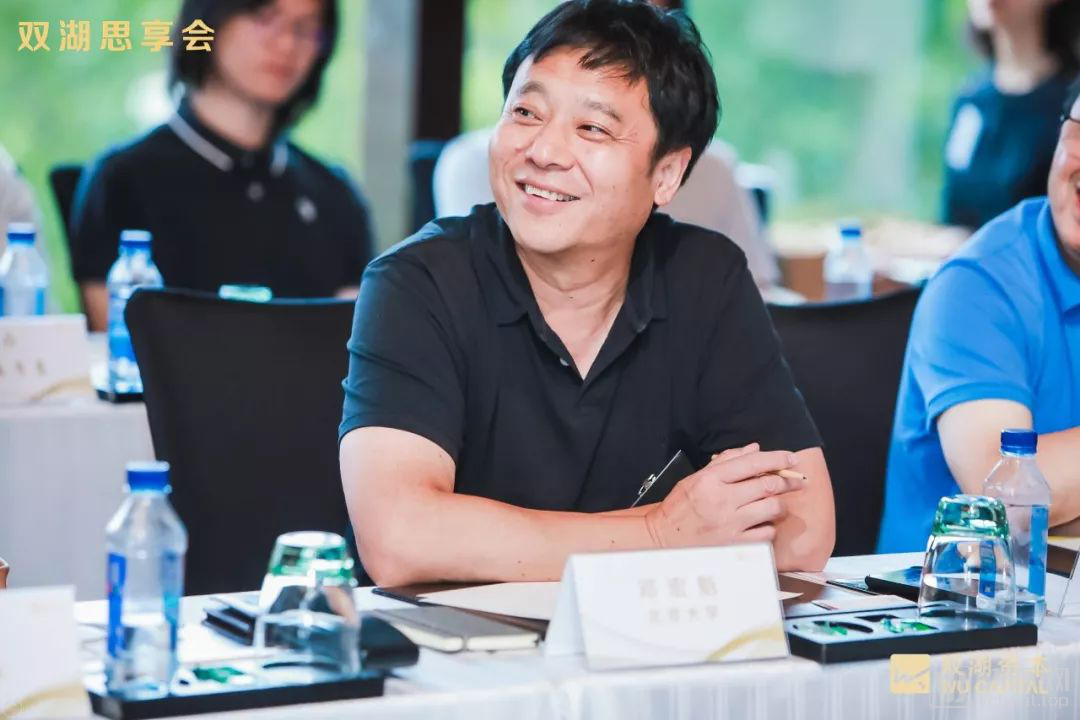
Professor Deng Hongkui, Director of the Center for Stem Cell Research at Peking University
Heads of the diabetes R&D divisions at Novo Nordisk and Eli Lilly believe that breakthroughs in diabetes treatment can primarily be achieved through two avenues: first, by discovering new therapies capable of completely curing diabetes, and second, by upgrading existing treatment modalities. Regenerative medicine, particularly stem cell therapy, represents one of the most promising directions for novel diabetes treatments. In recent years, major pharmaceutical companies have successively entered this field, and it is anticipated that multiple stem cell therapy projects will enter clinical stages in the near future. Regarding the enhancement of existing treatments, many pharmaceutical companies are striving to improve current insulin-based medications with the goals of reducing dosing frequency and delivering multifaceted benefits to patients. Next-generation products are expected to significantly improve patient adherence. Meanwhile, some pharmaceutical companies are developing smart insulins capable of sensing blood glucose levels, thereby achieving real-time blood glucose control.
Experts have proposed the concept of “Glucose+,” suggesting that future diabetes treatments should not only intelligently regulate blood glucose levels but also further control and manage diabetes-related complications, such as obesity, hypertension, hyperlipidemia, and cardiovascular diseases. Currently, R&D departments in pharmaceutical companies within the diabetes sector are undergoing a transformation, actively adopting more open approaches to research and development. Dr. Han Dan from Novo Nordisk shared insights on Novo Nordisk’s Innovo innovation platform, which combines internal incubation with external collaborations to enhance the efficiency of new drug development for diabetes.
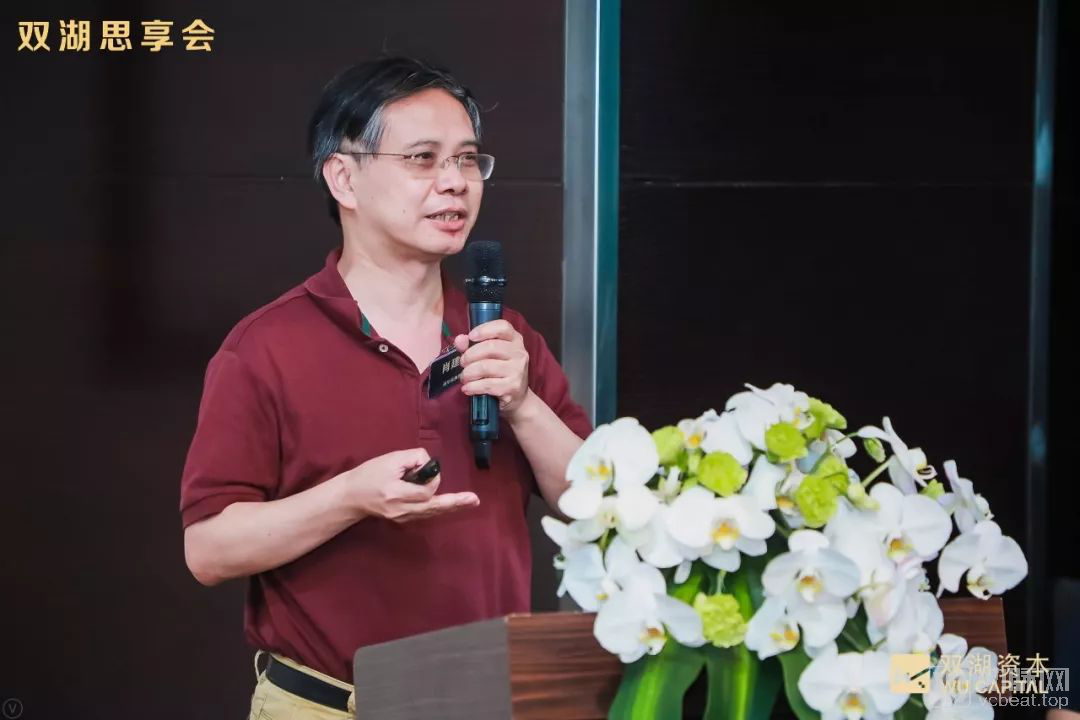
Professor Xiao Jianzhong, Director of the Department of Endocrinology and Metabolism, Beijing Tsinghua Changgung Hospital
Professor Xiao Jianzhong, Director of the Department of Endocrinology and Metabolism at Beijing Tsinghua Changgung Hospital, shared his insights from 35 years of medical practice, outlining the transition of the Chinese population’s constitution from malnutrition to overnutrition, which has subsequently led to a high prevalence of diabetes. The "Report on the Status of Diabetes in China," published in JAMA and led by Professor Xiao, noted that there are currently approximately 120 million diabetes patients in China, with the population exhibiting prediabetic symptoms reaching 35.7% of the total population. Against the backdrop of an increasingly aging population in China, the number of individuals with diabetes is projected to grow explosively over the next decade, imposing an extremely heavy medical and economic burden on Chinese society. Professor Xiao believes that to better address the substantial unmet clinical needs for diabetes care in China, comprehensive improvements are required across five key areas: public education, affordability, disease monitoring, treatment supervision, and scientific understanding. He particularly emphasized that clinicians and basic science researchers should collaborate closely to elucidate pathogenic mechanisms and corresponding pathophysiological phenomena, refine the subclassification of diabetes, and identify novel therapeutic targets and treatments.
A 2016 report by the World Health Organization indicated that 422 million people worldwide were living with diabetes, a figure projected to reach 629 million by 2045, making diabetes one of the most significant chronic diseases of the 21st century. Driven by population aging and favorable policies from healthcare reforms, the diabetes sector presents substantial opportunities for entrepreneurship and investment, underscoring the urgent and critical need for improved diabetes treatment and management. Founders from seven startups shared their practical experiences and explorations in the diabetes field. ZetaBio and Shunzhi Technology discussed strategies for producing cost-effective medications and medical devices for blood glucose control. Chengyi Biopharma, Yanjian New Drug, and Yinuo Pharmaceutical presented the latest progress on innovative drugs targeting diabetic complications within their respective R&D pipelines. Tangtangquan and Chongqing Youyou Baby Women’s and Children’s Hospital shared insights on enhancing the efficiency of chronic diabetes management through mobile internet technologies and precision medicine.
Mr. Cai Daqing, Founding Partner of Sherpa Capital; Mr. Li Ming, Managing Partner of Taifu Capital; and Mr. Chen Bing, Partner of HighLight Capital, along with other senior healthcare investors, shared a series of investment cases and insights in the field of diabetes. Mr. Cai believes that companies capable of developing innovative drugs with high clinical added value for addressing various complications will become favorites in the capital market. In Mr. Li’s view, there is still significant room for advancement in precision medicine for diabetes, with a particular focus on therapies offering clinical differentiation for specific diabetic subpopulations. Mr. Chen stated that, given the traditional high-carbohydrate dietary structure in China, improving medication adherence while ensuring patients’ quality of life is also a key area of interest for investment firms.
In recent years, biotechnology has witnessed rapid development, with life sciences demonstrating significant potential for breakthroughs and investment opportunities in both clinical and industrial applications. Shuanghu Capital consistently seeks out exceptional teams that are driven by technological innovation, focused on addressing unmet clinical needs, and possess extensive experience in industrial translation. The firm is committed to advancing the upgrade of the healthcare industry and serving human health.
Shuanghu Capital, established in 2013, currently maintains offices in Beijing, Hong Kong, and Silicon Valley. As a representative of China’s evergreen funds, Shuanghu Capital is dedicated to identifying outstanding investors and entrepreneurs worldwide. Leveraging its deep-rooted industrial resources and expertise in China, the firm supports the growth of its portfolio companies and harnesses the power of investment to drive innovation and change. As the sole domestic limited partner (LP) for several top-tier European and American funds, Shuanghu Capital has built a diversified growth asset portfolio based on global macro hedging strategies. Meanwhile, focusing on new products, services, and experiences driven by technological advancements and shifting paradigms, the firm selectively makes direct equity investments in high-quality entrepreneurial teams.