

Shandong Provincial Hospital Completes China's First “5G+4K+3D+MR” Laparoscopic Surgery in Collaboration with Hisense Medical
VCBeat (WeChat ID: vcbeat) has learned that on the afternoon of August 14, Shandong Provincial Hospital performed a “5G+4K+3D+MR” laparoscopic surgery. Leveraging the 5G network, surgeons combined 3D medical imaging, 4K ultra-high-definition video, and mixed reality (MR) technology to carry out and broadcast the precision procedure, marking the first such case in China’s medical sector. The surgery was conducted by a team led by Professor Li Leping, Vice President of Shandong Provincial Hospital. Key technical support was jointly provided by Hisense Medical, Olympus, and China Mobile. Zhao Shengtian, Party Secretary of Shandong Provincial Hospital, and Sun Zhijian, Vice President of the hospital, attended the event in person and provided guidance.
In the operating room of the East Campus of Shandong Provincial Hospital, Professor Jing Changqing from the Department of Gastrointestinal Surgery performed a right hemicolectomy combined with resection of liver metastases for colorectal cancer using a 4K laparoscope. Prior to the surgery, he utilized the Hisense Computer-Assisted Surgery (CAS) system and Mixed Reality (MR) technology for surgical planning.
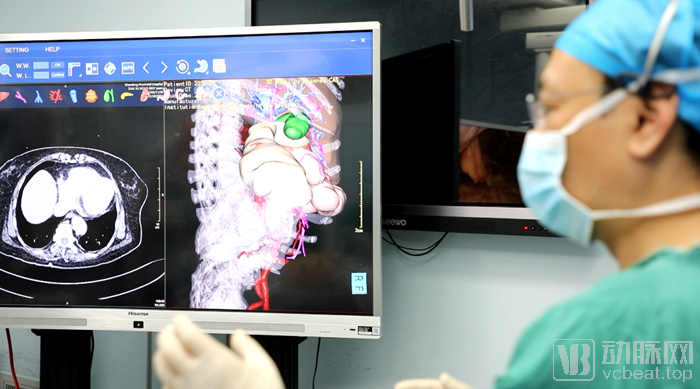
“With these new technologies, surgeons can visually and clearly distinguish tumors, organs, blood vessels, and other structures, assess vascular variations, and precisely locate tumors. ‘The preoperative predictions, combined with intraoperative anatomical findings, showed a very high concordance rate. This demonstrates that preoperative 3D reconstruction and MR technology integrate the virtual with the real, giving us greater confidence during surgery, enabling more precise procedures, and facilitating faster patient recovery,’ said Professor Jing Changqing. The surgery lasted over four hours and was successfully completed, saving the patient.”
4K laparoscopy offers a resolution approximately four times that of 2K, representing the highest level of image clarity currently available in the field of surgery. It provides surgeons with large-screen, wide-field 4K visualization, thereby enhancing the precision and accuracy of surgical procedures and ensuring both quality and efficiency. “Previously, live broadcasting of 4K laparoscopic surgeries was not feasible, primarily because network technology failed to meet the bandwidth requirements of 4K laparoscopy,” said Professor Jing Changqing.
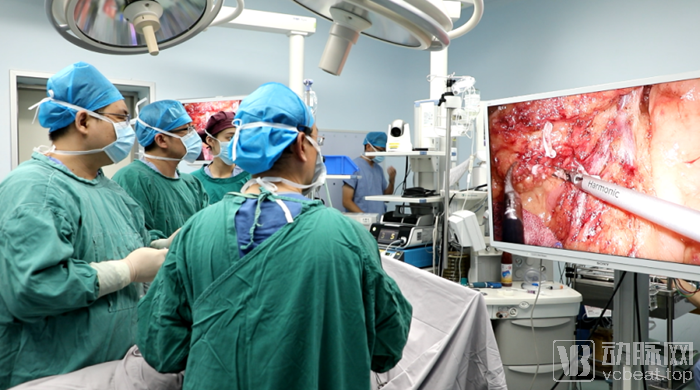
5G networks offer significant advantages, including ultra-high bandwidth and ultra-low latency. During this surgical broadcast, the downlink speed was approximately 430 Mbps, and the uplink speed was around 80 Mbps—tens of times faster than 4G network transmission speeds. This ensured smooth video data transmission with clear, lag-free audio and visuals, making it possible to broadcast and demonstrate ultra-high-definition laparoscopic procedures. In the hospital’s conference room, nearly 20 experts from across the province observed and studied the surgery in real time via Hisense laser TVs.
“5G+4K+3D+MR” Laparoscopic Surgery: Driving Transformations in Medical Education and Surgical Paradigms—Especially with 4K High-Definition Laparoscopy Leveraging 5G Technology, Surgeons Can Perform Remote Surgeries.
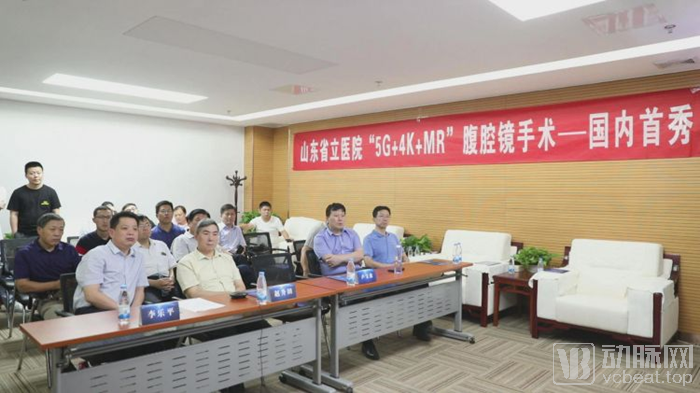
According to Professor Li Leping, Vice President of Shandong Provincial Hospital, the active implementation of “5G+4K+3D+MR” laparoscopic surgery represents a significant initiative by the hospital to advance its “Smart Hospital” development. The successful completion of this procedure not only propels Shandong Provincial Hospital’s laparoscopic surgery into the new era of “Internet+ Healthcare,” but also accelerates the rapid integration and advancement of medical services with 5G, artificial intelligence, and internet technologies across the province and throughout China, thereby supporting the strategic development of Smart Hospitals, Digital Shandong, and Healthy China.