

HuaKan Bio Completes Tens of Millions RMB Financing Round with Tsinghua University Co-Investment, Advances 3D Micro-Tissue Engineering Platform

CytoNiche
3D Cell Technology Products and Services Provider
Recently, VCBeat learned that CytoNiche has announced the completion of a new round of financing amounting to tens of millions of yuan. The round was led by Guoke Jiahe, with participation from Changjian Investment, the Tsinghua University Alumni Fund, and the Huakong Cornerstone Fund team, among others. Tsinghua University holds an equity stake and jointly supports the company. CytoNiche specializes in the research and development of 3D microtissue engineering technology, with its core technology derived from technological achievements transferred from Tsinghua University. Leveraging its proprietary technology, CytoNiche has launched a series of related products and services, including customized, large-scale, automated, and intelligent processes for stem cell culture and expansion; novel drugs for 3D stem cell microtissue regenerative therapy; and high-throughput 3D cell-based drug screening products.
Liu Wei, Co-founder and CEO of CytoNiche, told VCBeat that this round of financing was completed in early 2019. The funds are being used for the construction of a GMP-compliant manufacturing facility to scale up the product line, laying the foundation for subsequent regulatory filings of technical products.
Chen Hongwu, Managing Partner at Guoke Jiahe, stated, “In recent years, stem cell therapy has demonstrated significant potential in areas such as anti-aging and immunotherapy. The FDA and NMPA have successively introduced relevant regulations that clearly classify stem cells as biological ‘drugs’ for regulatory oversight and approval. As regulatory frameworks become increasingly mature, the prospects for stem cell therapy are expanding. CytoNiche’s 3D microtissue engineering technology provides personalized culture and expansion pathways for various types of stem cells, significantly improving both expansion efficiency and quality. Our investment in CytoNiche is driven not only by our recognition of its philosophy and technological products but also by the excellence of its team, which demonstrates great passion and confidence in industrialization.”
“The idea of starting a business first emerged in 2014,” recalled Liu Wei. In August 2010, Professor Du Yanan from the School of Medicine at Tsinghua University returned to China from Harvard Medical School in the United States to engage in basic research. At that time, Liu Wei joined Professor Du’s laboratory as a graduate student. “During those three to four years, Professor Du led us in conducting fundamental research on stem cells. Throughout this period, we published important papers in internationally renowned journals such as PNAS and Biomaterials,” Liu Wei stated. “These internationally recognized technological achievements further demonstrated that our original 3D microtissue engineering technology is scientifically feasible.” By the end of 2014, Professor Du’s team had completed the scientific research on 3D microtissue engineering technology.
Over the following years, the team began developing technological products, conducting scientific research such as early preclinical studies to provide supporting evidence, and working on commercialization. They also completed the transfer of intellectual property rights for their scientific achievements from Tsinghua University to the enterprise. In August 2018, CytoNiche was established. After eight years, Professor Du’s research team achieved a leap forward, progressing from original technology development to achievement transformation and the establishment of the company.
“We are a typical example of a full-time entrepreneurial venture launched by a university research team,” Liu Wei said with a smile. After the company’s establishment, Professor Du Yanan served as Chief Scientist of CytoNiche. He is a tenured professor at the School of Medicine, Tsinghua University, a recipient of the National Natural Science Foundation of China’s Excellent Young Scientists Fund, and a Changjiang Young Scholar. Co-founder Liu Wei serves as the company’s CEO and is also the principal inventor of its industrial-scale stem cell manufacturing solutions. He has published 20 papers in renowned international journals and filed or been granted more than 20 patents. Another co-founder, Dr. Yan Xiaojun, who also studied under Professor Du, is a Singaporean Chinese who chose to remain in China after completing his Ph.D. at Tsinghua University to pursue full-time entrepreneurship. Leveraging Tsinghua University’s extensive alumni network, CytoNiche has assembled an interdisciplinary team of Ph.D. holders, with core members all being Tsinghua alumni and over 60% of the team holding graduate degrees.
“In simple terms, 3D microtissue engineering technology can be understood as a technique that simulates the three-dimensional microenvironment of cells in vivo within an in vitro setting,” explained Liu Wei. Leveraging this core technology and the research team’s deep expertise in the field of stem cells, the company has launched two products and services: a closed-loop manufacturing process for novel stem cell therapeutics that is customized, scalable, automated, and intelligent (providing customized large-scale culture consumables, reagents, and equipment for stem cells), and the research and development of novel injectable 3D stem cell microtissue therapeutics.
In recent years, stem cell-based novel drugs have garnered widespread attention within the industry. Data from the international consulting firm Technavio indicates that the global stem cell therapy market is projected to grow at a compound annual growth rate (CAGR) of 37% over the next five years. Within the entire stem cell industry chain, stem cell therapy occupies the downstream segment, driving development in upstream activities—such as collection, preparation, and storage—as well as midstream processes, including differentiation, value-added services, and formulation development. “Upstream technologies in the stem cell industry have become relatively mature; however, most midstream operations still rely on traditional manufacturing processes, namely manual cell culture. This approach fails to achieve scalable and standardized production, thereby constraining the development of the stem cell novel drug industry,” stated Liu Wei.
Traditional stem cell culture processes employ manual, two-dimensional (2D) monolayer culture methods. CytoNiche’s 3D microtissue engineering technology creates an in vitro three-dimensional (3D) culture environment for stem cells by developing a fully automated stem cell manufacturing process, which includes customized 3D biomimetic microenvironments for stem cells (3D TableTrix microcarriers).TM), reagent kits for supporting processes, and customized stem cell bioreactors, thereby enabling a large-scale manufacturing process for stem cell production that features single-operator handling and closed-system continuous culture.
The company’s 3D stem cell culture system addresses a series of challenges associated with conventional 2D expansion methods currently available on the market, including low efficiency, difficulties in continuous culture, and inadequate scalability. It also resolves issues related to combined material-based stem cell products, such as the inability to achieve long-term in situ preservation and long-distance transportation, as well as problems concerning unstable product quality and susceptibility to differentiation and aging.
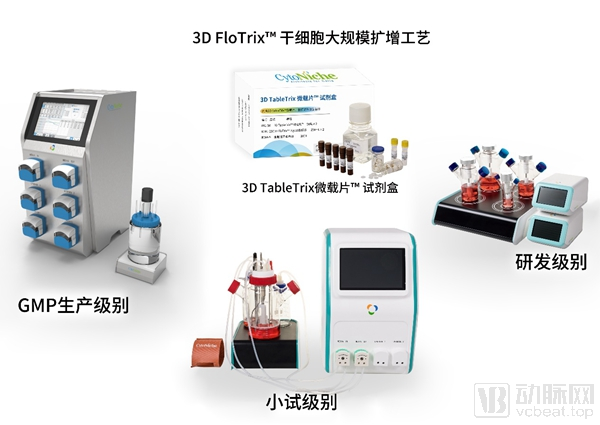
CytoNiche's Fully Automated Stem Cell Manufacturing Process
3D Microtissue-Based Novel Drugs Represent Another Major Breakthrough by CytoNiche, Following Its Advances in 3D Stem Cell Culture Technology. Research has demonstrated that stem cell therapy holds significant clinical potential in the treatment of autoimmune diseases, central nervous system injuries, cardiovascular diseases, arthritis, and endometrial repair. Current stem cell therapies typically involve the direct injection of free-floating stem cells into the lesion site. However, these free-floating cells are susceptible to the harsh microenvironment surrounding the lesion, leading to loss of viability, substantial cell leakage, and inconsistent therapeutic efficacy. Furthermore, dispersed and lost stem cells may potentially cause damage to normal tissues and organs.
“The key components of novel stem cell microtissue drugs include seed stem cells (cell-based therapeutics), stem cell microcarriers (cellular capsules), and a stem cell microtissue culture and expansion system (manufacturing process),” explained Liu Wei. “Just as active pharmaceutical ingredients combined with dosage forms constitute finished drug products, the integration of stem cells with their microenvironment forms novel stem cell microtissue therapeutics. By locally injecting these stem cell microtissues (capsule-based therapeutics) in situ at the lesion site, highly efficient, targeted, site-specific, and safe regenerative therapy can be achieved in vivo. This approach addresses a series of challenges associated with the local in situ injection of free stem cells, such as low ex vivo survival rates, shear stress-induced cell damage during injection, susceptibility to loss and diffusion in vivo, low survival rates, and short survival durations.”
Furthermore, studies in animal models of lower limb ischemia (diabetic foot) have found that the microtissue therapy requires only one-tenth the amount of mesenchymal stem cells compared to traditional free-cell therapies. “This is the most effective report to date in the literature, requiring the lowest dose of stem cells for regenerative treatment of lower limb ischemia,” said Liu Wei.
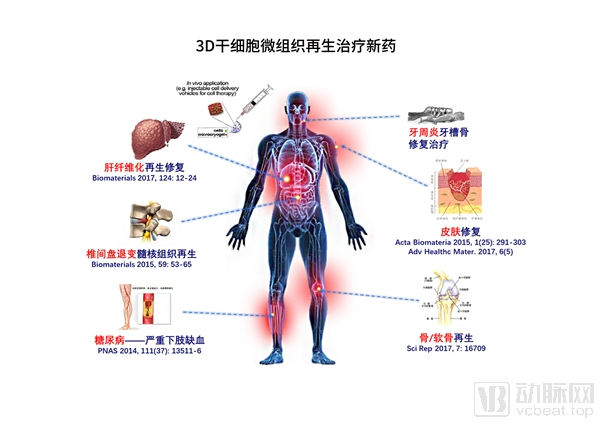
CytoNiche Stem Cell Microtissue Novel Drug
Currently, the company’s 3D stem cell microtissue therapy has completed preclinical efficacy and safety validation in disease models for diabetic foot with lower limb ischemia, bone and cartilage defects, intervertebral disc degeneration, liver fibrosis, and skin injury.We are currently seeking downstream stem cell enterprises and clinical partners to jointly advance the validation of clinical trials.
CytoNiche’s 3D microtissue engineering technology is not limited to the fields of stem cell production and novel therapeutics based on stem cell microtissues. Leveraging its 3D microtissue engineering platform, the company has developed a high-throughput 3D cellular drug screening product—the 3D Microtissue Array (3D PlaTrix™ Cell Culture Plate). “In simple terms, it is an in vitro drug screening model that mimics the in vivo cellular microenvironment,” explained Dr. Yan Xiaojun, Co-founder and CTO of CytoNiche. “Extensive preliminary research data indicate that our 3D high-throughput screening product is largely consistent with murine in vivo cellular models. Compared with conventional two-dimensional in vitro models, it can reduce the false-positive rate in cell-based screening during new drug development.”
Furthermore, this 3D microtissue array can significantly shorten the drug screening cycle. Typically, mouse xenograft models require five to six months from cell inoculation and tumor formation to drug testing. In contrast, CytoNiche’s 3D microtissue array is a high-throughput cell culture plate capable of simultaneously screening 384 conditions, with a screening cycle of only seven days. This substantially reduces the screening timeline, thereby enabling scalable, automated, cost-effective, and efficient high-throughput 3D cell-based drug screening.
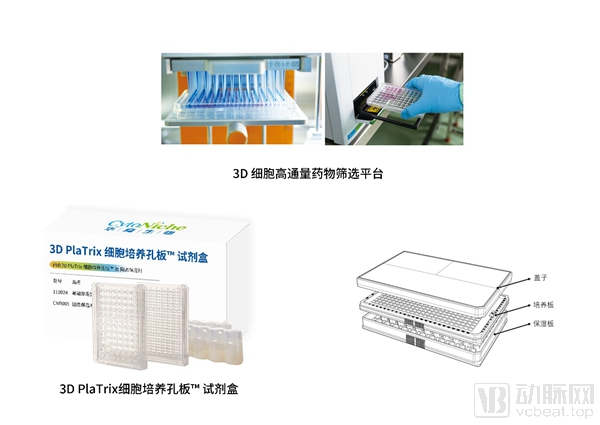
CytoNiche 3D Cell High-Throughput Drug Screening Products
Currently, CytoNiche has established collaborations with numerous universities, renowned stem cell companies, and research institutions. The company is also seeking partnerships with enterprises engaged in the R&D of novel stem cell drugs, clinical research organizations, and medical aesthetics and healthcare providers to jointly advance the development of new stem cell therapies and the application of its product portfolio. According to Liu Wei, the construction of the company’s GMP-compliant manufacturing facility is nearing completion, with the first batch of products expected to be manufactured by the end of this year, alongside the submission of relevant technical and product qualification applications.
In addition, the company will launch a new round of financing in the near future. The funds will be used for building a professional team, upgrading technical products, developing novel cell-based agents, and conducting clinical studies on new stem cell microtissue drugs.