

JunLian Healthcare Global New Drug Insights Weekly – Issue 18 (August 12–18, 2019)
Aug 19, 2019 11:35
CST Updated
11:35

August 12–18, 2019: A total of 10 new drug data entries were recorded this week, including 5 in oncology, and 1 each in hematology, metabolism, CNS, infectious diseases, and immunology.
❖Celgene’s Inrebic and AbbVie’s Rinvoq were launched on the same day, marking the official debut of second-generation JAK inhibitors with selectivity for the Janus kinase (JAK) family. First-generation JAK inhibitors are primarily pan-JAK inhibitors; there are four such products that inhibit multiple JAK targets but are associated with complications such as infections, anemia, and neutropenia. The development of second-generation JAK inhibitors aims to enhance inhibitor selectivity. Currently, in addition to Inrebic and Rinvoq, Gilead’s JAK1 inhibitor filgotinib is expected to submit a New Drug Application (NDA) this year for the treatment of rheumatoid arthritis. In China, numerous domestic companies have already begun to strategize around second-generation JAK inhibitors, leaving an estimated 3–4-year window before multinational corporations’ products enter the Chinese market.
❖The U.S. FDA has approved the marketing of Rozlytrek, an NTRK and ROS1 inhibitor developed by Roche. This marks the third tumor-agnostic therapy approved by the FDA, following Keytruda and Vitrakvi. Treating different diseases with the same therapy has long been a core clinical objective. However, due to the heterogeneity of tumor differentiation, current treatments capable of achieving this goal are concentrated in a few signaling pathways. In addition to TRK inhibitors, RET and FGFR are also key focuses for tumor-agnostic therapies. Blueprint’s BLU667 and BLU554 target these two respective biomarkers and are currently at the forefront of global clinical trials, potentially paving the way for the fourth tumor-agnostic therapeutic product.
AstraZeneca’s AZD1775, which targets DNA damage repair mechanisms,
In a Phase I clinical trial for treating patients with pancreatic cancer, overall survival (OS) was significantly prolonged.
AstraZeneca’s investigational therapy AZD1775, which targets DNA damage repair mechanisms, achieved positive results in a Phase 1 clinical trial when combined with chemotherapy and radiotherapy for the treatment of patients with newly diagnosed locally advanced pancreatic cancer, extending overall survival.
AZD1775 is a Wee1 inhibitor that plays an important role in DNA damage repair.
The Phase I clinical trial enrolled 34 patients with locally advanced pancreatic cancer. In addition to radiotherapy and the chemotherapy drug gemcitabine, patients received AZD1775 at varying doses.
The median OS for all patients in this clinical trial was 22 months, whereas the OS for patients treated with gitaxatide monotherapy was 12–14 months.
FDA Approves Celgene’s Inrebic for the Treatment of Intermediate-2 and High-Risk
(Intermediate-2/High-Risk) Patients with Primary or Secondary Myelofibrosis
FDA Approves Celgene’s Inrebic for the Treatment of Patients with Intermediate-2 and High-Risk Primary or Secondary Myelofibrosis
Inrebic (fedratinib) is an oral JAK2 and FLT3 inhibitor
In the Phase 2 and pivotal Phase 3 trials, a total of 608 patients received treatment with Inrebic, including 459 patients with myelofibrosis and 97 patients who had previously been treated with ruxolitinib.
In patients who had not previously received JAK inhibitor therapy, 37% of those treated with Inrebic achieved a >35% reduction in spleen volume, and 40% experienced an improvement of more than 50% in the Myelofibrosis Symptom Assessment Form (MFSAF) total symptom score; both endpoints were significantly superior to those observed in the placebo group (1% and 9%, respectively).
Mechanism of Action of JAK2
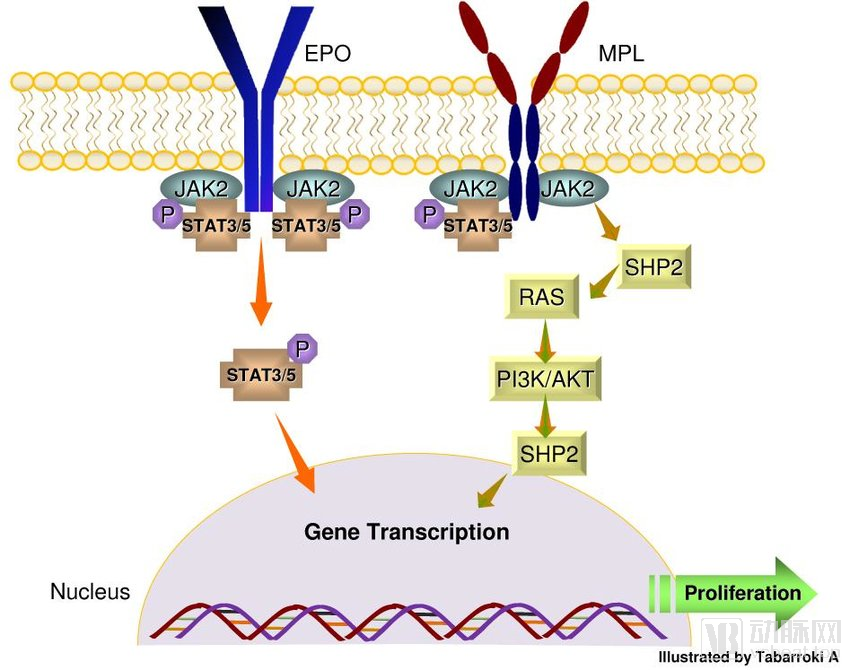
Data source: ResearchGate
The FDA approves AbbVie’s Rinvoq (upadacitinib) for market launch,
Treatment of adult patients with moderate to severe active rheumatoid arthritis (active RA)
FDA Approves Rinvoq (upadacitinib) for the Treatment of Adult Patients with Moderately to Severely Active Rheumatoid Arthritis (RA) Who Have Had an Inadequate Response to or Intolerance to Methotrexate (MTX)
Rinvoq (upadacitinib) is a once-daily, oral, small-molecule JAK1 selective inhibitor.
The SELECT Phase 3 clinical program comprises five clinical trials, with a total enrollment of nearly 4,400 patients.
More than 30% of patients achieved clinical remission following treatment with Rinvoq. During this period, patients exhibited minimal to no disease activity or symptoms, even without the use of methotrexate (MTX). The duration of clinical remission can extend up to 26 weeks.
The U.S. FDA Approves Wakix (Pitolisant) for the Treatment of Adult-Onset Narcolepsy
Excessive Daytime Sleepiness (EDS) in Patients with Narcolepsy
U.S. FDA Approves Wakix (pitolisant) for the Treatment of Excessive Daytime Sleepiness (EDS) in Adult Patients with Narcolepsy
Wakix is a “first-in-class” selective histamine H3 receptor antagonist/inverse agonist.
In two multicenter, randomized, double-blind, placebo-controlled studies, a total of 261 patients were enrolled and randomly assigned to receive Wakix, placebo, or an active control drug, with a treatment duration of eight weeks.
Wakix demonstrated a statistically significant improvement in EDS, as measured by the Epworth Sleepiness Scale (ESS) score.
The U.S. FDA Approves Roche’s NTRK
Launch of Rozlytrek (entrectinib), a ROS1 and ALK inhibitor
U.S. FDA Approves Roche’s NTRK, ROS1, and ALK Inhibitor Rozlytrek (entrectinib) for the Treatment of Patients with Solid Tumors Harboring NTRK Gene Fusions and Patients with Non-Small Cell Lung Cancer Harboring ROS1 Gene Mutations
Rozlytrek is a selective tyrosine kinase inhibitor designed to target NTRK and ROS1 gene fusions, capable of inhibiting the kinase activity of TRK A/B/C and ROS1.
This approval is primarily based on the pivotal Phase 2 clinical trial of STARTRK-2.
In patients with NTRK fusion-positive solid tumors, Rozlytrek achieved an objective response rate (ORR) of 57.4%, with a median duration of response (DOR) of 10.4 months. Patients with up to 10 different types of solid tumors responded to this therapy.
Regeneron announced evinacumab, which targets the innovative target angiopoietin-like protein 3 (ANGPTL3),
Achieved Positive Results in Phase III Clinical Trials
Regeneron Pharmaceuticals Announces Positive Results from Pivotal Phase 3 Trial of Evinacumab, Targeting the Novel Angiopoietin-Like Protein 3 (ANGPTL3)
Evinacumab is a monoclonal antibody targeting angiopoietin-like protein 3 (ANGPTL3).
The ELIPSE HoFH trial is an ongoing, randomized, double-blind, placebo-controlled Phase 3 clinical study. Sixty-five patients aged 12 years and older with homozygous familial hypercholesterolemia (HoFH) received either evinacumab or placebo in addition to their existing lipid-lowering therapy.
Compared with the placebo group, LDL cholesterol levels were reduced by 49% (a 47% reduction in the evinacumab group versus a 2% increase in the placebo group; p<0.0001); 47% of participants achieved LDL cholesterol levels below 100 mg/dL, compared with only 23% in the placebo group (p=0.0203).
Lipid-Lowering Mechanisms of ANGPTL3
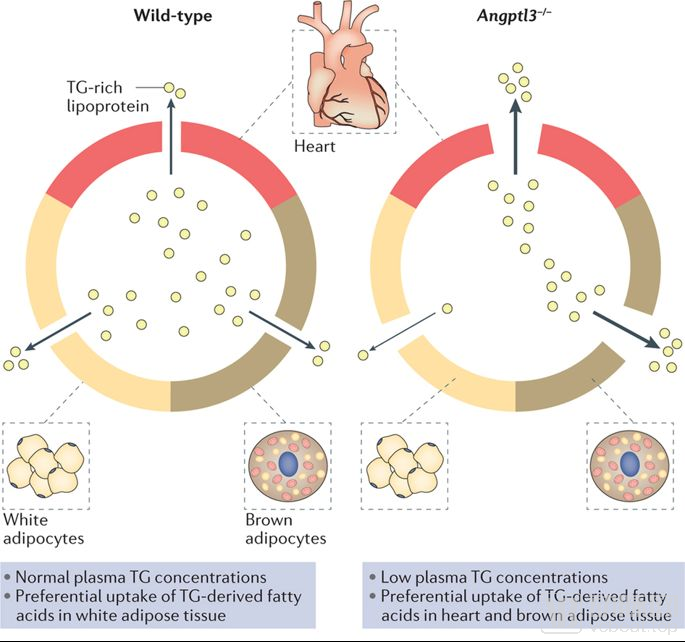
Source: Nature Reviews
AZ's Lynparza (olaparib) in combination with bevacizumab,
Met the Primary Endpoint in Phase 3 Trials of Ovarian Cancer as First-Line Maintenance Therapy
Lynparza (olaparib), a blockbuster PARP inhibitor co-developed by AZ and MSD, in combination with bevacizumab as first-line maintenance therapy, met the primary endpoint in a Phase 3 clinical trial for patients with advanced ovarian cancer
Lynparza is a “first-in-class” PARP inhibitor that targets the DNA damage response (DDR) pathway.
In a randomized, double-blind, Phase 3 clinical trial, patients with advanced ovarian cancer who had achieved a complete or partial response to first-line platinum-based therapy received treatment with Lynparza plus bevacizumab or bevacizumab alone. Bevacizumab is the standard of care for these patients.
The combination therapy of Lynparza and bevacizumab provided a statistically significant and clinically meaningful improvement in progression-free survival (PFS) compared with the standard-of-care group.
AZ’s BTK Inhibitor Receives FDA Breakthrough Therapy Designation,
As monotherapy for the treatment of adult patients with chronic lymphocytic leukemia (CLL)
AstraZeneca’s Bruton’s Tyrosine Kinase (BTK) Inhibitor Calquence (acalabrutinib) Receives FDA Breakthrough Therapy Designation as a Monotherapy for Adult Patients with Chronic Lymphocytic Leukemia (CLL)
Calquence is a BTK inhibitor that inhibits its activity by covalently binding to BTK.
In the global, randomized, multicenter, open-label phase 3 ASCEND trial, 310 patients who had received one prior line of therapy were treated with Calquence or standard combination therapy.
Calquence monotherapy reduced the risk of disease progression or death by 69% compared with the active control group (HR, 0.31; 95% CI, 0.20-0.49; p<0.0001)
Deciphera Announces Pivotal Phase 3 Clinical Trial of Ripretinib
INVICTUS’s Positive Top-Line Data,Patients with GIST in the Last-Line Treatment Setting
Deciphera Announces Positive Topline Data from the Pivotal Phase 3 INVICTUS Trial of Ripretinib, a KIT and PDGFRα Inhibitor for the Treatment of Patients with Fourth-Line or Later Gastrointestinal Stromal Tumors (GIST)
Ripretinib is a KIT or PDGFRα kinase inhibitor.
The Phase 3 INVICTUS clinical trial is a randomized, double-blind, multicenter, placebo-controlled international study in which 129 patients were assigned in a 2:1 ratio to receive ripretinib or placebo.
Ripretinib met the primary endpoint of improving PFS. The PFS for patients receiving ripretinib was 27.6 weeks, compared to only 4.1 weeks in the placebo group. Furthermore, the OS for patients treated with ripretinib was 15.1 months, versus only 6.6 months in the placebo group.
The U.S. FDA Approves Pretomanid, Developed by TB Alliance, for Market Launch
Used in combination with bedaquiline and other agents for the treatment of specific patients with highly drug-resistant tuberculosis (TB)
The U.S. FDA Announces Approval of Pretomanid, Developed by the Nonprofit Global Alliance for TB Drug Development (TB Alliance), in Combination with Bedaquiline and Linezolid, for the Treatment of Patients with Specific Forms of Highly Drug-Resistant Tuberculosis (TB)
Pretomanid is a new chemical entity
In the pivotal Nix-TB clinical trial, 109 patients were enrolled, including those with extensively drug-resistant TB and those with multidrug-resistant TB who were intolerant to or unresponsive to existing therapies.
After six months of treatment, the success rate of this combination therapy reached 89%, significantly higher than the historical success rate for treating patients with extensively drug-resistant tuberculosis (TB).
❖CDE’s Latest Public Notice: Sanofi’s Genzyme Subsidiary Receives Implicit Approval for Clinical Trial Application of Investigational New Drug Fitusiran Injection (Innovative RNAi Therapy), Indicated for the Treatment of Adult and Adolescent Patients Aged 12 Years and Older with Hemophilia A or B, With or Without Inhibitory Antibodies
❖Germany’s Merck KGaA has received implicit approval to conduct clinical trials in China for its investigational anti-cancer drug (code name: M7824) for the treatment of non-small cell lung cancer (NSCLC). In February this year, GlaxoSmithKline (GSK) entered into a global collaboration agreement with Merck KGaA for this drug, under which the latter may receive total payments of up to €3.7 billion.
❖AskBio Announces Acquisition of Synpromics, a Company Dedicated to Developing Synthetic Gene PromotersAskBio has announced the acquisition of Synpromics, a company dedicated to developing synthetic gene promoters. The collaboration aims to achieve more precise cell targeting and gene expression, thereby further improving gene therapies. AskBio specializes in the development of adeno-associated virus (AAV) gene therapies. Its proprietary AAV technology platform enables the use of genetic engineering techniques to modify AAV capsid proteins, thereby constructing AAVs with novel capsid proteins.
❖Dinghang Medicine (Oncologie) announced a clinical trial collaboration agreement with Merck & Co. (MSD) to evaluate the efficacy of a combination therapy consisting of its investigational anti-phosphatidylserine (PS) antibody, bavituximab, and Merck’s anti-PD-1 therapy, Keytruda, in patients with advanced gastric cancer or gastroesophageal junction cancer.
❖Boehringer Ingelheim and The University of Texas MD Anderson Cancer Center Announce New Multi-Year Collaboration to Co-Develop Multiple Innovative Anti-Cancer Therapies, Including KRAS Inhibitors for Gastrointestinal and Lung Cancers
❖Zai Lab and Novocure Announce That Optune, a Tumor Treating Fields (TTF) Product, Has Been Granted Innovative Medical Device Designation by China’s National Medical Products Administration (NMPA) for the Treatment of Adult Patients (Aged 22 Years or Older) with Glioblastoma (GBM)