

Huasheng Medical Empowers Tiered Diagnosis and Treatment Through Medical Testing, Reaching Over 2,000 Grassroots Healthcare Institutions in 8 Months
Huasheng Medical Laboratory, located in Jiangning District, Nanjing, is an atypical third-party medical laboratory. In addition to offering traditional testing services in clinical laboratory science, biochemistry, immunology, and genetics, the laboratory provides comprehensive online operational management services and medical testing products to primary healthcare institutions—such as township health stations and community health service centers—through its online digital platform, “Micro E-Test.”
Since its official launch in December 2018, the Wei E Jian platform has onboarded more than 2,000 primary healthcare institutions across Jiangsu, Anhui, Hubei, and Hunan provinces. Since March 2019, the monthly gross merchandise value (GMV) of medical laboratory services on the Wei E Jian system has exceeded RMB 5 million. Unlike most teams offering comprehensive medical laboratory services to primary care providers, which typically originate from the logistics industry, Mr. Chen Kongwei, co-founder of Huasheng Medical, has been deeply rooted in the medical laboratory sector for nearly 15 years. His career has spanned from laboratory products to third-party clinical laboratories, including tenures at KingMed Diagnostics and Adicon Clinical Laboratories, through which he has developed unique insights into the functions and potential of third-party medical testing.
The core team of Huasheng Medicine, assembled by Chen Kongwei, originated from the national or regional management ranks of Adicon. Their tenure at Adicon, one of China’s four largest third-party medical testing laboratories, provided the team with a primary advantage: the ability to rapidly establish professional service capabilities in both standardized medical laboratory technology and operations. Since December 2018, the Wei E-Jian system has served as a key information hub platform for specimens submitted by primary healthcare institutions across Jiangsu Province.
Since the first independent medical laboratory commenced operations in the 1990s, China’s third-party medical testing market has attracted numerous players and developed relatively comprehensive supporting infrastructure, despite its penetration rate remaining significantly lower than that of in-hospital medical testing. Leading independent clinical laboratory (ICL) enterprises, represented by Dian Diagnostics, KingMed Diagnostics, Adicon, and Daan Gene, have established a nationwide network of over 100 independent medical laboratories and captured more than 70% of the third-party medical testing market. Meanwhile, a large number of independent medical laboratories specializing in specialized testing have entered the market with genetic testing as their breakthrough point, injecting diverse vitality into this sector.
However, while the competitive landscape among leading third-party medical testing providers remains stable, there are numerous areas requiring optimization in the downward-tiering healthcare market, thereby creating room for innovative business models. For instance, tens of thousands of primary care institutions have struggled to benefit from the rapid growth of the third-party medical testing sector.
On the other hand, internet healthcare has developed relatively stable market and service models after years of exploration. However, its focus on auxiliary services such as consultation, appointment registration, triage, and preliminary diagnosis—while rarely involving core diagnostic and therapeutic activities—has become a bottleneck that urgently needs to be overcome.
Integrating third-party medical laboratory services with the internet to empower primary healthcare institutions was the original vision of Chen Kongwei, founder of Lihua Huasheng Medicine. He regarded primary healthcare institutions in small towns across China—excluding People’s Hospitals, Traditional Chinese Medicine Hospitals, and Maternal and Child Health Hospitals—as independently operated micro and small enterprises. He decomposed their business processes into three stages: customer acquisition, diagnosis, and treatment, and identified key needs such as clinical experience, drug supply, and risk control. Based on this analysis, Huasheng Medicine designed internet-enabled products and services for the operation and management of primary healthcare institutions, aiming to enhance their comprehensive diagnostic and therapeutic capabilities.
The first-generation Micro-E Test addresses the current fragmentation of patient information, sample handling, logistics, financial transactions, and report distribution in primary healthcare institutions. By integrating these five streams into a unified online information system, it enhances diagnostic and treatment efficiency at the grassroots level. Chen Kongwei pointed out that patients in primary care settings predominantly present with common conditions such as colds and fever. Previously, diagnoses relied heavily on physicians’ clinical experience; incorporating laboratory testing to scientifically differentiate patient symptoms will help strengthen the competitiveness of primary healthcare institutions, thereby attracting more patients.
“The primary goal of Micro E-Test 1.0 is to expand its user base within primary healthcare institutions.” By leveraging its own and partnered independent clinical laboratories, Huasheng Medical can achieve morning sample collection for simple specimens, with reports returned via the Micro E-Test system by the afternoon of the same day or the morning of the next day, thereby providing convenience to both primary care physicians and patients. “The types of tests we offer are those typically required when patients seek care at large hospitals,” Chen Kongwei told VCBeat. He explained that the introduction of Micro E-Test effectively empowers primary healthcare institutions with testing capabilities that meet the quality control requirements of clinical laboratory centers at all levels and comply with government-set pricing.
As Micro E-Test 1.0 was rolled out at the primary care level, Huasheng Medical iterated its features and developed internet-enabled functionalities based on customer needs, including report interpretation and customer-acquisition coupons, to help clients better attract patients and diagnose diseases.
By the Wei E-Jian 2.0 stage, Huasheng Medical is committed to transforming low-frequency users into high-frequency users and addressing the decentralization of high-quality medical resources. In alignment with patients’ disease spectra, the company provides targeted diagnostic and treatment training to primary healthcare institutions. This includes offering preventive diagnostics and developing an online system for interpreting test reports. By connecting part-time physicians from Nanjing’s Grade A tertiary hospitals with primary care physicians, the platform matches patients’ diagnostic and treatment needs across different levels of medical expertise through report interpretation. This approach empowers primary care providers with the diagnostic and treatment capabilities of tertiary hospitals without requiring direct patient contact by tertiary hospital physicians.
Since its launch one year ago, Wei E Jian 2.0, a platform with marketing attributes, has been adopted by more than 2,000 primary care hospitals in Jiangsu, Anhui, Hubei, and Hunan provinces. By the end of 2019, it had expanded to Guangdong, Jiangxi, Henan, Shandong, Zhejiang, and other provinces. Huasheng Medical plans to cover at least 10,000 of the more than 40,000 primary healthcare institutions across China within the next six months.
Currently, Huasheng Medicine is developing its third-generation micro-E examination products, aiming to introduce AI-assisted diagnosis for common diseases. As an internet platform, Micro-E Examination aggregates a large volume of data from doctors and patients, forming the foundation for AI product design. At present, Huasheng Medicine is collaborating with China’s most advanced medical AI companies to develop a general practitioner social platform, which leverages AI algorithms to match physicians and provide auxiliary diagnostic and treatment capabilities.
During the Micro E-Jian 3.0 phase, Huasheng Medical will build an ecosystem for primary healthcare from the dimensions of tiered diagnosis and treatment, laboratory testing, therapeutic services, and clinic operations, with new products scheduled to launch by the end of 2019. Chen Kongwei pointed out that primary healthcare institutions generally lack professional laboratory personnel and adequate equipment coverage. It requires the joint participation of many enterprises across the industry to transform the laboratory testing needs of these institutions into viable products. He refers to companies such as Kuaiyi Jian and Yunhu Medical, which also provide comprehensive primary care laboratory testing services, as “coopetitors” (competitive partners), noting that “each enters from different angles and anchors distinct business pathways to empower primary healthcare institutions.”
The “online + offline” integrated development model is the defining feature of Huasheng Medical’s chosen business model. On one hand, it extends traditional third-party medical testing laboratories to the internet, creating an open online platform that integrates its own laboratories while also connecting to any third-party laboratory. On the other hand, it focuses on enhancing the diagnostic and treatment capabilities of clinics, using laboratory testing merely as an entry point to continuously introduce various services aligned with this objective, such as local support services addressing the online medical testing needs of internet hospitals.
Mr. Chen Kongwei told VCBeat that after one year of operation and deployment in more than 2,000 primary healthcare institutions, the unique profit model he envisioned has begun to be validated and will be continuously replicated going forward. It is understood that Huasheng Medical will launch its first strategic financing round since its establishment within this year.
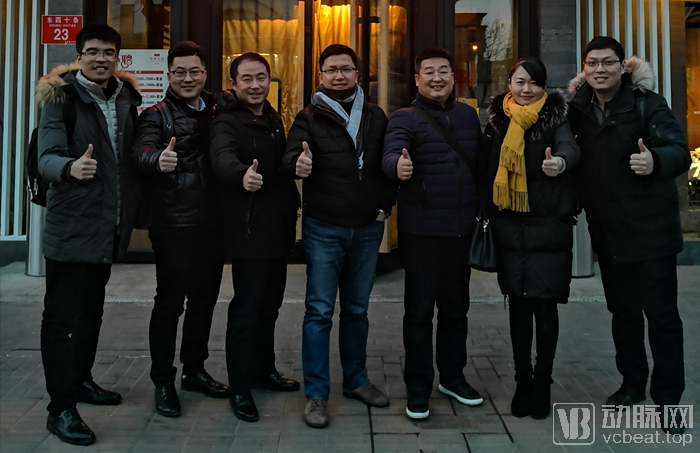
Group Photo of Huasheng Medical’s Core Team (Photo provided by the interviewee)