

Why This Bone Age AI System Has Swept Over 100 Pediatric Hospitals Across China
Bone age serves as a reference indicator for the diagnosis and efficacy monitoring of numerous pediatric endocrine disorders, such as short stature, precocious puberty, and obesity, and is crucial for assessing children’s growth and development. Statistics show that China has 271 million children aged 0–17 years, among whom 48%–63% exhibit abnormal growth and development, while over 99.5% of patients with developmental delays do not receive appropriate treatment. Therefore, it is imperative to advance bone age assessment technologies and promote widespread bone age screening for children of appropriate ages.
Currently, the most widely used clinical standards for bone age assessment include scoring methods such as TW3 and CHN-05, as well as the Greulich-Pyle (GP) atlas method. Among these, scoring methods like TW3 and CHN-05 offer high interpretation accuracy and relatively good consistency. However, they require manual developmental rating of 20 hand bones and subsequent calculation using specific formulas, resulting in an average processing time of 10–15 minutes per patient, which poses a significant challenge for outpatient physicians. In contrast, while the GP atlas method enables rapid image review and time-efficient evaluation through comparison with standard atlases, it suffers from limitations such as high subjectivity, poor reliability, and low consistency.
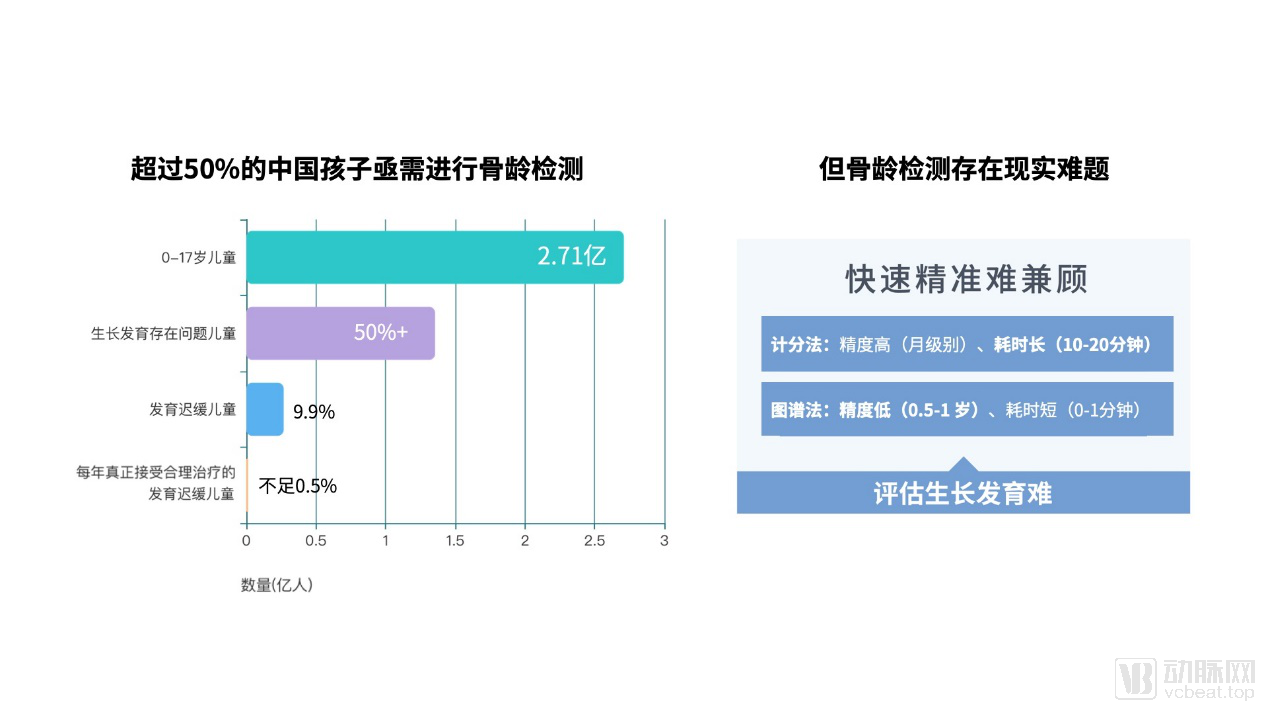
“The emergence of AI for bone age assessment represents a significant technological advancement in the evaluation of children’s growth and development,” said Shi Lei, Vice President of Yitu Healthcare. “Leveraging vast datasets of bone age images and deep learning technologies, AI-based bone age assessment enables efficient and accurate image interpretation while eliminating the impact of subjective factors on diagnostic outcomes. It also significantly enhances clinicians’ image reading capabilities. The ‘physician + AI’ model for bone age interpretation has demonstrated superior performance in efficiency, accuracy, and consistency, and is becoming the mainstream interpretation approach in the industry.”
In 2017, Yitu Healthcare, a leading domestic medical AI company, pioneered the launch of its TW3-based AI product for bone age assessment—the care.ai® Intelligent Diagnostic System for Pediatric Growth and Development. Leveraging advanced computer vision, deep learning technologies, and vast amounts of training imaging data, this AI system achieved second-level automatic bone age assessment for the first time in China, reducing the assessment time from the original 10–15 minutes to just a few seconds, while maintaining robust stability and consistency.
As a critical foundation for assessing pediatric growth and development, bone age assessment not only facilitates the early evaluation of a child’s growth potential but also significantly aids in the diagnosis of pediatric endocrine disorders. The accuracy of bone age assessment results profoundly influences the comprehensive evaluation of growth and development as well as predictions of future adult height.
In 2019, to fully meet the diverse needs for bone age assessment across different regions, healthcare levels, and standards, Yitu Healthcare’s AI-based bone age product underwent a comprehensive upgrade based on the 2017 TW3 method. It became the first globally to support multiple standards, including the TW3 method, the China-05 standard, and the Greulich-Pyle (GP) atlas method, achieving industry-leading performance under each standard system. This advancement effectively addresses the differentiated requirements of various regions, healthcare tiers, and medical institutions. Meanwhile, its growth and development functionalities have been further enriched, providing clinicians with a powerful and comprehensive tool for growth and development assessment.
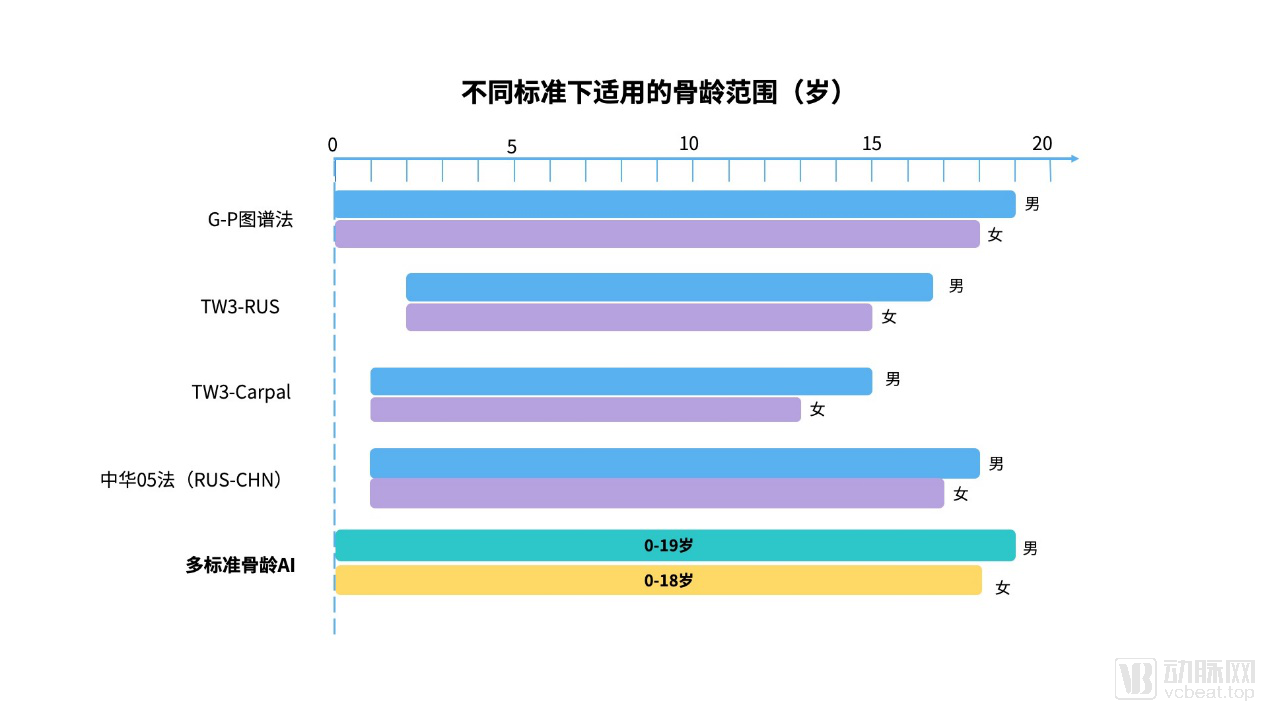
“Seamless compatibility with multiple bone age assessment standards within a single system demonstrates Yitu Healthcare’s robust technical capabilities and deep understanding of clinical needs,” Shi Lei revealed. “The TW3 method covers bone age assessment for adolescents aged 1–16 years, while the Chinese CHN-05 method further extends the age range to 1–18 years. Physicians can flexibly select different bone age assessment standards based on their preferences or clinical requirements to efficiently address clinical needs.”
As of June 2019, the care.ai® Intelligent Diagnostic System for Pediatric Growth and Development had been deployed for clinical trials in over one hundred hospitals across China. Among the top ten pediatric hospitals listed in the 2018 Fudan University Hospital Rankings, nine have adopted this system. Furthermore, full coverage has been achieved at the primary hospital of the National Children’s Medical Center, positioning the product far ahead of its competitors.
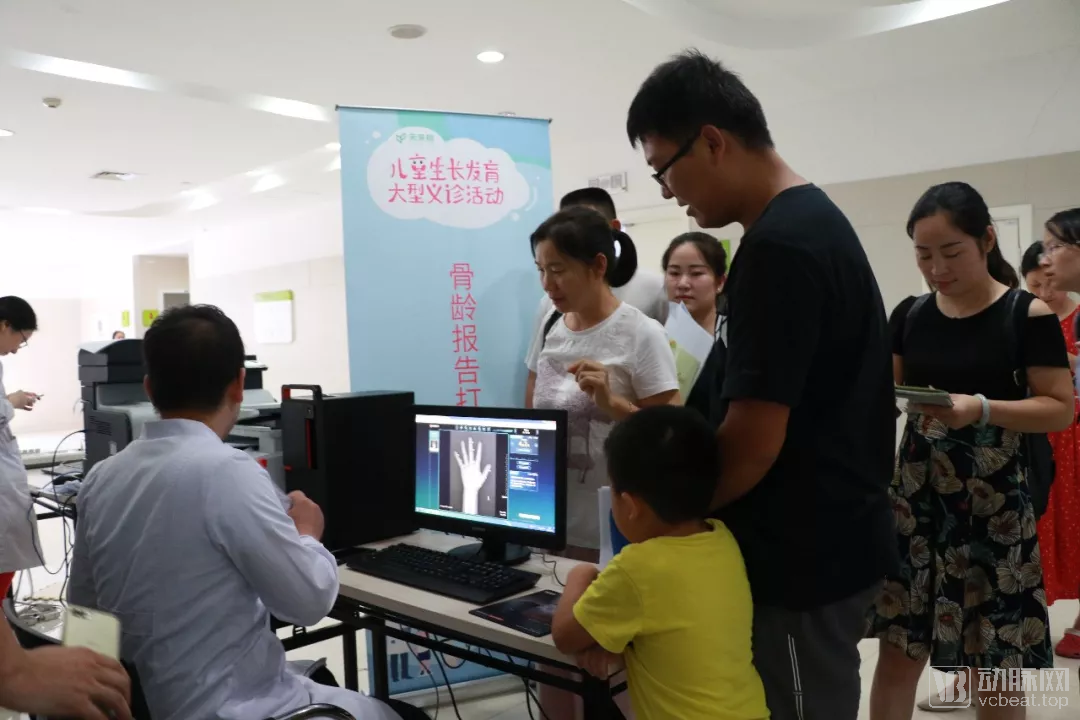
Image source: Large-scale free clinic event for children's growth and development during the summer vacation at The Children's Hospital, Zhejiang University School of Medicine
In clinical trials, the new "physician + AI" image interpretation model also demonstrates significant advantages over purely manual interpretation.
A study titled “Research on the Application Value of AI Software in Clinical Bone Age Assessment,” conducted at a top-tier pediatric hospital in the capital, demonstrated that clinicians using a “physician + AI” image interpretation model completed the process from image input to bone age calculation in seconds—only 1/100 of the time required by the manual-only group—based on a test set of over 1,000 bone age radiographs spanning various age groups and both sexes.
Meanwhile, the “physician + AI” image interpretation model also demonstrates excellent performance in terms of diagnostic accuracy and consistency.
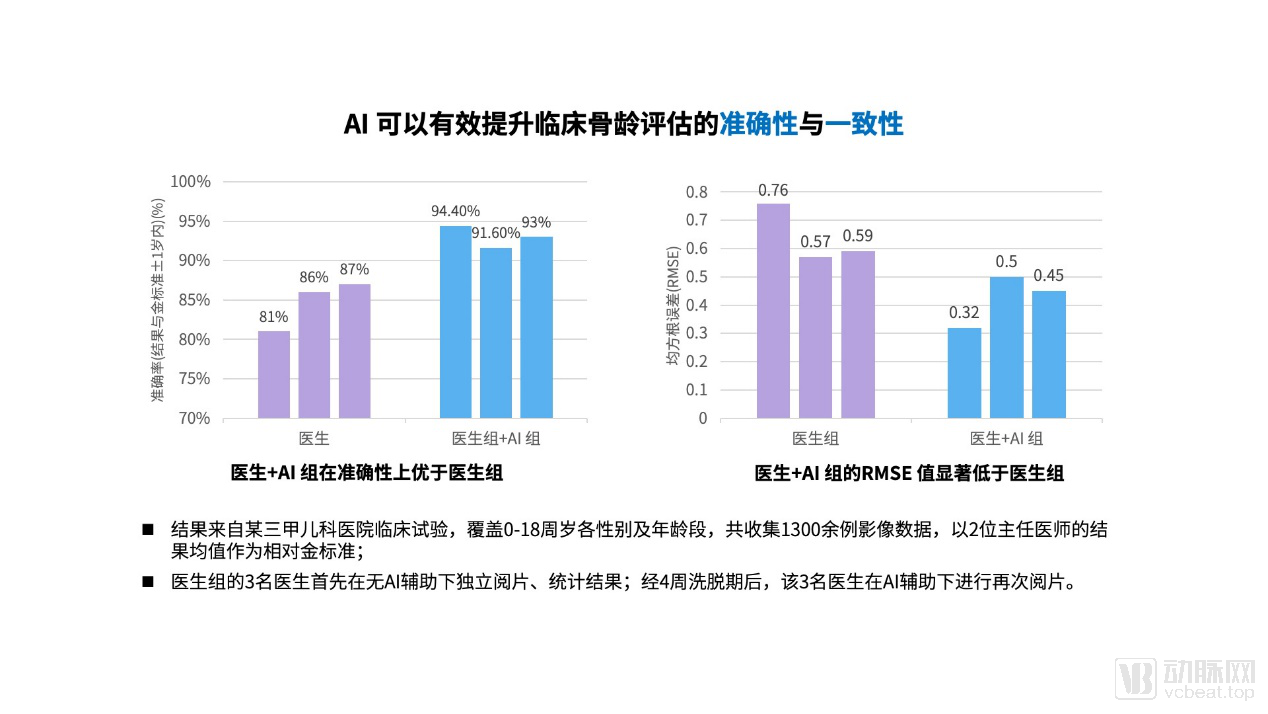
Statistical data show that the accuracy of bone age interpretation by “physician + AI” within ±1 year improved by an average of 8% compared with the gold standard, the mean error relative to the gold standard was reduced to the order of months, and the variability of the interpretation results was lower.
“Yitu Healthcare is establishing partnerships with an increasing number of top-tier pediatric hospitals, empowering clinical bone age assessment with advanced medical AI products and driving the comprehensive intelligent transformation of bone age assessment in China,” said Shi Lei. “We look forward to welcoming more like-minded professionals to join us in leveraging China’s first deep learning-based advanced AI to better promote standardized diagnosis and treatment as well as disease prevention for children’s growth and development.”