

Huang Hong, Director of Information Center at Huashan Hospital: Strategic Layout of Medical Informatization in the Era of Big Data
With the rise of big data, artificial intelligence, and the Internet of Things, healthcare informatics is undergoing rapid transformation and reinvention. Against this backdrop, the information technology departments of healthcare institutions are experiencing a significant shift in their roles and identities. How should healthcare IT professionals redefine themselves and respond to this transformation and its associated challenges?
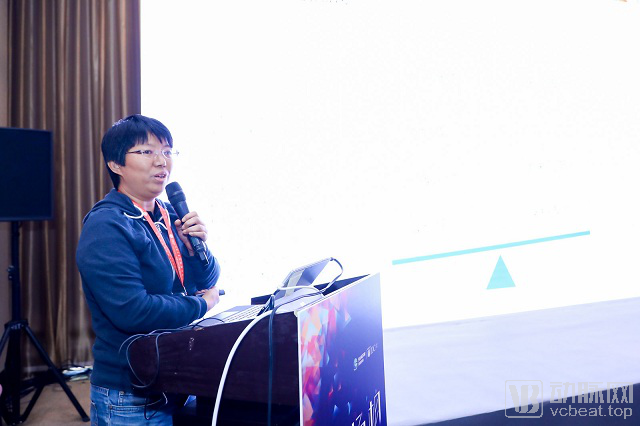
Huang Hong, Director of the Information Center at Huashan Hospital
At 9:00 a.m. on August 17, the Smart Healthcare Special Session, a sub-forum of the 2019 Sangfor Innovation Conference, kicked off in Shenzhen. At the forum, Huang Hong, Director of the Information Center at Huashan Hospital, delivered a speech titled “Reflections and Strategies on the Development of Medical Informatics.” This article presents a curated compilation of the key highlights from his presentation.
Huang Hong introduced that Huashan Hospital, located in the city center of Shanghai, is a small-scale hospital with multiple campuses. The support for the development of information technology within the hospital differs significantly from that of single-campus hospitals. Addressing the challenges and response strategies in the development of medical informatics, Huang Hong provided a detailed elaboration based on the situation at Huashan Hospital.
The Evolution of Hospital Informatics: A Journey from Informatization to Digitalization and Then to Intelligence.
Prior to 1996, hospital informatization was primarily focused on medical insurance settlement.
From 1996 to 2000, the hospital began to establish a hospital management information system centered on fee management.
2000–2013: Building on fee management, clinical needs gradually emerged, and the focus of informatization began to shift toward supporting both clinical care and hospital management.
From 2013 to 2016, comprehensive planning was conducted to build clinical, management, and research applications centered around the Clinical Data Repository (CDR), while extending informatization to patient services to achieve full digitalization. Since 2016, in alignment with the hospital’s 13th Five-Year Plan for informatization, explorations into building a smart hospital have been undertaken.
From an external perspective, the revenue generation process of hospitals has undergone significant changes. Previously, informatization initiatives focused on digitizing clinical and operational workflows; in recent years, the emphasis has shifted toward refined management. Refined management encompasses cost control, medical budget forecasting, and other related activities. For hospitals, this shift implies substantial transformations in their financial systems.
When it comes to seeking medical care, patients all expect to receive the best possible treatment. In light of this, how should our primary healthcare system respond? I believe that while promoting a tiered diagnosis and treatment model, we must fully integrate the appointment scheduling system with patient demands to achieve a balance.
Furthermore, from an internal perspective, the operational pressure on hospitals is increasing, driven by technologies such as cloud computing, big data, internet healthcare, and artificial intelligence. For instance, following the implementation of single-disease payment models, challenges arise in defining disease categories and determining how to utilize a unified system to accommodate diverse payment frameworks for different conditions. These are complex issues that are not easily resolved.
Behind the hospital's development lies the robust support of its information platform.To advance healthcare informatization, Huang Hong proposes the following strategic development initiatives:
I. Understand Yourself, Including Real-Time Monitoring Data, Rankings/Year-over-Year/Month-over-Month Comparisons, and Cross-Sectional Comparisons.
What Does It Mean to Know Oneself? In my view, for various reasons, informatization is essentially about answering the three fundamental questions of philosophy. To understand oneself, it is necessary to identify numerous methods and approaches for monitoring data.
For instance, what is the status of medical operations? Real-time monitoring of key metrics—such as average length of stay, volume of level 3 and 4 surgeries, average cost per visit, outpatient volume, and the proportion of pharmaceutical costs—is conducted to derive data-driven insights. Furthermore, it is essential to understand one’s positioning, including the hospital’s ranking on national lists (e.g., whether it is among the top 10), as well as the prominence of its departmental capabilities or other specific rankings.
A vivid metaphor can essentially summarize the medical specialties of Huashan Hospital: “big head, thick skin, long hands, and strong anti-infection capability.” “Big head” refers to neurology and neurosurgery; “thick skin” to dermatology; “long hands” to hand surgery; and “strong anti-infection capability” to the Department of Infectious Diseases and the Institute of Antibiotics. The influence of different diseases and disciplines varies, so the first step is to understand oneself.
II. Strengthen hospital operational management, encompassing aspects such as management mechanisms, management tools, operational systems, clinical systems, and administrative systems.Strengthening hospital operational management means that all control measures must be enabled through informatization.
Most hospitals began building their information systems in the 1990s. Examples include evaluation levels for electronic medical records, interoperability ratings, and smart hospital classifications.
I anticipate that the future competitiveness of hospitals will be reflected not only in their clinical capabilities but also in the value derived from clinical data. Consequently, the quality of medical data is likely to become a major area of competition among hospitals.
III. Enhancing the patient experience, including cashless payments, precise appointment scheduling, online report inquiries, post-discharge follow-up, referral and consultation services, lightweight medical consultations, and health management.
Medical development involves both service delivery and the extensive accumulation of medical data. From the hospital perspective, the process of informatization initially focused on building platforms centered around health insurance billing and related system infrastructure. Once these platforms reached a certain scale, the concept of smart healthcare development emerged.
IV. Promoting disciplinary development, including specialized medical consortia, specialty-specific medical records, single-disease research databases, research follow-ups, and multicenter studies.
Data connectivity across the multiple campuses of Huashan Hospital, including rule configuration and management consistency, relies on robust information systems. To translate clinical research into effective, informatics-enabled clinical tools, establishing an informatized evaluation framework is crucial.
Early healthcare informatization focused on building systems that integrated with health insurance, essentially revolving around core billing infrastructure. Today’s healthcare informatization must achieve the following: 1. Leverage the internet to benefit patients and facilitate medical care; 2. Implement computerized clinical decision support systems (CDSS); 3. Establish mechanisms for the aggregation and governance of big data in healthcare.
Smart Hospitals Have Become a Hot Topic,Its distinguishing feature lies in the transition from closed-loop management to platform-based management, and the shift from tightly coupled architectures to microservices.Specifically reflected in the following four aspects:
I. Process Control and Quantitative Management: Strengthening standardized internal hospital management through approval node controls in software systems, and supporting decision-making with an accurate quantitative indicator system.
II. Specialization and integration of medicine, pharmacy, nursing, technology, and research to provide deeply customized specialty electronic medical records for clinical departments, establishing an integrated work platform for physicians, pharmacists, nurses, medical technologists, and clinical researchers.
3. Internet integration and enhanced patient satisfaction: Keeping pace with the development of internet technology, we rapidly provide patients with convenient, high-quality medical services. We pioneered China’s first centralized appointment platform and China’s first credit-based medical payment system.
IV. Universal and Tool-Based: The Self-Service Single-Disease Research Platform Can Provide All Staff with Data Management Tools for Research Diseases.
Regarding the empowerment and upgrading of healthcare informatization, Huang Hong shared the following insights on Huashan Hospital’s current model of informatization development:
1. Patient Services: Promoting convenient and affordable services; launch of the electronic medical card for patient services.
Electronic Medical Visit Card: Launched for outpatient services in early 2019, this system provides a unified third-party interface, enabling third-party companies to assign unique electronic medical visit card numbers during patient appointment scheduling. Each card number is linked to the patient’s identity, adhering to the “one person, one card” principle, thereby resolving the previous issue of patients holding multiple physical medical cards.
2. Development of the Clinical MDT Management System, Construction of Specialty-Specific Electronic Medical Records (EMR), In-Hospital Blood Glucose Management, Real-Time Emergency Department Monitoring, Medical Technology Transport and Handover System, AR-Enabled Remote Ward Care, Remote Ultrasound Services, 5G High-Definition Live Surgery Broadcasting, Digital Operating Rooms, Clinical Staff Credentialing and Access Rights Management, and Medical Waste Management.
Huashan Hospital has a relatively low volume of emergency cases, with its Chest Pain Center and Stroke Center being the most representative specialties. Leveraging these two key strengths, our team has developed a system to achieve unified management of patients presenting for emergency care.
This year marks the inaugural year of 5G. Huashan Hospital has introduced remote ultrasound technology, enabling 5G-enabled remote ward rounds for visiting experts. Additionally, we conducted a high-definition live broadcast of a surgery via 5G, which yielded excellent results.
Furthermore, information technology implementation is primarily categorized by scenario. Consequently, Huashan Hospital has developed numerous cross-system applications. For instance, in the absence of a centralized document repository, staff previously had to print out regulatory protocols for each examination, resulting in significant A4 paper consumption. In reality, a comprehensive document center could be established, featuring version control, update mechanisms, and access permissions.
In addition to facilitating patient access to medical care, the tiered diagnosis and treatment system plays a crucial role in supporting central and western regions of China. Huashan Hospital has established connections with many areas in these regions and formed a specialized medical team that provides remote consultations for complex and difficult cases via the internet.