

Huxin Gongxin Files IPO Prospectus: A Blockchain-Powered Transparent Third-Party Rating Platform for Aesthetic Medicine and Private Hospitals
How many beauty enthusiasts have been deterred from medical aesthetics by the endless stream of cosmetic surgery consumer rights cases reported in the news? Nearly every medical aesthetic institution has aggressively promoted the unique features of its products, assuring customers of their superior therapeutic efficacy. Amidst this dazzling array of claims, can these institutions truly be trusted? Which ones are superior and which are inferior? These are genuine concerns plaguing consumers.
The medical aesthetics and private hospital sectors have witnessed rapid growth in recent years. Huang Wenjia, who has been deeply engaged in the biomedical field for many years, has naturally taken note of this booming trend. Huang studied biotechnology-related disciplines at the University of Pennsylvania in the United States. After graduation, he joined a pharmaceutical company. Later, to address the issue of medication adherence, he founded Hangzhou Wubao Technology Co., Ltd. and developed smart pillboxes capable of collecting patient data and providing real-time medication reminders.
Because pharmaceutical companies have a stronger ability to pay extra fees compared to patients, smart pillboxes are mainly targeted at B-end customers such as pharmaceutical companies or hospitals, which also brings opportunities for Huang Wenjia's second entrepreneurship. When communicating with founders of some private hospitals and medical aesthetic institutions, Huang Wenjia found that there is a very significant industry pain point in the rapidly developing private hospital and medical aesthetics sector—due to the uneven level of medical care across the industry, medical disputes involving certain private hospitals and medical aesthetic institutions can lead to consumer distrust of the entire industry.
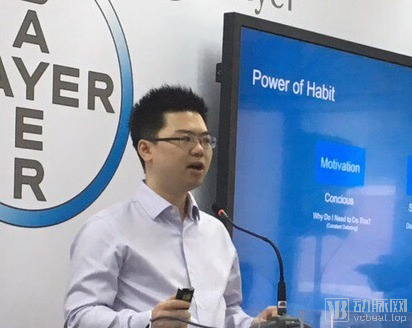
Huang Wenjia, Founder of the Mutual Trust and Public Credit Platform
Huang Wenjia cited as an example: “At present, ‘Putian-system hospitals’ have almost become synonymous with poor-quality hospitals. However, my research has found that some Putian-system hospitals are highly reputable and compliant. Because patients are unable to distinguish between good and bad providers, they ultimately lose trust in all Putian-system hospitals. This is a classic case of bad money driving out good; if we cannot differentiate high-quality hospitals from substandard ones, the entire industry will suffer negative consequences.”
Based on this insight, Huang Wenjia conceived the idea of developing a rating system specifically designed to evaluate the quality of private hospitals and medical aesthetic institutions. Huang candidly stated that many existing “rating systems” in the market have eroded user trust due to certain under-the-table practices. This presents an opportunity to create a fully impartial and transparent third-party rating system that users can trust.
Only Handling Negative Reviews? Specializing in User Complaints and Building Platforms to Facilitate Communication Between Both Parties
Huang Wenjia established Nanjing Argus Technology Co., Ltd. in the first half of this year. Upon its inception, the company began building “Mutual Trust and Public Credibility,” a third-party evaluation network. Huang’s initial plan is to provide users with a public complaint platform, facilitating direct engagement between users and medical aesthetics providers or private hospitals on the platform, thereby further enabling communication and rights protection regarding medical disputes.
When medical disputes arise, users can access the Mutual Trust and Public Credibility Platform to file complaints for rights protection. Upon receiving a complaint, the platform will proactively contact senior management of the implicated medical aesthetics clinic or private hospital, who may then designate a specific representative to handle the case. The designated representative will negotiate and communicate with the complaining consumer through public replies on the platform. All proceedings are transparent, permanently recorded by the platform, and cannot be deleted, allowing all users of the Mutual Trust and Public Credibility Platform to view them.
If senior executives at medical aesthetic clinics or private hospitals refuse to engage in negotiation and communication, their conduct will be recorded in the platform’s rating system, thereby affecting the institution’s overall composite rating. All users within the mutual trust and public credibility network will be able to view how the institution handles medical disputes.
Recording an institution’s “refusal to negotiate” is merely the first step for Mutual Trust and Public Credibility; the platform also assists consumers in further safeguarding their rights. For instance, when a medical aesthetics provider refuses to communicate or negotiate, Mutual Trust and Public Credibility helps connect consumers with law firms. The platform facilitates the entire process of selecting, engaging, paying, and communicating with these firms, ensuring that consumers can retain professional lawyers to handle their cases at below-market rates. This includes issuing legal demand letters to the relevant institutions and managing subsequent rights-protection efforts. Additionally, Mutual Trust and Public Credibility leverages media channels, such as press releases, to publicize misconduct by medical aesthetics providers or private hospitals, thereby urging these institutions to actively resolve medical disputes.
Huang Wenjia emphasized that Mutual Trust and Public Credibility serves as a communication platform, leveraging consumer complaints as an entry point to provide a one-stop resolution mechanism for various disputes, without unconditionally favoring consumers. When the outcome of communication favors private hospitals or aesthetic medicine providers by confirming their lack of fault, it also constitutes a timely public relations opportunity for these institutions. Regardless of who is right or wrong, the entire process of communication and negotiation between both parties will be openly and fairly displayed on the platform for reference by users of Mutual Trust and Public Credibility.
When conducting integrity ratings for private hospitals and medical aesthetic institutions, mutual trust and public credibility are not determined solely by patient complaints. Instead, a comprehensive assessment is made by considering consumer complaints alongside an online survey of relevant evaluations of the institution, such as how medical dispute cases involving the institution were handled in news reports.
In addition, Huxin Gongxin will investigate the business registration information of the relevant institutions to determine whether there are any operational risks, such as administrative penalties, legal litigation, or inclusion on the list of dishonest judgment debtors.
By integrating user complaints, comprehensive online research, and business registration data, Huxin Gongxin ultimately assigns a comprehensive integrity rating to healthcare institutions. A high rating indicates a low incidence of medical disputes and positive user feedback; conversely, a low rating suggests frequent medical disputes and poor user experience.
For founders of institutions that engage in “shell-changing” to evade responsibility, the Mutual Trust and Public Credit system directly binds their integrity ratings to them personally. Even if they launch new medical aesthetic clinics, these new entities’ ratings will be directly impacted by their past negative records, ensuring that users can immediately assess the credibility of the new institutions.
Leverage Blockchain to Ensure Data Authenticity, with Decentralized and Fully Transparent Operations
When developing a third-party rating system, the most common criticism concerns how to ensure the system’s impartiality. Huang Wenjia responded: “We leverage blockchain technology to guarantee information authenticity, while independently appointing public reviewers to make platform operations fully transparent and decentralized.”
After a consumer files a complaint on the Mutual Trust and Public Credibility System, the platform randomly selects 50 users to serve as public reviewers, who assess whether the complaint contains prohibited or non-compliant language, such as abusive terms. Upon completion of the review, complaints deemed non-compliant will trigger a notification from the Mutual Trust and Public Credibility System, prompting the user to make appropriate revisions. Complaints determined to be compliant are then recorded on the blockchain, ensuring they are permanently stored and cannot be deleted or tampered with. Medical aesthetic clinics or private hospitals can only respond to and address these posts publicly in the comment section. All actions are recorded on the blockchain, achieving true transparency and decentralization.
Mutual Trust and Public Credit has established its own protocols for handling users who post malicious reviews or submit falsified credentials. Dr. Lin Li, one of the partners at Mutual Trust and Public Credit, is an expert in digital forensic image authentication and machine learning with prior experience in the United States. As one of the principal investigators for the U.S. CSAFE project, he helped establish the first benchmark image database for forensic applications in the United States. By leveraging cutting-edge Adaptive Digital Image Steganography and Mobile Imaging Fingerprint technologies, the system can rapidly and intelligently identify users submitting falsified credentials or engaging in other malicious activities, resulting in permanent account bans. It is worth noting that users must undergo real-name verification and multiple layers of identity confirmation when applying for an account. Once a user is banned for prohibited conduct, their identity credentials will be permanently barred from re-registering within the Mutual Trust and Public Credit system.
In exploring its business model, Huxin Gongxin has introduced multiple offerings, including membership services, legal services, and advertising services. For its membership services, Huxin Gongxin targets medical aesthetic clinics and private hospitals. The company provides member institutions with a SaaS platform that enables them to view complaints in real time and facilitates accelerated resolution. Additionally, it helps enterprises identify potential risks and areas for improvement through complaint analysis. The platform will also provide analytical tools in the future, offering data statistics on competitors’ litigation histories and rating scores, thereby helping businesses better navigate market competition.
In terms of legal services, Huxin Gongxin primarily targets consumers. The company has partnered with several law firms, allowing retained lawyers to directly access all consumer rights protection cases on the platform, from which the company earns a corresponding commission on the rights protection fees.
In terms of advertising services, the company provides institutional ad placements on its trusted and credible platform. When users view ratings and reviews for a specific medical aesthetics provider, they can see competitor ratings and rankings in the corresponding ad spaces, facilitating comprehensive reference for users.
It is worth noting that Huxin Gongxin offers another standout service: collective rights protection. When the volume of similar complaints against a particular company reaches a certain threshold, the “collective rights protection” mechanism is triggered. Huxin Gongxin then informs consumers that they may choose either individual or collective avenues for seeking redress. Collective rights protection helps users safeguard their rights at minimal cost. Huxin Gongxin aggregates affected consumers online and acts as an intermediary to help the consumer group unify their claims, engage legal counsel, initiate litigation, and undertake other related actions.
Currently, the beta version of the Huxin Gongxin website was launched online in early August. Huang Wenjia’s numerous concepts and designs regarding medical aesthetics and private hospitals are still being further refined, while many focused services for medical aesthetics and healthcare institutions have not yet been fully developed. Advertising services, legal services, and membership services have not officially commenced. The company is currently preparing to launch offline promotional campaigns to increase consumer awareness, familiarity, and adoption of the Huxin Gongxin platform.
According to the reporter, less than a month after its launch, the Huxin Gongxin platform has already amassed over 1,000 users, with four to five rights-protection cases currently underway. However, these cases have not yet been fully focused on medical aesthetics and other healthcare institutions. Huang Wenjia explained that Huxin Gongxin will primarily center on the medical aesthetics and healthcare sectors in the future, while also expanding into litigation services in other fields. Additionally, the company plans to introduce more product formats, such as a mobile app.