

National Healthcare Security Administration Media Briefing on the 2019 National Reimbursement Drug List Adjustment
On August 20, the National Healthcare Security Administration held a press briefing. Xiong Xianjun, Director of the Department of Pharmaceutical Services Management, briefed attendees on the adjustments to the 2019 National Reimbursement Drug List and answered questions from the media. The meeting was moderated by Yan Qinghui, Director of the General Office and spokesperson for the National Healthcare Security Administration. VCBeat republished the content of the meeting.
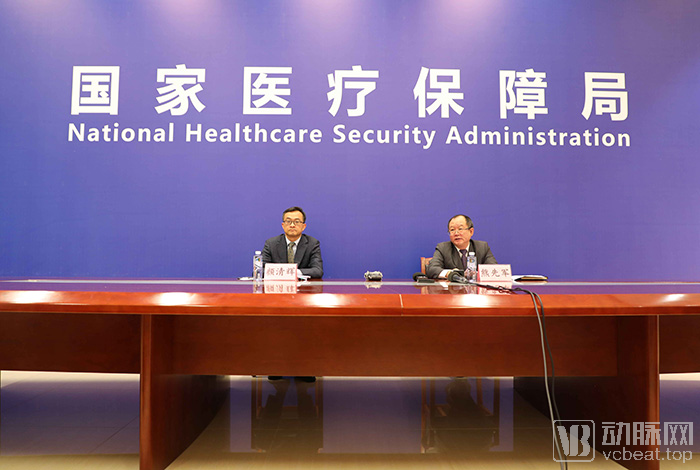
Yan Qinghui:
Good afternoon, dear members of the press. Thank you very much for your continued concern and support for the National Healthcare Security Administration (NHSA). Welcome to this briefing.The Central Committee of the Communist Party of China and the State Council attach great importance to alleviating the burden of medical expenses on the public. In accordance with the requirement set forth at the Central Economic Work Conference to “include more life-saving and emergency medicines in the medical insurance coverage,” the NHSA, in collaboration with relevant departments, has carried out dynamic adjustments to the drug catalogs for the Basic Medical Insurance, Work-Related Injury Insurance, and Maternity Insurance. Currently, the 2019 drug catalog adjustment has achieved phased progress. The list of drugs approved through the routine access process will be released after this briefing. We will also distribute some background materials to you afterward.
This adjustment to the National Reimbursement Drug List (NRDL) marks the first comprehensive revision since the establishment of the National Healthcare Security Administration (NHSA). It also represents a systematic review of the existing drug list, which was first issued in 2000. The purpose of today’s meeting is to brief you on the situation and to coordinate our efforts in public communication, ensuring that patients and the general public gain a more accurate understanding of the policy.
We are also very pleased to have with us today Mr. Xiong Xianjun, Director of the Department of Pharmaceutical Services Management under the National Healthcare Security Administration, who will provide an overview of the general situation regarding this round of adjustments to the National Reimbursement Drug List and answer questions from the press.
Next, let us first invite Director Xian Jun to introduce the relevant situation.
Xiong Xianjun:
Good afternoon, friends from the media. Thank you very much for your support and attention to the work of the National Healthcare Security Administration (NHSA). In accordance with the meeting agenda, I will briefly introduce the progress made in adjusting the 2019 National Reimbursement Drug List (NRDL). The Party Central Committee and the State Council attach great importance to alleviating the financial burden on the public. Following the requirements set forth at the Central Economic Work Conference to include more life-saving and emergency medications in the medical insurance coverage, the NHSA, in collaboration with relevant departments, has adjusted the drug lists for Basic Medical Insurance, Work-Related Injury Insurance, and Maternity Insurance this year. The adjustment work has now achieved phased results, and the list of drugs approved through routine admission is about to be released.
First, I would like to introduce the work we have already carried out. The current adjustment to the National Reimbursement Drug List (NRDL) is the first such adjustment since the establishment of the National Healthcare Security Administration (NHSA). It also represents a comprehensive review of the existing drug varieties included in the list since the first edition was released in 2000. Adhering to the fundamental principle of “making every effort to ensure basic coverage and consistently maintaining sustainability,” and taking into account factors such as the requirements of the medical insurance system, the level of socioeconomic development, and actual clinical medication practices, we have followed an adjustment approach that highlights key priorities, addresses shortcomings, optimizes structure, and encourages innovation. On this basis, and after fully soliciting opinions from relevant departments and the general public, we formulated the Work Plan for the 2019 National Reimbursement Drug List Adjustment, which was announced to the public in April.
In accordance with this plan, we carried out work in four areas. First, we conducted a comprehensive survey of drugs covered by medical insurance. Nearly 5,000 medical experts with diverse specialized backgrounds were randomly selected from across China’s 31 provinces. These experts provided opinions and recommendations on all more than 16,000 drug varieties approved for marketing by the National Medical Products Administration before December 31, 2018. Drugs with broad consensus were included in the scope of evaluation.
Second, expert review was conducted. We selected nearly 400 renowned experts from across China, covering fields such as clinical medicine, pharmacy, pharmacoeconomics, and health insurance management. Based on the results of the preliminary survey on medicines covered by health insurance, these experts carried out multiple rounds of deliberations on each drug to preliminarily determine the candidate lists for inclusion and exclusion.
Third, an expert panel was organized to conduct voting. Over 3,000 medical experts were randomly selected from across China and cast their votes to screen the candidate list by specialty.
Fourth, the list of drugs for routine inclusion and the list of drugs proposed for negotiation were finalized. Based on the voting results of the selection experts, the lists of drugs to be included in or excluded from negotiations were determined. Consultation experts were organized to conduct evaluations on certain drugs requiring enhanced management, thereby establishing payment restrictions and Class A/B classifications. This process resulted in the formation of the final list of drugs for routine inclusion and the list of drugs proposed for negotiation.
Part II: Overview of the Drug Catalog
This adjustment to the National Reimbursement Drug List (NRDL) adheres to the principles of optimizing structure, incorporating new entries while removing others, and focusing on improving utilization efficiency, thereby adding certain drugs with proven efficacy. Drugs removed from the list primarily include those whose approval numbers have been revoked by the National Medical Products Administration (NMPA), as well as those with low clinical value, evident potential for misuse, or better alternatives available, thus creating space for the inclusion of more life-saving and emergency medications into the medical insurance coverage. Furthermore, experts have strengthened restricted payment management for certain drugs within the NRDL that are prone to misuse, primarily targeting antibiotics, nutritional preparations, and traditional Chinese medicine (TCM) injections.
First, regarding the status of drugs under routine inclusion. From the perspective of drugs under routine inclusion, the overall number of drugs remained relatively stable before and after the adjustment; however, there was a significant turnover in specific varieties added to and removed from the list, resulting in substantial changes to the drug structure. The routinely included portion released this time comprises a total of 2,643 drugs, including 1,322 Western medicines and 1,321 proprietary Chinese medicines (including 93 ethnic medicines). Traditional Chinese Medicine (TCM) decoction pieces are managed under an inclusion-based approach, with 892 varieties incorporated. Among the routinely included drugs, there is a basic balance between Western medicines and TCM products. The number of Class A drugs has been appropriately increased, with 640 Class A drugs listed in the catalog, an increase of 46 compared to 2017. This includes 398 Western medicines and 242 proprietary Chinese medicines.
To better meet the clinical needs for rational drug use, 148 new drug varieties were added to the routine access portion of this drug catalog adjustment, including 47 Western medicines and 101 Chinese proprietary medicines. The newly added drugs cover National Essential Medicines that should be prioritized, medications for major diseases such as cancer and rare diseases, chronic disease medications, and pediatric drugs. Specifically, five new medications for major diseases, 36 for chronic diseases such as diabetes, and 38 pediatric drugs were added through routine access. The vast majority of National Essential Medicines have either passed routine access or been included in the list of drugs proposed for negotiation, and 74 essential medicines have been reclassified from Category B to Category A. Notably, medications for cancer and rare diseases have been included in the list proposed for negotiation. Those that reach agreement through subsequent negotiations will be incorporated into the catalog in the future.
Second, regarding the drugs proposed for negotiation. For this adjustment of the drug catalog, we have further refined the methods for negotiated access based on a summary of prior experience. In light of expert review and voting outcomes, 128 drugs—comprising 109 Western medicines and 19 proprietary Chinese medicines—have been preliminarily identified for inclusion in the scope of negotiated access. These include patented, exclusive products that demonstrate high clinical value but are costly or exert a significant impact on the insurance fund. The therapeutic areas covered primarily encompass serious and critical conditions such as cancer and rare diseases, as well as chronic diseases including hepatitis C, hepatitis B, hypertension, and diabetes. Many of these products are new drugs approved by the National Medical Products Administration (NMPA), and also include major domestically developed innovative medicines. The next step is to finalize the list of drugs for negotiation after soliciting expressions of interest from manufacturers.
Third, regarding the removal of drugs from the directory. The removed drugs primarily included those whose approval numbers had been revoked by the National Medical Products Administration (NMPA), as well as those with low clinical value, evident misuse, and better alternatives available, totaling 150 products. Excluding those whose approval numbers were revoked by the national drug regulatory authorities, a total of 79 products were removed. Experts also gave significant consideration to the first batch of the National Key Monitoring List for Rational Drug Use, released by the National Health Commission in June. After expert deliberation, it was decided to remove all key-monitored drugs from the National Reimbursement Drug List (NRDL). Among the removed products, some had high annual sales volumes. Their removal may impact the production and operations of certain enterprises; however, the review panel concluded that removing such drugs from the directory helps create space for including more life-saving and emergency medications, and also promotes the industry’s accelerated transformation and upgrading.
Through adjustments, we have overall enhanced the coverage level of the National Reimbursement Drug List, improved the efficiency of using limited medical insurance funds, better met the basic medication needs of the vast majority of insured individuals, and effectively increased the sense of gain among the general public.
Part Three: Next Steps
Next, our Bureau will strengthen guidance to local authorities to ensure the early implementation of the Drug Catalog and organize drug access negotiations in accordance with the work plan. First, we will guide all regions to promptly adjust the systems of medical insurance handling agencies and designated medical institutions, ensuring that the new edition of the catalog is officially implemented starting January 1, 2020, thereby benefiting a broad range of insured patients. Meanwhile, we will enhance monitoring and strengthen post-access management for key varieties newly added to the catalog. Second, we will carry out drug access negotiations. In accordance with established procedures, we will expedite the initiation of access negotiations, communicate negotiation intentions with relevant enterprises, require enterprises to submit negotiation materials, organize experts in pharmacoeconomics and medical insurance management to conduct assessments, and hold on-site negotiations. If a nationally unified payment standard acceptable to both parties is reached, it will be included in the catalog according to procedural requirements. (Reprinted from: National Healthcare Security Administration)