

AI-Powered Lung Cancer Screening Initiative 'AI Cancer Prevention Map' Draws a Circle on China's Eastern Coast
“Lung Cancer Screening?”
Grandma Li from Ningde City, Fujian Province, was initially skeptical about such a good offer—a free low-dose spiral CT (LDCT) for early lung cancer screening provided by Gutian County Hospital in Ningde. In her view, as long as she remained physically robust, there was no need for medical check-ups. However, this intelligent lung cancer screening program targeted at impoverished households greatly appealed to her family. After their repeated persuasion, Grandma Li finally appeared at the hospital.
On January 6, she arrived early and waited at the entrance of the Radiology Department of Gutian County Hospital in Fujian Province. Soon after Grandma Li completed her imaging examination, the doctor informed her that she only needed to wait for the report.
Inside the radiology department, the battle of image interpretation has officially begun. The low-dose computed tomography (LDCT) scans of more than 1,000 “Grandma Li” patients have been processed and reconstructed into thin-slice CT images, generating over 400 images per patient and totaling more than 400,000 images. These images are transmitted to the workstations of radiologists in the reading room. The radiologists must review each image individually to identify hidden hazardous lesions and provide diagnostic interpretations. This task demands not only speed but also accuracy and consistency, making it a time-consuming and relatively monotonous endeavor.
In previous years, the large-scale task of reviewing cancer screening images would have deterred physicians; however, with the introduction of a “new weapon,” this year’s image review process has undergone a slight change.
This year, every radiologist’s workstation has been equipped with Yitu Healthcare’s care.ai® Chest CT Intelligent 4D Imaging System. Physicians need only click to view the images and scroll with the mouse; yellow circles will then highlight the lesions, enabling measurement, classification, and differential diagnosis, followed by the generation of a structured report. After verifying the AI’s analytical and diagnostic findings, physicians can generate the final structured report with a single click.
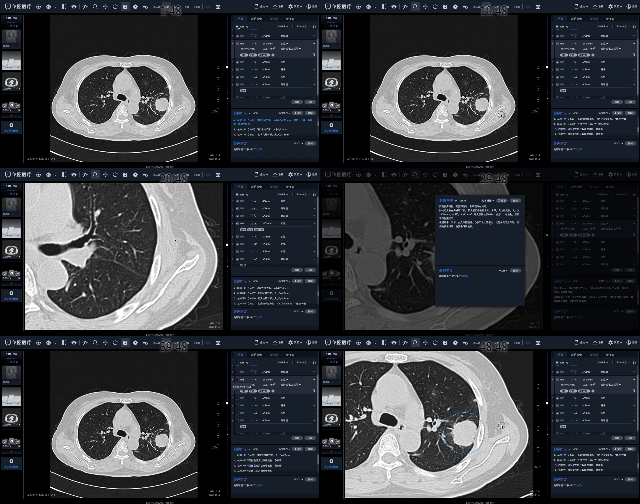
care.ai® Chest CT Intelligent 4D Imaging System Animated Demonstration
With the assistance of the “physician + AI” image interpretation model, lung cancer early screening for over 1,000 individuals living in poverty was completed efficiently, and the screening report was promptly delivered to Grandma Li. Upon receiving the imaging report indicating a “high suspicion of malignancy,” Grandma Li, who had never undergone lung cancer screening in her life, initially felt fear, followed by a sense of relief. This shift in emotion stemmed from the screening physician’s reminder that earlier detection of lung cancer leads to better treatment outcomes, and that early-stage lung cancer even has a certain probability of being cured.
This is merely a small snapshot of the “AI Cancer Prevention Map” initiative, specifically the Fujian Mindong Campaign for lung cancer screening and early diagnosis and treatment among impoverished populations, jointly launched by Director Zhu Kunshou’s team from the Second Department of Thoracic Surgery at Fujian Provincial Cancer Hospital and Yitu Healthcare. Among the more than 1,000 impoverished individuals screened in Ningde City during the initial phase, the team identified over 20 cases highly suspicious for lung cancer. Eight patients were confirmed to have early-stage lung cancer via surgical pathology, achieving excellent treatment outcomes, while the remaining suspected malignant cases are under close follow-up.
With over 30 years of medical practice across various regions, Dr. Chen Weisheng, the team leader for screening programs, has remained at the forefront of clinical diagnosis and treatment of lung cancer. He has witnessed the rapid advancements in lung cancer diagnostic and therapeutic techniques in China, while also gaining a profound understanding of the difficulties faced by impoverished populations in accessing medical care. After treating countless patients with advanced-stage lung cancer, he is deeply concerned: Why must treatment be delayed until symptoms appear in the late stages of lung cancer? When will impoverished populations be freed from the fear of cancer?
After much deliberation, a goal has become increasingly clear: to ensure that every impoverished individual has access to at least one lung cancer screening opportunity!
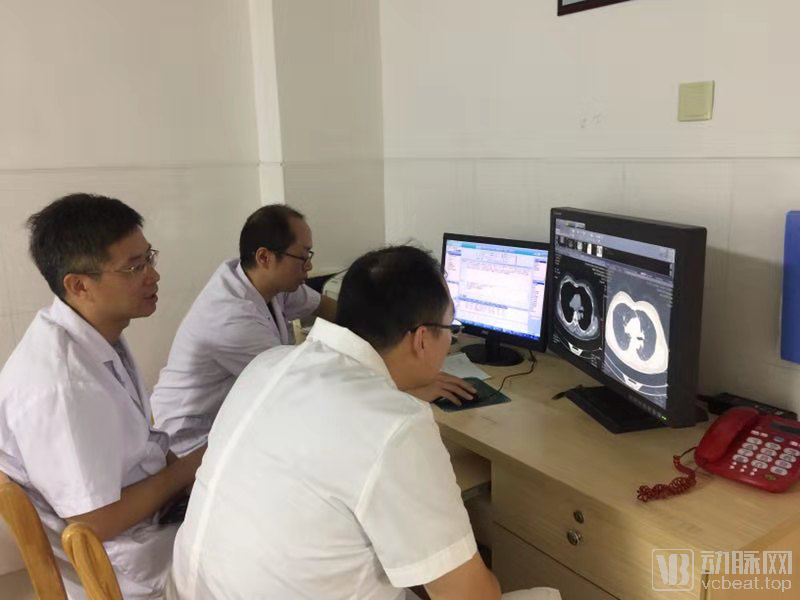
Team members conduct case discussions using the “physician + AI” model.
Statistical data indicate that lung cancer has the highest incidence and mortality rates among all cancers in China; fortunately, it is also one of the cancers most amenable to screening and with the best prevention and control outcomes. Low-dose computed tomography (LDCT) is currently the only imaging modality recognized to reduce lung cancer mortality in high-risk populations. The Chinese Guidelines for Low-Dose Spiral CT Screening for Lung Cancer (2018 Edition) recommend LDCT screening for high-risk individuals in China.[1]
Meanwhile, policies are vigorously promoting cancer screening and early diagnosis and treatment. In February 2019, Premier Li Keqiang proposed at the State Council executive meeting to adhere to prevention first, advance cancer screening and early diagnosis and treatment, and strive to reduce mortality rates.
But how easy is it to carry out large-scale early screening for lung cancer?
Director Zhu Kunshou stated that impoverished regions generally suffer from scarce medical resources, a shortage of radiologists, and weak image interpretation capabilities. Furthermore, public awareness of early lung cancer screening remains low. Even with concerted efforts to successfully recruit high-risk populations for screening, relying solely on the existing staff at primary healthcare institutions and a purely manual image interpretation model would undoubtedly place immense pressure on their diagnostic capacity. Therefore, the introduction of new forces is essential.
In fact, while Director Zhu Kunshou was grappling with the challenge of early lung cancer screening for impoverished populations, another group had already launched their own early lung cancer screening initiatives.
At the Chinese Congress of Radiology in November 2018, Yitu Healthcare officially launched its “AI Cancer Prevention Map” initiative. This marked Yitu Healthcare’s first global deployment of critical disease screening based on a large-scale population. The initiative collaborates with hundreds of medical institutions across 19 provinces, municipalities, and autonomous regions. Leveraging Yitu Healthcare’s advanced suite of medical AI products, it aims to build an intelligent diagnosis and treatment platform covering high-incidence cancers such as lung cancer, breast cancer, cervical cancer, and colorectal cancer. The platform provides AI-powered services to clinical experts, including image detection, lesion analysis, clinical decision support, and patient management.
As a leading medical artificial intelligence enterprise in China, Yitu Healthcare pioneered the global launch of its whole-body AI—care.ai® Chest CT Intelligent 4D Imaging System—at the 2018 Radiological Society of North America (RSNA) annual meeting. This system achieves second-level, high-sensitivity, and low-false-positive detection for the vast majority of findings on chest CT images, providing physicians with trustworthy structured reports. By being seamlessly integrated into the actual clinical workflows of numerous hospitals, it has significantly advanced the implementation of the “physician + AI” image interpretation model in China.
Clinical performance trials conducted in real-world clinical settings have demonstrated that, leveraging the care.ai® Chest CT Intelligent 4D Imaging System, the “Physician + AI” interpretation model can comprehensively enhance nodule detection capabilities among junior physicians and primary care providers (pulmonary nodules are important early signs of lung cancer), while reducing lesion detection time by approximately 30%.
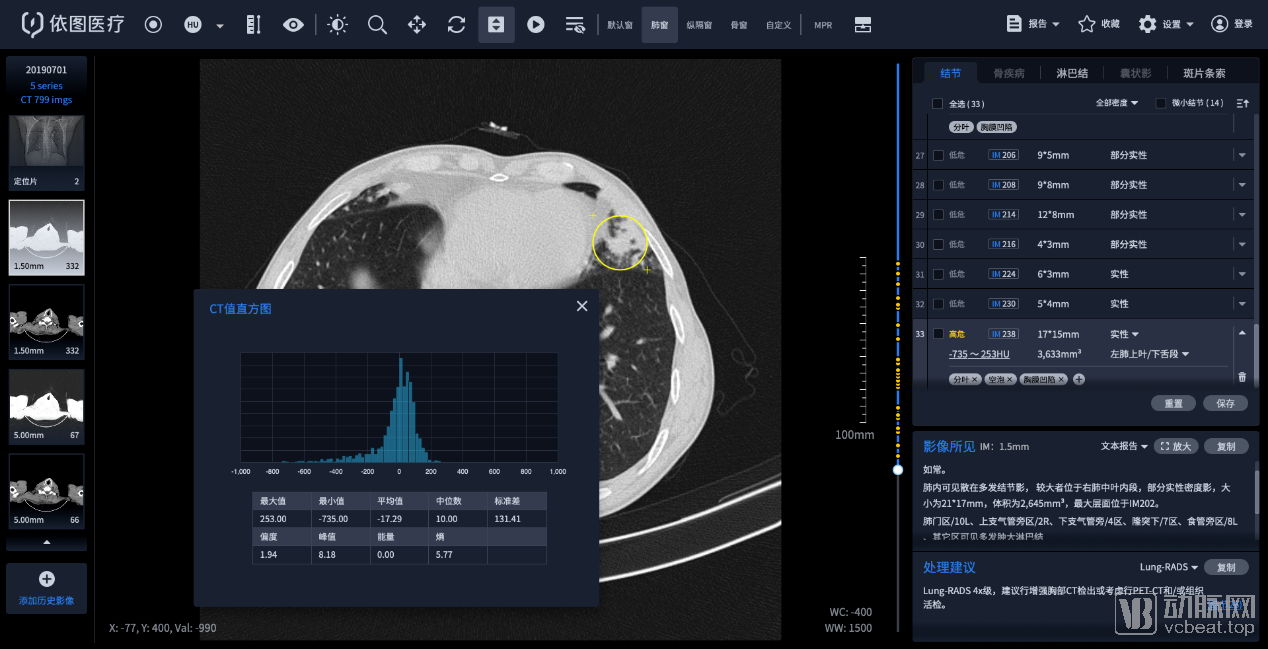
Example 1: Malignant Nodule Detected in Intelligent Early Lung Cancer Screening
Shared ideals, a robust technological foundation, and an unwavering commitment to leveraging AI technology for health-focused poverty alleviation have brought together medical experts and AI companies working side by side in the field of early cancer screening.
The “AI Cancer Prevention Map” drew a circle on the coast of the East China Sea.
Ningde City, located in northeastern Fujian Province, was once a typical area characterized by being old revolutionary base areas, ethnic minority regions, border areas, and islands with widespread poverty. In the early stages of reform and opening-up, it was one of the 18 contiguous impoverished areas in China.
On August 4, 2019, General Secretary Xi Jinping replied to a letter from the villagers of Xiadang Township in Shouning County, Fujian Province, congratulating them on achieving poverty alleviation and encouraging them to uphold the “dripping water wears through stone” spirit to steadily advance along the path of rural revitalization.
As a crucial component of rural revitalization, “health-focused poverty alleviation” has become the top priority.
“Many urban residents undergo regular health check-ups, whereas rural residents, particularly those living in poverty, rarely do. Consequently, many conditions that could have been managed through early intervention are delayed. Poverty caused or exacerbated by illness is commonplace in rural areas and has become a significant obstacle to rural revitalization,” revealed Director Zhu Kunshou. “The novel ‘AI + Physician’ cancer screening model enables large-scale regional early cancer screening that was previously unfeasible. AI technology offers new possibilities for the early screening, diagnosis, and treatment of cancer.”
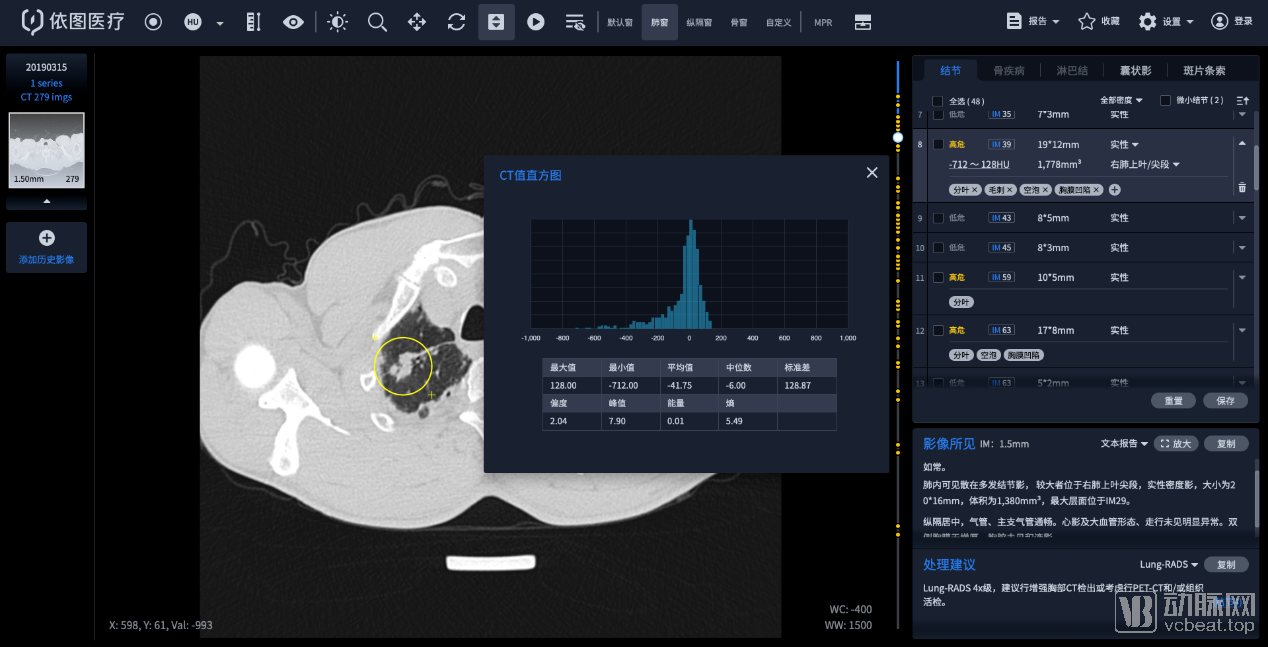
Example 2 of Malignant Nodules Detected in Intelligent Early Lung Cancer Screening
According to Director Zhu Kunshou’s plan, 10,000 individuals from the registered impoverished population in Ningde City will be selected for early lung cancer screening. However, if the traditional manual image interpretation model were adopted, the sheer volume of readings alone would exhaust the already scarce resources of radiologists, significantly increasing their workload.
However, the shortcomings of purely manual image interpretation are precisely the scenarios where AI applications excel. The new “physician + AI” interpretation model can significantly save physicians’ time, rapidly and accurately detect lesions, and provide functionalities such as benign-malignant differentiation, automated comparison with historical images, and structured reporting, thereby substantially improving screening efficiency and accuracy.
As of June 2019, the Fujian tour of the “AI Cancer Prevention Map” has reported frequent successes. In Ningde City, more than 1,000 individuals were screened, identifying over 20 cases with high suspicion of cancer; among these, 8 were surgically confirmed as early-stage lung cancer, and 10 remain under follow-up. Specifically, in Gutian County, a county-level division under Ningde City, more than 300 screenings were conducted, yielding approximately 6 highly suspicious cases. Of these, 4 are under follow-up, and 2 were surgically confirmed. Led by Director Zhu Kunshou, an expert team performed the first thoracoscopic minimally invasive lung cancer surgery at Gutian County Hospital.
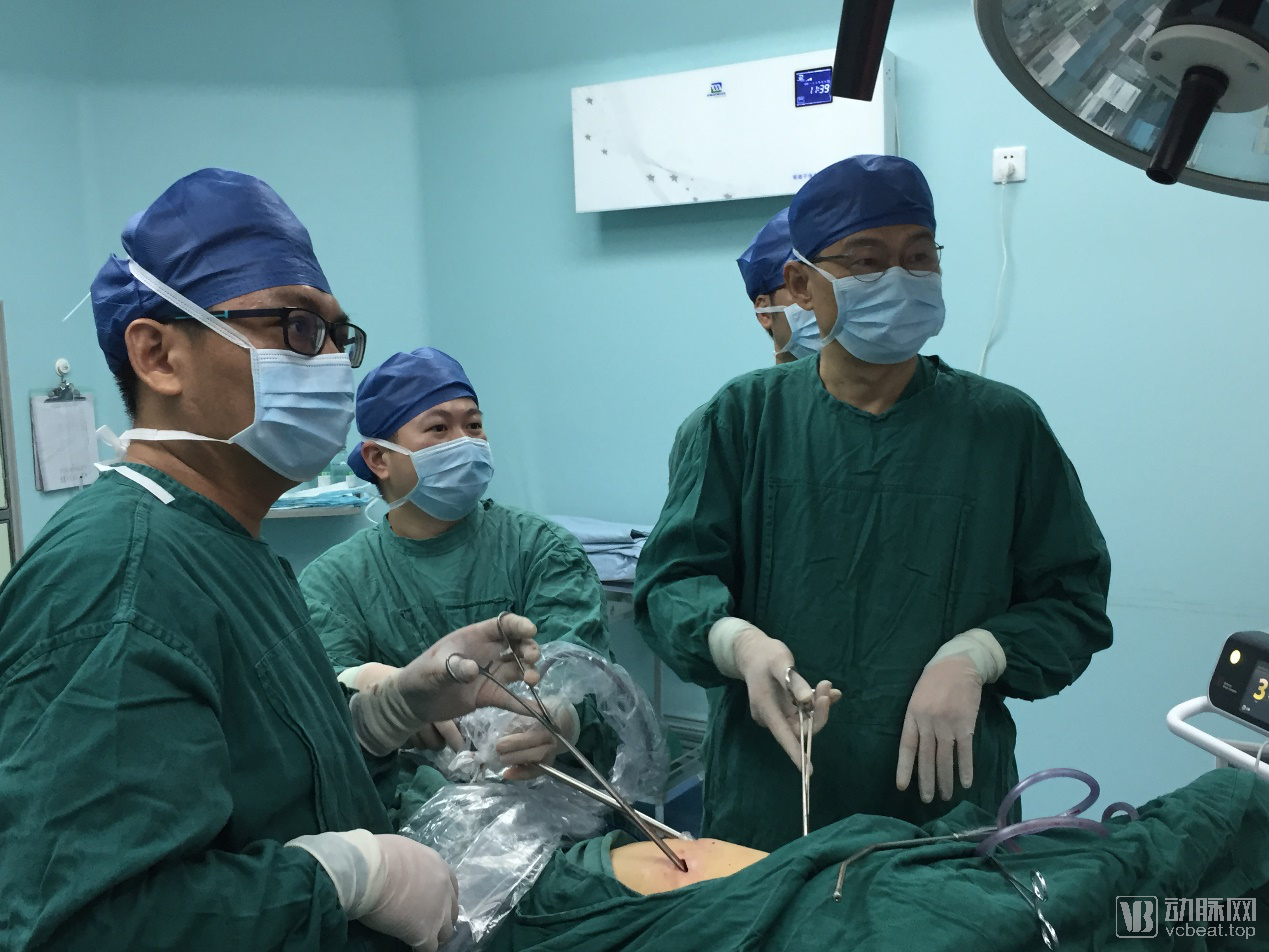
A team of experts led by Director Zhu Kunshou performed video-assisted thoracoscopic surgery (VATS) on patients with early-stage lung cancer identified through screening.
On June 27, the “Internet + Health Poverty Alleviation Promotion Group” was established in Beijing under the guidance of the National Health Commission and the Ministry of Industry and Information Technology, and jointly initiated by the China Population and Development Research Center, the Medical Management Service Guidance Center of the National Health Commission, and the China Academy of Information and Communications Technology. Relying on its leadership position in the field of medical AI and its extensive practice in empowering primary healthcare with AI, Yitu Healthcare became the only medical artificial intelligence enterprise to serve as a deputy leader unit.
“Pooling efforts to implement targeted measures and securing a decisive victory in poverty alleviation” was the primary objective of the 2019 No. 1 Central Document. By the end of 2018, 16.6 million people in China remained below the poverty line. Strengthening the grassroots health service network for the impoverished population and ensuring their basic medical needs are met is not only a fundamental prerequisite for economic poverty alleviation but also a critical safeguard against returning to poverty due to illness.
Director Zhu Kunshou stated: Large-scale early cancer screening initiatives can significantly increase the likelihood of early detection, enabling timely intervention and treatment. This approach improves patients’ clinical outcomes and overall health, reduces societal healthcare expenditures, and prevents poverty caused or exacerbated by illness. It truly embodies the principles of poverty alleviation through medical care and health initiatives, while aligning with healthcare reform directions that promote the decentralization of advanced medical technologies and the implementation of a three-tier referral system.
It is estimated that in 2010, the medical costs for lung cancer in the United States reached $12.1 billion, accounting for approximately 10% of total healthcare expenditures. This not only consumed substantial medical resources but also imposed a heavy economic burden on society.[2] For impoverished populations in China, the impact is even more severe.
Today, a group of patients diagnosed with suspected lung cancer during this screening, including Grandma Li, still feel lingering fear. Without this screening, these individuals would have continued their daily lives in apparent calm, eating their three meals a day. However, once the latent period of cancer passed and symptoms emerged aggressively, they could have seized the fate of an individual or even an entire family.
References:
[1] Chinese Guidelines for Low-Dose Spiral CT Screening of Lung Cancer (2018 Edition)
https://www.ncbi.nlm.nih.gov/pmc/articles/PMC5973012/
[2] Wang Lin, Wang Zuyi, Wang Guowen. Research Progress in Lung Cancer Screening [J]. Chinese Journal of Clinical Thoracic and Cardiovascular Surgery,
2014, 21(2):258-263.