

10x Genomics Files for IPO Amid Patent Litigation Risks
10x Genomics
DNA Sequencing Technology Developer
On August 20, 2019, VCBeat learned that single-cell sequencing company 10x Genomics had filed its initial public offering (IPO) application with the Nasdaq for the first time. According to documents filed with the U.S. Securities and Exchange Commission on Monday, the company plans to raise up to $100 million in its IPO.
The company has not yet disclosed its expected share price range, but its prospectus shows that in fiscal year 2018, 10x Genomics reported total revenue of $146.3 million and a net loss of $112.5 million. As of June 30, 2019, the company held $56 million in cash and cash equivalents, with 1,285 installed instruments, each generating approximately $81,000 in consumables revenue. For the six months ended June 30, 10x Genomics reported a net loss of $14.5 million.
10x Genomics, headquartered on the West Coast of Boston, is a rising star in the field of single-cell sequencing. In 2016, 10x Genomics launched its flagship product, the Chromium System, a molecular barcoding and analysis platform based on microfluidics technology. This system enables simultaneous profiling of gene expression in 1,000 to 10,000 cells, facilitating the classification of cell populations and the detection of differential gene expression between them. It has become the gold standard for studying tumor cell heterogeneity, characterizing immune cell populations, and investigating embryonic development.
Furthermore, with its software system capable of fully interfacing with Illumina sequencers, 10x Genomics rose to prominence at the 2016 J.P. Morgan Healthcare Conference, emerging as the biggest dark horse in the field of single-cell transcriptome sequencing at that time, and entered into a strategic partnership agreement with Illumina.
Founded in 2012, the company was co-established by Serge Saxonov and Ben Hindson. As a co-founder and CEO, Serge Saxonov has been the driving force behind the company’s development. He holds a bachelor’s degree in applied mathematics and biology from Harvard Medical School and a Ph.D. in biomedical informatics from Stanford University. Prior to founding this company, Saxonov served as Vice President at QuantaLife, a third-generation PCR technology company that raised over $30 million in funding and was acquired by Bio-Rad in 2011. Additionally, Serge previously served as the founding architect and Director of Research and Development at 23andMe.
Co-founder and CSO Ben Hindson holds a Ph.D. in Chemistry from Deakin University in Australia and was previously the Co-founder and Chief Scientific Officer of QuantaLife. From 2002 to 2008, Hindson held various positions with significant responsibilities in the Chemical and Biological Weapons Non-Proliferation Program at Lawrence Livermore National Laboratory. He has published extensively in this field and holds multiple patents related to detection technologies and instrumentation.
Saxonov and Hindson’s expertise in their respective fields helped 10x Genomics rise to prominence within just a few years, establishing the company as a recognized dark horse in the industry.
Leveraging its industry reputation and experience, the company secured $4.79 million in Series A financing from Silicon Valley Bank just 10 months after its inception. By 2016, the amount raised in its Series C round had reached $55.5 million.
In 2015, after three years of quiet development, 10x Genomics made its debut by launching its first product, the GemCode platform, at the 16th Annual Advances in Genome Biology and Technology (AGBT) conference. Comprising instruments, reagents, software, and molecular barcodes, the platform represented an upgrade to existing short-read sequencers. 10x Genomics aimed to generate novel types of sequencing data, including haplotype phasing and structural variant detection, while also enabling de novo assembly of data. GemCode ranked first among the Top 10 Innovative Products in Life Sciences in 2015.
In 2016, 10x Genomics made its debut at the J.P. Morgan Healthcare Conference with the GemCode platform, emerging as the biggest dark horse in the single-cell analysis sector that year. Unlike second-generation sequencing technologies, GemCode broke through the bottleneck of short-read sequencing by generating long-range reads to address the limitations of second-generation sequencing. In contrast to PacBio’s third-generation sequencing, 10x Genomics did not engage in direct competition with Illumina, the industry giant; instead, its analysis system was compatible with Illumina’s sequencing platforms, earning it favor among major corporations. Within four days after the January conference concluded, 10x Genomics announced rapid partnerships with three large companies.
On February 8, 2016, 10x Genomics announced that it was jointly developing next-generation sequencing and single-cell analysis workflows and solutions with QIAGEN. Under the collaboration agreement, QIAGEN will optimize its sample preparation using 10x Genomics’ GemCode platform and single-cell products. The two parties will combine 10x Genomics’ GemCode platform with QIAGEN’s single-cell products and its NGS product, GeneReader, to develop newer and more comprehensive sample preparation solutions.
This product is likely the Chromium, a flagship sequencing system announced by 10x Genomics on February 11. Designed for large-scale professional laboratories, this sequencing platform’s most notable feature is its capability for single-cell sequencing.
Peer Schatz, CEO of QIAGEN, stated, “The new partnership will help further unlock the potential of each product and provide important new technologies for NGS research.”
On February 9, 10x Genomics announced a partnership with sequencing giant Illumina, under which Illumina sequencers will be integrated with 10x Genomics’ GemCode platform to provide researchers with a broader range of sequencing applications. Under the agreement, the two companies will jointly promote 10x Genomics’ Linked-Read sequencing products and Illumina’s sequencing systems. 10x Genomics’ microfluidics-based molecular barcoding long-read solution, built on GemCode technology, enables researchers to achieve more extensive sequencing applications on Illumina sequencers.
Christian Henry, Chief Business Officer of Illumina, stated: “We are delighted to partner with 10x Genomics to jointly build an industry ecosystem. GemCode technology enables users of HiSeq X, HiSeq, NextSeq, and MiSeq systems to upgrade their existing platforms, offering services at a lower cost and higher quality compared to other long-read sequencing systems available on the market.”
On February 11, 10x Genomics and Agilent Technologies jointly announced that they are collaborating to develop high-efficiency exome products by leveraging their respective technological strengths. This synergy enhances the depth of exome sequencing, enabling more precise detection of variant sites, particularly in genomic regions that are difficult to map. Furthermore, in addition to exonic regions, the new product allows for the inclusion of other genomic regions to facilitate phasing analysis, offering significant advantages for analyzing complex structural variations in the genome. By integrating Agilent’s SureSelect target enrichment technology with 10x Genomics’ GemCode platform, the required sample input is reduced to approximately 1 nanogram of DNA.
Herman Verrelst, Vice President and General Manager of Agilent’s Genomics Division, stated in a press release: “Our collaboration with 10x Genomics will advance our understanding of disease and position us at the forefront of technological innovation. The unique potential of this new technology enhances parental haplotype analysis and detection of structural genomic variants, which will have a significant impact on clinical research for diseases such as cancer.”
10x Genomics, which has been thriving on all fronts, also secured its Series C financing this month, with the round reaching a substantial $55 million and SoftBank participating in the investment.
In 2018, 10x Genomics successively acquired the epigenetics company Epinomics and the spatial genomics technology company Spatial Transcriptomics, thereby enhancing its capabilities in RNA sequencing.
“The key to our success is rapid, non-incremental innovation,” Saxonov stated in an interview. “Most importantly, our team comprises talented individuals from diverse disciplines. By fostering the right culture, we maintain a sense of urgency and sustain innovation.”

Image from the prospectus
Not only is it highly favored overseas, but 10x Genomics is also immensely popular in China. The GemCode and Chromium platforms are priced at $75,000 and $125,000, respectively, making them quite affordable compared to other major competitors. Moreover, the Chromium platform enables single-cell sequencing. In China, 10x Genomics boasts a large following, including BGI, Berry Genomics, CapitalBio Technology, Novogene, Annoroad Gene Technology, OE Biotech, and Phesgo Genomics.
10x Genomics stated that from its launch through June 30, 2019, it had sold 1,284 instruments to researchers worldwide, including to 93 of the top 100 global research institutions and 13 of the top 15 pharmaceutical companies globally by 2018 revenue.
The first half of 10x Genomics’ journey can be described as “silent until it makes a splash,” but with growing fame has come greater trouble.
In February 2015, Raindance and the University of Chicago filed a lawsuit against 10x Genomics in the U.S. District Court for the District of Delaware, alleging that nearly all of 10x Genomics’ products using GEM microfluidic chips infringed seven U.S. patents owned or exclusively licensed by Raindance (the “Delaware Action”). In May 2017, Bio-Rad replaced Raindance as the plaintiff following its acquisition of Raindance.
In November 2018, the jury unanimously found that all single-cell and linked-read genomics products sold by 10x Genomics willfully infringed three U.S. patents licensed by the University of Chicago to Bio-Rad. Under the ruling, 10x Genomics was required to pay Bio-Rad $23.9 million in damages.
10x Genomics strongly opposed the ruling in the patent litigation case, stating, “We strongly oppose this ruling and will immediately file an appeal.” 10x Genomics had previously attempted to overturn the jury’s verdict, but on July 9, 2019, the judge denied 10x Genomics’ motion and upheld the jury’s verdict. Bio-Rad also requested that the court issue a permanent injunction against 10x Genomics, which was granted on July 26, 2019:
The ruling prohibits 10X Genomics, Inc. from selling any infringing products to new customers and grants Bio-Rad’s claims for additional damages and pre- and post-judgment interest. The court also recognized an agreement under which Bio-Rad permits 10X Genomics, Inc. to continue supplying consumables for previously sold systems, subject to the payment of patent royalties.
Subsequently, 10x Genomics reiterated its strong opposition to the jury’s verdict and the ruling, announcing that it will file an appeal. In a statement addressed to customers, 10x Genomics stated that it would continue to sell its existing products, as detailed below:
1. For existing users, it is confirmed that current products can continue to be sold;
2. New, patented Next GEM products can be sold to both existing users and new customers;
3. We hope to continue providing service and maintenance for products that have already been sold.
On July 31, 2017, Bio-Rad and Lawrence Livermore National Security, LLC filed a complaint with the U.S. International Trade Commission (“ITC”) under Section 337 of the Tariff Act of 1930 (ITC Investigation No. 337-TA-1068), alleging that 10x Genomics’ products infringed their patents. Bio-Rad is seeking an exclusion order to prevent 10x Genomics from importing the accused microfluidic chips (including GEM microfluidic chips, gel bead-making microfluidic chips, and Next GEM microfluidic chips) into the United States. Prior to the launch of Next GEM microfluidic chips and related products, 10x Genomics’ product sales primarily utilized GEM microfluidic chips. The evidentiary hearing for ITC Investigation No. 337-TA-1068 was held in May 2018, and the presiding administrative law judge issued an initial determination in September 2018, finding that the GEM microfluidic chips infringed U.S. Patent Nos. ’664, ’682, and ’635, but did not infringe U.S. Patent No. ’160.
The final ruling on this dispute is scheduled to be announced in late September 2019. If Bio-Rad’s exclusion order is ultimately upheld, 10x Genomics will be prohibited from selling GEM microfluidic chips in the United States. Prior to the second quarter of 2019, all of 10x Genomics’ microfluidic chips were manufactured outside the United States; starting in the third quarter, its U.S.-based manufacturing facility officially commenced operations.
These two rulings dealt a heavy blow to 10x Genomics, which, of course, launched a counterattack in the dispute. On January 11, 2018, 10x Genomics filed a complaint with the U.S. International Trade Commission (ITC) against Bio-Rad, alleging that Bio-Rad infringed its four patents: U.S. Patent Nos. 9,644,204; 9,689,024; 9,695,468; and 9,856,530 (the “ITC Investigation No. 1100”). On July 12, 2019, the administrative law judge issued an initial determination finding that Bio-Rad had infringed the ’024, ’468, and ’530 patents. The judge upheld the validity of all asserted patents and rejected Bio-Rad’s ownership claims regarding all asserted patents. The target date for the final determination was set for November 12, 2019, by which time 10x Genomics expected the ITC to issue an exclusion order prohibiting Bio-Rad from importing infringing microfluidic devices, components thereof, and products containing them—including the ddSEQ Single-Cell Isolator system—into the United States.
In the life sciences instrumentation industry, characterized by high entry barriers and significant technical moats, patented technologies constitute a core competitive advantage for enterprises. In its prospectus, 10x Genomics acknowledged the business risks stemming from years of patent disputes; undoubtedly, the final outcome of these disputes will be a matter of survival for the company.
On August 20, 2019, 10x Genomics officially announced its filing for an initial public offering (IPO). Although 10x Genomics did not disclose the expected price range, according to documents filed with the U.S. Securities and Exchange Commission (SEC) on Monday, the company plans to raise $100 million through its IPO. It is understood that 10x Genomics will trade under the ticker symbol “TXG,” with JPMorgan, Goldman Sachs, and Bank of America serving as joint book-running managers.
10x Genomics generated $109.4 million in revenue in the first half of 2019, representing an increase of nearly 85% from the $59.2 million recorded between January and June 2018. For the full year 2018, the company’s revenue more than doubled, rising from $71.1 million in 2017 to $146.3 million.
In fiscal year 2018, 10x Genomics reported total revenue of $146.3 million and a net loss of $112.5 million. The company also noted that its net loss for 2018 was associated with $62.4 million in expenses related to “intellectual property acquisitions for R&D purposes,” as well as $38 million in litigation costs incurred in the fourth quarter of 2018. In the first half of fiscal year 2019, 10X Genomics spent $15.9 million on patent litigation fees.

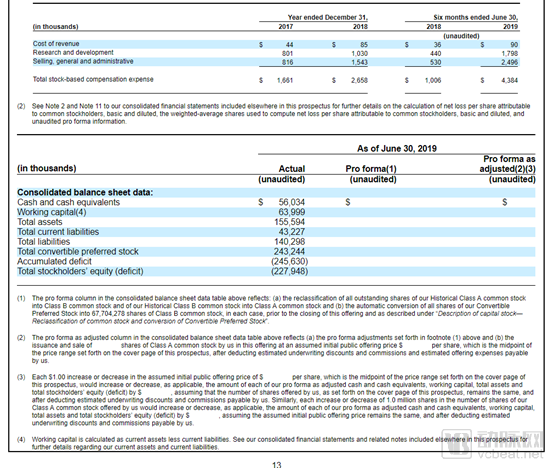
As of December 31, 2015, the number of employees at 10x Genomics increased from 110 to 500. “In addition, we anticipate that we will need to hire additional accounting, finance, and other personnel related to our efforts to comply with the requirements applicable to public companies.”
In terms of products, the company has currently launched two platforms, GemCode and Chromium, with core capabilities encompassing genomics analysis, single-cell analysis, and spatial analysis. Although there are competitors in the market, including Becton, Dickinson and Company, Bio-Rad, and Nanostring Technologies, their product portfolios only partially overlap with those of 10x Genomics. Therefore, the market pressure faced by 10x Genomics stems less from direct competition with peer companies. In contrast, the outcome of its patent dispute with Bio-Rad may well be the critical determinant for its IPO bid and subsequent development.