

Golden Track: Investment Salon on Rehabilitation, Elderly Care & Wellness Successfully Held in Beijing
On the afternoon of August 22, the “Golden Track: Investment Salon Series on Healthcare, Elderly Care, and Nursing,” jointly hosted by VCBeat and Zero2IPO Healthcare, and co-organized by Zhongguancun Technology Leasing, was successfully held at the Zhongguancun National Defense Science and Technology Park in Beijing.
The event brought together over 150 industry entrepreneurs, founders, and investors. Through keynote speeches, report releases, roundtable forums, and project pitch sessions, participants explored industrial opportunities and development trends in the health, elderly care, and nursing sector. The aim was to facilitate the exchange of industrial resources encompassing “technology + capital + talent + applications,” and to jointly build an ecosystem for the health, elderly care, and nursing industry.

Address by Liu Shouquan, Assistant to the General Manager of Zhongguancun Technology Leasing
First, Liu Shouquan, Assistant General Manager of Zhongguancun Technology Leasing, delivered a speech at the event. He mentioned that Zhongguancun Technology Leasing has cumulatively invested in over 100 projects in the healthcare sector, with total investment exceeding RMB 4 billion. He expressed hope that this event would help identify more outstanding projects in the field of healthcare, elderly care, and nursing, thereby providing a boost to the industry’s rapid growth.

Opening Remarks by Li Datao, Founder of VCBeat
In his opening remarks, Li Datao, founder of VCBeat, stated that as an observer and recorder of the innovative healthcare industry, VCBeat engages in extensive communication with numerous innovative companies and investment institutions, aggregates industry information, and conducts sector research and analysis. The company has found that the health, elderly care, and nursing sector is poised to embrace new opportunities and a fresh starting point for development.

Keynote Speech by Yu Jurong, Partner at Zero2IPO Capital and Zero2IPO Healthcare
Yu Jurong, Partner at Zero2IPO Capital and Zero2IPO Healthcare, delivered a keynote speech titled “The Flourishing Ecosystem of ‘Healthcare, Nursing, and Elderly Care’: Midsummer Is Approaching.” She noted that China’s market for healthcare, nursing, and elderly care holds immense potential. Currently, the aging rate stands at 12%, and it is projected to reach the 20% threshold within the next decade. There are currently 300 million people living with chronic diseases, which have become the leading threat to the health of the Chinese population. Among the 85 million people with disabilities, 75% acquired their disabilities after birth. The rehabilitation needs of the elderly, individuals with chronic diseases, and people with disabilities share common characteristics. As “healthcare, nursing, and elderly care” constitute a systematic undertaking, their integration offers both medical and economic value.
Yu Jurong also analyzed investment opportunities and timing in the rehabilitation, elderly care, and nursing industry. After more than a decade of capital-driven growth, the “spring blossoms” have faded for internet healthcare ventures that merely hyped concepts, simple companion robots, and facility-heavy rehabilitation and nursing institutions built primarily around real estate. In contrast, specialized service providers supporting serious medical care, comprehensive enterprises offering integrated medical and elderly care services, and B2B companies enhancing service efficiency and coverage are currently in their “summer bloom” phase. Meanwhile, companies focused on big data-driven innovations in insurance payment for patients with pre-existing conditions, practical assistive devices, smart products, and talent development and matchmaking platforms are entering the “summer growth and autumn harvest” stage. Yu Jurong stated that China’s rehabilitation, elderly care, and nursing market is being propelled by multiple drivers, including favorable policies, consumption upgrades, an influx of diversified capital, and advancements in payment models and technology, positioning companies in this sector for rapid growth.
When discussing investment opportunities, Yu Jurong categorizes enterprises into three major types: product-based, service-based, and platform-based. In the healthcare and elderly care sector, most products serve as auxiliaries, while services constitute the mainstream. Beyond the public healthcare system, the deepening specialization in niche areas—evident in past nursing institutions and care centers, as well as current home-care and remote services—demonstrates that service orientation remains central to corporate strategy. The platform segment presents a significant opportunity; although the commercial model is not yet fully mature, specialized talent platforms are expected to demonstrate superior efficiency in healthcare and elderly care in the future. She believes that humanistic care is more important than technology in the healthcare and elderly care sector.
Regarding investment opportunities across various B2B and B2C application scenarios, she believes that in-hospital and peri-hospital settings hold greater potential than home-based care. The first area focuses on the substantial medical resource intensity of peri-hospital services, such as in-hospital rehabilitation departments and peri-hospital rehabilitation facilities, where case studies from investment firms can serve as references. The second area involves establishing community nursing centers and nursing homes; while some institutions have emerged with small-scale pilot models, their performance still requires comprehensive evaluation across multiple dimensions. The third area pertains to home-based care, comprising: 1) age-friendly home modifications, with several foreign brands already entering the market; 2) in-home care services; and 3) remote long-term rehabilitation and nursing. These institutions require concerted efforts and collaboration across the industrial chain to enable patients to achieve optimal recovery outcomes.

VCBeat Senior Researcher Shi Anjie Report Release
“Research Report on the Development Potential of China’s Rehabilitation Industry in 2019,” compiled by VCBeat over a one-month period, has been officially released. Shi Anjie, Senior Researcher at VBInsight, provided an analysis of the report. He emphasized that, based on relevant data, the scale of China’s rehabilitation industry had already reached RMB 45 billion in 2018, and is projected to surpass RMB 100 billion by 2022, with a compound annual growth rate (CAGR) as high as 23%.
Shi Anjie pointed out that the United States has a longer history of development in rehabilitation medicine, with highly mature service systems, care models, and insurance payment mechanisms, indicating that its market has entered a mature stage. In contrast, after less than 40 years of development, China’s rehabilitation medicine sector remains in a growth phase. A comparison of rehabilitation physicians and rehabilitation-related data between the two countries reveals a significant gap, which precisely underscores the substantial potential for future market expansion in China’s rehabilitation sector.

Chart by VCBeat, 2019
From the perspective of corporate financing rounds and dimensions, according to incomplete statistics from VCBeat, 21 out of 54 companies in the rehabilitation sector were at pre-Series A stages, with financing amounts all exceeding RMB 10 million. This indicates that China’s entire rehabilitation industry is favored by capital, suggesting significant potential for future development.
He also noted that six key areas—rehabilitation robotics, telerehabilitation, cardiac rehabilitation, rehabilitation informatics, rehabilitative nursing, and musculoskeletal rehabilitation—will emerge as the prime growth sectors in the future of rehabilitation. Internet-based rehabilitation and care hospitals are becoming a new business model within the rehabilitation medical industry, while technology, talent, and services will form the “golden triangle” shaping the future of rehabilitation.

VCBeat, 2019
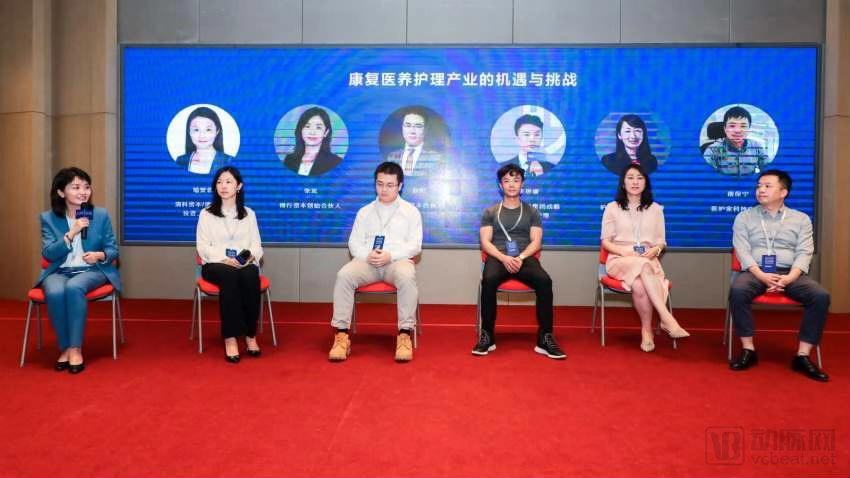
The panelists participating in the roundtable discussion included Ms. Zhang Lan, Founding Partner of Boying Capital; Ms. Yu Jurong, Investment Partner at Zero2IPO Capital/Zero2IPO Healthcare; Mr. Zhao Yang, Partner at Weilai Capital; Mr. Li Sirui, General Manager of the Strategic Development Department at Tasly Holding Group; Ms. Zhang Xueli, Founder and CEO of Hulianwang Technology; and Mr. Nan Baoning, COO of Beijing Yihujia Technology Service Co., Ltd. Together, they explored the opportunities and challenges in the rehabilitation, medical care, and nursing industry.
From an investment perspective, Zhang Lan, Founding Partner of Boying Capital, shared her investment experience, stating that the most critical factor in healthcare investment is therapeutic efficacy, followed by differentiated services.
She believes that since the healthcare and elderly care industry is fundamentally people-centric, the primary focus should be on team leadership capabilities, including recruiting, training, and motivating service personnel, as well as maintaining service quality. The second priority is to standardize, productize, and modularize services to reduce reliance on human labor, which is a prerequisite for scalability. The third is to ensure both social significance and economic value by building a sound business model grounded in correct values. Zhang Lan stated that they have long focused on the healthcare and elderly care sector and have currently invested in two companies within this field.
Zhao Yang, a partner at Weilai Capital, also shared his investment insights, noting that the probability of successful investment in the healthcare, elderly care, and nursing industry chain is increasing. Drawing from their existing investments in health payment projects, they have found that insurance can provide stable payment guarantees and sustain steady customer traffic for companies on both the service and product sides of the healthcare, elderly care, and nursing sector. Currently, they primarily focus on two types of enterprises: one specializes in traffic operations, featuring robust product and service models that integrate with major traffic platforms; the other focuses on user operations, including distinctive service providers that continuously extend the user service lifecycle.
For individual clients, Li Sirui, General Manager of the Strategic Development Department at Tasly Holding Group, stated that to address patients’ unmet clinical needs, enterprises must demonstrate to clients “the recurrence rate without a rehabilitation program, the extent to which it can be reduced with such a program, and how the rehabilitation program meets essential healthcare demands.”
Li Sirui also shared insights on capital’s perspective within the industry. In the field of acute-care-level medical services, project replicability is a key concern. He stated, “You may have achieved success at a single point or in one hospital with a viable profit model. What I focus on is having a service system and training framework that allow for continuous scaling of this model. Regarding rehabilitation during the acute phase of medical care and post-PCI (Percutaneous Coronary Intervention) rehabilitation, these sectors emphasize the value of network synergy. First, establish a defined operational model; second, determine the payer structure—whether it is an insurance-based model or an out-of-pocket patient model; and third, build a value network.”
From a corporate perspective, Zhang Xueli, Founder and CEO of Huliwang Technology, stated that the company has transitioned from its 1.0 phase of nurse training services to the 2.0 era. During the 1.0 phase, the company served over 700,000 nurses across China, accounting for 25% of the nation’s nursing workforce. The 2.0 era focuses on engaging senior nurses nearing retirement from clinical practice to provide disease-specific rehabilitation guidance to discharged patients. Based on the proportion of discharged patients and client demand, initial efforts are primarily centered on orthopedics and cardiovascular and cerebrovascular diseases.
Nan Baoning, COO of Beijing Yihujia Technology Service Co., Ltd., stated that they are still in an exploratory phase, having begun to introduce training materials and systems from Japan’s elderly care and nursing industry in 2014 and 2015.
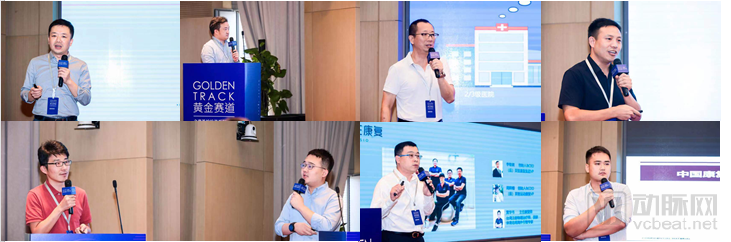
During the roadshow session, representatives from eight projects presented on key aspects including pain points addressed, application scenarios, product design, and collaborative resources. The eight innovative projects featured in this roadshow covered a broad spectrum, encompassing specialized service institutions supporting serious medical care, integrated enterprises providing medical and elderly care services, companies enhancing service efficiency and coverage for B-side clients, and firms developing practical assistive devices and smart products.
Project 1: Beijing Julu Medical Management Consulting Co., Ltd.
Julu Medical effectively integrates high-quality domestic and international medical rehabilitation resources, providing comprehensive solutions for holistic rehabilitation, specialized general care, and cardiopulmonary-diabetic chronic disease rehabilitation to partner hospitals, health examination centers, nursing homes, and other institutions. It currently operates six “Julu Cardiopulmonary-Diabetic Rehabilitation Centers.”
Project 2: Beijing Ruihua Cardiac Rehabilitation Center
Ruihua Xinkang was established in 2016 as China’s first specialized cardiac rehabilitation hospital. By setting up rehabilitation centers adjacent to benchmark institutions such as Anzhen Hospital, it pioneered the “pre-treatment and post-rehabilitation” model. The company has adapted the Mayo Clinic’s cardiac rehabilitation system for the Chinese market and integrated the cardiac rehabilitation technologies and service frameworks of Japan’s Sakakibara Heart Institute, thereby developing safe and effective cardiac rehabilitation treatment protocols tailored to the needs of Asian populations.
Project 3: Beijing Yujian Weilai Technology Co., Ltd.
Yujian Future focuses on “stroke rehabilitation” as its entry point, leveraging internet, big data, and artificial intelligence technologies to connect doctors, medical devices, and patients. It has established a deep strategic partnership with Xuanwu Hospital of Capital Medical University and is also a key collaborative member of the Beijing Cerebrovascular Disease Industry Technology Innovation Strategic Alliance.
Project 4: Beijing Tichuang Dongli Health Management Co., Ltd.
Tichuang Power relies on a replicable, standardized model and aims to expand its number of outlets to the top position nationwide within the industry over the next two years. Its sports rehabilitation centers focus on integrating “sports rehabilitation and sports health management” as their core business, with operations currently established in multiple cities including Beijing, Shanghai, Nanjing, Hangzhou, Tianjin, and Ningbo.
Project 5: Beijing Aiyisheng Health Technology Co., Ltd.
AiYiSheng Health specializes in the field of intelligent chronic disease management, integrating artificial intelligence with clinical medicine. It provides the GDS (Guideline-Driven System), an AI-powered chronic disease management system aligned with national guidelines, to empower and enhance efficiency for the National Health Commission, local health commissions, healthcare security administrations, community hospitals, and medical consortia, while ensuring cost containment.
Project 6: Beijing Yuanzizai Health Technology Co., Ltd.
Yuanzizai is a chain of orthopedic and sports rehabilitation institutions that deliver international-quality services. Dedicated to the specialized field of joint care, it collaborates with leading clinical orthopedic surgeons in China to jointly advance the integrated professional development of orthopedic rehabilitation. Currently, it operates two sports rehabilitation centers in Beijing, providing clients with comprehensive, full-cycle services that encompass prevention, non-surgical conservative treatment, perioperative rehabilitation, and long-term post-discharge home-based rehabilitation management.
Project 7: Shenzhen Yinghansi Power Technology Co., Ltd.
Yinghansi is a high-tech enterprise engaged in the research and development of lightweight powered exoskeletons, dedicated to developing lightweight powered exoskeleton robots for home use, thereby helping patients with walking disabilities improve their mobility and quality of life. The company has currently completed the development of multiple powered exoskeleton robots for orthopedic rehabilitation and post-stroke sequelae, with some products having obtained U.S. FDA and European CE certifications; it is currently undergoing certification by the China Food and Drug Administration (CFDA).
Project 8: Beijing Medical and Nursing Home Technology Service Co., Ltd.
Yihujia is a professional enterprise specializing in medical nursing, elderly care and companionship, maternal and infant care, and other life support services, with equity investment from AVIC Trust, a central state-owned enterprise. It provides medical nursing, elderly care and companionship, maternal and infant care, and other life support services. Its nursing operations cover 26 hospitals across China, and it operates four long-term care centers with a total of 16,000 beds.
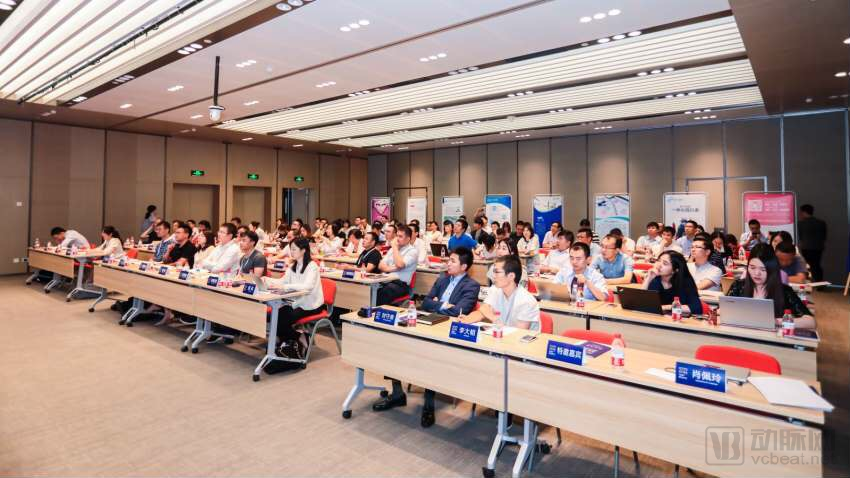
As the final project pitch concluded, the “Golden Track” Investment Salon Series on Health, Elderly Care, and Nursing successfully came to a close. The salon established a venture capital exchange platform in the health, elderly care, and nursing sector, garnering attention and support from investors and entrepreneurs alike. It also highlighted the significant potential of this field to stakeholders across various sectors interested in the innovative medical industry. We look forward to everyone embracing the mission of “bringing comfort to the acutely ill, ensuring peace for the elderly, and fostering joy for all,” and jointly advancing the health, elderly care, and nursing industry.