

Universal Healthcare Launches China's First Coronary Heart Disease Insurance "Bing Wu You"; Explores Innovative Single-Disease Health Insurance Model
In March this year, cheers erupted from the conference hall of Beijing Global Medical Rescue Co., Ltd. The company’s domestically first insurance product for pre-existing conditions—“Post-PCI Hospitalization Medical Insurance (Wu You)” —had finally reached a consensus on cooperation among the product designer, reinsurers, direct insurers, and distribution channels. This milestone was achieved after an eight-month journey encompassing preliminary research, project initiation, risk control design, and filing of product terms.
In China, there are no more than ten medical insurance products that cover individuals with pre-existing conditions, making Global Medical Assistance undoubtedly one of the first pioneers in this area. As the largest medical assistance organization in China, Global Medical Assistance has been operating global medical rescue services for nearly 18 years, and their innovative single-disease health insurance represents a new endeavor. Established in 2001 by the International Health Exchange Center (IHEC) of the former National Health and Family Planning Commission, Global Medical Assistance has been providing market-oriented services such as emergency medical rescue, routine medical care, roadside assistance, travel aid, and claims assistance.
Over the years, Universal Medical has established direct and extensive collaborations with more than 1,168 medical institutions both domestically and internationally, cumulatively covering over 30 million individuals and completing nearly 100,000 case services. The substantial volume of medical data accumulated has created new possibilities for exploring insurance-related business opportunities.
On April 25, “Bing Wuyou” launched China’s first hospitalization medical insurance product for coronary heart disease, also named “Bing Wuyou,” on Du Xiaoman, Baidu’s financial platform. VCBeat previously reported on this launch. The product is underwritten by Yi An Insurance, one of the first four internet insurance companies approved for establishment in China, with Aon, the world’s largest insurance brokerage and risk management firm, serving as the reinsurance broker.

“Bing Wuyou” Product Introduction
According to the introduction, “Bing Wuyou” targets patients with NYHA Class I and Class II heart failure, coronary heart disease (CHD), and those who have undergone percutaneous coronary intervention (PCI). Upon successful enrollment, users immediately receive a basic reimbursement coverage of 60%. Furthermore, by engaging in continuous and effective health-related interactions, customers can earn up to an additional 40% in insurance benefits at no extra cost. This dynamic management approach is the first of its kind among domestic medical insurance products, truly achieving an integrated linkage between health management and insurance benefits. It has also become a key reason why this novel insurance model exploration has gained recognition from the China Insurance Regulatory Commission (CIRC).
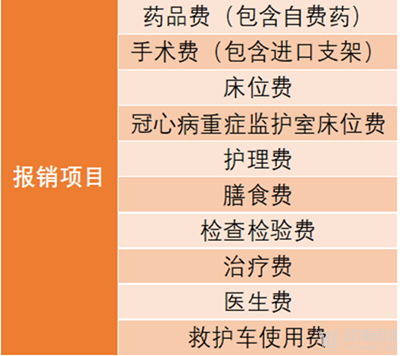
"Bing Wuyou" Reimbursement Program
Upon the occurrence of an insured event, users may file a claim by submitting required documents, including the original medical diagnosis certificate issued by the hospital, original proof of medical expenses, and the medical expense settlement statement. The insurance company shall pay the claim amount into the user’s designated account within 10 business days after the claim materials have been reviewed and approved.
Mr. Guo Jian, CEO of Universal Medical, is a veteran in the insurance industry. Over his 16-year career, he has witnessed the evolution of the insurance sector, from the regulatory liberalization of health insurance operations and management to the emergence of blockbuster insurance products. Previously, individuals could only purchase fixed-benefit health insurance policies from commercial insurers. Under such policy terms, once an insured event occurred, the insurer was required to pay the beneficiary a lump-sum compensation of a predetermined amount. The advent of “Million Yuan Medical Insurance” pioneered the era of individual expense-reimbursement medical insurance. Building on this foundation, “Bing Wu You” (Worry-Free Illness) features innovative design specifically tailored for patients with coronary heart disease.
Coronary heart disease (CHD) is a chronic condition characterized by recurrent episodes. The cost of a single treatment episode is high, averaging RMB 50,000–70,000, and can reach RMB 100,000–200,000 in particularly severe cases. Traditional medical insurance policies typically exclude individuals with pre-existing conditions, including CHD patients, rendering them a vulnerable group within the commercial insurance market. Meanwhile, domestic insurers’ health insurance operations primarily target the large population of healthy individuals who have not yet purchased commercial medical insurance, thereby leaving market opportunities for other players in the health insurance ecosystem that possess substantial volumes of medical data.
In addition to reimbursing the costs of secondary hospitalizations for individuals with pre-existing conditions, a major highlight of the “Bing Wu You” product is the introduction of strict patient adherence management as a risk control measure. During the development of this product, Universal Medical introduced the advanced overseas “HMO model,” emphasizing the integration of “healthcare + insurance.” This approach provides customers with both insurance products and medical services, shifting the focus of health insurance from mere disease coverage to comprehensive health management. Specifically, by collaborating with online healthcare and online pharmaceutical platforms, Universal Medical has implemented dynamic reward-based insurance benefits, enhanced claims management capabilities, and delivered personalized health management services to customers, thereby breaking the industry status quo and overcoming sector-wide challenges.
At the time of premium payment, users immediately receive basic reimbursement benefits with a 60% reimbursement rate. The remaining 40% reimbursement rate is earned through user interactions with physicians on the Universal Medical platform. Mr. Guo stated that patients who have undergone coronary stent implantation need to long-term adhere to medical advice and take anticoagulant medications to control blood lipid levels and blood viscosity. Improving patient adherence can effectively reduce the probability of recurrent vascular occlusion. Universal Medical has also launched a dedicated WeChat Official Account management platform to monitor patients’ medication adherence through interactive engagement.
For patients with good adherence to medical advice, a 5% monthly increase in insurance benefits is awarded as an incentive for proactively reducing the risk of readmission, up to a maximum reimbursement rate of 100%. This effective linkage between health management and insurance benefits has become a key reason why Bingwuyou’s innovative insurance model has gained recognition from the China Insurance Regulatory Commission.
Furthermore, as part of the company’s traditional business operations, the ancillary services provided by Universal Medical’s integrated medical rescue division have significantly enhanced the value proposition of the “Worry-Free Illness” program. In the event of an insured incident, Universal Medical can provide access to hospital resources and services such as telephone-based medical consultations, ten-minute emergency response guidance, hospitalization arrangements, inter-hospital transfers, and advance payment of medical expenses.
In fact, despite the positive market response to Bing Wuyou, its launch was no easy feat. “It took eight months from internal project initiation to its official listing on the Du Xiaoman platform.” The most challenging aspect was overcoming the entrenched perceptions of insurance companies.
On one hand, domestic insurance companies face a vast, untapped market for healthy individuals and lack the subjective willingness to develop products for those with pre-existing conditions. On the other hand, medical insurance products for patients with pre-existing conditions feature more complex structures, significantly increasing the difficulty of risk control. Such endeavors contradict their operational philosophy centered on stability and profitability. In reality, patients with pre-existing conditions demonstrate a strong willingness to engage in health management and purchase medical insurance, generating robust market demand and fostering a new market segment with reduced reliance on distribution channels. “This is particularly true for post-cardiac stent surgery patients targeted by ‘Bing Wu You’,” pointed out Mr. Guo.
Furthermore, insurers have long denied coverage to individuals with pre-existing conditions, primarily because their more complex health profiles expose insurers to greater claims risk. Insurance products designed based on the law of large numbers place extremely high demands on the volume and quality of underlying data. The lack of medical data is the fundamental reason why traditional insurers have been unable to actuarially include individuals with pre-existing conditions in their coverage.
Over the past decade and more, Universal Medical has accumulated a large medical database sufficient to support insurance actuarial calculations through its medical rescue services. The innovation team’s analysis of data from cardiac patients in Chinese public hospitals over the past ten years revealed that although the number of new patients receiving coronary stents has increased year by year, resulting in a cumulative population of nearly 8 million individuals who have undergone stent implantation, the probability of postoperative readmission for secondary cardiac surgery actually falls within the range required by insurers for claims risk management, thereby alleviating insurers’ concerns.
Mr. Guo told reporters that the success of Bing Wuyou is just the beginning. In this wave of innovation, Universal Medical aims to cultivate an ecosystem of incentive-based health insurance by leveraging insurance products for individuals with pre-existing conditions. “This represents a model innovation grounded in the development of innovative products.” Universal Medical is currently working to integrate various healthcare management products—spanning different stages and functions—into a closed-loop health insurance system. As conditions for positive incentives, these measures will stimulate consumer demand within the healthcare management ecosystem, either proactively or passively, thereby generating revenue for all participating stakeholders.
During the maturity phase of this model, users can even obtain insurance policies at very low prices, with insurers’ costs offset by enterprises that generate revenue from product or service sales within the closed-loop ecosystem. This approach mobilizes the enthusiasm of various companies in the ecosystem, ensuring that all participants benefit. “In response to the gaps and deficiencies in the insurance market for patients with pre-existing conditions of major diseases, Global Human will actively develop single-disease pre-existing condition insurance programs, striving to become an industry leader, fill market voids, and benefit patients.”