

Chuanshi Banruo Files IPO Prospectus: Pioneering Smart Consumables Cabinets and End-to-End Medical Supply Chain Solutions
With the release of the Administrative Measures for Medical Consumables and the gradual implementation of the “Two-Invoice System” for medical consumables, state oversight of these products has become increasingly standardized and stringent. Shenzhen Chuanshi Boruo Technology Co., Ltd. (hereinafter referred to as “Chuanshi Boruo”) is a leading third-party pharmaceutical supply chain service platform in China. Leveraging cloud-based supply chain infrastructure, the company provides end-to-end direct connectivity supply chain solutions for pharmaceutical manufacturers, hospitals, and pharmacies. Recently, Qu Yong, General Manager of Chuanshi Boruo, disclosed to VCBeat that, in response to the introduction of policies related to medical consumables, the company began shifting one of its core business focuses to medical consumables in early April this year.
The core team of Chuan Shi Ban Ruo has been deeply engaged in the pharmaceutical industry for over a decade, accumulating extensive experience in both in-hospital and out-of-hospital logistics. “Prior to the company’s establishment, our team focused on optimizing individual nodes within the supply chain, which proved highly limited in terms of overall supply chain cost and efficiency,” said Qu Yong. “Having worked in Japan’s pharmaceutical supply chain sector for many years, I observed that Japan achieved holistic optimization of supply chain processes (procurement–distribution–storage) as early as the 1990s by establishing an industry-level order management platform. Therefore, we also aim to address efficiency and cost challenges in pharmaceutical distribution by building a supply chain platform tailored to China’s pharmaceutical industry.”
Establishing a pharmaceutical supply chain platform is by no means an easy task. The gap between the industry’s understanding of supply chains and the philosophy advocated by Chuanshi Banruo requires detailed explanations to clients across various segments, including business development, marketing, procurement, distribution, and warehousing. This approach helps clients grasp the solution framework that evolves from point-to-line to line-to-plane, thereby integrating their upstream and downstream operations and achieving true supply chain optimization.
Currently, Chuanshi Banruo has two core business areas, targeting in-hospital and out-of-hospital settings respectively, which complement each other. In practice, these two areas are continuously integrating, further facilitating the connectivity of the supply chain platform.
Out-of-hospital:Inventory Pre-positioning Services and Supply Chain Management Services. By establishing a pharmaceutical transportation service platform, the company provides inventory pre-positioning and supply chain management services to manufacturers. This approach significantly reduces their overall supply chain costs, addresses the cost increases caused by fragmented sales orders, and enhances the level of service manufacturers can offer to downstream customers. This pre-positioned warehouse service has become an increasingly prominent demand from manufacturers since the implementation of the “Two-Invoice System” policy and the execution of the “4+7” volume-based procurement program.
In-hospital:In-Hospital Logistics Services (SPD Services)Hospital logistics services, an integrated third-party-initiated solution for pharmaceutical and consumable management in hospitals, were introduced from Japan. In China, hospital logistics face challenges such as insufficiently refined management and difficulties in tracing the use of pharmaceuticals and consumables. Through years of effort and experimentation, Chuanshi Boruo has effectively linked manufacturers, distributors, primary hospital warehouses, and clinical departments by providing an integrated solution comprising a “Supplier Collaboration Platform + SPD (Supply, Processing, and Distribution) + Smart Terminals.” This approach not only expands the traditional scope of hospital logistics but also constructs a hospital supply chain Internet of Things (IoT) by integrating smart hardware products, achieving seamless information connectivity. As a result, it significantly enhances the efficiency of hospital logistics and reduces associated management costs.
When it comes to in-hospital services, Qu Yong emphasized: “The SPD system has been promoted in China for over a decade, but some hospitals have misconceptions about it, mistakenly believing that adopting this system alone can resolve all internal medical logistics issues. In my view, the system is merely an auxiliary tool; the management of consumables and pharmaceuticals relies more on operational excellence than on the system itself.”
However, in response to hospitals’ high expectations for SPD systems, Handed Down If The Technology has provided its answer. The company has standardized the management and implementation processes for each project within hospitals, enabling them to utilize the SPD system for warehouse management, departmental management, order management of consumables and pharmaceuticals, and post-use settlement management, thereby significantly improving the work efficiency of medical staff. In addition, to achieve efficient management of high-value consumables, Handed Down If The Technology has independently developed an ultra-high-frequency (UHF) smart cabinet for high-value consumables.
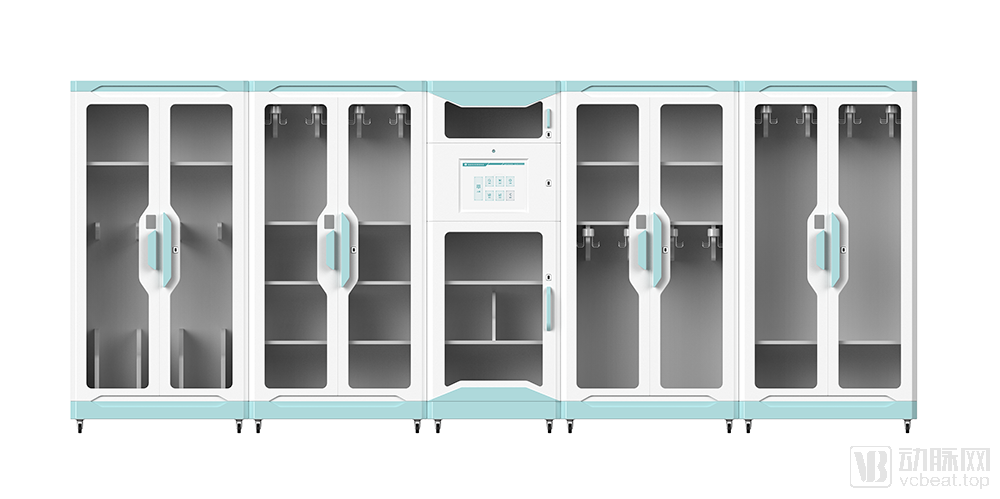
Schematic Diagram of Ultra-High-Frequency High-Consumable Cabinet (Image provided by the enterprise)
Managing high-value consumables is inherently a challenging aspect of in-hospital logistics management. The company began developing related intelligent management terminals in 2018 and ultimately launched its ultra-high-frequency (UHF) high-value consumable cabinet earlier this year. Equipped with RFID tag chips, this UHF high-value consumable cabinet can read relevant information about the consumables. Healthcare professionals must first verify their identity before accessing the supplies, and the entire retrieval process is recorded by the cabinet, thereby ensuring standardized management of high-value consumables.
Qu Yong stated, “Chuan Shi Ban Ruo is fortunate, as we launched our ultra-high-frequency high-value consumable cabinets this year, coinciding with the recent issuance of new national regulations on consumable management, which has led hospitals to place greater emphasis on managing medical consumables. Currently, our ultra-high-frequency high-value consumable cabinets have been deployed in more than ten hospitals and have received widespread acclaim.”

On-site Photos of High-Value Consumables Management by Chuanshi (Images Provided by the Enterprise)
In addition to ultra-high-frequency high-value consumable cabinets, Chuanshi Boruo is also developing two types of logistics robots. One facilitates the secondary transport of pharmaceuticals and consumables from automated equipment by medical staff via robots; the other enables point-to-point delivery of pharmaceuticals and consumables, with medical staff operating the robots through intelligent terminals. Currently, these two robots are being piloted at two large, well-known Grade 3A hospitals, and the company plans to launch their market promotion this October.
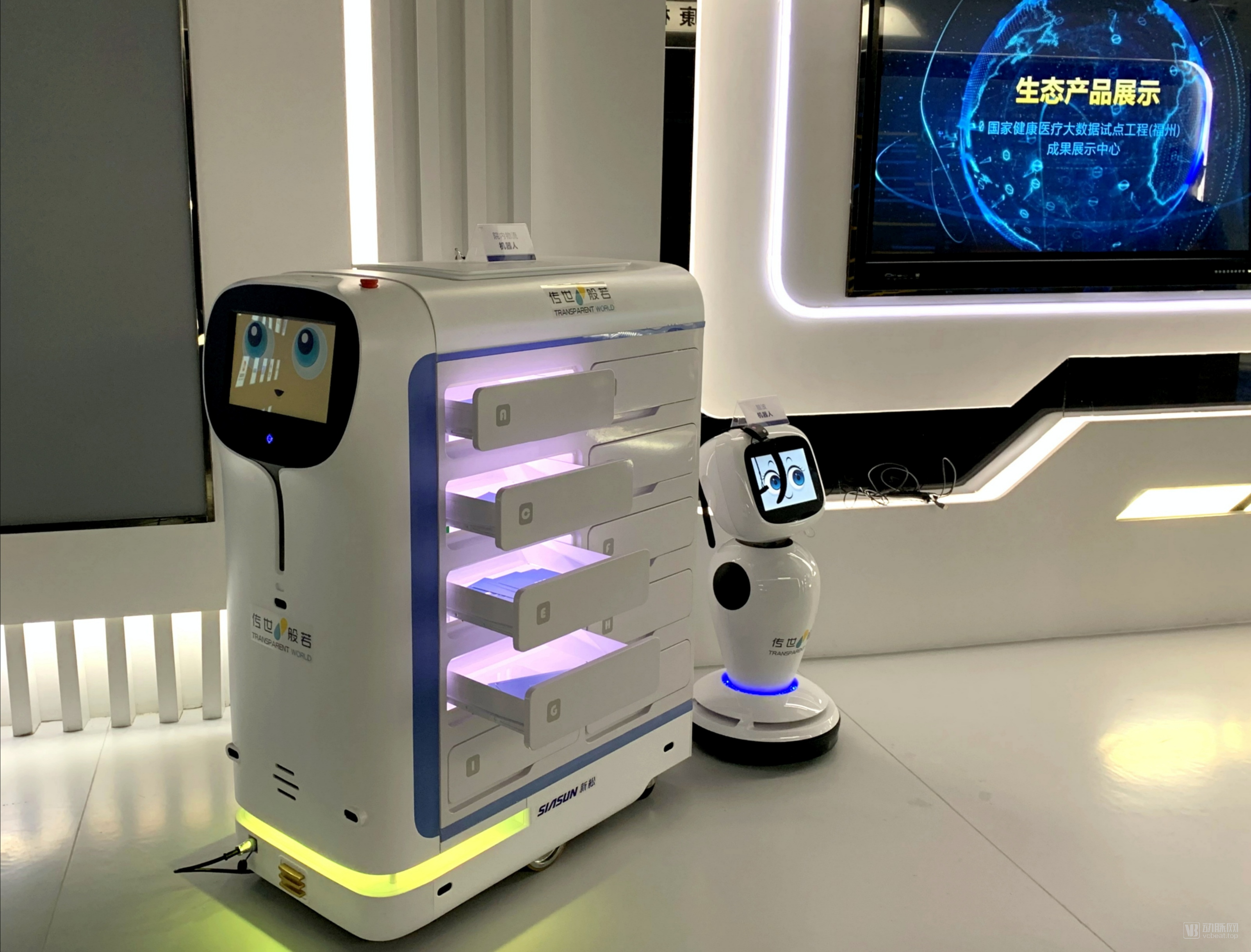
Product Display Image of Chuanshi Banruo Robot (Image Provided by the Company)
As of now, Handed Down Prajna’s pharmaceutical supply chain platform has onboarded 87 manufacturers, 921 distributors, and 148 medical institutions. The supply chain management platform, jointly launched with China Electronics Data and built upon national healthcare big data, has been implemented in multiple pilot cities for national data engineering projects. It has enabled pilot hospitals to achieve the goal of absolute zero-inventory internal logistics operations, significantly enhancing hospital management performance under the zero-markup policy. Furthermore, Handed Down Prajna has completed the development of 13 product lines and secured 18 product intellectual property rights and 13 invention patents.
Regarding the future of Chuanshi Borun, Qu Yong stated, “In the future, we will closely monitor the impact of volume-based procurement under medical insurance on direct industrial distribution, as well as the cancellation of drug and consumable consignment models on in-hospital supply chain services. We believe that our products and service model are highly aligned with these two healthcare reform directions. This is because Chuanshi has always operated as an independent third party, dedicated to purely enhancing supply chain management capabilities for both enterprises and hospitals.”
"It is reported that Chuanshi Banruo completed its Series A financing in 2018 and has currently launched its Series B financing plan. In the next three years, Chuanshi Banruo will make every effort to achieve rapid market replication from 1 to 100."