

BIO-Innovate Files IPO Prospectus: Pioneering China's MedTech Innovation Ecosystem with a Track Record of Incubating Multiple Billion-Dollar-Valuation Companies

Proxima Capital
Investment Institutions in the Medical Technology Field
Li Zhe, who majored in applied electronics and later launched a startup in the United States, never imagined that years later his most defining label would be as a trailblazer of China’s innovative healthcare entrepreneurship model.
Li Zhe, who holds a bachelor’s degree in Applied Electronics from Zhejiang University, previously worked at Huawei, where he collaborated with IBM consultants to redesign and restructure the company’s R&D processes. Later, while pursuing his MBA at Hult International Business School in Boston, Li took an entrepreneurship course taught by Professor Pasteur, a seasoned mentor in startup training. This course had a profound impact on his subsequent career.
From drafting a project plan in 2005 to establishing China’s first international biotechnology research institute in Tianjin, founding Baichuanghui and pioneering the medical device CDMO (Contract Development and Manufacturing Organization) R&D and production model in China, and setting up a leading vertical fund for biopharmaceuticals, Li Zhe—who originally founded BioHermes, a diagnostic reagent R&D and sales company in the United States—has helped nearly 100 overseas-returnee entrepreneurs launch their startups and implement their projects in specialized industrial parks across China.
VCBeat lists below some of the globally and domestically leading technology projects introduced and incubated by Baichuanghui, covering multiple hot sectors in biopharmaceuticals, diagnostic reagents, and healthcare enterprises. Among these are star companies valued at hundreds of millions, yet Mr. Li Zhe has never ceased his exploration of innovative models for medical entrepreneurship. Last weekend, VCBeat met with Mr. Li Zhe at the Chongqing International Medical Technology Translation Center, located in a bustling area of Chongqing, where he shared how Baichuanghui helps startups overcome the three major growth hurdles: R&D, production, and financing.

Selected Projects Introduced and Incubated by Baichuanghui
Medical entrepreneurship is a collaborative endeavor involving multiple stakeholders: scientists establish technological barriers, entrepreneurs handle specialized operational management, and investors address ongoing funding needs. While serving as Executive Director of the New England Chapter of the Chinese American Professors Association (SAPA), Mr. Li Zhe observed, while assisting early-stage returnee entrepreneurs, that numerous experienced Chinese scientists in the United States intended to return to China to launch startups leveraging cutting-edge technologies, but struggled to identify local biomedical parks with sufficient professional capacity to support their ventures.
At that time, there were no public laboratories in China. Even if university and research institution laboratories had been fully opened to the public, their equipment standards would have been insufficient to meet the experimental demands of cutting-edge technologies. In contrast, in Boston, USA, leading universities such as the Massachusetts Institute of Technology (MIT) and Harvard University integrated technological R&D, clinical applications, and industrial resources. They provided state-of-the-art core laboratories, fully equipped sample production workshops, and timely business management advice, thereby establishing a comprehensive pathway for technology startup incubation.
Mr. Li Zhe believes that improving scientific research infrastructure is an essential pathway for introducing innovative technologies from overseas. In 2005, under the advocacy of the Ministry of Science and Technology of China, Mr. Li Zhe joined forces with several key members of the Chinese Association of Pharmaceutical Professionals in the United States (CAPP-US) to draft the inaugural plan for China’s first International Institute of Biotechnology. The plan was quickly approved as a project by the Ministry of Science and Technology. Led by the Ministry of Science and Technology, in collaboration with the Ministry of Health, the Ministry of Commerce, the State Food and Drug Administration, and the People’s Government of Tianjin Binhai New Area, the Tianjin International Joint Academy of Biomedicine (hereinafter referred to as the “Joint Academy”) was established in Tianjin Binhai New Area.
To date, the Joint Research Institute has become one of the most dynamic biopharmaceutical parks for gathering overseas-returning high-end talents in new drug R&D and for innovative drug development and production, having successfully recruited nearly 100 academic leaders from abroad to return to China and launch their ventures.
The same mission attracted two other partners to join, including Mr. Li Xuefei, former General Manager of the China operations for a U.S. medical device company and former General Manager of a national-level biotechnology industrial park. With 20 years of management and operational experience in high-tech companies and industrial parks, he is currently responsible for the operation of the company’s industrial park and platform. He possesses extensive project management experience and has provided planning and consulting services to multiple government-backed industrial parks.
Dr. Yang Junjie graduated from the Department of Immunology at Beijing Medical University and completed his postdoctoral training in Ophthalmology and Immunology at the University of Washington, USA. He also holds a U.S. medical license. Dr. Yang has extensive experience in new drug development at globally renowned pharmaceutical companies, including Pfizer and Alcon (later acquired by Novartis). He possesses over 20 years of experience in research and development, management, and entrepreneurship within the biopharmaceutical industry.
The three founders convened in Wuxi, Jiangsu Province, where they established Baiqiao International, the predecessor of Baichuanghui, initiating a nationwide rollout of specialized medical technology incubation zones. The team’s first move was to set up the self-operated Jiangyin Baiqiao International Biotech Incubator (hereinafter referred to as “Baiqiao Incubator”) in Wuxi, Jiangsu. With an investment of tens of millions of yuan in instruments and equipment, they built central laboratories and pilot-scale production workshops shared by tenant companies. At the Baiqiao Incubator, the team leveraged professional operational management capabilities to accelerate the growth of startups, reducing the average time required for translating scientific and technological achievements into practical applications from 5–6 years to 4–5 years.
Enterprises settling in the Baiqiao Incubation Park have reduced their upfront costs for experiments and instruments while accelerating R&D progress. Over the past four years, Baichuanghui has introduced and incubated more than 40 medical startups founded by overseas returnees at the Baiqiao Incubation Park. These include Changfeng Pharmaceutical, a leading Chinese respiratory drug delivery platform that completed a RMB 440 million Series D financing round two years ago; Amate, which develops bioresorbable cardiovascular stents; and Pulai, which focuses on the development of broad-spectrum antimicrobial peptides.
As startup projects in the Baiqiao Incubation Park continue to grow, the team has found that the substantial investment required for production platforms during the transition from R&D to commercialization has become the second major barrier constraining many early-stage companies.
In 2011, Baichuanghui established China’s first medical device CDMO platform in Wuhan Optics Valley Bio-city, pioneering the contract manufacturing model for innovative medical devices and facilitating regulatory approval for more than 20 companies on this platform. Mr. Li Zhe told VCBeat that, with the nationwide rollout of the Medical Device Marketing Authorization Holder (MAH) system, an increasing number of companies are outsourcing their production processes to third-party providers through CDMO arrangements.
Mr. Li Zhe pointed out that during this period, Baichuanghui was no longer satisfied with its original incubator function and would gradually develop into an innovation ecosystem, providing a resource matchmaking platform for medical entrepreneurship enterprises.
On one hand, it provides on-the-ground support within industrial parks by establishing incubators and accelerators. BaiChuangHui has successively set up operations in Wuhan, Hangzhou, Zhengzhou, Chengdu, Chongqing, and other cities, selecting areas with relatively low startup costs but concentrated knowledge resources such as universities and technology innovation centers to build medical innovation hubs or clusters.

Baichuanghui’s Nationwide Layout in China

Baichuanghui Branches in 6 Cities Across China
On the other hand, it fully integrates resources across the upstream and downstream segments of the industry chain. Baichuanghui facilitates collaborations between its incubated and portfolio companies and leading clinical experts across various regions in China, assessing the application prospects of cutting-edge projects from the perspective of clinical needs.
Mr. Li Zhe believes that grasping trends is the most critical factor in project incubation, stating, “Only by clearly identifying technological development trends can we understand their future impact in China and drive industry transformation.” Each year, the three founders lead their research team in conducting extensive industry studies, applying a global perspective to analyze the clinical application potential of the latest cutting-edge technologies. They complete pivot research covering hundreds of industries annually, seeking a deeper understanding of global dynamics and trends through comparisons with existing technologies.
Establish extensive industry resources encompassing global universities and research institutes, international biopharma industrial parks, leading healthcare enterprises, and industry associations to build a global medical innovation ecosystem and talent network.
Believing that exceptional talent is the core resource for healthcare entrepreneurship, Baichuanghui is dedicated to attracting high-end global medical innovation and entrepreneurial talent. For many years, Baichuanghui has been actively involved in national talent introduction programs, continuously facilitating the entry of more outstanding overseas projects into China. It annually organizes events such as the “Overseas Chinese Entrepreneurship and Development Fair,” under the guidance of departments including the Central Leading Group for Introducing High-Level Overseas Talent, and the “Chunhui Cup,” a platform for returning overseas students to innovate and start businesses hosted by the Ministry of Education and the Ministry of Science and Technology. These initiatives have attracted hundreds of global healthcare entrepreneurs to participate or return to China to launch their ventures.
Baichuanghui has built a full-industry-chain resource network, including collaborations with globally renowned industry associations such as the US-China Healthcare Association (USCHA), BIOWIN (Belgium), and the Canada-China Biomedical Science and Technology Development Association; research systems of prestigious domestic and international universities, including Zhejiang University, Tongji Medical College, Chongqing Medical University, Harvard University, Stanford University, and Johns Hopkins University; leading healthcare companies such as Johnson & Johnson, Philips, Sinopharm, Daan Gene, Janssen Pharmaceuticals (Belgium), UCB Pharma (Belgium), and AstraZeneca (Sweden); and hospital networks such as Fuwai Hospital, Wuhan Union Hospital, and the Affiliated Hospitals of Chongqing Medical University.
To better align industrial chain resources and services with global innovation projects, Baichuanghui officially launched the BIO-X Initiative in 2018 to facilitate the market entry of overseas innovative projects into China. This initiative helps overseas entrepreneurs navigate China’s regulatory landscape, supports their localization efforts, and facilitates connections with clinical resources. The first cohort comprised 20 companies, including a number of internationally recognized innovative medical technology projects approved by the U.S. Food and Drug Administration (FDA). Currently, the “Cleveland Clinic Startup Competition Direct Access” program is underway; in October, it will take a group of innovative projects originating from China to participate in roadshows at the Cleveland Global Summit.
Early-stage healthcare startups commonly face significant challenges in securing financing. China lacks specialized angel investors in the healthcare sector, and many investment firms are unable to participate in early-stage investments. The Baichuanghui team firmly believes that innovative healthcare investment, particularly at the early stage, presents a unique opportunity capable of delivering substantial returns to both enterprises and investors. Baichuanghui boasts an investment team with extensive experience and expertise in healthcare entrepreneurship, having accumulated rich experience in incubating early-stage healthcare startup projects.
The founder of Baichuanghui also possesses extensive experience in medical entrepreneurship, and has therefore assembled a professional investment team dedicated to the incubation and investment of early-stage innovative healthcare ventures. The team selects outstanding teams that address critical clinical needs, possess core technologies, or have rich industrialization experience. It has incubated and invested in a portfolio of early-stage medical startup projects, including Kangjia Online—a rapid home-based sperm motility testing project based on microfluidic technology, founded by young experts; and Bainai Likang—an innovative gel drug delivery platform project, founded by young experts with R&D backgrounds from well-known international pharmaceutical companies. This approach reflects a profound understanding that the incubation of innovative healthcare solutions requires the support of professional investment.
In 2016, Mr. Li Zhe co-founded Proxima Capital with his former Zhejiang University classmate Sun Xiaolu, a seasoned investor active on the front lines of venture capital, to identify high-quality investment targets addressing significant unmet clinical needs and to promote the translation of innovative technologies.
“Fundamentally, the logic behind incubation and investment is the same: by providing resources and services, we facilitate or accelerate the growth of high-quality enterprises and ultimately share in the returns,” said Mr. Li Zhe. He noted that Baichuanghui incubates and builds portfolios of companies in vertical sectors according to investment standards, and that the “incubation + investment” model makes the investment portfolio more robust.
Under the “Incubation + Investment” model, Proxima Capital strives to become the investor with the deepest understanding of healthcare and entrepreneurship, helping scientists navigate the journey from initial concept to product commercialization. “Many scientists embarking on their first entrepreneurial venture have ideas that are not yet fully mature, and there is a significant gap between conception and the development of a prototype.” Throughout this process, Baichuanghui continuously provides empowerment and acceleration. When engaging with founding teams, Mr. Li Zhe adheres to the principle of addressing weaknesses without overstepping boundaries. The team observes and nurtures areas where the company excels, while the incubation and investment teams step in promptly to support and accompany the company’s growth whenever assistance is needed.
To date, Proxima Capital’s Phase I Fund has invested a total of RMB 500 million in 18 portfolio companies. Among these, 10 companies possess globally leading platform technologies and are pioneering innovators in critical therapeutic areas within China, including cardiovascular, gastrointestinal, and respiratory diseases. Their products have either been launched on the market or are currently undergoing clinical trials.
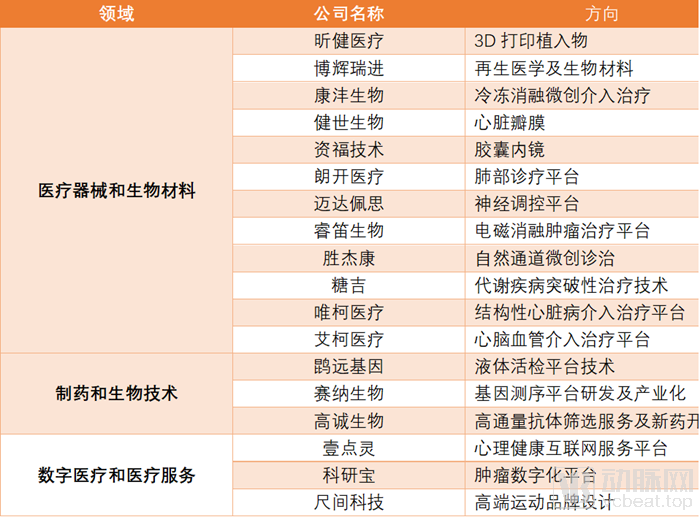 Proxima Capital's Portfolio
For years, Baichuanghui has been continuously exploring innovative models in healthcare, addressing weaknesses along the innovation chain. It integrates industry resources for startups, lowering entry barriers on one hand, and accelerating professional translation through the establishment of public platforms on the other.
At the end of 2018, during exchanges with Chongqing Science and Technology Venture Capital Co., Ltd., Baichuanghui proposed the vision of establishing an internationally leading medical translation center centered around Chongqing Medical University and its affiliated hospitals. This initiative aims to provide diversified services, offering support across various stages such as experimental platforms for projects and government fund applications. This undoubtedly represents another attempt and innovation in Baichuanghui’s healthcare entrepreneurship model.
Mr. Li Zhe pointed out that many overseas medical startups innovate based on genuine clinical needs, giving rise to a large number of physician-led enterprises. In China, however, clinicians often lack the professional product design capabilities necessary to facilitate product commercialization. “The purpose of establishing the Chongqing International Medical Innovation Center (CIMIC) under the Baichuanghui initiative is to help clinical department heads transform unmet clinical needs into business plans, and ultimately into startups and rapidly growing innovative enterprises.”
Furthermore, through the BIO-X program, Baichuanghui is cultivating high-quality projects from startups founded by returnees, while screening and nurturing a portfolio of promising potential investment targets for Proxima Capital. “After six months to a year of incubation and acceleration, the fund gains clearer visibility into each project’s development trajectory, thereby achieving an organic integration of incubation and investment.”
“Incubation services have no endpoint.” Mr. Li Zhe pointed out that Baichuanghui will continue to add new business modules to its service matrix in response to the evolving incubation needs of startups.
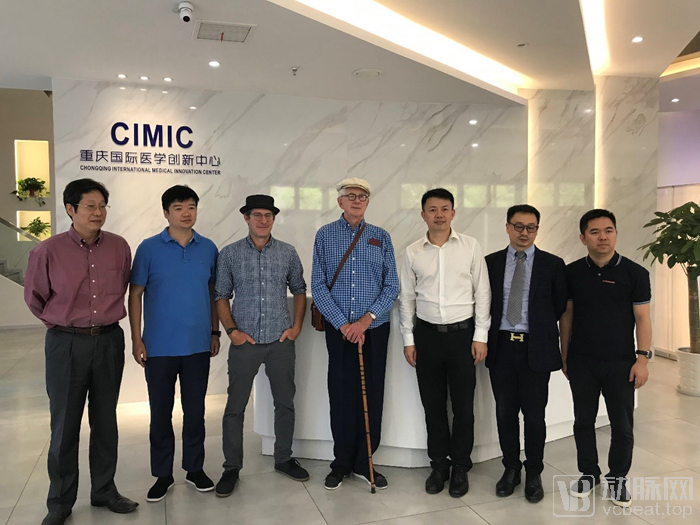
Mr. Li Zhe (third from right) hosts Nobel laureate Professor Sheldon Glashow and his delegation at CIMIC
Mr. Li Zhe succinctly summarized the model of Baichuanghui as follows:
First, Baichuanghui boasts a professional team and a global perspective, dedicated to building a bridge between global innovative medical technologies and products and the Chinese market, and establishing an incubation and investment platform for innovative healthcare.
Second, accurately analyze and grasp global trends in medical innovation, identify investment sectors that address critical clinical needs, and make precise investments in unicorn companies;
Third, continuously innovate medical incubation and acceleration models, integrate upstream and downstream resources to build a full-industry-chain service platform, and establish an “incubation plus investment” model to accelerate the incubation, cultivation, and investment of Chinese unicorn enterprises in the healthcare sector.
Medical technology innovation has always been a formidable challenge. Baichuanghui’s vision is to continuously build a better ecosystem for healthcare entrepreneurship and serve as the premier partner in the development of China’s medical technology innovation.