Baidu, CAICT, and Roland Berger Jointly Release White Paper on AI-Driven Healthcare Transformation at WAIC 2019
On August 29, the 2019 World Artificial Intelligence Conference (WAIC 2019), themed “Intelligent Connectivity for a World of Infinite Possibilities,” kicked off in Shanghai. As one of the thematic forums of the World Artificial Intelligence Conference, the “2019 Global AI Health Summit” was held on August 30 at West Bund in Xuhui District, Shanghai. The summit was guided by the International Telecommunication Union (ITU) and jointly organized by the Medical Management Service Guidance Center of the National Health Commission, the China Academy of Information and Communications Technology (CAICT), the Shanghai Municipal Commission of Economy and Informatization, the People’s Government of Xuhui District, and the Internet Medical and Health Industry Alliance.
The conference brought together experts, scholars, and industry leaders from both China and abroad in the field of AI for health to engage in in-depth discussions on development trends, industry regulation, innovative technologies, practical applications, and investment directions. During the event, the World Health Organization (WHO) and the International Telecommunication Union (ITU) officially established the Domestic Promotion Group for the Focus Group on AI for Health, aiming to promote deep collaboration among Chinese stakeholders in developing international standards for medical AI. Lingyi Zhihui participated in the conference as a deputy leader of the “Promotion Group.” Lingyi Zhihui is an AI healthcare brand powered by Baidu Brain technology. Earlier this year, as the lead organization, Lingyi Zhihui submitted two international standard proposals to the Focus Group, covering fundus imaging and clinical decision support systems, which received widespread recognition from multiple parties.
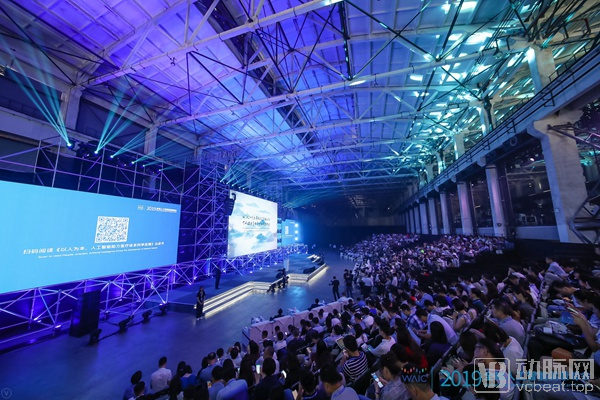
As a key outcome of the Chinese counterpart group to the WHO/ITU Focus Group on Artificial Intelligence for Health, Baidu AI Industry Research Center, the China Academy of Information and Communications Technology (CAICT), and Roland Berger jointly released the White Paper on People-Centered AI Empowering the Scientific Development of Healthcare Systems (hereinafter referred to as the “White Paper”) at the summit. The White Paper highlights eight key perspectives in the field of medical AI and points out that “to meet the diverse needs of healthcare service providers, payers and regulators, and pharmaceutical and medical device suppliers, AI will evolve into a rich variety of top-level application scenarios, promoting the realization of ‘people-centered integrated care’.”

“2019 Global AI Health Summit” Launches White Paper: “People-Centered: AI Empowering the Scientific Development of Healthcare Systems”
Viewpoint 1: AI is indispensable for alleviating the imbalance between medical supply and demand.The core challenge in China’s healthcare industry lies in the mismatch between supply and demand. The healthcare system is evolving toward a people-centric, integrated service model, with ongoing transformations in medical services, health insurance, and the pharmaceutical and medical device production and distribution systems. Continuous investment by medical experts, high-quality standardized data, and leading AI technologies will be the key drivers of AI development in healthcare.
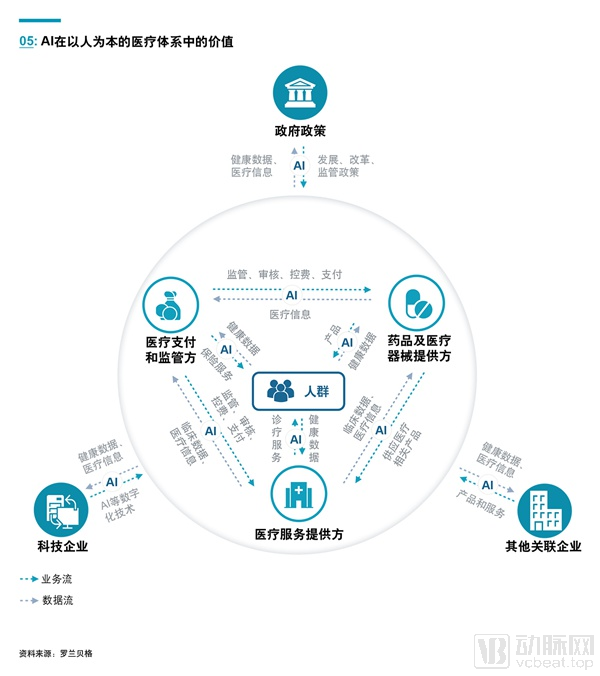
"White Paper on People-Centered, AI-Empowered Scientific Development of Healthcare Systems": The Value of AI in a People-Centered Healthcare System
Viewpoint 2: AI will empower healthcare providers across the entire process of pre-diagnosis, during diagnosis, and post-diagnosis.The integration of AI with healthcare services delivers multifaceted value, including improved service quality, enhanced patient experience, reduced medical costs, and strengthened hospital operational management. This synergy creates a wealth of application scenarios across the pre-diagnosis, intra-diagnosis, and post-diagnosis stages. AI will facilitate the online-offline integration of healthcare services, extending treatment into proactive health management. It will empower hospitals at all levels to deliver consistent, precise, and high-quality health management services, thereby realizing a truly ubiquitous, full-lifecycle healthcare service system.
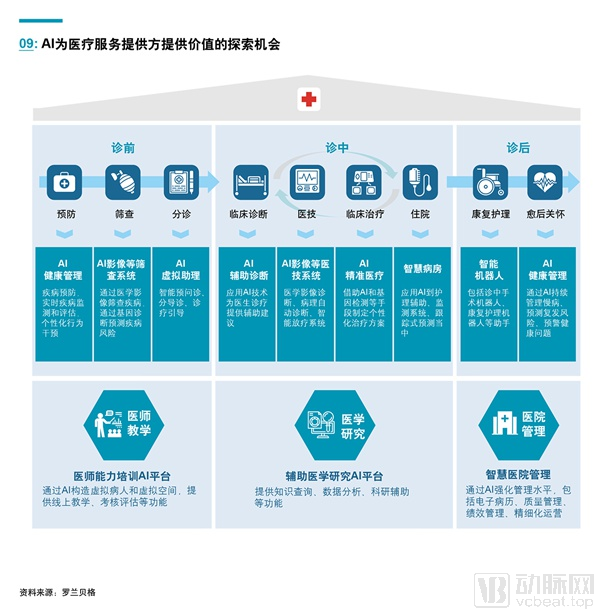
“People-Centered, AI-Empowered Scientific Development of the Healthcare System” White Paper: Exploring Opportunities for AI to Deliver Value to Healthcare Providers
Perspective 3: AI Will Cover the Entire Value Chain of Pharmaceutical and Medical Device Service Providers.AI can shorten the R&D cycle, reduce R&D costs, and increase the success rate of R&D in the research and development phase; improve quality and efficiency in the production phase; and accelerate clinical processes, assist in formulating clinical strategies, and promote precision medicine and personalized diagnosis and treatment in the application phase.
Perspective 4: AI will become a key enabler for healthcare payers to leverage the entire healthcare ecosystem.AI will help achieve goals such as controlling health insurance costs, intelligent risk control, and fraud reduction, fostering new collaborative relationships between payers, healthcare providers, and suppliers of pharmaceuticals and medical devices. The ultimate goal is to enhance the quality of healthcare services, pharmaceuticals, and medical devices while reducing expenditures, with a focus on value-based healthcare.
Perspective 5: Clinical Decision Support Systems (CDSS) Have Broad Application Prospects in Both Primary Care Hospitals and Tertiary Hospitals in the Future.CDSS will evolve from general practice to specialty care, and from tools to platforms, achieving deep integration with clinical workflows. For primary care hospitals, AI-assisted diagnosis can effectively reduce misdiagnoses and missed diagnoses, enhance physicians’ diagnostic and treatment capabilities, and improve the quality of medical services. For tertiary hospitals, AI can promote more standardized and rational diagnostic practices through data feedback, thereby improving physician efficiency.
Viewpoint 6: Personal health management platforms centered on “AI + big data technology” will become key.Future personal health management platforms will be built upon the healthcare system, integrating patients’ full-lifecycle data from both in-hospital and out-of-hospital settings to enable proactive health management. The advent of artificial intelligence will facilitate intelligent disease prevention guidance, provide real-time dynamic monitoring and assessment of diseases and individual health status, and deliver personalized behavioral interventions for users. This will promote high-quality, efficient, and low-cost medical and elderly care services, such as rehabilitation nursing and chronic disease management, thereby reducing disease risks and preventing illnesses before they occur, while lowering costs for patients, hospitals, and medical insurance systems.
Viewpoint 7: Medical natural language processing and knowledge graphs are the core technologies in the field of healthcare AI.Natural language processing is crucial for applications such as structuring electronic medical records, enabling virtual assistants and computer-aided diagnosis, and mining relationships between drugs and diseases from literature and clinical evidence. Knowledge graphs serve as the underlying core of clinical decision support systems, acting as the foundation and bridge for intelligent semantic retrieval. They hold promising prospects in various areas of smart healthcare, including disease risk assessment, intelligent assisted diagnosis and treatment, medical quality control, support for medical research, and hospital management decision-making.
Viewpoint 8: Providing end-to-end solutions that encompass medical products, services, and operations will be the development direction for all AI providers.Medical AI suppliers will evolve from offering generalized, fixed-price products to delivering value-based, personalized solutions. Driven by policy, their revenue models will shift from direct income based on informatization budgets to value-creation models—such as cost savings and data monetization—aligned with human-centric trends, alongside consumer-facing (C-end) charging models. Furthermore, they will expand their focus beyond single healthcare demanders to encompass the broader market of the health and medical ecosystem.
An overview of the empowerment and application of artificial intelligence (AI) technologies for various stakeholders reveals that its core capabilities can be categorized into three layers: computational intelligence, perceptual intelligence, and cognitive intelligence. Taking Baidu’s AI practices in the healthcare sector as an example, Lingyi Zhihui is implementing solutions by leveraging Baidu’s robust AI capabilities, focusing on the three key areas of “cognitive intelligence,” “perceptual intelligence,” and “computational intelligence.”
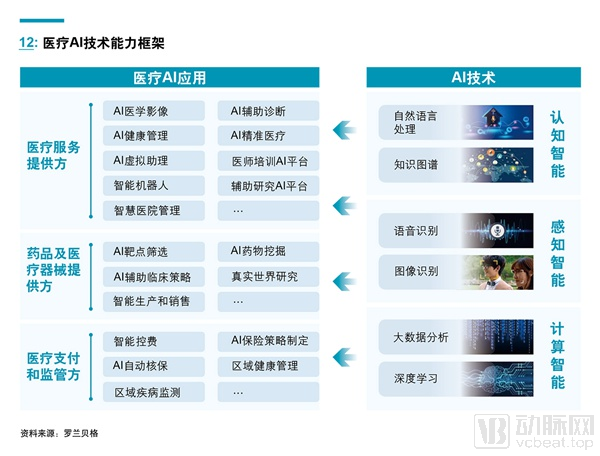
"Human-Centered, AI-Empowered Scientific Development of the Healthcare System White Paper": Medical AI Technology Capability Framework
For instance, China has over 600 million people at risk of eye diseases who require regular screening, yet there are only 36,000 professional ophthalmologists and fewer than 1,000 grassroots physicians capable of interpreting medical images. To address this imbalance between massive demand and scarce resources at the level of perceptual intelligence, “Lingyi Zhihui” has developed an “AI-driven fundus image analysis system.” This system can generate multiple fundus examination reports within 10 seconds, achieving a diagnostic accuracy rate of up to 94%. Since last year, “Lingyi Zhihui” has initiated scientific research collaboration with the Zhongshan Ophthalmic Center of Sun Yat-sen University, deploying the fundus image analysis system to numerous primary care hospitals in Guangdong Province, where it has received widespread acclaim from local physicians and the public.
Furthermore, in addition to providing solutions for preventive screening, artificial intelligence empowers primary care physicians with professional, real-time clinical decision support capabilities at the cognitive intelligence level. This safeguards primary care diagnosis and treatment, thereby helping to bridge the gap caused by insufficient medical resources at the grassroots level. “Lingyi Zhihui” has developed a “Clinical Decision Support System (CDSS)” tailored for primary care physicians with relatively limited clinical experience. The system comprises multiple modules, including intelligent consultation, diagnostic assistance, and treatment plan recommendations. It delivers high-quality diagnostic and therapeutic expertise comparable to that of physicians in Tier 3 Grade A hospitals, covering over 4,000 diseases across 27 standard specialties, with a top-3 disease recommendation accuracy rate as high as 95%. Currently, the Lingyi Zhihui CDSS has been deployed in 16 provinces and municipalities across China, providing optimal support to tens of thousands of primary care physicians. Its timely medication recommendations and comprehensive consultation capabilities have received widespread acclaim.
As advocated by the conference theme, “Intelligently Connecting the World, Endless Possibilities,” the integration of artificial intelligence (AI) and healthcare holds immense promise. By enhancing quality and efficiency, reducing costs while increasing benefits, and driving model innovation, AI will foster profound transformation and comprehensive improvement across all stakeholders in the healthcare system, centering on the core medical ecosystem. AI and data will permeate the entire healthcare ecosystem, reshaping the doctor-patient relationship and serving as both an accelerator and a lubricant to help overcome bottlenecks in the current healthcare system, thereby bringing about far-reaching changes to the industry. The white paper is now officially available on the Lingyi Zhihui website.
To view the full article, please click the link or scan the QR code below:https://01.baidu.com/index.html