

Sanbo Neurosurgery: Building a Prestigious Academic Hospital with 98%+ Patient Satisfaction

Sanbo Brain
Healthcare Group Management Service Provider
In recent years, as China’s new healthcare reforms have entered a deeper phase, private healthcare has received strong policy support from both central and local governments, leading to its rapid development. From breakthroughs in development models and innovations in operational methods to the emergence of numerous new business formats, the private healthcare sector has become increasingly standardized and mature. A number of high-quality private medical institutions, represented by Sanbo Brain, have emerged and grown during this period.
In 2004, Sanbo Brain was officially established. Over the past 15 years, Sanbo Brain, adhering to its academic hospital philosophy of “Excellence in Medical Care, Education, and Research,” has grown increasingly profound through the test of time. In the medical service capability (DRGs) rankings published by the Beijing Municipal Health and Family Planning Commission, it has consistently been ranked among the top-tier tertiary hospitals for neurosurgery alongside Tiantan Hospital and Xuanwu Hospital for many consecutive years. It is a designated construction unit for the National Key Clinical Specialty (Neurosurgery). Furthermore, it has transformed from an obscure private hospital into a university-affiliated hospital, and evolved from a single-site facility with just over 200 beds into a private healthcare chain group with nearly 2,000 beds.

Plaque Unveiling Ceremony for the 11th Clinical Medical College of Capital Medical University (Image source: Provided by the enterprise)
How has Sanbo Brain developed over the past 15 years? What is the underlying logic behind its achievements? And what distinguishes its specialized brain hospitals? To address these questions, a reporter from VCBeat (WeChat ID: vcbeat) conducted an exclusive interview with Xu Xiangying, Medical Director of Sanbo Hospital Management Group Limited and Vice President of Capital Medical University Sanbo Brain Hospital.
Unlike the advertising and marketing strategies of many private hospitals, Sanbo Brain has embodied the ethos of “sustaining medical practice through technical excellence, relying on hard capabilities, avoiding gimmicks, and tackling the ‘hard nuts’ of neurology” since its inception. Since its establishment, Sanbo has remained committed to its mission of “advancing the cause of neuroscience” and its vision of “excellence in medical care, education, and research,” pursuing a distinctive path as an “academy-style hospital.”
In 2004, three renowned neurosurgeons in Beijing—Luan Guoming, Yu Chunjiang, and Shi Xiang’en—resigned from their respective Grade A tertiary hospitals and co-founded Beijing Sanbo Brain Hospital with professional CEO Zhang Yang. Only by possessing exceptional expertise can one undertake the most challenging tasks; from its inception, Sanbo Brain Hospital positioned itself to address complex and difficult neurological cases. Upon opening, the hospital admitted a large number of patients with complicated conditions. Each successfully treated patient became part of Sanbo’s word-of-mouth network, which, over time, evolved into a strong brand through cumulative positive referrals.
Xu Xiangying told reporters that most patients visiting Sanbo Brain are those with complex and difficult conditions, many of whom had previously struggled to access appropriate medical care. Sanbo Brain is committed to making high-end medical technologies accessible to the general public and solving healthcare problems for ordinary people. To date, Sanbo has performed more than 30,000 neurosurgical procedures. In 2018 alone, it carried out over 3,600 surgeries, with more than 80% classified as Level IV (the highest complexity tier). The perioperative mortality rate has remained below 0.5% over the past five years, and patient satisfaction has consistently stayed above 98%.
Currently, Sanbo Brain Hospital of Capital Medical University provides medical services for nearly all types of neurological disorders. It has eight neurosurgery wards and one neurology ward, covering almost all categories of specialized neurological diseases. Among these, the treatment techniques for epilepsy, acoustic neuroma, glioma, cerebral aneurysm, craniopharyngioma, and spinal cord tumors have reached an advanced level.
Relentless Pursuit Yields Achievement. In the DRG rankings released by the Beijing Municipal Health and Family Planning Commission in 2016, Sanbo Brain Hospital ranked second among tertiary-grade Class A hospitals specializing in neurosurgery, alongside Tiantan Hospital and Xuanwu Hospital. At the 2017 Annual Conference on the Development of Private Hospitals in China, Professor Chen Xiaohong, Dean of the Beijing Zhongweiyun Medical Data Analysis and Application Technology Research Institute, released a statistical analysis report on big data for diseases. The report showed that Capital Medical University Sanbo Brain Hospital treated a total of 243 disease types, with 17 of these ranking first among all hospitals.
Competition in the healthcare industry is essentially a competition for talent, with “human resources” constituting the primary growth bottleneck for private hospitals. Xu Xiangying explained that physicians from public hospitals are reluctant to join private institutions, partly due to their attachment to the job security of the “iron rice bowl,” but more importantly, because of significant disparities between private and public hospitals in areas such as scientific research, career advancement, and academic professional development.
In public hospitals, physicians have well-established channels to apply for research funding, conduct scientific studies, and pursue further academic advancement. In contrast, private hospitals face greater difficulties in securing national research grants, and their academic development is often constrained. Therefore, to attract physicians, offering higher salaries alone is insufficient; it is more valuable to help them enhance their academic and research capabilities and provide robust opportunities for professional growth. “From its inception, Sanbo Brain established a strategy of synchronized development in clinical practice, education, and research,” Xu Xiangying told reporters. Adhering to the vision of “Excellence in Medicine, Education, and Research,” Sanbo is committed to building an academically oriented hospital.
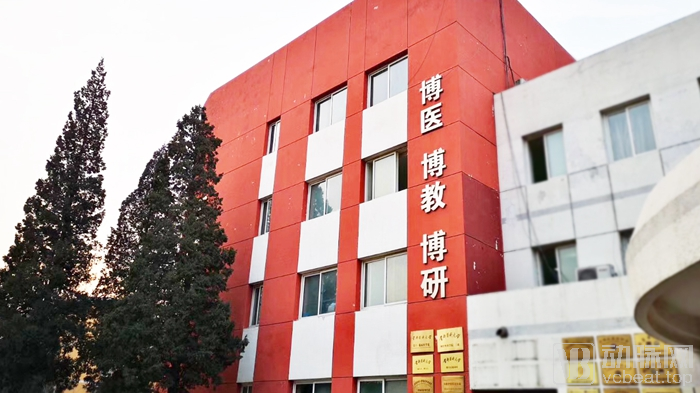
Sanbo Brain Hospital, Capital Medical University (Image source: provided by the enterprise)
Under this framework, in 2005, Sanbo Brain applied to become a master’s and doctoral degree-granting institution at Capital Medical University. In 2006, it was designated as a national training base for neurosurgeons. In 2007, Capital Medical University integrated its neuroscience disciplines and established the School of Neurosurgery, structured into three departments and one institute. As one of the three departments within the School of Neurosurgery at Capital Medical University, Sanbo Brain was listed alongside Tiantan Hospital and Xuanwu Hospital. On December 20, 2010, the Eleventh Clinical Medical College of Capital Medical University was officially inaugurated at Sanbo Brain Hospital. This marked the first time a private hospital in Beijing was formally incorporated into the research and teaching system of a key higher education institution. Xu Xiangying stated, “It is widely recognized in the industry that this move not only broke the monopoly held by public hospitals over academic medical centers but, more importantly, explored a new model of ‘academic private hospitals,’ paving the way for innovative approaches to healthcare delivery funded by social capital.”
Unlike other private hospitals, Sanbo has gained recognition and support from top medical schools, removing previous constraints on its academic development. The hospital now enjoys guaranteed support in research project initiation, funding applications, and physician title evaluations, fostering a stronger sense of belonging among staff. “Sanbo currently has 10 doctoral supervisors and 19 master’s supervisors, and has independently trained over 200 master’s students, doctoral candidates, and postdoctoral fellows. Furthermore, Sanbo’s teaching and research platforms are built upon Capital Medical University, making them largely comparable to those of public hospitals. In addition to a first-class clinical platform, physicians benefit from premier teaching and research platforms that help expand their academic influence. These soft strengths facilitate talent development and have naturally attracted many leading experts to join.”
It is reported that at Sanbo Brain, 75.2% of all clinical physicians hold a master’s degree or higher, and 31.9% hold a doctoral degree or higher. Among them, 74.3% hold intermediate-level professional titles or above, and 43.4% hold associate senior-level titles or above. With discipline leaders as the core and a group of outstanding young and middle-aged technical backbone physicians as the main body, a three-tiered talent team comprising senior, middle-aged, and young professionals has begun to take shape.
In April 2017, China launched a comprehensive reform to separate medical services from pharmaceutical sales, with the core objective of eliminating the practice of “subsidizing healthcare through drug profits.” In fact, as early as its founding in 2004, Sanbo Brain had carefully designed its hospital operational model. Rather than adhering to the dogma of high profit margins from drugs and expensive consumables, it broke the vicious cycle of “subsidizing healthcare through drug profits” by focusing on providing advanced medical technologies and high-quality healthcare services, pursuing higher surgical cure rates, and enhancing nursing standards. Sanbo Brain’s system of “sustaining healthcare through medical expertise” highlights the value of advanced medical technology and physicians. According to Xu Xiangying, at Capital Medical University Sanbo Brain Hospital, pharmaceutical costs currently account for only about 14% of patients’ total treatment expenses, far below the industry average of 40%. Meanwhile, by restricting the use of costly medical consumables to achieve the goal of sustaining healthcare through medical expertise, the hospital ensures that overall treatment costs remain no higher than those at public hospitals. By eliminating the excessive markups on drugs and medical consumables, Sanbo Brain’s approach underscores the technical sophistication of its surgical procedures and the value of its physicians.
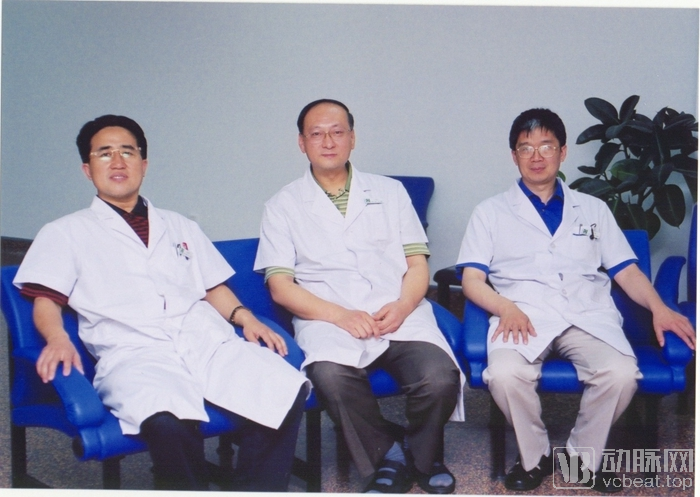
Luan Guoming (left), Yu Chunjiang (center), Shi Xiang’en (right) (Image source: Provided by the company)
Sanbo Brain has also established a unique service-oriented management model, characterized by the principle: “Support services revolve around medical care, medical care revolves around physicians, and physicians revolve around patients.” In line with its patient-centered service philosophy, Sanbo Brain has developed a “360-degree comprehensive medical service process,” setting forth specific requirements for every stage of the patient journey and for all relevant job roles.
First, an appointment center was established. Telephone, online, and WeChat appointment and consultation services were launched to answer patient inquiries, assess their detailed conditions, and accurately match them with the appropriate specialists.
Second, a customer service center was established. As 90% of Sanbo Brain’s patients come from outside the local area, Sanbo provides considerate services such as accommodation guidance, ticketing consultation, and mailing of medication and test results.
Third, an Outpatient Service Center was established. Sanbo Brain advocates the “First Inquiry Responsibility System,” under which patients may direct any inquiries to the outpatient department. Outpatient service staff are fully responsible for a comprehensive range of services, including hospitalization guidance, physician consultation coordination, ward information dissemination, rounding support, implementation of patient suggestions, follow-up telephone calls, and reminders for subsequent visits.
In addition to offline in-hospital services, Sanbo Brain has launched “Internet Plus Healthcare” services, creating a closed-loop service ecosystem that integrates online and offline channels, including telemedicine, internet hospitals, and online communities.
China has long faced a shortage of high-quality medical resources, with major hospitals overcrowded while smaller ones remain underutilized. This imbalance in healthcare resource distribution has led to burdensome experiences for both patients seeking care and physicians providing it. Against this backdrop of insufficient supply of premium medical services, non-public healthcare institutions have emerged, effectively supplementing, alleviating, and diverting patient flow from the overcrowded large hospitals.
To effectively alleviate the strain on regional medical resources and promote the decentralization of high-quality medical care, Sanbo Brain initiated its “group-based” development strategy in 2014, beginning to establish a chain of institutions across China. Currently, it operates five affiliated hospitals, including Capital Medical University Sanbo Brain Hospital, Kunming Sanbo Brain Hospital, Chongqing Sanbo Jiangling Hospital, Chongqing Sanbo Chang’an Hospital, and Fujian Sanbo Funeng Brain Hospital, with two additional hospitals under construction.
For Sanbo Brain, the group’s chain-based development is not only essential to meet its own growth needs but, more importantly, helps patients save both money and time. Taking Kunming Sanbo Brain Hospital under its umbrella as an example, since its establishment in Yunnan Province in 2014, it has alleviated the suffering of over a thousand patients with neurological disorders from Yunnan, Guizhou, and Sichuan provinces over the past five years. Previously, these patients often had to travel thousands of kilometers across difficult terrain to seek medical care in cities such as Beijing and Shanghai.
Xu Xiangying stated that when selecting locations for new hospitals, Sanbo first conducted regional planning—covering areas such as Northwest, Southwest, and Central China—to facilitate regional coverage. At the local implementation level, comprehensive considerations were given to local disease incidence rates, population size, and regional transportation infrastructure. Most importantly, the degree of support from local governments for privately run healthcare institutions was taken into account.
“Ninety percent of the patients at Beijing Sanbo come from outside the city. Given the large number of non-local patients, can tiered diagnosis and treatment enable our high-quality medical services to reach more patients?” said Xu Xiangying. Guided by this philosophy, Sanbo Brain has actively responded to the national policy on tiered diagnosis and treatment by formulating a plan to build the Sanbo Medical Consortium. It is exploring the synergistic development of tiered diagnosis and treatment alongside specialized care. To date, Sanbo has established specialized medical consortia with more than 50 hospitals across China, achieving interconnectivity. This initiative delivers Sanbo’s advanced technologies and high-quality diagnostic and therapeutic services directly to grassroots institutions, while transferring its technical expertise to grassroots physicians to enhance their clinical capabilities. As a result, local residents can access premium medical services close to home, bringing tangible benefits to a broader population at the grassroots level.
In the future, Sanbo Brain will continue to adopt a development model centered in Beijing with nationwide chain operations, striving to build a first-class domestic chain of neurological medical institutions. By establishing medical consortiums, it will further expand the reach of its medical services, upholding the creed of “providing better care to more patients” at a higher level. The goal is to make advanced medical technologies accessible to the general public and meet the multi-level and diverse healthcare needs of the population.