As RNAi technology continues to demonstrate its clinical translation and commercialization capabilities, the global RNAi sector is gaining momentum at an accelerating pace.Since 2025, the total amount of global disclosed transactions has been approximately USD 35 billion, increasing more than 40% year-on-year.
According to Frost & Sullivan data, the global market size of small nucleic acid drugs has grown from US$10 million in 2016 to US$3.25 billion in 2021, with an annual compound growth rate as high as 217.8%. Evaluate and BCG predict that by 2026, the global market size for oligonucleotide drugs will exceed US$15 billion.
In the Chinese market, small nucleic acid drug R&D companies are also starting to accelerate their layout. The growth potential of the market is even more significant. According to a research report by Dongwu Securities,China's RNAi therapy market was approximately USD 4 million in 2022 and is expected to exceed USD 300 million by 2025, with a CAGR of over 300%. It is projected to reach about USD 3 billion by 2030.
2025 is being called the "Year of Going Global" for China's small nucleic acid industry.Chinese companies have not only successfully overcome the "bottleneck" of delivery patent barriers, but also demonstrated global competitiveness in target selection and molecular design.As BWEL Pharma reaches a deep strategic cooperation with Novartis, involving licensing deals for multiple small nucleic acid drugs, with a total amount exceeding 5 billion US dollars; RiboBio partners with BI on a small nucleic acid drug for treating NASH/MASH in a collaboration worth over 2 billion US dollars.
At the same time, Chinese players in the small nucleic acid sector are upgrading from single products to platform capabilities. A complete technology platform and delivery system are becoming key to a company's long-term competitiveness. Companies such as Higene Bio, RiboBio, BoWang Pharma, and SANEGENEBIO have established delivery platforms with independent intellectual property rights.
Since the beginning of 2026, there have been frequent developments in the small nucleic acid field.SANEGENEBIO's self-developed siRNA candidate drug SGB-7342 has completed the first subject dosing in a Phase 1 clinical study in China for the treatment of obesity at the First Hospital of Jilin University; Ribo Biotech successfully listed on the Hong Kong Stock Exchange with an issue price of HK$57.97 per share, raising a total of over HK$1.8 billion.
Industry analysis suggests that the gradual expansion of market space is due not only to high convenience and high compliance, but also to its mechanism of action. It is reported that siRNA can directly target mRNA upstream of protein expression, achieving therapeutic purposes by modulating mRNA transcription levels.It can target previously "undruggable" target genes, expanding the application scope from rare diseases to more common diseases, including cardiovascular, metabolic, neuropsychiatric, and cancer fields.
Meanwhile, despite the broad development prospects of small nucleic acid drugs, their research and commercialization still face multiple challenges. Technically, the application of siRNA technology still encounters many limitations. On one hand, although various delivery carriers have been developed, achieving efficient extrahepatic tissue delivery remains a key challenge yet to be overcome. On the other hand, safety issues such as the drug's immunogenicity, potential off-target effects, and insufficient stability in vivo also constitute major obstacles in the research and development process.
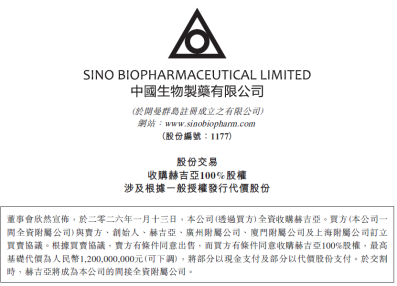
Currently, the global pharmaceutical industry is undergoing a profound transformation from traditional chemical drugs and biologics to precision-targeted therapies. With their unique mechanisms, small nucleic acid drugs are expected to become a disruptive force leading the future. In this race,Whoever can be the first to overcome the above technical difficulties will be able to seize the market opportunity.Sino Biopharm, evidently, has made an early move in this crucial competition and secured a favorable position.
The reference materials are from publicly available online information, including news, corporate official websites, and government documents.