

Shanghai Tenth People's Hospital Showcases Infervision AI Medical Solutions at 2019 World Artificial Intelligence Conference

Infervision
Artificial Intelligence Product Developer
VCBeat (WeChat ID: vcbeat) reports from the scene: From August 29 to 31, the 2019 World Artificial Intelligence Conference was held in Shanghai, gathering more than 500 distinguished guests from top domestic and international universities, leading industry enterprises, and international organizations, as well as global AI corporate leaders.
Cutting-edge new technologies, products, applications, and concepts dazzled attendees, while AI’s comprehensive empowerment of sectors such as education, healthcare, transportation, government affairs, and finance allowed everyone to deeply perceive a future defined by “Intelligently Connecting the World, Endless Possibilities.”
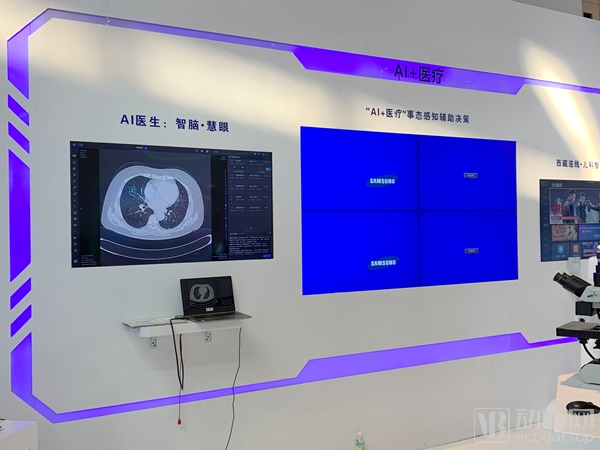
Shanghai Tenth People’s Hospital (hereinafter referred to as “Tenth Hospital”) showcased Infervision’s AI medical products and a series of other AI+ healthcare applications at the exhibition, demonstrating the transformative power of AI in empowering the healthcare industry.
Shanghai Tenth People's Hospital Partners with Infervision, Driving Steady Gains in Diagnostic Efficiency
In March 2019, the National Health Commission issued the Assessment Standards for Hospital Smart Service Grading concerning smart diagnosis and treatment, clarifying the definition and connotation of smart hospitals. In April of the same year, Shanghai officially unveiled its first batch of pilot application scenarios for artificial intelligence. Twelve specific scenarios were selected, covering areas such as schools, hospitals, communities, industrial parks, transportation, government services, and finance. Shanghai took the lead in China in implementing deep AI applications, with the Tenth People’s Hospital being one of the selected institutions.
It is reported that the application scenarios of medical AI products are ubiquitous at Shanghai Tenth People’s Hospital. In the Department of Radiology, pulmonary nodules represent the most frequently encountered condition. During the more than one year since Infervision’s AI medical solutions were implemented at the hospital, they have assisted physicians in interpreting tens of thousands of imaging cases.
“Thin-slice scanning of a single lung may generate over 1,000 images, the vast majority of which are normal. However, missing even one nodule constitutes a missed diagnosis.” — Tang Guangyu, Director of the Department of Radiology, Shanghai Tenth People’s Hospital
Tang Guangyu, Director of the Department of Radiology at Shanghai Tenth People’s Hospital, also stated that screening for pulmonary nodules places significant pressure on radiologists. AI-assisted imaging diagnostic systems can rapidly detect and localize all nodules, assess their size and risk level, and compare them with prior imaging studies, thereby providing substantial support to physicians in making accurate diagnoses.
Furthermore, AI-assisted imaging diagnostic systems have significantly improved the efficiency of image interpretation. While manual review previously required ten to thirty minutes per case, the integration of AI has reduced this time to just two or three minutes, thereby alleviating the shortage of radiological diagnostic resources.
“Previously, reports on pulmonary nodules could only be issued by physicians with five to ten years of experience, attending physicians, or senior resident physicians. Now, staff members with just one year of experience can also undertake image interpretation tasks with the assistance of AI.” — Tang Guangyu, Director of the Department of Radiology, Shanghai Tenth People’s Hospital
National Support for AI in Healthcare: An Irreversible Trend
In recent years, with the rapid development of artificial intelligence technology, the immense value of medical AI has garnered widespread attention across society, and the state has attached great importance to the future of artificial intelligence.
On the afternoon of July 24, 2019, Xi Jinping, General Secretary of the Communist Party of China Central Committee, President of the People’s Republic of China, Chairman of the Central Military Commission, and Director of the Central Commission for Comprehensively Deepening Reform, presided over the ninth meeting of the Central Commission for Comprehensively Deepening Reform and delivered an important speech. The meeting emphasized that pilot programs for the establishment of regional medical centers should be carried out. The main task is to select several high-quality medical institutions in regions with abundant medical resources, such as Beijing and Shanghai, and to establish regional medical centers in areas with significant patient outflows and relatively scarce medical resources. This will be achieved through various measures, including the establishment of branch centers and affiliates, and the promotion of multi-site practice by physicians. By fully leveraging advanced technologies such as artificial intelligence and big data, the initiative aims to promote the clustered development of high-quality medical resources and better meet the public’s demand for medical services.
On August 26, 2019, the China International Smart Industry Expo was held. President Xi Jinping of the People's Republic of China sent a congratulatory letter, extending warm congratulations on the convening of the event. In his message, President Xi pointed out that modern information technologies, represented by the internet, big data, and artificial intelligence, are advancing at an unprecedented pace. A new round of scientific and technological revolution and industrial transformation is gaining strong momentum, driving the rapid development of the intelligent industry and exerting significant and far-reaching impacts on economic development, social progress, and global governance.
Infervision Gains Recognition in Multiple Countries; AI’s Future Looks Promising
Since its inception, Infervision has remained at the forefront of medical artificial intelligence development. Its medical AI products are being integrated into all aspects of healthcare, including disease prevention and screening, clinical diagnosis, treatment decision-making, and prognostic follow-up, providing comprehensive assistance to physicians and ensuring greater safety for patients.

Infervision’s “Smart Solution for the Full Lifecycle of Lung Cancer”
As of June 2019, Infervision’s deployment sites had covered all 32 provincial-level administrative regions across China, while its strategic footprint extended to North America, the Asia-Pacific region, and Europe, spanning eight countries worldwide. The company’s AI solutions assisted physicians in completing over 40,000 clinical diagnoses daily, with the total number of cases processed through Infervision’s AI servers surpassing 7 million.