

Ma Huateng at WAIC 2019: Leading Comprehensive AI Governance with 'Tech for Good'
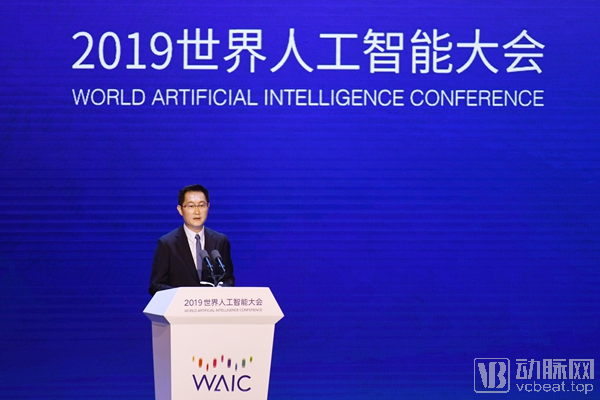
On August 29, the 2019 World Artificial Intelligence Conference opened in Shanghai. In his speech, Ma Huateng, Chairman and CEO of Tencent, stated that the urgency of AI governance is increasing, and that “Tech for Good” should guide comprehensive AI governance to ensure AI is “interpretable,” “controllable,” “usable,” and “reliable.” In May this year, Tencent introduced “Tech for Good” as its new vision and mission, focusing on exploring the proper way for humans and AI to coexist.
At last year’s World Artificial Intelligence Conference, Ma Huateng for the first time raised four key challenges that must be addressed in the development of artificial intelligence, framed from the perspectives of “interpretability,” “controllability,” “usability,” and “reliability,” with the aim of prompting reflection among AI practitioners worldwide.
Ma Huateng stated that over the past year, global enthusiasm for artificial intelligence (AI) has remained undiminished, with numerous highlights and significant breakthroughs in AI research, applications, and governance. It is encouraging to note that in June this year, China’s National Committee for the Governance of New-Generation Artificial Intelligence released a report proposing the development of “Responsible AI,” marking the country’s first issuance of AI governance principles. On August 26, Vice Premier Liu He also called at the Smart China Expo in Chongqing for intelligent technologies to “demonstrate the power of tech for social good,” uphold ethical and moral boundaries, and establish industry-wide and corporate ethical self-discipline standards. Evidently, there is a high degree of consensus among the government, enterprises, and society on the overarching principles of AI governance.
Ma Huateng believes that the development trend of artificial general intelligence (AGI) is becoming increasingly clear, with AI continuing to approach human intelligence and evolving from “specialists” to “generalists.” As AI becomes increasingly integrated with various industries, the growth of the artificial intelligence industry will bring us an inclusive intelligent society marked by “AI+.”
“Today, no single country possesses all the resources, technologies, and capabilities required for the new global round of technological and industrial revolution. Industrial fragmentation and technological decoupling will undermine the long-term interests of humanity as a whole. In the face of contradictions such as technological competition, trade disputes, and geopolitical conflicts, we should demonstrate wisdom and inclusiveness to strive to overcome these barriers.” Ma Huateng further emphasized that strengthening global governance and cooperation is an indispensable component in the development of AI.
Ma Huateng stated that Tencent will fully support Shanghai in building a highland for innovative AI development, spare no effort in helping Shanghai establish itself as the “Global Esports Capital,” assist in the construction of Shanghai’s digital government, and develop projects such as the “Financial Risk Monitoring and Early Warning Platform” and the “Smart Market Supervision Platform.”
In August 2018, Tencent’s East China Headquarters was officially established in Shanghai. Currently, the headquarters employs nearly 5,000 people, and a new building for the East China Headquarters is under construction. Tencent’s Youtu Lab, which focuses on computer vision research, and its Keen Security Lab, dedicated to intelligent cybersecurity research, have both settled in Shanghai. Over the past year, Tencent has also launched several AI application projects in Shanghai, including a Medical AI Big Data Laboratory and an AI Hospital. All six of Tencent Esports’ professional leagues are based in Shanghai, along with more than 50 professional clubs within the Tencent Esports ecosystem.
According to reports, Tencent has established four major AI laboratories covering the full spectrum from fundamental research to diverse application development. It has also built a matrix of laboratories for frontier technology exploration, encompassing robotics, quantum computing, 5G, edge computing, and the Internet of Things (IoT), thereby creating a “technology engine” for the future.
In conjunction with the 2019 World Artificial Intelligence Conference, Tencent hosted T-DAY, an offline technology carnival featuring hands-on experiences with 18 AI technologies and internet applications. The exhibition hall highlighted the integration of “AI technology + Shanghai cultural elements,” allowing visitors to easily experience the latest internet technologies and earning widespread appreciation from Shanghai residents.
The 2019 World Artificial Intelligence Conference was jointly hosted by the National Development and Reform Commission, the Ministry of Science and Technology, the Ministry of Industry and Information Technology, the Cyberspace Administration of China, the Chinese Academy of Sciences, the Chinese Academy of Engineering, and the Shanghai Municipal People's Government. Centered on the theme “Intelligent Connectivity for a Boundless Future,” the conference continues to build a world-class platform for cooperation and exchange in artificial intelligence.
The following is the full transcript of the speech:
Distinguished leaders, esteemed guests, and dear friends, good morning!
It is a pleasure to attend the World Artificial Intelligence Conference again. Each visit to Shanghai brings a unique experience. Particularly over the past year, Shanghai has made every effort to implement the “Three Major Tasks and One Major Platform,” resulting in a continuous stream of significant and celebratory events.
At this time last year, Tencent’s East China Headquarters was officially established in Shanghai. Currently, the East China Headquarters employs nearly 5,000 people. The new headquarters building under construction underscores our commitment to taking root and growing in Shanghai.
Over the past year, we have significantly increased our investments in artificial intelligence, cloud computing, cultural creativity, and other fields in the Shanghai region, achieving new progress:1. We fully support Shanghai’s efforts to build a highland for innovative AI development. Our Youtu Lab, a domestic leader in computer vision research, and our Keen Security Lab, which specializes in intelligent cybersecurity research, are both based in Shanghai.Over the past year, we have launched a number of new AI application initiatives in Shanghai, including a Medical AI Big Data Laboratory and an AI Hospital.II. We fully support Shanghai in building itself into the “Global Esports Capital.”All six of Tencent Esports’ professional leagues are based in Shanghai, and more than 50 professional clubs within the Tencent Esports ecosystem have also established their presence in the city. We have entered into a strategic partnership with Shanghai Juss Group to designate the 80,000-seat Oriental Sports Center as a Tencent Esports-recommended venue.III. We support the construction of Shanghai’s digital government by developing projects such as the “Financial Risk Monitoring and Early Warning Platform” and the “Smart Market Supervision Platform.”
To coincide with the conference, we launched an offline technology carnival (T-DAY) featuring hands-on experiences of 18 AI technologies and internet applications. The exhibition hall highlights the integration of “AI technology + Shanghai cultural elements,” and such science popularization activities have been well received by Shanghai residents. Yesterday, I also had the distinct honor of accompanying Secretary Li Qiang on a tour and hands-on experience of the exhibits.
The theme of this conference is “Intelligently Connecting the World, Infinite Possibilities.” Looking at the global AI landscape over the past year, we observe sustained momentum and frequent highlights, with numerous breakthroughs in AI research, applications, and governance. Tencent has established four major AI laboratories, covering everything from comprehensive fundamental research to diverse application development. Meanwhile, we have also built a matrix of laboratories dedicated to exploring frontier technologies, encompassing robotics, quantum computing, 5G, edge computing, and the Internet of Things (IoT), thereby creating a technology engine geared toward the future.
Below, I will share a few insights from the perspectives of AI research, AI applications, and AI governance:
First, the development trend of artificial general intelligence is becoming increasingly clear, with AI continuing to approach human intelligence and evolving from a “specialist” to a “generalist.”Achieving a leapfrog development from specialized artificial intelligence to general artificial intelligence is an inevitable trend in the next phase. A crucial step in this process is the transition from “human-assisted intelligence” to autonomous intelligence. Represented by AlphaZero, the successor to AlphaGo, human intervention has begun to decrease, while machine intelligence’s capacity for autonomous learning from its environment has significantly strengthened.
Since 2016, Tencent AI Lab has developed “Fine Art,” the Go-playing AI that has consecutively won world championships. Subsequently, in collaboration with the “Honor of Kings” team, it developed the AI “Juewu.” “Juewu” does not rely on human experience but achieved mastery through self-learning from scratch. Currently, “Juewu” has reached professional-level performance. This represents a significant step forward from narrow artificial intelligence toward artificial general intelligence.
Virtual worlds, as simulations and emulations of the real world, have long served as a litmus test for evaluating and enhancing AI capabilities. The industry widely regards complex virtual environments as a critical step toward solving the ultimate challenge in AI: Artificial General Intelligence (AGI). If AI can learn to analyze, make decisions, and act as rapidly as humans within virtual games that simulate reality, it will be capable of executing more difficult and complex tasks. For instance, while the total number of atoms in the observable universe is estimated at 10^80, and the number of possible variations in Go reaches 10^172, the decision-making complexity in “Honor of Kings” soars to 10^20,000. If AI can perform at or beyond human levels in such highly complex virtual environments, the prospect of achieving general intelligence in the real world becomes highly promising.
This is made possible by the powerful simulation capabilities of our game physics engine, which provides AI with a realistic training environment. Currently, we are among the global leaders in artificial simulation for AI research. From “Jueyi” to “Juewu,” our continuously accumulated robust algorithms have endowed AI with an exceptionally powerful brain.
Second, in terms of AI applications, the deepening integration of AI with various industries will foster an inclusive intelligent society characterized by “AI+.”China’s artificial intelligence (AI) industry boasts promising prospects, with its market size poised to enter a period of rapid growth over the next decade. Currently, comprehensive industry solutions—such as smart manufacturing, smart healthcare, intelligent security, smart transportation, and smart retail, formed through the integration of AI with various sectors—are being widely implemented across China.
Among these, smart healthcare is our key focus. We have established the first batch of national next-generation artificial intelligence platforms for medical imaging. “Tencent Miying” has expanded its applications from single-disease to multi-disease scenarios, assisting physicians in diagnosing various cancers and other conditions. Capable of identifying and predicting risks for over 700 diseases, it has become a national benchmark project. Furthermore, we have created a “micro-ecosystem” of AI applications in healthcare by integrating internet hospitals, electronic health card initiatives, and professional medical science popularization projects such as “Tencent Yidian.”
Third, in terms of AI governance, we should guide comprehensive governance with the principle of “Tech for Good,” ensuring that AI is “knowable,” “controllable,” “usable,” and “reliable.” This “Four-Ke” principle was proposed by me at last year’s conference.Observing the developments over the past year, we have found that the urgency of AI governance is increasing. We ourselves are also deepening our reflection on technological values. In May this year, we proposed “Tech for Good” as Tencent’s new vision and mission, focusing precisely on exploring the proper way for humans and AI to coexist.
Encouragingly, in June this year, the National Committee for the Governance of New-Generation Artificial Intelligence released a report proposing the development of “Responsible AI,” marking China’s first issuance of principles for AI governance. A few days ago, Vice Premier Liu He also called at the Smart China Expo held in Chongqing for intelligent technologies to “demonstrate the power of technology for social good,” uphold ethical and moral baselines, and establish industry-wide and corporate ethical self-regulation standards. Evidently, there is a high degree of consensus among the government, enterprises, and society on the overarching principles of AI governance.
Furthermore, I wish to emphasize that strengthening global governance and cooperation is an indispensable component of AI development. Today, no single country possesses all the resources, technologies, and capabilities required for the new round of global scientific, technological, and industrial revolution. Industrial fragmentation and technological decoupling will undermine the long-term interests of humanity as a whole. In the face of contradictions such as technological competition, trade disputes, and geopolitical conflicts, we should demonstrate wisdom and inclusiveness, striving to overcome these barriers.
Finally, I extend my gratitude to the conference organizers for their exceptional vision and enthusiasm in bringing together stakeholders from government, technology, humanities, education, business, and investment sectors to explore the future prospects of AI. I wish this conference a complete success! Here’s to the bright future of AI and to Shanghai’s promising tomorrow! Thank you all!